A Reliquary in the Fortress
The Caponier of Silence
The Warsaw Citadel is a place of heavy, layered ironies, a site where the architecture of oppression has been alchemized into a sanctuary of truth. Built by Tsar Nicholas I following the suppression of the November Uprising of 1830, the fortress was never intended to defend the city of Warsaw; it was built to intimidate it. It was a brick collar around the neck of a rebellious nation, a garrison where Russian guns pointed inward at the Polish population. For a century, its damp dungeons and execution yards held Polish patriots, revolutionaries, and insurgents who dared to dream of sovereignty.
Today, however, the southern "Caponier"—a specialized artillery fortification designed to sweep the moat with cannon fire—houses a different kind of prisoner. It holds the memory of the 22,000 men systematically murdered by the Soviet Union in 1940. The Katyn Museum is not a conventional historical gallery; it is a "martyrium," a secular shrine designed to house relics. In the Catholic tradition deeply embedded in Polish culture, a relic is a physical piece of a saint or their belongings that bridges the gap between the divine and the mortal. Here, the relics are strictly forensic but no less sacred: a button torn from a greatcoat, a rusted spectacle frame, a chess piece carved from wood in a Soviet camp.
These objects were dug out of the clay in the Smolensk, Kharkiv, and Kalinin oblasts. They have traveled from the execution pits of the NKVD to the vitrines of Warsaw to serve as silent witnesses in a trial that has lasted eighty years. The museum operates on a principle of "displacement." Because the actual killing fields lie in Russia—a territory now politically hostile and geographically difficult to access—the geography of memory has been forcibly shifted. The Citadel has become the surrogate ground. It is here that the anonymous mass of "22,000 victims" is resolved back into individual human beings: fathers, husbands, scientists, and dreamers.
The Geopolitics of the "Forbidden Zone"
This entry is anchored in Warsaw out of ethical and logistical necessity. The actual sites of the massacres—the Katyn Forest, the village of Mednoye, and the Piatykhatky forest in Kharkiv—are located in Russia and Ukraine. The Russian sites are currently subject to a revisionist political climate, where the state actively works to dilute the Soviet admission of guilt. The "Dark Atlas" directs the traveler here, to the Citadel, because this is where the truth of the event currently resides. The soil of Smolensk may hold the bones, but the Citadel holds the biography.
The Crime: The Decapitation of a Nation
The "Brain Trust" of the Second Republic
To understand the artifacts in the museum, one must first understand the specific human geography of the victims. The Soviet invasion of Poland on September 17, 1939, executed under the secret protocols of the Molotov-Ribbentrop Pact, was not merely a territorial grab; it was an ideological cleansing. The Red Army captured approximately 250,000 Polish prisoners of war. While the enlisted men were largely released or sent to labor camps in the Gulag, the officers were segregated into three "special camps": Kozelsk, Starobelsk, and Ostashkov.
The demographic composition of these camps was unique in military history. The Polish Army of the interwar period relied heavily on reservists—educated civilians mobilized in times of war. Consequently, the men herded into the cattle cars were not career soldiers. They were the intellectual and cultural elite of the nation. The death toll included over 800 doctors and surgeons, hundreds of university professors and schoolteachers, engineers, architects, town planners, lawyers, judges, and journalists. It included the men who built the bridges, wrote the laws, healed the sick, and taught the youth.
Stalin and Lavrentiy Beria, the head of the NKVD, understood that these men represented the "immune system" of Polish sovereignty. They were the reservoir of leadership that would be necessary to rebuild an independent Polish state after the war. By signing the execution order on March 5, 1940, the Soviet leadership was not disarming a military force; they were lobotomizing a culture. They were ensuring that the Poland which emerged from the war would be a headless body, pliable to Soviet control.
The Logistics of the "Katyn Method"
The museum’s "Wall of Shadows" exhibits detail the logistical coldness of the operation. The prisoners were held for months in a state of suspended hope. They were subjected to lengthy interrogations, not to extract military intelligence, but to determine their political pliability. Those who refused to renounce their allegiance to Poland were marked for death.
In April 1940, the transport lists were finalized. The prisoners were moved by train to the execution sites. At Katyn, they were offloaded at the Gnezdovo station, a quiet rail stop surrounded by forest. From there, they were transferred into "Black Marias"—prison buses with whitewashed windows or small, claustrophobic cells. These vehicles were driven a short distance into the woods, where the engines of tractors were often left running to mask the noise of the gunfire.
The execution method, now infamously known as the "Katyn Method," was standardized to an industrial degree. The primary executioner, Vasili Blokhin, utilized German-made Walther PPK pistols. He reportedly brought a suitcase full of them, favoring them over the standard Soviet Tokarev because the Walther did not jam and had a manageable recoil—a crucial factor when one intends to shoot hundreds of men in a single night. Blokhin, who is credited with personally killing thousands of the prisoners, wore a butcher’s leather apron and long gloves to protect his uniform from blood spatter.
The victims were led to the edge of the pits or into the basement of an NKVD villa. Their hands were tied behind their backs with wire or rope. If they struggled, their overcoats were pulled over their heads and tied around their necks—a specific knotting technique that would later become a forensic signature of the NKVD. They were shot once in the base of the skull. The bodies were stacked with geometric precision, layer upon layer, sprinkled with lime to hasten decomposition, and covered with earth.
The Anatomy of the Lie
The 1943 Discovery and the Nazi Pivot
The narrative of Katyn is a story of two crimes: the murder in 1940, and the cover-up that followed. The graves were discovered by the Nazis in April 1943. The German Wehrmacht, having pushed the Soviet lines back, was tipped off by local Russian peasants who knew of the "Black Marias" entering the forest. When they opened the earth, the scale of the find stunned even them.
Joseph Goebbels, the Nazi Propaganda Minister, immediately saw the political utility of the find. He sought to drive a wedge between the Western Allies (the US and UK) and the Soviet Union by exposing the brutality of the Bolshevik regime. To lend credibility to the discovery, the Germans invited the International Red Cross (who declined due to lack of Soviet consent) and an International Commission consisting of forensic experts from twelve countries, including neutral Switzerland, to examine the bodies.
The forensic evidence was irrefutable. The decomposition of the corpses, the age of the spruce trees planted on top of the graves, and—crucially—the dates on the letters found in the victims' pockets all pointed to the spring of 1940. The letters stopped in April and May of that year. No document was found dated later than May 1940. This proved conclusively that the men had died when the Soviets controlled the territory, long before the German invasion of 1941.
The Burdenko Fraud and the Western Betrayal
When the Red Army retook Smolensk in late 1943, the NKVD immediately began "correcting" the site. They bulldozed the graves, crushed the skulls to hide the bullet entry points, and destroyed the Polish Red Cross markers. In January 1944, the Soviets convened the "Burdenko Commission," a sham investigation that tortured witnesses into changing their stories and planted false evidence, such as unmailed letters dated 1941, to frame the Germans.
The tragedy of Katyn was compounded by the betrayal of the West. President Roosevelt and Prime Minister Churchill were fully aware of the likelihood of Soviet guilt. Reports from the Polish government-in-exile, as well as their own intelligence services, pointed to Stalin. However, the logic of total war dictated that the alliance with the Soviet Union against Hitler was paramount. To acknowledge Katyn was to risk the Soviet Union making a separate peace with Germany or collapsing the Eastern Front.
Thus, the "Great Lie" was maintained through a conspiracy of silence. The US government suppressed the findings of Colonel John Van Vliet, an American POW who had been taken to Katyn by the Germans in 1943. When the issue was raised at the Nuremberg Trials, the Soviet prosecutors attempted to include Katyn in the indictment against Hermann Göring. However, the evidence was so weak, and the defense so spirited, that the tribunal quietly dropped the charge from the final judgment—a tacit admission that the Soviets were lying, though no one dared say it openly in court.
The "Memory Crime" in Poland
For the next 45 years, the "Katyn Lie" became a foundational myth of the Eastern Bloc. In the People's Republic of Poland, to mention Katyn as a Soviet crime was to commit an act of sedition. Families of the victims were barred from government jobs or university positions. The censorship was total; the date "1940" was erased from history books and replaced with "1941." The lie was maintained not just by the state, but by a pervasive atmosphere of fear. Yet, the truth was preserved in the private sphere—in the "metal boxes" buried in Polish gardens containing the medals of the dead, and in the whisper networks of the opposition.
Visiting the Anchor: The Katyn Museum Experience
The Descent into the Caponier
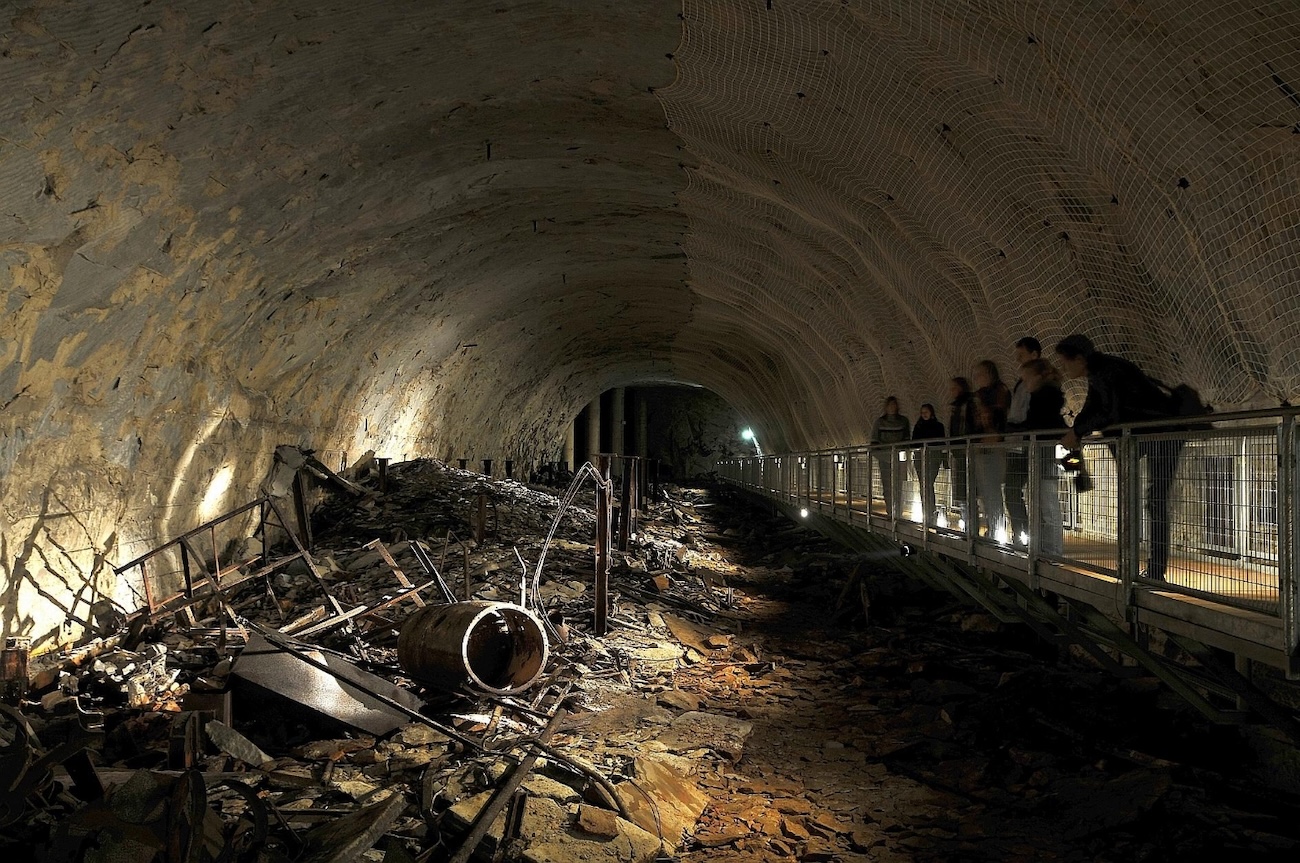
Entering the Katyn Museum is a somatic experience designed to mimic the psychological weight of the event. The entrance is located in the southern gate of the Citadel. Visitors walk down a long, sloping ramp into the earth, transitioning from the noise of modern Warsaw into the damp, silent acoustics of the fortress.
The architecture, designed by the firm BBGK Architekci, utilizes the raw brick of the 19th-century fortification, stained with time and moisture. The space feels subterranean, oppressive yet reverent. It evokes the sensation of descending into a pit, yet the clean lines and modern lighting elevate it to a sanctuary. The temperature drops as you descend; the air smells of old stone and earth.
The Hall of Relics: The Excavated Biography
The core of the museum is the exhibition of artifacts. These are objects that spent fifty years in the ground, absorbing the chemistry of the massacre. They are presented in illuminated glass cases, floating in the darkness like holy objects. The curators have chosen not to clean them entirely; the soil of Smolensk still clings to the crevices of the metal, a physical link to the crime scene.
- The Uniforms: You will see scraps of Polish military uniforms, the fabric stained by clay and fluids, yet the buttons—with the Polish Eagle—remain defiant. The Soviets often ripped the rank insignias off the prisoners, but the buttons remained, a subtle assertion of nationality that the executioners overlooked.
- The Diaries: Perhaps the most haunting artifacts are the personal diaries. Many officers kept journals until the very end, recording their fears, their hopes, and the mundane details of camp life. The entries stop abruptly. One diary, recovered from the pocket of Major Adam Solski, reads: "April 9. Five a.m. From very early morning the day began in a special way. We were stripped of our belts, pocket knives, and watches... We are being taken somewhere in cars. What is next?" The entry ends there. The diary survived; the man did not.
- The Improvised Life: The vitrines display chess sets carved from wood, rosaries made from dried bread, and cigarette holders fashioned from scrap metal. These objects speak to the prisoners' resilience, their attempt to maintain a semblance of civilized life and human dignity in the shadow of the executioner. They represent the human spirit's refusal to be reduced to a number.
- The Janina Lewandowska Skull: The museum addresses the singular tragedy of Janina Lewandowska, the only female victim. An aviator and the daughter of a general, she was executed alongside the men. Her skull was secretly recovered and hidden for decades before being identified and interred with full military honors.
The "Gap" and the Epitaph
One of the most striking architectural features is the "Gap"—a vertical slash in the fortress wall that allows a beam of light to cut through the darkness. It symbolizes the violent rupture in Polish history, the "lost generation" that was cut away. It is a moment of architectural violence that mirrors the historical violence.
The route concludes in the Epitaphium, a massive hall where the names of the 21,857 victims are laser-etched into steel plates. The sheer scale of the list is overwhelming. It is not just a list of names; it is a texture. Standing in front of it, one realizes that each name represents a universe of connections—a family, a career, a future—that was extinguished. The lighting in this room is dim, encouraging silence and reflection.
The Valley of Death
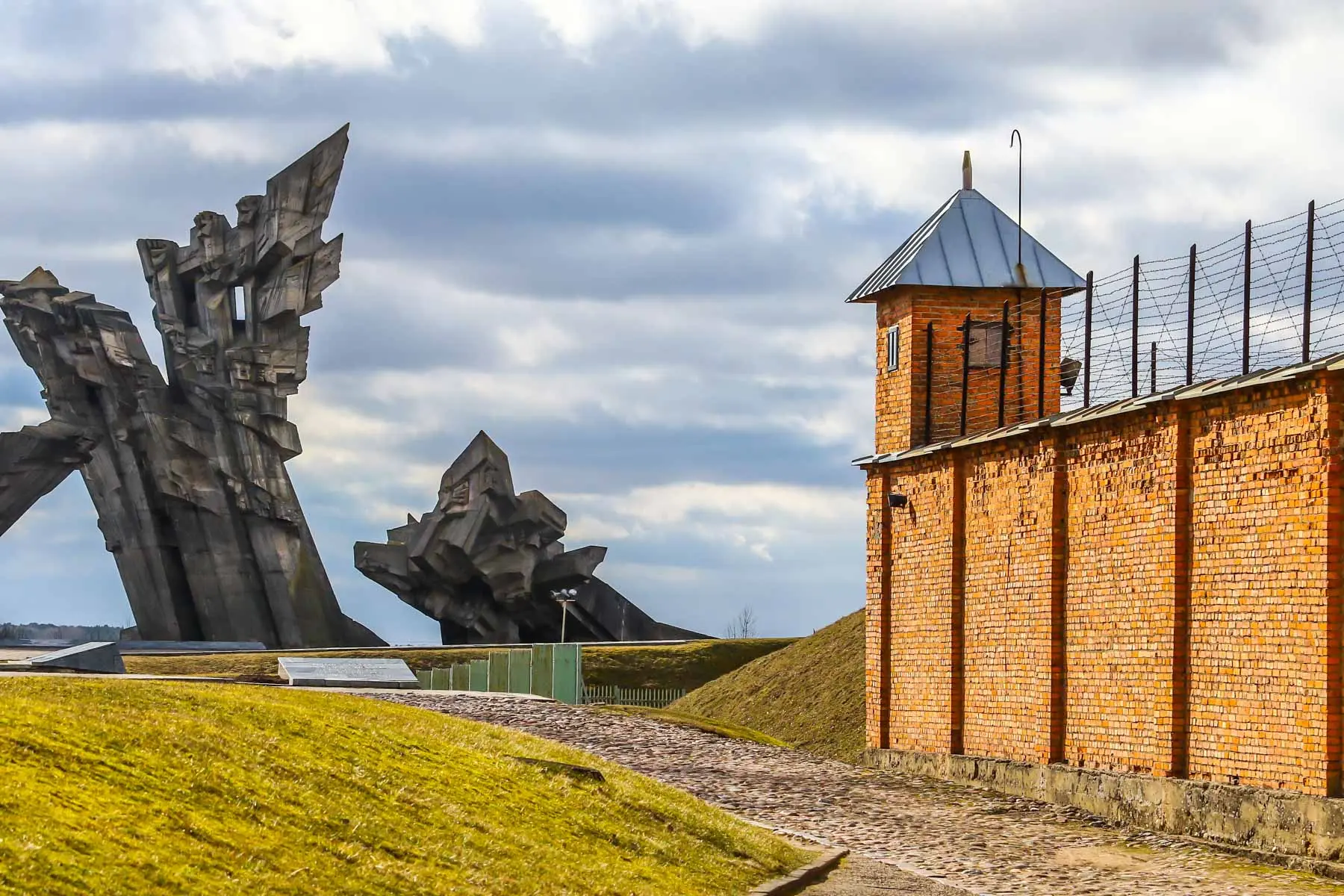
Outside the Caponier lies the "Valley of Death," an open-air memorial park within the Citadel walls. Here, concrete steles rise from the grass, evoking the trees of the Katyn Forest. The silence here is profound, insulated from the city by the massive fortress ramparts. It is a place for the decomposition of trauma, a space to breathe after the suffocating intensity of the underground exhibits. The sound of the wind in the trees here serves as a counterpoint to the silence of the forest in Smolensk.
Conclusion: The Victory of Memory
The existence of the Katyn Museum in the Warsaw Citadel is, in itself, a victory. It is the ultimate refutation of the totalitarian attempt to control the past. The Soviet Union utilized the immense machinery of the state—the secret police, the diplomatic corps, the education system—to enforce the erasure of this crime. They bulldozed the forest, they faked the documents, and they imprisoned the truth-tellers.
And yet, they failed. They failed because of the chemistry of the soil that preserved the bodies. They failed because of the "metal boxes" buried in Polish gardens by grieving widows. They failed because of the buttons and the diaries that refused to rot.
The shadow of Katyn lengthened again on April 10, 2010, when a Polish government plane carrying President Lech Kaczyński and 95 other high-ranking officials crashed near Smolensk. They were en route to a memorial service marking the 70th anniversary of the massacre. The crash killed everyone on board, including the chiefs of the Polish armed forces and relatives of the Katyn victims. It was a tragic rhyme of history, a surreal echo that deepened the forest's association with Polish national trauma.
By anchoring this entry in Warsaw, we acknowledge that the true monument to Katyn is not the physical ground in Russia, which remains contested and politicized. The true monument is the memory preserved by the Polish people. This museum is a fortress, not of war, but of evidence. It stands as a reminder that while regimes can kill men and bury bodies, they cannot, in the long arc of time, bury the truth.
FAQ
Why is this entry anchored in Warsaw and not Smolensk?
The Dark Atlas maintains a strict ethical policy regarding the Russian Federation. Due to the ongoing full-scale invasion of Ukraine, we do not provide travel guides or encourage tourism to Russia. Directing travelers to Smolensk would arguably provide tacit support—financial and propagandistic—to an aggressor state. Furthermore, the Russian state has increasingly engaged in "historical revisionism," threatening to close the Katyn memorial or tolerating protests that deny Soviet guilt. The Katyn Museum in Warsaw offers a profound, comprehensive, and ethically clear way to engage with this history without crossing the border.
Is the museum suitable for all visitors?
The Katyn Museum is a somber, intense experience. The "Relics" section, which displays items removed from mass graves (including personal effects found on bodies), can be emotionally overwhelming. The atmosphere is dark and claustrophobic by design. It is recommended for adults and teenagers. While there is no explicit gore, the psychological weight of the artifacts is significant.
How do I get to the Warsaw Citadel?
The Warsaw Citadel (Cytadela Warszawska) is located in the Żoliborz district of Warsaw.
- Address: Jana Jeziorańskiego 4, 01-522 Warszawa.
- Transport: It is easily accessible by public transport (tram or bus) from the city center (approx. 15-20 minutes). The closest Metro station is Dworzec Gdański, followed by a short walk or tram ride.
- Admission: Admission is generally free on Thursdays, but check the official website for current ticketing and hours, as the Citadel complex is undergoing expansion to include the new Polish History Museum.
What happened to the actual execution site in Russia?
The site in the Katyn Forest is technically a memorial complex, built in 2000. It contains both the Polish War Cemetery and a Russian section for victims of the Great Purge. However, access for Westerners is currently difficult due to visa restrictions and lack of direct flights. Moreover, local Russian political groups have recently campaigned to dismantle the Polish memorial in retaliation for Poland's removal of Soviet-era monuments, making the site's future uncertain.
Sources & References
- The Katyn Museum: Official Site - A Branch of the Polish Army Museum
- The Katyn Massacre: Basic Facts - Institute of National Remembrance (IPN)
- Katyn: A Crime Without Punishment - Anna M. Cienciala (Yale University Press, 2007)
- Stalin’s Killing Field: The Katyn Files - CIA FOIA Reading Room
- Katyn 1940: The Documentary Evidence of the West's Betrayal - Eugenia Maresch (Naval Institute Press, 2010)
- Warsaw Citadel and the Katyn Museum Architecture - ArchDaily