The Gothic Bohemian Fortress With Its Defences Facing the Wrong Way
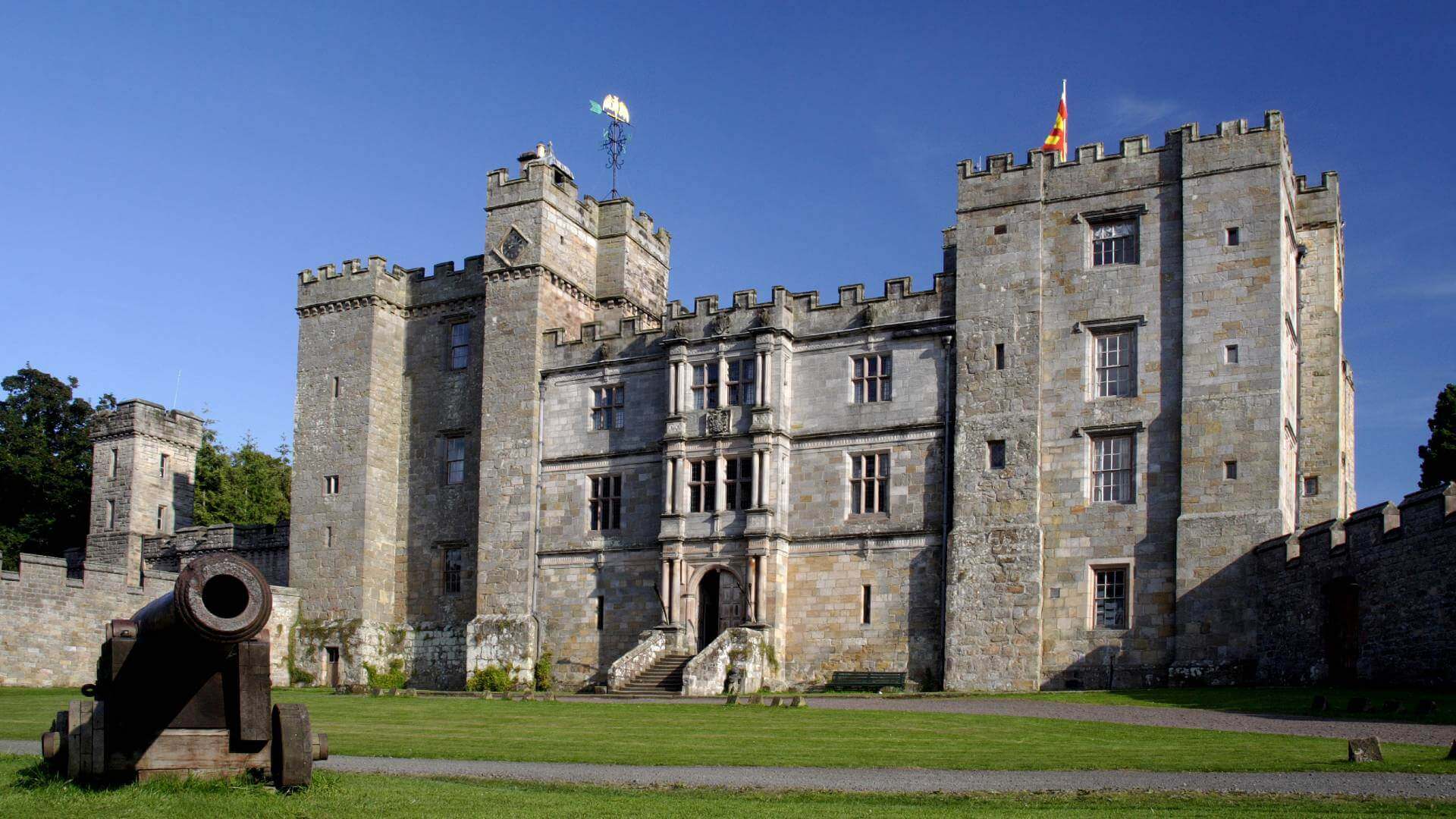
A visitor walking the inner courtyard of Houska Castle for the first time notices the wrongness within minutes. The keep is heavily walled. The chapel is reinforced. The structure is unmistakably defensive in character. But the strength of the walls sits in the wrong places. There is no commanding view of any approach, because there is no approach to command. The castle was built deep inside a sandstone forest, on a low spur of rock that offered nothing tactical, on land that connected to no trade route and no contested border. Whoever built Houska was not thinking about attackers.
The architectural choice that defines the castle is the placement of its chapel. The Chapel of the Archangel Michael sits directly above a natural fissure in the limestone bedrock — a vertical fault in the rock that locals had known about for centuries before the first stone was laid. There is no crypt beneath the chapel and no foundation hollow. The altar is mounted on bare rock, at the precise point where the fissure opens. The choice of saint is specific. Michael is the archangel who threw Satan out of heaven. He is invoked in Catholic liturgy for the protection of souls and the sealing of evil. In medieval Bohemia, where the consecration of ground was a serious theological act, you did not pick Michael by accident.
This is the central fact of Houska Castle, and it has remained the central fact for seven hundred years. A Bohemian king commissioned a major fortified stone structure in deep forest, with no military function, and placed an altar dedicated to the archangel of expulsion on top of a hole in the ground. Everything else about the castle — the inward orientation of its strongest features, the absence of a well, the frescoes inside the chapel showing combat with demons — flows from that one decision. The legend wrote itself because the building was made to contain it.
King Ottokar II and the Construction of Houska Castle in the 1270s
Ottokar II Přemysl was the wealthiest monarch in 13th-century Central Europe. He ruled Bohemia from 1253 until his death at the Battle of Marchfeld in 1278, and at his height his territories ran from the Sudetes to the Adriatic. He was called the Iron and Gold King for his armies and his silver mines. He built castles compulsively — over thirty during his reign — and most of them sit at strategic points: river crossings, mountain passes, border heights overlooking contested ground.
Houska is not one of those.
The site Ottokar chose lies in the Kokořínsko, a region of folded sandstone forest and quiet meadows that has never carried significant traffic. The castle does not sit on a road. It does not guard a pass. The nearest medieval settlement of any size was Bezděz, about a day’s ride east, where Ottokar built a much larger and more conventional fortress on a commanding volcanic peak. Bezděz makes sense as a piece of military architecture. Houska does not. The standard explanation given by 19th-century Czech historians — that it was an administrative seat for managing royal forests — does not survive a walk around the building. The chapel and the keep are too elaborate and the location is too useless for that.
The construction period is dated by surviving documents and architectural analysis to roughly the late 1270s, completed during or shortly after the period of Ottokar’s reign. By the time the work was finished, Ottokar himself was dead on the field at Marchfeld, killed by Rudolf of Habsburg in a battle that ended Bohemian dominance in Central Europe. The castle he commissioned in the empty forest outlived him. It also remained, for the better part of a century, almost empty. No major household ever made Houska a primary seat. There is no record of a great noble feast held in its halls, no significant marriage celebrated there, no royal visit of consequence. Ottokar’s strange castle stood in the forest with a small caretaker garrison and the chapel.
That absence is itself a clue. Bohemian aristocrats did not generally let usable fortresses sit unused. Either Houska was not usable as a fortress — which the architecture suggests — or it was being used for something the records did not describe.
The Bottomless Pit Beneath the Chapel and the Legend of the Sealed Hellmouth
The legend of Houska is older than the castle. Local Czech folklore from the Kokořínsko records, in versions transmitted orally and later set down by 18th and 19th-century chroniclers, that a deep fissure existed in the rock at the site before any building stood there. The locals called it the pit, and the stories said that creatures emerged from it at night.
The creatures were not described as fully human or fully animal. They were half-things — bodies with the wrong limbs, faces that approximated faces — and they came out of the pit, hunted in the surrounding forest, and returned before dawn. Villagers who walked too near the pit at the wrong hour did not always come home. The folklore is consistent across the region: the pit could not be filled with earth or stone because whatever was thrown in came back up.
The Condemned Prisoner Lowered on a Rope
The most famous Houska story attaches to the early phase of the castle’s construction. A man under sentence of death was brought to the site. He was offered a deal. He would be lowered into the pit on a rope, before the chapel cap was placed, and if he returned alive with an account of what was down there he would receive a full pardon.
He took the offer.
The rope was paid out. Within a short time the man at the bottom began screaming. His screams were not coherent words. They were the noises of an animal in extreme distress. The men at the surface hauled the rope up as fast as they could.
The man who came back up was not the man who had gone down. His hair, dark when he descended, had turned white. He was an old man in appearance, though he had been in his twenties or thirties an hour before. He could not speak. He lived for a few weeks afterwards, in a state his keepers described as agitated madness, and then he died.
There is no documentary proof of this story. There is no parish record, no death notice in a chronicle, no name attached to the prisoner. The story is folklore. What is documented is that the legend was already circulating in the Kokořínsko in written form by the 17th and 18th centuries, attached specifically to Houska, and that it has been the central story of the castle ever since. The building shaped the legend; the legend shaped how the building was used.
Why the Chapel of Saint Michael Was Built Directly Over the Pit
The medieval theological logic of capping a hellmouth with a chapel was internally consistent. Sacred ground, in pre-Reformation Catholic understanding, was active. The consecration of a church involved specific liturgical actions intended to make the physical space hostile to demonic presence. A chapel dedicated to Michael was not symbolic decoration. It was, in the minds of the men who built it, a working defensive instrument.
The architecture supports this reading. The chapel walls at Houska are thicker than they need to be for the building’s modest size. The altar is anchored on bedrock with no air gap beneath it. The orientation is unusual: the entrance does not face the cardinal directions in the conventional manner of medieval Bohemian churches. The placement reads as a structural decision designed for a single purpose, and that purpose is announced by the saint to whom the chapel is dedicated.
If you accept the medieval premise — that a fissure in the rock was understood by the local population to be a portal for demonic entities, and that the king had been petitioned to do something about it — every architectural feature of Houska becomes explicable. The remote location keeps the problem far from major settlements. The lack of a well means no permanent garrison and no military purpose; the building exists for the chapel. The inward orientation of certain defensive features makes sense if the threat was understood to be coming from the inside.
The premise does not have to be true. It has to have been believed.
The Unique Gothic Frescoes Painted on the Walls of Houska’s Chapel
Inside the Chapel of Saint Michael, the walls are covered in 14th-century Gothic frescoes that have no equivalent in any other surviving Bohemian sacred space.
Most medieval Czech church frescoes show the standard programme of saints, biblical scenes, and donor portraits. The Last Supper. The Crucifixion. Local patrons kneeling at the feet of the Madonna. The chapel walls at Houska show something else entirely. The principal scenes depict combat — angelic figures armed with swords and lances, striking down creatures that are not the standard devils of medieval Christian iconography. They are stranger than that. They have animal heads and human bodies, or human heads and bestial limbs. They are painted in postures of falling, fleeing, and being driven downward.
The Left-Handed Female Centaur Drawing a Bow
The most discussed image in the chapel is a fresco of a centaur. The figure is female, the only female centaur known in medieval Bohemian sacred art. She is drawing a bow. She is drawing it with her left hand.
Medieval iconography is not casual about handedness. The left side, in Christian symbolic language, is the side of the damned at the Last Judgement; the sinister hand is the demonic hand. A female centaur with a drawn bow in her left hand is, in 14th-century Catholic visual logic, an unmistakably demonic figure. Czech art historians who have studied the chapel have read the figure as an emblem of pagan or pre-Christian danger, painted on the wall specifically because the wall is part of the cap.
The frescoes are not decorative. They are programmatic. They constitute a sustained visual statement that the interior of this chapel is hostile ground for evil. Every painted scene reinforces the function of the chapel itself: the suppression of whatever is beneath the floor.
The Programmatic Iconography of Containment
The rest of the chapel walls support the centaur. Archangels appear repeatedly. Saint Michael himself is depicted in armour, striking downward. There is a fresco of the apocryphal story of the war in heaven, with angels driving the rebellious host into a chasm. The visual logic of the chapel reads as a closed circuit: every scene depicts the defeat of demonic creatures by angelic ones, and every defeat moves the demonic figures downward, toward the floor, toward the bedrock, toward the fissure beneath the altar.
The painters of these frescoes are not named. They worked roughly a century after Ottokar’s reign, in the mid-14th century, which means the chapel was repainted under a later Bohemian king who chose to reinforce the original consecration with a coordinated cycle of containment imagery. Two generations of Czech monarchs invested in this building, neither of them used it as a residence, and the only major artistic programme inside it concerns the suppression of demonic forces. The pattern is too consistent to be coincidence.
The Wehrmacht Occupation and the Nazi Occult Episode at Houska Castle
The German army took Houska in 1939, in the wake of the dismemberment of Czechoslovakia and the establishment of the Protectorate of Bohemia and Moravia. The castle was held by Wehrmacht units for most of the war. What they did there is partially documented and partially the subject of speculation that has run well ahead of the evidence.
The Verified Military Use of Houska Castle During the Second World War
The documented record is straightforward. A small German garrison was stationed at Houska. The castle was used as an administrative outpost and, by some accounts, as a storage facility. There are references in surviving Czech regional records to the construction of small experimental workshops on the grounds, though the nature of the work is not specified. The castle was returned to Czech hands after liberation in 1945, in damaged but not destroyed condition.
That is what is solidly attested.
The Ahnenerbe, Himmler’s Occult Bureau, and What Cannot Be Confirmed
The Ahnenerbe was Heinrich Himmler’s research institute, founded in 1935 as an academic-occult arm of the SS, dedicated to the recovery of supposed Germanic, Aryan, and esoteric heritage across the Reich and beyond. Its investigators ranged from Tibet to Iceland, looking for evidence of ancient racial superiority, lost civilisations, occult power. They had a documented interest in folklore sites across occupied Europe, and Bohemia was within their territory.
The popular postwar narrative is that the Ahnenerbe identified Houska as a site of supernatural significance, conducted experiments there during the occupation, and that bodies of SS officers were found in the chapel after liberation. The story has been repeated in Czech ghost-hunter literature and in international occult-history paperbacks for decades.
The evidence is thin. There is no surviving Ahnenerbe document specifically identifying Houska as an active research site. The reports of bodies in the chapel come from secondary sources written long after 1945. The most credible reading of the wartime episode is that German troops occupied a strange castle that already carried a heavy local reputation, and that the postwar telling of their occupation has been elaborated by the same folkloric instinct that shaped the medieval legends.
That instinct is not a flaw. It is what Houska does to its occupants. Whatever the building’s actual function in the 1270s, whatever the actual interest of the Ahnenerbe in the 1940s, the castle has, over and over, attracted the kinds of stories that match its architecture. The Wehrmacht episode is the most recent chapter in a pattern that runs back to Ottokar.
Houska Castle Today and the Czech Heritage of Belief
The castle is privately owned. It was returned to the Šimonek family, who had held it before the German occupation, after the fall of communism in 1989, and they have spent more than three decades restoring it. The building is structurally sound, the frescoes have been stabilised, and the grounds are open to visitors from spring through autumn. Houska sits about an hour’s drive north of Prague, near the village of Blatce in the Liberec Region. The road in is narrow and winds through pine forest.
The visitor experience is unsensational. A guide takes small groups through the keep, the residential rooms, and the chapel. The frescoes are explained without melodrama. The pit is mentioned, and the floor of the chapel is pointed out, and the visitor is told what the local population believed in the 13th century. There is no theme-park overlay. The Šimoneks have made a conscious decision to let the building speak.
Standing in the chapel in mid-afternoon, with sunlight angling through the small high windows onto the bedrock floor, the visitor confronts the same question every visitor has confronted since Ottokar’s masons set the altar stone. The building was made by serious men to do a specific thing. The legend explains what they thought they were doing. The architecture confirms it. Whether what they were containing was real or whether it was the product of a belief so strong it shaped a king’s commission, the building remains, and the building still feels wrong in the way it was made to feel wrong.
Houska sits within a Czech landscape that takes belief seriously. The Sedlec Ossuary to the southeast is decorated in human bone by a Cistercian monk who interpreted scripture literally. Prague is a city whose oldest quarter records ghost stories in the names of its streets. The Kokořínsko forest itself, in which Houska sits, is one of the densest concentrations of medieval and early modern folklore in the country. The castle is not an aberration in this landscape. It is the most exposed instance of a pattern that runs through Bohemian sacred architecture: the conviction that buildings can hold things in.
The more famous Carpathian cases run the other way. Bran Castle stood as a Transylvanian customs fortress for five centuries before an Irish novelist who never set foot in Romania grafted Dracula onto its walls. The fortress came first; the legend, much later. Houska is the inverse. The pit in the rock was already known to the Kokořínsko’s villagers when Ottokar’s masons arrived, and the building that rose around it was shaped to match what the locals said was there. Most haunted castles inherit their ghosts. Houska was built to one.
The chapel doors close at five in the afternoon, and the visitor walks back across the courtyard to the road. The pine forest absorbs the sound. The frescoes stay on the wall behind the closed door, and the altar remains anchored on the rock, and whatever is or is not in the fissure beneath it continues to be exactly what it has been for seven hundred years.
Frequently Asked Questions About Houska Castle
Where is Houska Castle located?
Houska Castle stands in the Kokořínsko region of northern Bohemia, in the Czech Republic, about sixty kilometres north of Prague near the village of Blatce in the Liberec Region. The coordinates are approximately 50.4880° N, 14.6094° E. It is reached by a narrow road through pine forest and is open to visitors from spring through autumn.
When was Houska Castle built and by whom?
The castle was commissioned by King Ottokar II Přemysl of Bohemia and completed in the late 13th century, during or shortly after his reign of 1253 to 1278. Ottokar was killed at the Battle of Marchfeld in 1278 by Rudolf of Habsburg, and the castle was finished in the years immediately surrounding his death. The construction is documented through architectural analysis and a small number of surviving royal records.
Why is Houska Castle called the gateway to hell?
Local Czech folklore predating the castle’s construction held that a deep fissure in the bedrock at the site was a portal from which demonic creatures emerged. King Ottokar II is said to have built the castle, and specifically its Chapel of the Archangel Michael, to seal the pit. The chapel altar is mounted directly on the bedrock at the point where the fissure is believed to lie. Saint Michael is the archangel traditionally invoked against demonic forces in Catholic liturgy.
What is the story of the condemned prisoner at Houska Castle?
According to a Bohemian legend attached to the early phase of the castle’s construction, a man under sentence of death was offered a pardon in exchange for being lowered into the pit on a rope to report on its contents. He began screaming within minutes. When he was pulled back up, his hair had turned white and he could not speak. He died a few weeks later in a state of madness. The story is folklore rather than documented history, but it has been the central legend of Houska since at least the 17th century.
What did the Nazis do at Houska Castle?
The Wehrmacht occupied Houska Castle from 1939 to 1945 during the German occupation of Czechoslovakia. It was used as an administrative post and possibly for storage and small workshops. Claims that the Ahnenerbe, Heinrich Himmler’s occult research institute, conducted supernatural experiments at the site are widely repeated but poorly documented. The most credible reading is that German troops occupied a castle with an existing supernatural reputation, and that the postwar telling of their occupation has been heavily embellished.
Can you visit Houska Castle today?
Yes. Houska Castle is privately owned by the Šimonek family, who recovered it after the fall of communism in 1989 and have spent decades restoring it. The castle is open for guided tours from spring through autumn, with limited weekend hours during shoulder seasons. The chapel, the keep, and the frescoes are accessible to visitors. The grounds host occasional cultural events and overnight stays in the summer months.
Sources
Tajemství hradu Houska — Václav Cílek (2007)
Encyklopedie českých hradů — Tomáš Durdík (2000)
Ilustrovaná encyklopedie českých hradů — Tomáš Durdík (1999)
Hrady, zámky a tvrze v Čechách, na Moravě a ve Slezsku, Volume III (Severní Čechy) — edited by Rudolf Anděl (1984)
Přemysl Otakar II.: Král na rozhraní věků — Josef Žemlička (2011)
The Premyslid Dynasty and Their Castles in Bohemia — Tomáš Durdík, Castellologica Bohemica (1989)
The SS Ahnenerbe: A History of the Nazi Occult Research Institute — Heather Pringle (2006)
Czech Gothic Wall Painting in the 14th Century — Jan Royt, Charles University Press (2003)
Folklore of the Kokořínsko Region — Czech Academy of Sciences ethnographic survey records (various dates)
National Heritage Institute of the Czech Republic entry: Hrad Houska — Národní památkový ústav
Hrad Houska official site documentation — Šimonek family ownership records (post-1989)
Bezděz and Houska: Two Castles of Ottokar II in Northern Bohemia — Castellologica Bohemica, comparative architectural study