Karosta Prison Architecture: Sensory Deprivation and Design
Smells of the Red Brick Infirmary: Iron and Damp Concrete
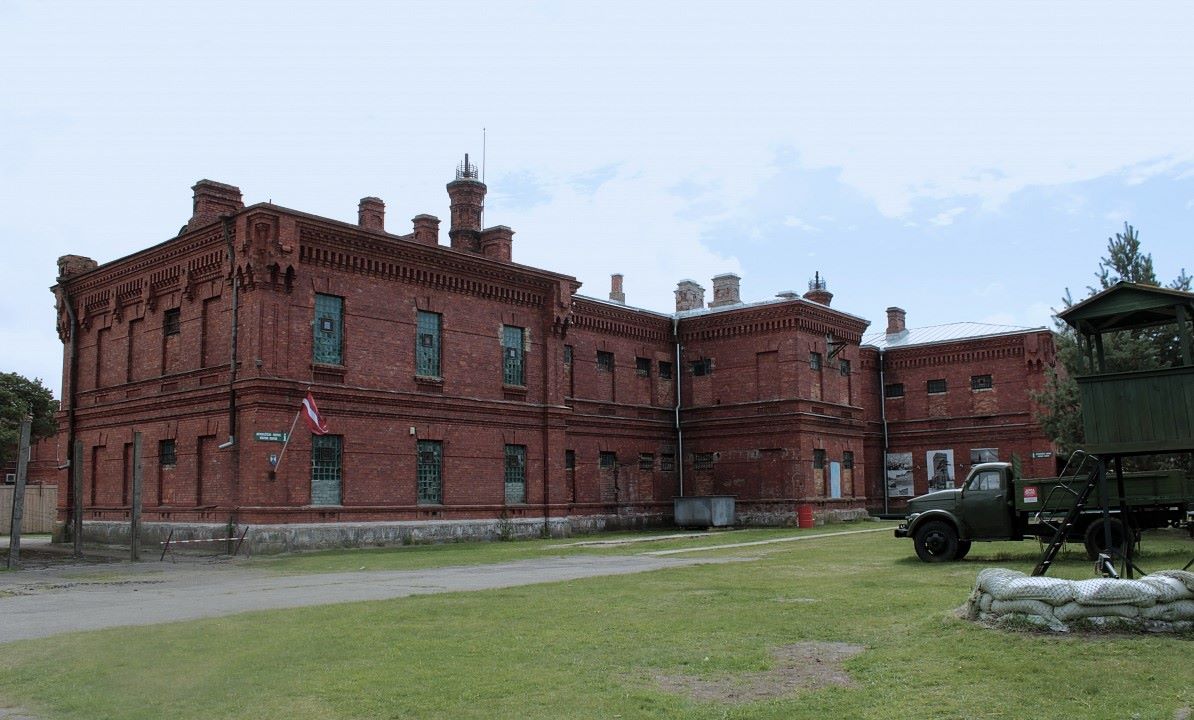
The smell of damp concrete and oxidized iron hits you before you even cross the threshold. Built at the dawn of the 20th century, the structure was originally intended to be a state-of-the-art military hospital for the Russian Empire’s Baltic Fleet. Instead, the high, arched windows were bricked over with jagged masonry, and the interior was painted a suffocating, light-absorbing black.
By 1905, the first influx of prisoners arrived—not patients seeking healing, but rebellious sailors from the Revolution who were beaten into submission within these walls. The transition from a house of healing to a house of breaking was seamless and total.
Today, the air remains thick with a cold, metallic moisture that feels like breathing in the residue of a rusted cage. It is a scent that never leaves the fabric of your clothes, a physical reminder of the 90 years of misery contained within these four-meter-thick walls. There is no insulation from the Baltic winter; the wind outside howls through the gaps in the outer fortifications, but inside, the air is stagnant and mute.
Acoustic Torture: The Sound of Silence in Karosta
The silence in the corridors is a heavy, engineered vacuum designed to fracture the mind. In its operational prime, Karosta was a site of total sensory deprivation. Guards wore soft-soled boots to ensure prisoners never heard them approaching the "eye" of the cell door—a tiny, brass-rimmed aperture used for constant, unblinking surveillance. The only sound that punctured the stillness was the rhythmic, metallic clang of the heavy iron doors, a sound that signaled either the arrival of a meager ration or the beginning of an interrogation.
The History of Karosta: From Tsar Alexander III to the Soviet Union
Construction of the War Port: Alexander III’s Naval Fortress
Tsar Alexander III ordered the construction of Port Imperatora Aleksandra III in 1890 as a strategic hub for the Russian Navy. This was not merely a naval base; it was a closed, self-sustaining city designed to house 20,000 military personnel and their families. It boasted its own ornate Orthodox cathedral, schools, a post office, and a complex electrical grid that was decades ahead of the surrounding Latvian countryside. Karosta—derived from the Latvian Kara osta meaning "War Port"—was meant to be an impenetrable bastion of Russian power on the Baltic Sea.
The prison was the city’s shadow, a necessary "disciplinary" tool to maintain order among the thousands of sailors stationed at the edge of the Empire. The grand architecture of the officers' quarters stood in stark, ironic contrast to the red-brick detention center, proving that in the Tsar’s vision, the line between elite service and criminal incarceration was razor-thin.
Occupations and Regimes: How Karosta Survived Three Empires
The prison functioned under four distinct regimes: Tsarist Russia, Independent Latvia, Nazi Germany, and the USSR. While the flags on the masthead changed, the methodology of the prison remained remarkably consistent. It was a short-term disciplinary facility where the goal was not rehabilitation, but the total breaking of the human spirit through systematic cruelty.
During the Nazi occupation from 1941 to 1944, the facility became a transit point for the doomed, a site for mass executions of "deserters" and political dissidents. When the Soviets returned in 1945, they utilized the same cold cells and the same iron rings in the walls to house those deemed "enemies of the state." The transition of power in the Baltic was always written in blood, and Karosta was the inkwell. The Russian military finally withdrew in 1994, leaving behind a structure that had outlasted every empire that tried to claim it.
Timeline of Incarceration: Major Events at Liepāja Prison
The 1905 Revolution: The First Executions at Karosta
The 1905 Russian Revolution transformed Karosta from a disciplinary barracks into a site of active slaughter. Sailors of the Baltic Fleet, inspired by the uprising in St. Petersburg, turned against their Tsarist officers. The response from the Empire was swift and merciless. Hundreds of sailors were rounded up and shoved into the newly converted infirmary cells. The bricked-up windows were a direct response to the uprising—a way to ensure the rebellious screams of the tortured did not reach the ears of the soldiers still stationed in the courtyard. These men were the first to experience the "Special Regime," a protocol of sleep deprivation and physical labor that would define the prison for the next century. The courtyard, once intended for parades, became a makeshift firing range where the ringleaders of the mutiny were executed against the red brick walls.
Nazi Occupation 1941-1945: The Baltic Fleet Purge
When the Wehrmacht rolled into Liepāja in June 1941, Karosta became a slaughterhouse for the Third Reich. The Nazi regime utilized the prison’s isolation to conduct "cleansing" operations. Thousands of Soviet prisoners of war and local Latvian resistance fighters were funneled through the gates. The Nazis added a new layer of terror: the systematic use of the basement levels for "interrogations" that rarely ended in a return to the cells. Documented accounts from this era describe the courtyard as being permanently stained with the grey dust of the lime used to cover the bodies of the executed. The prison was no longer just a place for soldiers; it was a factory for the erasure of anyone who dared oppose the New Order. By the time the Soviets pushed back the front line in 1944, the prison had seen more death in four years than it had in the previous forty.
Soviet Cold War Era: The "Gates of Hell" and the KGB
Under Soviet rule, Karosta became a specialized engine of terror. The inmates—often young conscripts or political dissidents—nicknamed the facility the "Gates of Hell" for a reason. The Soviet guards, overseen by the KGB’s military counter-intelligence wing, used the prison to suppress any hint of Latvian nationalism or ideological deviation.
The cruelty was political. If a sailor was caught listening to foreign radio or speaking Latvian instead of Russian, he was sent here to be broken. The Soviets viewed these men not as soldiers who made mistakes, but as ideological viruses. The interrogations were designed to extract "confessions" that would implicate others, creating a web of paranoia that kept the Baltic Fleet in a state of constant fear until the very day the Russian military left in 1994.
Prison Life and Discipline: Soviet Terror Inside the Cells of Karosta
The Soviet "Earthquake": A Methodology of Physiological Collapse
The primary method of discipline utilized by Soviet guards in Karosta was a choreographed physiological assault known as the earthquake. This was not a random act of violence, but a calculated Soviet stress exercise designed by the military apparatus to destroy a prisoner's ligaments and will.
Prisoners were forced into the squat-stand position: knees bent at a 90-degree angle, backs pressed flat against the abrasive concrete wall, and arms locked straight out in front of them. Soviet guards forced them to hold this position for hours under constant verbal abuse. If a man’s legs trembled or he collapsed from exhaustion, the guards would initiate the earthquake—a chaotic period of physical violence or the hosing down of the cell with freezing Baltic seawater.
This geometry of pain was a signature of Soviet military discipline, intended to turn the prisoner’s own body into his primary torturer. The goal was total muscular failure and the psychological realization that no part of one's own anatomy was under their own control, but belonged entirely to the Soviet State.
Soviet Standards of Degradation: Hunger and Hygiene in Cell Block 2
Life in the general population cells under Soviet administration was a masterclass in the systematic degradation of human dignity. Each cell, roughly 15 square meters, was packed with up to 24 men, a density specifically maintained by the Soviet wardens to ensure constant friction and lack of sleep. There were no beds, only slanted wooden pallets that offered no protection from the rising damp of the floor.
The Soviet daily ration consisted of 300 grams of black bread and a thin, watery gruel, totaling less than 1,200 calories—half of what is required for a man performing the hard labor demanded by the guards in sub-zero temperatures. Hygiene was non-existent by design.
Soviet protocols allowed prisoners only one sanitary walk a day, lasting exactly five minutes, to use a communal latrine that was frequently overflowing. The stench of unwashed bodies, gangrene, and human waste created a toxic atmosphere that led to frequent outbreaks of tuberculosis, which the Soviet administration often left untreated as a secondary form of punishment. In Karosta, the Soviet system ensured you did not just lose your freedom; you lost your health, your identity, and your humanity.
Karosta Today: Legends and the Business of Dark Tourism
The White Lady Ghost: Folklore of the Liepāja Prison
The legend of the "White Lady" is a sociological artifact of the prison’s long history of unresolved trauma. According to local folklore, a young woman whose fiancé was executed in the prison hanged herself in her cell, and her spirit remains trapped in the dark corridors. While modern skeptics dismiss these claims, the persistence of the story among the guards and locals highlights the psychological weight of the site. The "ghost" is a human metaphor for the thousands of families who lost loved ones to the "Black Hole" of Karosta. It represents the lingering, unacknowledged grief of a century of military occupation. In a place where so many were erased without a trace, the mind creates specters to fill the void. The haunting of Karosta is not supernatural; it is the inevitable byproduct of a site where the walls have absorbed too much misery to ever be truly empty.
Preservation and Tourism: How Karosta Remembers the Iron Curtain
Since its public opening in 1997, Karosta has become a lightning rod for the ethics of "Dark Tourism." The facility was preserved exactly as it was found: the peeling paint, the Soviet propaganda posters, and the scratched-in graffiti of the final inmates remain untouched. Unlike traditional museums that sanitize the past, Karosta embraces the rot. It has shifted from a site of genuine terror to a site of "extreme experience," where the history of the Baltic’s occupation is sold as a commodity. This transition reflects a broader trend in post-Soviet states—the need to monetize the scars of the past to fund the preservation of the truth. Karosta is no longer a prison for the body, but it remains a prison for the memory, ensuring that the brutal efficiency of the 20th century is never forgotten.
Travel Guide for Karosta Prison: Tours and Extreme Stays
Preservation and Tourism: How Karosta Remembers the Iron Curtain
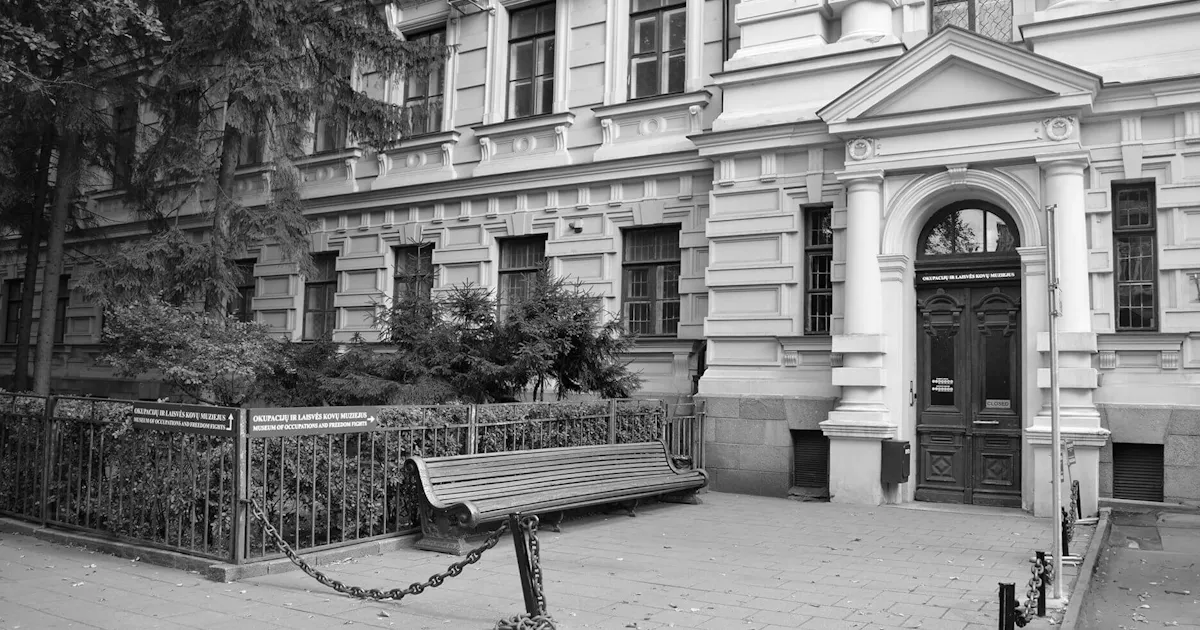
Since its public opening in 1997, Karosta has become a lightning rod for the ethics of dark tourism. It stands as a grittier, more stagnant counterpart to Lukiškės Prison in Vilnius, Lithuania. While both were massive carceral complexes built by the Russian Empire and utilized by the Soviets, their modern paths have diverged. Where Lukiškės has been repurposed into a vibrant cultural hub for concerts and art—masking its brutal history with modern utility—Karosta refuses to heal.
It has shifted from a site of genuine terror to a site of "extreme experience," where the history of the Baltic’s occupation is sold as a commodity. This transition reflects a broader trend in post-Soviet states—the need to monetize the scars of the past to fund the preservation of the truth. Karosta is no longer a prison for the body, but it remains a prison for the memory, ensuring that the brutal efficiency of the 20th century is never forgotten.
How to Visit Karosta: Logistics for Travelers to Liepāja
Visiting Karosta requires a deliberate journey to the western edge of Latvia, a place where the landscape still feels scarred by the Cold War. From Riga, the capital, it is a 3-hour drive or a bus journey to Liepāja. Once in the city, you must cross the Oskars Kalpaks bridge—a massive steel swing bridge designed by Gustave Eiffel’s workshop—to enter the Karosta district. The prison is located at Invalīdu iela 4.
Tours are conducted daily, but the real draw is the Extreme Night stay. For a fee, you are stripped of your phone, your dignity, and your comfort. You are processed as a prisoner, shouted at in Russian-accented commands, and forced to sleep on a wooden pallet. It is a grueling, uncomfortable experience that costs roughly 15.00 EUR, a small price to pay for a window into a nightmare.
Ethics of Dark Tourism: Experiencing Historical Trauma
Standing in the courtyard of Karosta presents a profound ethical dilemma for the modern traveler. There is a jarring dissonance between the "game" played by the tour guides—who dress in Soviet uniforms and bark orders—and the reality of the men who were actually murdered on that spot. To visit Karosta is to participate in a form of historical voyeurism. You must ask yourself: is role-playing a prisoner a form of empathy, or is it a trivialization of a century of pain?
The psychological impact of the site is undeniable. Even the most cynical visitor will find their breath catching in the solitary confinement wing. The ethics of Karosta lie in the silence after the tour ends—the moment you step back into the sunlight and realize that, unlike the men of 1905, 1941, or 1970, you have the privilege of walking away.
FAQ
Why was Karosta called "The Gates of Hell"?
The nickname was coined by Soviet-era inmates who recognized that the facility was designed for maximum psychological trauma rather than long-term detention. Unlike standard labor camps, Karosta was a disciplinary "short-term" facility where Soviet guards could apply intense, concentrated brutality without the bureaucratic oversight of the broader Gulag system. It was a place of immediate, visceral breaking.
How does Karosta compare to Lukiškės Prison in Lithuania?
Both were commissioned by the Russian Empire and later weaponized by the Soviet Union to suppress Baltic independence. However, Lukiškės is a massive, multi-wing urban fortress in the heart of Vilnius that has since been "gentrified" into a cultural hub. Karosta, conversely, remains an isolated, decaying military outpost that has resisted modernization, offering a much more raw and physically demanding visitor experience.
Who were the primary targets of the Soviet regime at Karosta?
The prison primarily housed "unreliable" Soviet sailors, but it also functioned as a filtration point for Latvian civilians, dissidents, and "partisans" who resisted Soviet occupation. During the late Cold War, any military personnel suspected of having "Western sympathies" or possessing prohibited literature were sent here to undergo the Soviet "Earthquake" discipline.
Is the "Extreme Night" stay safe for everyone?
Physically, the experience is supervised, but psychologically it is designed to be distressing. Participants must be in good health, as the "Soviet guards" will force you to perform strenuous exercises and follow strict, aggressive military protocols in a cold, unheated environment. It is not recommended for those with claustrophobia or heart conditions.
What happened to the Soviet guards after the prison closed?
When the Russian military withdrew in 1994, many of the personnel returned to Russia, leaving the facility abandoned. Some former staff reportedly remained in the Liepāja area, but the specific identities of those who administered the most brutal punishments remain largely obscured by the chaotic nature of the Soviet collapse and the destruction of local military records.
Sources
- Karosta Prison Official Site — Karosta Rescue Society (2024)
- Dark Tourism: Karosta Prison — Peter Hohenhaus (2021)
- Latvia Travel: Karosta Prison — Investment and Development Agency of Latvia (2023)
- Lukiškės Prison 2.0: From Prison to Art — Lukiškės Prison Hub (2024)
- The History of the Baltic Fleet at Karosta — Military Heritage Tourism (2022)
- Soviet Legacy in Liepāja — Liepāja Tourism Information Center (2024)
- The 1905 Revolution in the Baltic — Ministry of Foreign Affairs of Latvia (2020)
- Closed Cities of the USSR: Karosta — Russia Beyond (2021)
- The White Lady of Karosta: Folklore and Fact — Liepāja Municipality (2024)
- Occupied Latvia: 1940-1991 — Museum of the Occupation of Latvia (2023)