The Birth of the Atomic Age at Trinity Site
The history of the world is divided into two distinct halves: the era before July 16, 1945, and the era that followed. At precisely 5:29:45 AM Mountain War Time, the desert floor of the Jornada del Muerto was subjected to a heat ten thousand times hotter than the surface of the sun. In that microsecond, the Trinity Site ceased to be merely a remote coordinate in the New Mexico basin and became the radioactive cradle of a new geological epoch—the Anthropocene. This was not merely a military test or a scientific milestone; it was the moment humanity acquired the agency of a cosmic force, possessing for the first time the specific, calculated means to orchestrate its own extinction. The site stands today as a silent, scorched testament to that transition, a place where the air itself was once set on fire, fundamentally altering the relationship between the human species and the planet it inhabits.
The Prophetic Silence of the Jornada del Muerto
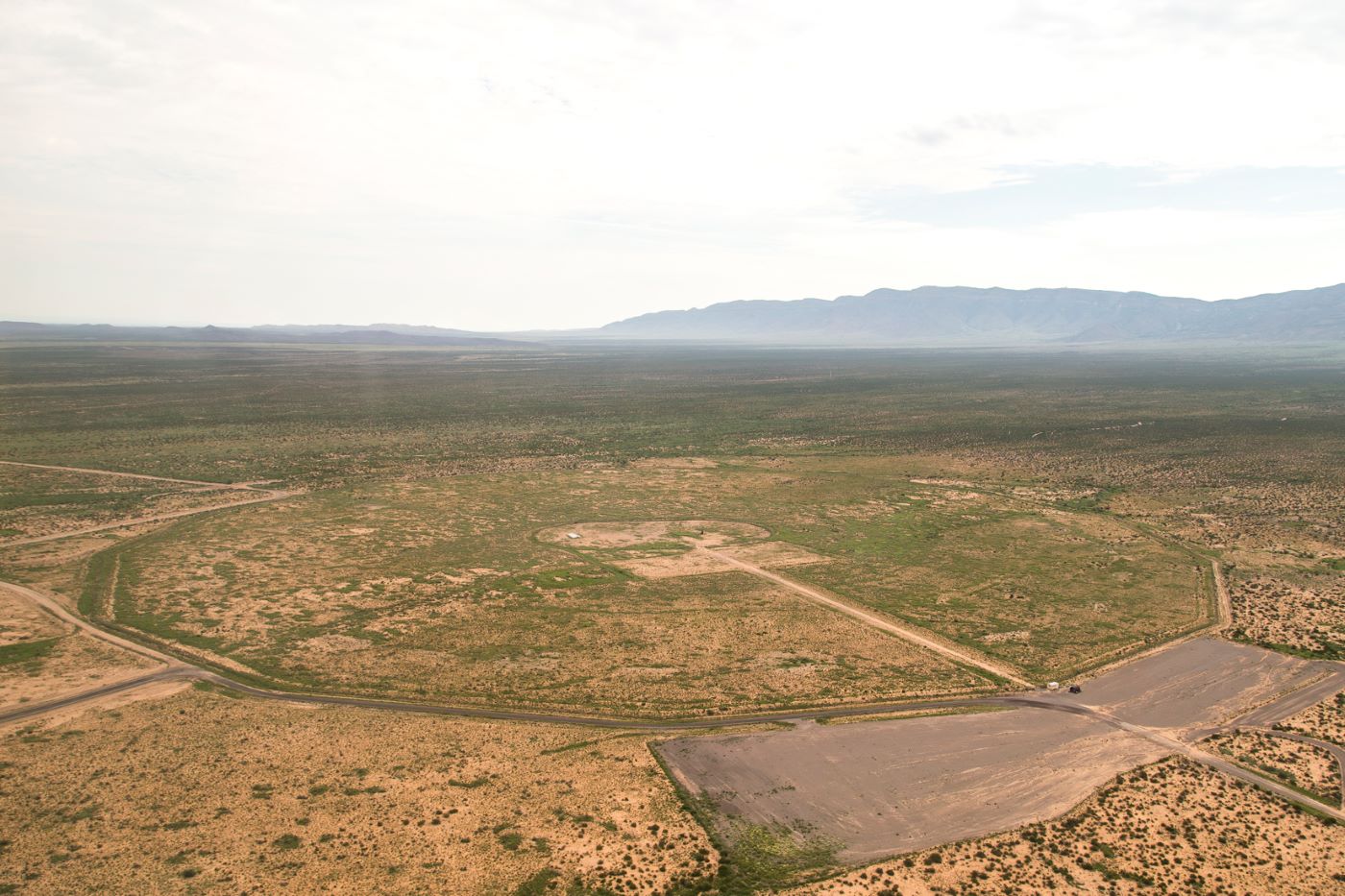
The selection of the Trinity Site was dictated by a paradoxical need for absolute isolation and extreme accessibility for the era's greatest minds. The Spanish name for this stretch of desert, Jornada del Muerto, translates to "The Journey of the Dead Man," an appellation earned centuries earlier by conquistadors who found its waterless expanse a graveyard for the unprepared. There is a chilling, poetic resonance in this naming. The "Dead Man’s Journey" became the staging ground for a device that would eventually place the entire global population on a similar precipice. The silence of this basin is profound; it is a natural amphitheater of scrub brush, yucca, and gypsum, bounded by the Oscura and San Andres mountains. To the scientists of the Manhattan Project, this isolation was a security requirement, but to history, it serves as a stark, empty canvas upon which the most violent act of creation was painted. The sociological weight of the site lies in its transformation from a forgotten colonial passage into the most significant square mile on Earth—a place where the silence of the desert was shattered by a sound so profound it was heard across three states, yet remained officially "explained away" as a remote ammunition dump explosion for weeks.
The Transmutation of Global Sovereignty
Before the detonation of "The Gadget," sovereignty was a matter of borders, steel, and manpower. After the flash at Trinity, the concept of national security was vaporized alongside the 100-foot steel tower that held the device. The Trinity Site represents the altar where the traditional rules of engagement were sacrificed for the doctrine of Mutually Assured Destruction. By proving that a single weapon could erase a city, the architects at Trinity fundamentally shifted the seat of global power from the battlefield to the laboratory. While the Trinity Site was the violent climax of the project, the intellectual and logistical machinery that powered it was housed 200 miles to the north in Los Alamos. The site is a monument to this invisible shift. Visitors today do not see a grand fortress or a bustling command center; they see a modest stone obelisk marking a shallow depression. However, the intellectual gravity of this location is immense. It is where the "Great Powers" were redefined, not by the land they could hold, but by the fire they could command.
The Strategic Necessity: Why Trinity Had to Happen
The Trinity test was born from a desperate technical uncertainty. While the uranium bomb (Little Boy) was a relatively simple "gun-type" design that scientists were confident would work without a test, the plutonium-based "Fat Man" device relied on a complex implosion method that had never been proven. In early 1945, the Manhattan Project was a multi-billion dollar gamble. If the implosion failed over Japan, the United States would not only lose its most expensive weapon but would literally hand the Japanese military a gift of several kilograms of weapons-grade plutonium.
The Scientific "Fizzle" and the Pressure of Potsdam
The scientific community at Los Alamos was deeply divided on whether the "Gadget" would actually work. The complexity of the explosive lenses—required to compress a sphere of plutonium perfectly symmetrically—was so high that many, including the project's own explosives experts, feared a "fizzle." This term described a partial detonation where the conventional explosives go off but fail to trigger a full nuclear chain reaction. Beyond the technical doubt, there was intense political pressure. President Harry Truman was scheduled to meet with Joseph Stalin at the Potsdam Conference in July 1945. Truman delayed the meeting specifically to ensure he had the results of the Trinity test in his pocket. The success at Trinity was the ultimate "ace" in the emerging Cold War poker game, providing Truman with the diplomatic leverage to dictate the terms of the post-war world.
The Ethical Void of the 100-Ton Test
Prior to the actual nuclear detonation, the team conducted a "pre-test" involving 100 tons of high explosives laced with radioactive isotopes. This was done to calibrate instruments, but it also served as a dark rehearsal for the contamination to come. The scale of the 100-ton test was massive by any conventional standard of the time, yet it was a mere candle flame compared to what occurred on July 16. This preparatory phase highlights the cold, empirical nature of the Manhattan Project; the scientists were meticulously preparing to measure a phenomenon that many secretly hoped would be impossible. The ethical considerations of the fallout were largely secondary to the mechanical necessity of ensuring the weapon's reliability before its deployment on a human population.
The Timeline of the Manhattan Project’s Final Gamble
The countdown to the Trinity test was a period of sustained psychological and mechanical tension that stretched the limits of human endurance. For years, the Los Alamos laboratory had operated as a pressurized environment of theoretical physics, but as the components of the first plutonium bomb arrived at the Jornada del Muerto, the abstract became terrifyingly physical.
The McDonald Ranch House and the Assembly of the Gadget
Two miles south of Ground Zero stands the George McDonald Ranch House, a modest stone structure that served as the final assembly point for the bomb’s plutonium core. There is a jarring cognitive dissonance in the architecture: a rustic, four-room farmhouse, once the home of cattle ranchers, became the cleanest room in the world to house the most sophisticated weapon ever built. In the master bedroom, the windows were sealed with plastic and the floor covered in linoleum to prevent the desert dust from contaminating the "Gadget’s" delicate innards. On July 13, 1945, the hemispherical plutonium pits were driven to this house. The assembly was a high-stakes manual labor; scientists worked in silence, using simple hand tools to fit the core into its explosive casing. The house still stands today, preserved in a state of arrested development, a shell of 19th-century ranching life that briefly cradled the 20th century’s greatest secret.
05:29:45 AM: The Moment History Fractured
The final hours leading to the detonation were plagued by a violent lightning storm, threatening to prematurely trigger the electrical detonators or force a catastrophic postponement. Robert Oppenheimer, the project’s scientific director, watched the horizon with a fragility that mirrored the device itself. When the storm finally broke, the countdown resumed. At 5:29:45 AM, the firing circuit closed. In the first three milliseconds, a ball of fire expanded to 200 meters in diameter, glowing with a luminescence that turned the night sky into a mid-day glare perceived by observers 200 miles away. The physics were unprecedented: the pressure at the center of the blast reached 100 billion atmospheres. The light preceded the sound, a searing, silent flash that etched the shadows of the desert plants into the ground before the thunderous roar of the shockwave arrived, traveling at the speed of sound to flatten everything in its path.
The Post-Flash Psychological Fallout
The immediate aftermath of the blast was not marked by celebration, but by a profound, heavy silence among the observers at the S-10,000 bunker. Kenneth Bainbridge, the test director, famously turned to Oppenheimer and remarked, "Now we are all sons of bitches." While Oppenheimer later famously recalled the line from the Bhagavad Gita—"Now I am become Death, the destroyer of worlds"—the true psychological reality was one of cold, technical realization. The scientists had successfully "cracked the atom," but in doing so, they had opened a door that could never be closed. The men who stood in the New Mexico dawn realized that their success had rendered the world they knew obsolete. The celebratory mood was stifled by the weight of the realization that the weapon worked—and worked with a terrifying efficiency that exceeded many of their theoretical models.
The Physicality and Transmutation of the Blast Zone
To visit the Trinity Site today is to witness a landscape that was physically rewritten by heat and pressure. The blast did not just destroy; it transmuted. It altered the very atomic structure of the earth, creating new substances and leaving a permanent geological record of the explosion in the desert floor.
Trinitite: The Mineralogical Scar of a Man-Made Sun
The most tangible evidence of the Trinity blast is a substance known as Trinitite. As the fireball touched the ground, it sucked up thousands of tons of sand, melting it instantly into a liquid state. This molten silica rained back down, cooling rapidly into a vesicular, bottle-green glass that carpeted the crater floor. Trinitite is more than a curiosity; it is a mineralogical scar. It contains the isotopes of the original plutonium core and the steel of the tower, fused forever into the desert sand. While much of it was buried by the Army in the 1950s to reduce radiation levels for public visits, the ground at Trinity still glitters with small, forbidden fragments of this glass. It is a substance that does not exist anywhere else in nature in quite this form—a man-made gemstone of the apocalypse.
The Architecture of Erasure at Ground Zero
At the center of the Trinity Site sits a simple, dark lava-rock obelisk, marking the exact spot where the 100-foot steel tower once stood. The tower did not fall; it was vaporized. The heat was so intense that the massive steel girders were turned into a metallic gas, leaving only the reinforced concrete footings as stubs in the earth. The crater itself was roughly 330 feet wide and 10 feet deep, a shallow bowl created by the downward pressure of the blast. The architecture of the site is defined by this absence—an "erasure" of matter. To stand at the obelisk is to stand at the epicenter of a void where, for a fraction of a second, the laws of biology and chemistry were suspended in favor of high-energy physics.
The Human Cost: The Downwinders and the Locals
One of the most significant and long-suppressed chapters of the Trinity story is its impact on the local population. In 1945, the Manhattan Project officials estimated that there were no civilians within range of the blast. This was a catastrophic oversight. In reality, thousands of New Mexicans lived in small ranching communities and towns like Tularosa and Carrizozo, many within a 50-mile radius.
The Invisible Snow of Chupadera Mesa
The Trinity device was detonated on a tower, rather than high in the atmosphere, which meant it sucked an enormous amount of dust and debris into the radioactive fireball. This resulted in what can only be described as a "dirty bomb" effect. As the mushroom cloud drifted northeast, it deposited a thick layer of radioactive ash across the Chupadera Mesa. Local residents recalled "white ash" falling like snow on their cattle and into their open-air cisterns. At the time, they were told nothing. They continued to eat the meat from their livestock and drink the water from their roofs, unknowingly ingesting high concentrations of Iodine-131 and Plutonium-239.
The Legacy of the Tularosa Basin Downwinders
The long-term health consequences for these families have been devastating. For decades, residents of the Tularosa Basin have reported disproportionately high rates of rare cancers, infant mortality, and thyroid disorders. Unlike the victims of the Nevada Test Site, the New Mexico Downwinders were never officially recognized under the Radiation Exposure Compensation Act (RECA) for nearly eighty years. Their history is one of a "forgotten sacrifice," where civilian lives were treated as collateral damage in the rush to beat the Axis powers. The struggle for recognition and medical compensation continues to this day, framing the Trinity Site not as a historical park, but as an ongoing site of biological and social trauma.
Impact on Nature: The Scorched Ecosystem
The Jornada del Muerto may look barren, but it is a complex ecosystem of desert scrub, lizards, rattlesnakes, and migrating birds. The Trinity test was an unprecedented biological shock to this environment.
The Instantaneous Sterilization of the Soil
The heat of the explosion didn't just burn the surface; it sterilized the soil for feet below the ground. All microorganisms, seeds, and root systems at Ground Zero were destroyed instantly. For years after the test, the crater remained a literal dead zone where nothing would grow. The radiation also had immediate, visible effects on the local fauna. Observers noted that cattle in the path of the fallout plume developed white patches of hair where radioactive particles had burned their skin—a phenomenon the ranchers called "atomic singe."
Nature's Resilience in the Missile Range
Paradoxically, because the Trinity Site is now part of the highly restricted White Sands Missile Range, the surrounding thousands of acres have become a de facto wildlife refuge. Protected from urban development and hunting, the range is home to thriving populations of oryx (an African antelope introduced in the 1960s), mule deer, and coyotes. Nature has reclaimed the desert, but the radioactive isotopes remain. Studies of the local soil show lingering traces of Cesium-137 and Strontium-90, elements that have been integrated into the desert's nutrient cycle, ensuring that the legacy of July 16, 1945, is literally part of the DNA of the New Mexican wilderness.
Visiting the Site: What Remains Today
Visiting the Trinity Site is not like visiting a typical museum. It is a logistical challenge that requires patience and a willingness to follow strict military protocol.
Logistics of the Biannual Open House
The site is only open to the public twice a year—typically the first Saturday in April and the third Saturday in October. There are no tickets; instead, you must arrive at the "Stallion Gate" off Highway 380. Expect massive lines of vehicles stretching for miles as the Army conducts security sweeps on every visitor. You will be required to provide government identification and follow a strictly marked 17-mile drive through the missile range. Photography is permitted at Ground Zero, but strictly forbidden during the drive in, as you are passing through an active military installation.
Walking the Perimeter of Ground Zero
Once you arrive at the parking area, you walk a quarter-mile path into the inner fenced area. The primary feature is the Ground Zero Obelisk, a 12-foot tall marker made of black lava rock. Nearby, you can see a preserved section of the original crater floor, protected by a metal shelter to show what the Trinitite looked like before the Army buried most of it. You can also view "Jumbo," a massive 214-ton steel canister designed to contain the plutonium if the explosives failed. Its presence is a testament to the immense lack of confidence the scientists had in their own creation. The experience is somber, marked more by what is missing than what is there. The "100-foot tower" is now just four rusted stumps of steel in the ground.
Conclusion: The Eternal Shadow of the Gadget
The Trinity Site is not a relic of the past; it is a preview of a potential future. It remains a place of profound pedagogical value, serving as a physical reminder of the moment humanity’s reach exceeded its grasp. The obelisk in the New Mexico desert does not just mark a spot where a bomb went off; it marks the point where we lost our innocence regarding the permanence of our civilization. As the desert wind blows across the Jornada del Muerto, it carries the same dust that was once part of the first nuclear fireball. Trinity is the "Ground Zero" of our modern consciousness, an eternal shadow cast by a light that was, for one terrifying moment, brighter than a thousand suns.
FAQ
Is it safe to visit the Trinity Site today?
Yes, for the duration of the biannual open house. Radiation levels at Ground Zero are approximately ten times higher than natural background radiation, but a one-hour visit results in a dose of about one-half millirem. To put this in perspective, a typical chest X-ray is about 10 millirem, and a round-trip flight from New York to Los Angeles exposes a passenger to 5 millirem. The Army advises against spending more than a few hours at the site and strictly prohibits the ingestion of soil or Trinitite.
What was the yield of the Trinity explosion?
The "Gadget" detonated at Trinity had an explosive yield of approximately 21 kilotons of TNT (roughly 88 terajoules). While initial estimates by Manhattan Project scientists ranged from a "fizzle" to over 40 kilotons, the 21-kiloton measurement confirmed the terrifying efficiency of the plutonium implosion design. For context, this was significantly more powerful than the "Little Boy" uranium bomb dropped on Hiroshima, which yielded approximately 15 kilotons.
How did the Trinity Site get its name?
The name "Trinity" was bestowed by Robert Oppenheimer, the scientific director of the Manhattan Project. In a 1962 letter to General Leslie Groves, Oppenheimer explained that the name was inspired by the poetry of John Donne—specifically the "Holy Sonnet XIV" which begins with the line, "Batter my heart, three-person'd God." Oppenheimer’s choice reflected the deep psychological and philosophical weight he felt as the project moved from theory to reality.
Are there any photos of the actual Trinity explosion?
Yes, the Trinity test was the most photographed event in history up to that point. The military utilized over 50 different cameras operating at various speeds to capture the detonation from multiple angles. The most famous images are the high-speed "Berney" photos that show the fireball's initial expansion in millisecond increments. These photos were essential for scientists to calculate the yield and analyze the shockwave's behavior.
Why is the site only open twice a year?
The Trinity Site is located within the 3,200-square-mile White Sands Missile Range, an active military testing facility. The range is used year-round for missile defense testing and other high-security operations. The biannual open houses are carefully scheduled windows that allow for public access without compromising national security or the safety of the civilians entering a live fire range.
Are there any buildings left from 1945?
The most significant remaining structure is the George McDonald Ranch House, located two miles south of Ground Zero. This stone farmhouse, where the bomb’s plutonium core was assembled, has been restored to its 1945 appearance. At Ground Zero itself, only the concrete footings of the 100-foot tower and the massive "Jumbo" steel canister remain.
Who were the "Downwinders" of the Trinity Site?
"Downwinders" is the term used for the civilian populations in New Mexico who lived in the path of the radioactive fallout plume. Because the bomb was detonated on a 100-foot tower rather than high in the atmosphere, it pulverized and irradiated thousands of tons of soil, which then fell as radioactive ash across the Tularosa Basin and Chupadera Mesa. For decades, these communities have fought for recognition of the resulting cancer clusters and health complications.
Sources & Further Reading
- Trinity Site Official Historical Records - U.S. Army White Sands Missile Range (2023)
- The Manhattan Project: Making the Atomic Bomb - F.G. Gosling / U.S. Department of Energy (2010)
- The Tularosa Basin Downwinders Consortium - Tularosa Basin Downwinders (2024)
- Atomic Audit: The Costs and Consequences of U.S. Nuclear Weapons - Stephen I. Schwartz / Brookings Institution (1998)
- The Trinity Test: Eyewitness Accounts - Los Alamos National Laboratory Historical Archive (2022)
- Radiological Assessment of the Trinity Site - Centers for Disease Control and Prevention (CDC) (2014)
- Trinitite: The First Post-Nuclear Mineral - National Park Service (2021)
- Robert Oppenheimer: A Life Inside the Center - Institute for Advanced Study (2023)