
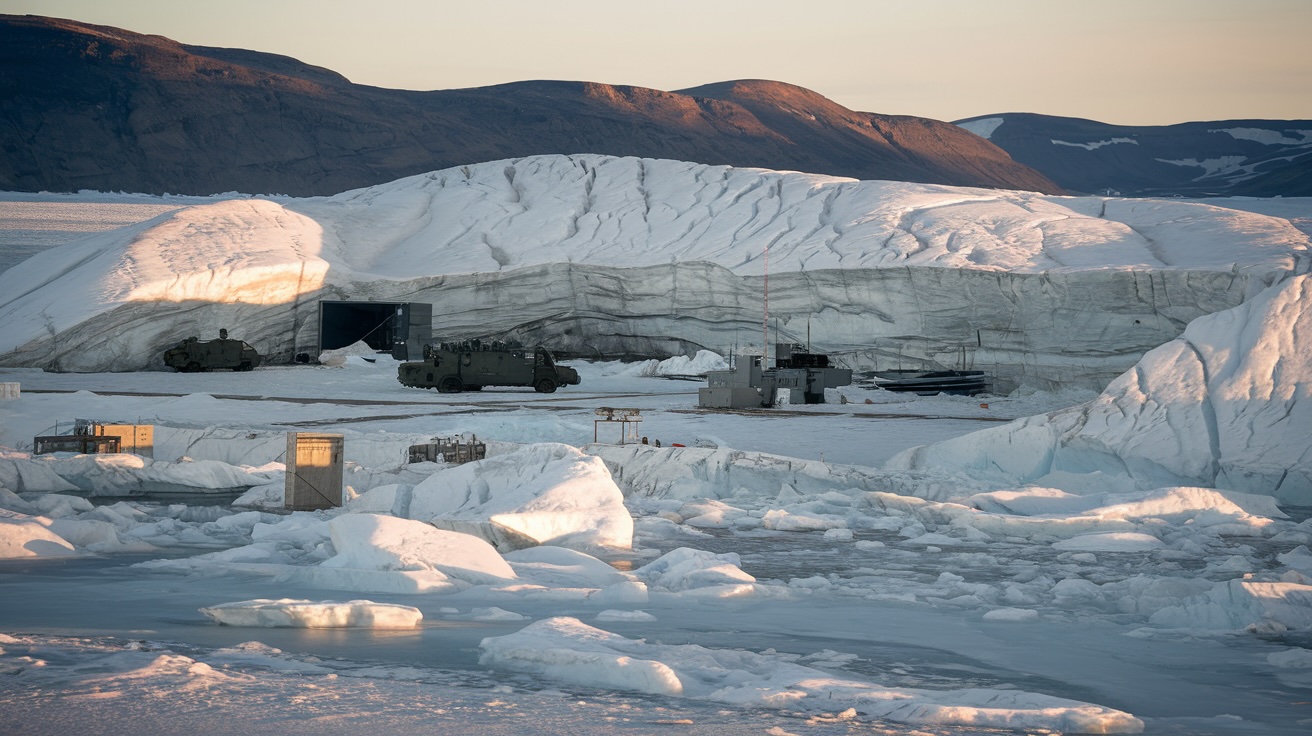
The Cold War was not a conflict of borders; it was a conflict of minutes. By 1958, the American mainland was thirty minutes away from total erasure, a reality ushered in by the Soviet launch of Sputnik and the subsequent development of Intercontinental Ballistic Missiles (ICBMs). This shifted the strategic center of the world from the Atlantic and Pacific oceans to the North Pole. On a traditional map, the U.S. and the USSR are separated by vast distances; on a polar projection, they are neighbors across a frozen fence. Camp Century was the Pentagon’s attempt to occupy that fence, turning the Greenland ice sheet into a forward-operating bunker that would buy the United States a few precious minutes of warning time.
Greenland sat directly on the "Great Circle" flight path—the celestial highway for nuclear warheads. Military planners realized that a base buried beneath the ice would be invisible to high-altitude reconnaissance, creating an "invisible" launchpad that the Soviets could not target in a first strike. Camp Century was the prototype for Project Iceworm, a plan to hide 600 nuclear missiles within a shifting, 2,500-mile labyrinth of ice. It was a multi-billion-dollar gamble to ensure that even if Washington D.C. was leveled, the "Second Strike" would come from the heart of the Arctic.
Cold War Geopolitics and the Strategic Value of the High Arctic
The "Pentagon to Kremlin" metric was the literal yardstick of the Cold War. In a decapitation strike, the objective was the destruction of the enemy's brain (The Pentagon) by the enemy’s heart (The Kremlin). By stationing missiles in Greenland, the U.S. could cut the flight time to Moscow in half while forcing Soviet radar to split its focus between the Western horizon and the polar stars. This was not a laboratory; it was a desperate attempt to weaponize the planet's geography to solve the "Missile Gap"—the terrifying belief that the U.S. was falling behind in the race for orbital dominance.
US Military Strategy and the 1951 Defense of Greenland Agreement
Strategic proximity dictated every nail driven into the Greenland firn. Under the 1951 Defense of Greenland Agreement, the U.S. gained rights to establish "defense areas" on the island. While the Danish government technically held sovereignty, the Americans operated with near-total autonomy. Camp Century was positioned specifically to monitor Soviet trans-polar activity while remaining invisible to the nascent satellite technology of the era.
Arctic Engineering and the Doctrine of Environmental Conquest
The U.S. Army Polar Research and Development Center viewed the ice sheet as a blank canvas. They believed that by mastering the "Frozen Frontier," they could extend the American reach into any extreme climate. This doctrine ignored the indigenous knowledge of the Inuit, who understood the ice as a living, shifting entity. The Army treated the glacier as a static basement, a fundamental scientific error that would eventually lead to the site's mechanical ruin.
The Origins of Project Iceworm and Subterranean Construction
The transition from a theoretical base to a physical reality required radical mechanical innovation. In 1959, the Army deployed the "Peter Plow," a massive Swiss-made rotary snow miller. This machine did not just move snow; it pulverized it. The plow carved deep, vertical-walled trenches into the compacted snow, known as firn. These trenches reached depths of 30 feet, creating the skeletal structure of a hidden metropolis that would eventually house 200 soldiers and a nuclear reactor.
Construction was a feat of high-speed industrialism in a sub-zero vacuum. Once the Peter Plows finished a trench, workers installed corrugated steel arches over the top. These arches were then covered with a fresh layer of milled snow, which froze into a hard, structural crust. The result was a series of climate-controlled corridors that remained at a constant -1°C, even when the surface above was lashed by 100-mph winds and temperatures of -50°C.
The Swiss Peter Plow: Engineering the Arctic Tunnels
The Peter Plow was the central nervous system of the construction phase. These 30-ton machines used dual rotary blades to chew through the ice, blowing the discharge over 100 feet away from the trench edge. The trenches were uniform, measuring 24 feet wide and up to 1,100 feet long. This precision allowed for the rapid insertion of prefabricated wooden buildings that served as the actual living quarters, keeping the soldiers insulated from the ice walls themselves.
Firn Sintering: Turning Snow into Structural Load-Bearing Ice
Milled snow undergoes a process called "sintering," where individual ice crystals bond together after being agitated. By blowing the snow back over the steel arches, engineers created a roof that was effectively a single, monolithic slab of ice. Within 48 hours, this roof could support the weight of a tank. The base was designed to be invisible from the air, with only a few ventilation pipes and elevator hatches breaking the flat white horizon of the Greenland interior.
PM-2A Nuclear Reactor: The First Portable Atomic Power Plant
The logistical heart of Camp Century was the PM-2A nuclear reactor. Shipped in 27 separate prefabricated sections from Alco Products in New York, it was the first of its kind. The reactor was a pressurized water system generating 1.5 megawatts of electricity. It eliminated the need for a constant, impossible supply chain of diesel fuel. It provided the heat for the camp’s steam system and powered the "water wells"—steam probes that melted deep into the glacier to provide fresh drinking water for the crew.
Daily Life and Secret Missions Inside the Ice City
Living inside Camp Century was a surreal existence of artificial permanence. The base contained 21 main trenches, the longest being "Main Street," which stretched over 1,000 feet. Inside these frozen halls sat the prefabricated plywood buildings that contained a state-of-the-art hospital, a research lab, a darkroom, a library, and a gymnasium. It was a mid-century American suburb buried under 30 feet of ice, complete with hot showers and a mess hall serving fresh steaks.
The secret mission, however, was Project Iceworm. The goal was to expand these 21 trenches into a massive network of 2,500 miles. This subterranean grid was designed to host 600 "Iceman" missiles—modified Minuteman ICBMs mounted on specialized rail cars. These cars would move constantly through the ice, ensuring that if a nuclear war began, the Soviet Union would have no fixed targets to hit. Greenland was to become a giant, frozen shell game with the fate of the world as the stakes.
Anatomy of the Base: Trenches, Labs, and Nuclear Containment
The layout was strictly functional. Trench 1 housed the PM-2A reactor, separated from the living quarters by several hundred feet of ice for radiation shielding. Trench 2 contained the "Main Street" barracks. Trench 10 was the laboratory where scientists studied ice cores, some of the first ever taken, which ironically would later provide the data to prove the very climate change that is now unearthing the base. Every building sat on wooden blocks to prevent the heat of the rooms from melting the floor beneath them.
Project Iceworm vs. Plokstine: The Global Underground Arms Race
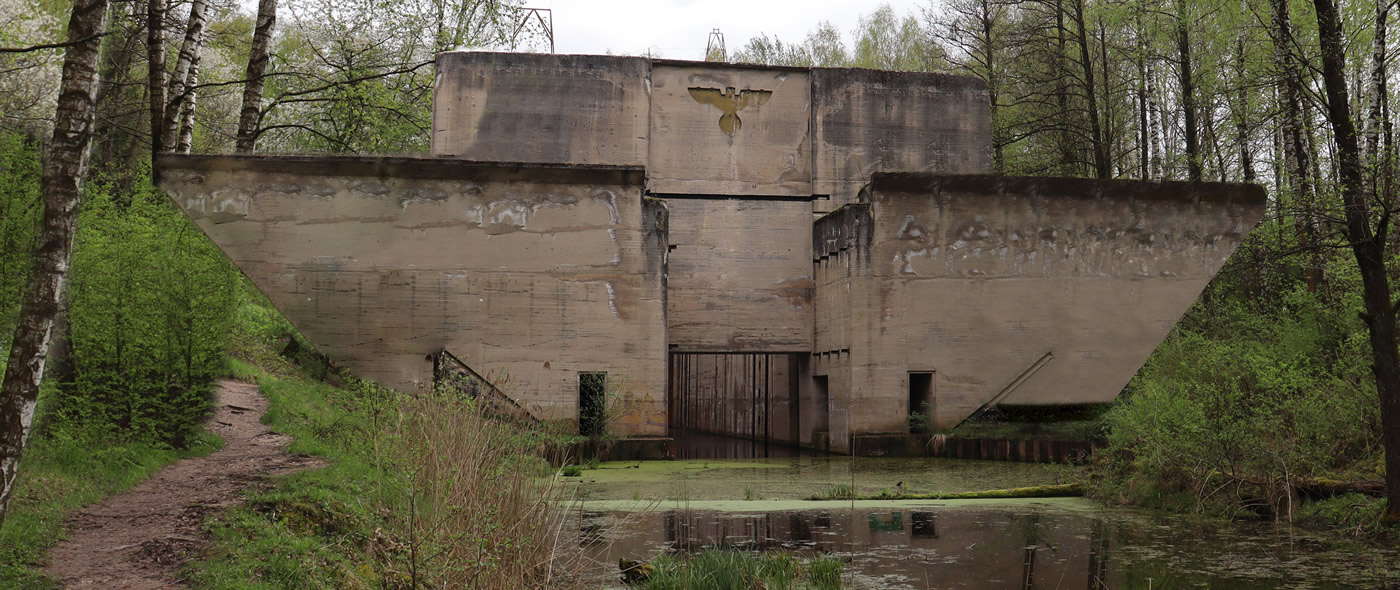
The Iceman missiles were the ultimate "Second Strike" weapon. The plan called for the deployment of 600 missiles across an area of 52,000 square miles of the Greenland ice cap. The project was so secret that the Danish government was never informed of the nuclear missile component; they were told the base was purely for "research." This subterranean escalation was a direct ideological match for the Plokstine Missile Base in Lithuania—the Soviet Union's first underground nuclear fortress, which utilized the stability of the forest floor to achieve the same hidden strike capability that the U.S. sought to hide within the shifting Greenland ice.
Ice Fever: The Psychological Impact of Arctic Isolation
The human cost of Camp Century was measured in "Ice Fever." Soldiers worked 12-hour shifts in a world where the sun never rose and the only sound was the hum of the reactor and the groaning of the ice. The psychological strain was intense. The Army conducted frequent psychiatric evaluations, noting that the combination of claustrophobia and extreme isolation led to increased irritability and a decline in cognitive function. Men were rotated out every six months to prevent total mental collapse.
Glacial Movement and the Collapse of the Frozen Dream
The downfall of Camp Century was not a sudden explosion, but a slow, relentless crush. The U.S. Army engineers had treated the ice sheet as a solid, immobile mass. In reality, the Greenland ice sheet is a visco-plastic fluid. It flows under its own weight. Within months of the base's completion, the walls of the trenches began to "creep" inward. The ceiling of the reactor trench dropped by more than a foot in its first year. The ice was reclaiming the space.
By 1962, the structural integrity of the base was failing. The steel arches that held up the snow roofs began to buckle and snap under the pressure of the shifting ice. Pipes carrying steam and water sheared off as the buildings shifted on their foundations. The very thing that made the base invisible—the ice—was now acting as a slow-motion hydraulic press, squeezing the American experiment out of existence.
Viscoplastic Flow: How the Greenland Glacier Crushed the Base
The physics of glacial flow are unforgiving. As new snow accumulates on the surface, the pressure on the lower layers increases, causing the ice to deform and move toward the edges of the island. At Camp Century, this meant the trenches were shortening and narrowing simultaneously. Maintenance crews worked 24/7 with chainsaws to trim the encroaching ice walls, but they could not keep up. The ice was moving at a rate of several inches per month in critical areas.
Reactor Shutdown: The Decommissioning of the PM-2A
The PM-2A reactor was the first casualty of the moving ice. The cooling systems began to leak as the shifting foundations put intolerable stress on the joints. In 1963, realizing that a nuclear meltdown inside a collapsing glacier would be a global PR disaster, the Army shut the reactor down. It was disassembled and shipped back to the U.S. for disposal. However, the secondary waste—radioactive wastewater and the contaminated soil around the reactor site—was simply left behind.
1967 Abandonment and the Legacy of the Eternal Vault Fallacy
In 1967, the Army officially abandoned Camp Century. They left behind the wooden buildings, the railway tracks, the sewage system, and thousands of tons of hazardous materials. The prevailing scientific theory at the time was that the site would be buried under 100 meters of snow within centuries and remain frozen for 100,000 years. They viewed the Arctic as an eternal vault, a place where consequences could be discarded and forgotten. They were wrong.
Climate Change and the Looming Radioactive Environmental Disaster
Camp Century is currently a ghost city of toxins. As the climate warms, the Greenland ice sheet is melting at an unprecedented rate. The "eternal vault" has become a leaking sieve. Current glaciological models indicate that the site is no longer in a zone of net snow accumulation. Instead, it is in a zone of ablation—where melting exceeds snowfall. The waste buried in 1967 is now moving closer to the surface every year.
The inventory of the waste is staggering. Buried beneath the snow are 200,000 liters of diesel fuel, 24 million liters of raw sewage, and significant concentrations of Polychlorinated Biphenyls (PCBs), which were used in the base's paint and electronics. Most dangerously, there are unknown quantities of low-level radioactive isotopes from the PM-2A reactor’s coolant. These are not static; they are currently migrating through the ice in a plume of contaminated meltwater.
Toxic Inventory: Diesel, PCBs, and Radioactive Waste
The sheer volume of waste left at Camp Century represents a major ecological threat. The 200,000 liters of diesel alone could devastate local marine ecosystems if it reaches the coast. PCBs are "forever chemicals" that bioaccumulate in the fat of seals, polar bears, and whales—the primary food sources for the Inuit people. The U.S. military’s "leave no trace" policy was nonexistent in 1967; they simply walked away from a massive chemical and radiological spill.
The 2090 Melt Projection: When the Waste Hits the Ocean
A 2016 study published in Geophysical Research Letters set a definitive deadline for the Camp Century disaster. Based on current warming trends, the ice covering the base will begin to disintegrate by the year 2090. At that point, the toxins will be mobilized into the proglacial lakes and eventually the North Atlantic. The "ticking clock" is no longer a metaphor; it is a calculated geological certainty. We have less than 70 years to figure out how to clean up a site that is currently buried under 100 feet of moving ice.
Sovereignty and the Trump Administration’s Greenland Purchase Proposals
The legal status of Camp Century is a diplomatic minefield. Greenland is a self-governing territory of Denmark, but the base was an American military installation. This sovereignty is currently the subject of renewed tension, notably during the Trump administration's 2019 and 2025 proposals to "buy" Greenland as a strategic real estate asset. The U.S. argues the base was built with Danish consent, while Denmark argues they were misled about its purpose, leaving the Greenlandic government to face the chemical reality of Cold War hubris.
The Atlas Entry: How to Visit the Ruins of Camp Century
Logistics, Coordinates, and Arctic Travel Requirements
There is nothing to see on the surface. Camp Century is located at 77.18° N, 61.13° W. Accessing the site requires a private expedition from Thule (now Pituffik) Air Base or Ilulissat, involving heavy-duty ski-equipped aircraft or long-range snowmobiles. There are no markers, no monuments, and no visible ruins. You are standing on a flat, white horizon, knowing that a nuclear city is being slowly crushed 100 feet beneath your boots.
What to Expect: Atmosphere and Environmental Reality
Expect a profound sense of insignificance. The wind is the only sound, often reaching speeds that make verbal communication impossible. The cold is a physical weight. The "attraction" is the invisible history—the knowledge that the most complex military facility of its time is currently being digested by the planet.
Frequently Asked Questions About Camp Century and Project Iceworm
Is Camp Century currently visible on satellite imagery?
Most of the base remains buried under layers of compressed snow and ice, making it invisible to standard optical satellite imagery. However, high-frequency ground-penetrating radar used by scientific missions has mapped the entire subterranean layout. As the surface continues to melt, large debris fields and structural remnants are beginning to appear as dark anomalies against the white ice sheet.
How much radioactive waste is actually left in the Greenland ice?
The site contains an estimated 47,000 gallons of radioactive wastewater used during the operation of the PM-2A nuclear reactor. Additionally, there are significant quantities of radioactive isotopes embedded in the structural steel and the soil of the unlined sumps used for waste disposal during the 1960s.
Can the public visit Camp Century today?
There is no formal prohibition on visiting the coordinates, but the site is practically inaccessible to the general public. It requires military clearance to land at Pituffik Space Base and a specialized private expedition to traverse the ice sheet. There are no facilities, markers, or emergency services at the site.
Who officially owns the waste left at the site?
The legal ownership of the waste is a matter of intense international dispute. Under the 1951 Permanent Defense Agreement, the United States holds responsibility for its defense areas, but the "abandonment" of the site in 1967 occurred before modern environmental protocols were established. Currently, the U.S., Denmark, and the Government of Greenland are in a diplomatic deadlock over liability.
What are PCBs and why are they dangerous at this site?
Polychlorinated Biphenyls (PCBs) are highly toxic industrial chemicals used in the 1960s as fluids in electrical transformers and as paint additives. They are "forever chemicals" that do not break down in the environment. If released by the melt, they will bioaccumulate in Arctic wildlife, causing reproductive failure and cancer in apex predators and the human populations that rely on them.
Sources and Citations
- The Camp Century Climate Tipping Point - Geophysical Research Letters (2016)
- Project Iceworm: The Secret Nuclear City - U.S. Army Documentary Archives (1960)
- Greenland, Denmark, and the Cold War Legacy - Danish Institute for International Studies (2017)
- The PM-2A Nuclear Reactor Technical Manual - Atomic Energy Commission Records (1963)
- Melting Ice and Geopolitical Friction in the Arctic - Nature Climate Change (2021)
- The Thule Treaty and US Military Rights - U.S. Department of State Archive (1951)
- The 2025 Greenland Sovereignty Crisis - Reuters World News (2025)
- Arctic Mineral Extraction and Security - Council on Foreign Relations (2024)



%2C%20Konjic%2C%20Bosnia.jpg)


