The Streets That Lead Nowhere
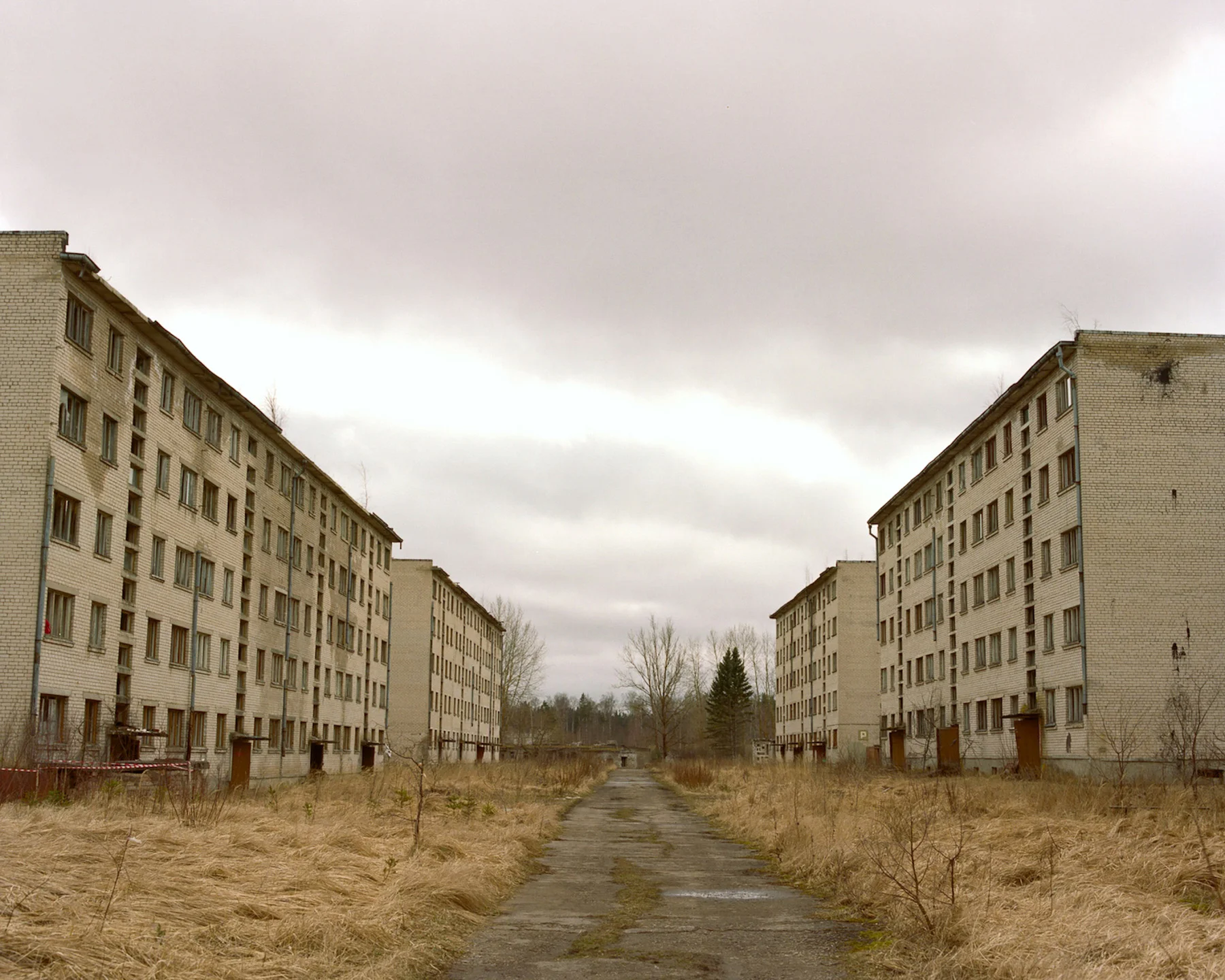
To drive into Centralia, Pennsylvania, is to enter a geography of absence. The street grid remains, etched into the overgrown topography like a phantom limb. There are stop signs that guard empty intersections, crumbling sidewalks that border forests instead of front yards, and paved driveways that end abruptly in tangles of briar and goldenrod.
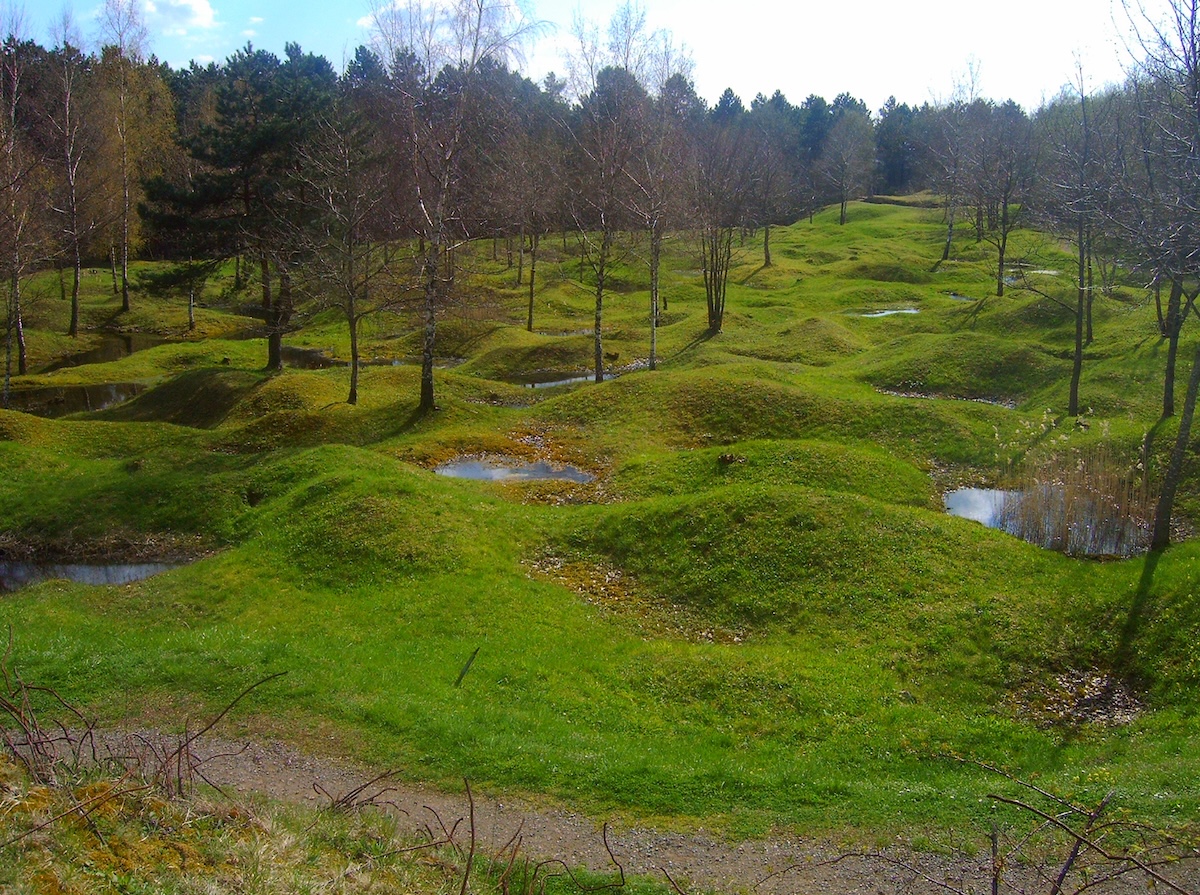
It is a place of profound cognitive dissonance. The layout suggests a classic American small town—a grid of avenues, alleyways, and municipal zones—but the buildings have been erased. On a damp morning, the silence is absolute, broken only by the rustle of deer moving through what used to be living rooms and the faint, rhythmic hiss of steam escaping from the earth. In certain zones, the ground is warm to the touch. In others, dead trees stand bleached and skeletal, their roots boiled by the heat rising from below. This is not a ghost town in the traditional sense, abandoned to the wind; it is a town that was systematically dismantled to save its residents from the ground beneath their feet.
The Heart of the Anthracite
Centralia sits in the difficult, folded hills of Columbia County, deep within Pennsylvania’s Coal Region. This is the heart of the Anthracite belt, home to a specific type of hard coal that burns hotter, cleaner, and longer than the bituminous coal found elsewhere.
Geologically, the region is a wonder and a trap. The coal seams here are not flat; they are twisted into complex, pretzel-like folds by ancient tectonic pressure. To mine them, engineers had to dig deep, labyrinthine shafts and drifts, creating a vast honeycomb of voids beneath the surface. For a century, this geology was the source of the region's immense wealth. The anthracite fueled the Industrial Revolution, heated the homes of the East Coast, and built the railroads. But the very qualities that made anthracite valuable—its density and high carbon content—meant that once it caught fire, it was nearly impossible to extinguish.
A Town Built on Black Diamonds
Before the smoke began to rise, Centralia was a vibrant community. In the mid-20th century, it was home to over 1,000 residents, boasting five churches, two schools, a bustling main street with bars and grocery stores, and a fierce sense of civic pride. It was a classic working-class enclave, where generations of families lived on the same blocks and neighbors spoke across porch railings.
Life revolved around the mines. The town was literally built on top of its livelihood. The Buck Mountain coal seam, one of the richest deposits in the state, ran directly under the borough. The residents accepted the grime and the hard labor as the price of stability. They lived with the dust of the breakers and the noise of the collieries, never suspecting that the tunnels they dug to extract their wages would eventually become the arteries of their destruction.
Memorial Day, 1962: The Spark
The end of Centralia began with a mundane administrative decision. In May 1962, the Borough Council decided to clean up the town landfill in time for the upcoming Memorial Day celebrations. The landfill was located in an abandoned strip-mine pit next to the Odd Fellows Cemetery.
The council hired five volunteer firefighters to burn the trash—a common practice at the time. On May 27, they ignited the pile. After the trash had burned down, they doused the ashes with water and declared the fire out. They were wrong.
The pit was not sealed. At the bottom of the landfill, hidden by layers of garbage and shale, was an opening into the labyrinth of old mine drifts. Embers from the trash fire slipped through a fissure and landed on the exposed face of the Buck Mountain coal seam. In the cool, oxygen-rich darkness of the mine, the anthracite caught fire. When the bulldozer operator arrived days later to turn the trash, he found steam curling up from the rocks. The town had not just burned its garbage; it had ignited the earth.
The Missed Opportunities
The tragedy of Centralia is a story of missed windows. In the weeks following the ignition, the fire was small and manageable. A local mine inspector offered to dig out the burning material for a fledgling cost of around $175. The council, worrying about the legality of the procedure and the cost, dithered.
As the weeks turned into months, the fire crept deeper. State agencies became involved, but bureaucratic paralysis set in. Projects were delayed by holidays, arguments over funding, and jurisdiction disputes between the state and federal mining bureaus. By the time heavy equipment was finally brought in to excavate the fire, it had moved beyond the reach of the shovels. An attempt to flush the mines with a slurry of wet sand failed when the mixture clogged the boreholes, effectively insulating the fire rather than extinguishing it. What could have been fixed with a few hundred dollars in 1962 had, by 1963, become a subterranean monster that would eventually cost the government over $40 million to address—not by fixing it, but by fleeing it.
Anatomy of an Underground Inferno
A coal mine fire is a terrifying geological event. It does not burn like a forest fire with open flames; it smolders like a charcoal briquette, advancing slowly through the seam. The fire creates its own weather system. As the coal burns, it heats the air, which rises through fissures in the ground. This rising heat creates a vacuum that sucks fresh, oxygen-rich air down through other vents, feeding the combustion engine.
In Centralia, the complex geology worked against the engineers. The steep pitch of the coal seams allowed the fire to travel deep underground, protected by layers of rock that insulated the heat. Temperatures in the fire zone can exceed 1,000°F (538°C). The fire moves unpredictably, following the flow of air and the quality of the coal, indifferent to the property lines on the surface. It can burn for decades in one spot or race hundreds of feet in a month, leaving behind a layer of ash and a void that eventually collapses, causing the ground above to subside.
The Invisible Poison: Life in the 1970s
For nearly two decades, the residents of Centralia lived in a state of growing denial and dread. By the late 1970s, the fire was no longer a theory; it was a physical presence.
Residents began to report chronic headaches, nausea, and fatigue—classic symptoms of carbon monoxide poisoning. The fire was exhaling toxic gases that seeped into basements and bedrooms. In 1979, the mayor, John Coddington, who owned a gas station, dipped a stick into his underground fuel tanks to check the level. When he pulled it out, the gasoline was hot. The temperature of the fuel in the underground tank was 172°F (78°C). The fire was directly beneath the town center, heating the ground like a stove. The state installed carbon monoxide monitors in homes, turning the town into a high-tech canary cage. Sirens would wail in the middle of the night, forcing families to evacuate their own beds.
The Boy in the Sinkhole
If there was a single moment that doomed Centralia, it happened on Valentine’s Day, 1981. A 12-year-old boy named Todd Domboski noticed a wisp of smoke rising from the grass in his grandmother’s backyard. Curious, he walked over to investigate.
Suddenly, the earth opened up beneath him. A sinkhole, four feet wide and 150 feet deep, swallowed him. He grabbed onto an exposed tree root, screaming for help as the hot, toxic mud swirled around his legs. The smoke billowing from the hole contained lethal levels of carbon monoxide. His cousin, Eric Wolfgang, heard the screams and managed to pull Todd out of the hole just moments before the boy would have been overcome by the fumes.
The incident drew national media attention. The image of a child nearly eaten by the earth shattered the resolve of the community and forced the government to act. It was no longer an environmental nuisance; it was a lethal trap.
A Community Divided: The Buyout
In 1983, the U.S. Congress appropriated $42 million for the relocation of Centralia. But the money brought division, not relief. The town split into two bitter factions: those who wanted to leave to protect their health, and those who believed the fire posed no immediate threat and wanted to stay in their ancestral homes.
A non-binding referendum was held. By a vote of 345 to 200, the residents voted to relocate. What followed was a slow-motion funeral for the community. Neighbors stopped speaking to one another. Families packed up and moved to nearby towns like Mount Carmel and Ashland. The social fabric unraveled house by house. As properties were purchased by the state, they were boarded up and then demolished. The sound of bulldozers became the soundtrack of the decade.
The Erasure: Demolition and Eminent Domain
Throughout the late 1980s and 1990s, Centralia was systematically erased. The state of Pennsylvania claimed the land under the doctrine of eminent domain, condemning the properties to ensure no one would move back.
Once a house was acquired, it was leveled. Basements were filled with gravel, and lots were graded and seeded with grass. In 2002, the U.S. Postal Service formally revoked Centralia’s zip code, 17927. The town ceased to exist as a legal entity. It was removed from maps, and road signs directing travelers to Centralia were taken down. The physical structures were gone, leaving only the grid of streets and the sidewalks to frame the empty space where a community once lived.
The Last Holdouts
Despite the condemnation, a handful of residents refused to leave. They became known as the "holdouts." They argued that the fire had moved past their specific properties, or that the government’s warnings were a conspiracy to seize the mineral rights to the billion dollars' worth of anthracite remaining in the ground.
They fought the state in court for decades. In 2013, a settlement was finally reached. The remaining seven residents were granted permission to live out their lives in their homes. However, they could not sell the property or pass it to heirs. Upon their deaths, the houses would be seized and demolished. Today, fewer than five residents remain, living in a scattering of row homes that stand like fortresses against the encroaching forest.
The Myth of Silent Hill
Centralia’s plight captured the imagination of the world, most notably serving as the visual inspiration for the horror film Silent Hill. The movie’s depiction of a town where ash falls like snow and sirens wail in the fog cemented Centralia’s reputation as a "gateway to hell."
However, this pop-culture fame is a source of frustration for those connected to the town. There are no monsters in Centralia, no cults, and no supernatural darkness. The reality is far more mundane and tragic: it is a story of industrial negligence and geological inevitability. The "ash" people expect to find is actually steam; real ash rarely falls. The horror of Centralia is not cinematic; it is the quiet sadness of a lost home.
The Death of the Graffiti Highway
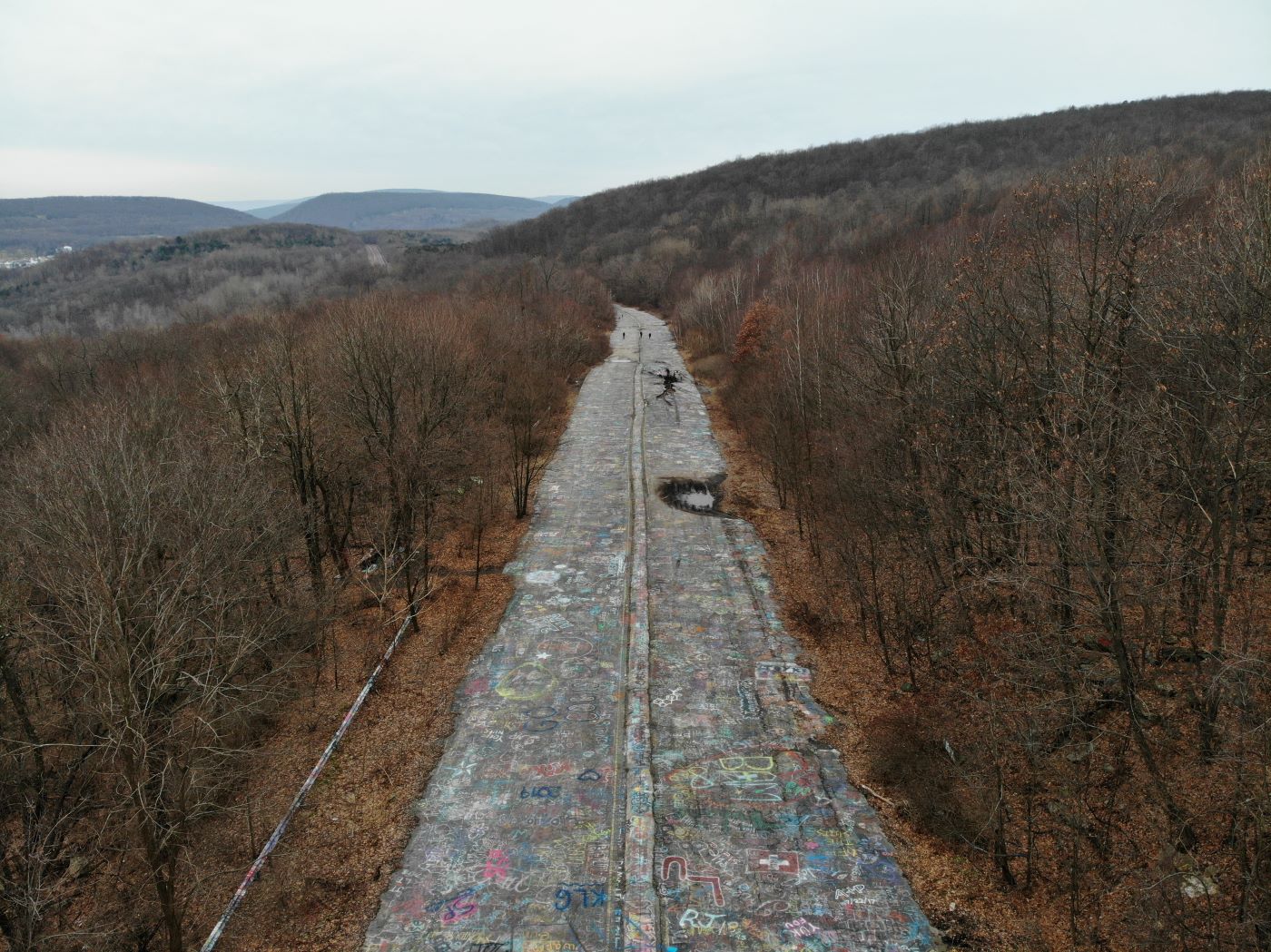
For years, the most famous landmark in Centralia was a closed section of Route 61. The fire burning beneath the road had caused the asphalt to buckle and crack, creating fissures that vented smoke. The state closed this section in the 1990s and rerouted the highway.
Abandoned, the road became a canvas. Known as the "Graffiti Highway," it was covered in decades of spray paint—names, drawings, slogans, and art stretching for nearly a mile. It became a pilgrimage site for dark tourists. However, in 2020, during the height of the COVID-19 pandemic, the crowds became unmanageable. The private landowner, Pagnotti Enterprises, decided the liability was too great. In April 2020, dump trucks arrived and buried the Graffiti Highway under hundreds of tons of dirt. The cultural landmark was erased, returned to the earth just like the town it served.
Centralia Today: A Park of Ghosts
Today, Centralia feels less like a town and more like a strange, unintentional park. Nature is reclaiming the grid with aggressive speed. Trees grow in the middle of former living rooms; deer graze on the manicured lawns of the holdouts.
The most striking visual feature is the "stairs to nowhere"—concrete steps that rise from the sidewalk and end abruptly in a field of weeds, marking where a porch once stood. Stone retaining walls line empty lots. Yet, overlooking it all, the Assumption of the Blessed Virgin Mary Ukrainian Greek-Catholic Church still stands on the hill. Built on solid rock rather than the coal seam, it was spared from the fire and the buyout. On Sundays, former residents still return to worship, a weekly act of defiance against the erasure.
Dark Tourism I: The Atmosphere
For the visitor, Centralia offers a disquieting atmosphere. It is defined by its contradictions: a street grid without houses, a highway without cars, and a fire without flames. The air often carries the faint, acrid smell of sulfur, particularly on the southern edge of town near the cemetery.
It is a quiet place. The wind rushes through the trees that have colonized the borough, and the silence is heavy. Walking the streets evokes a sense of intrusion, as if entering a room where an argument just ended. It is a cemetery not just for people, but for the idea of a community.
Dark Tourism II: What Remains to See
While the Graffiti Highway is gone, there are still sites to explore. The municipal building, which houses the fire truck and ambulance, still stands and is occasionally staffed. The cemeteries—St. Ignatius, Odd Fellows, and Saints Peter and Paul—are well-maintained and offer a poignant look at the generations who lived and died here before the fire.
The "Burn Zone" is located near the St. Ignatius cemetery. Here, the ground is hot, and the vegetation is bleached and dead. On cold days, plumes of steam rise visibly from the earth. Near the Odd Fellows cemetery, a simple time capsule monument (to be opened in 2016, though the town was largely gone by then) marks the centennial of the borough, a tragic reminder of the optimism that existed just before the end.
Dark Tourism III: Hazards and Legalities
Visiting Centralia requires caution. The ground in the impact zone can be unstable. Subsidence—the sudden collapse of the earth into a mine void—is a genuine risk. Visitors should stay on paved surfaces and established paths.
Legally, the situation is complex. The streets are public, but the land on either side is often state-owned or private property. The few remaining houses are private residences, and the occupants understandably have zero tolerance for trespassing or harassment. The area where the Graffiti Highway lies is strictly "No Trespassing," and police patrol the area to enforce this. The gases, while less concentrated than in the 1980s, can still accumulate in low-lying areas, so lingering near vents is ill-advised.
Ethics of the Void
Centralia has suffered from a wave of "disaster porn" tourism, with visitors treating the site like a playground—leaving trash, starting bonfires, and harassing residents. Responsible visitation means understanding that this is a site of tragedy.
Do not paint on the roads or trees. Do not try to find the "fire"—you won't see flames, only steam. Do not knock on doors or photograph the residents. The ethical approach is to bear witness to the history, to walk the empty streets with respect for the lives that were uprooted, and to leave no trace of your presence.
The Fire That Won’t Die
Geologists estimate that there is enough anthracite in the Buck Mountain seam to fuel the fire for another 250 years. The fire is moving. It is slowly migrating southeast, towards the town of Byrnesville (which was also relocated) and potentially towards the larger town of Ashland.
Trenches have been dug to try and stop it, but the fire has breached them before. It is a slow-motion predator, indifferent to human timelines. It will outlive the last resident, the last building, and likely the memory of the town itself.
Conclusion: A Warning in the Smoke
Centralia is a scar on the landscape of the American Dream. It stands as a testament to the consequences of industrial hubris and the terrifying power of the earth when pushed too far.
In the end, nature is reclaiming Centralia. The asphalt is cracking, the trees are returning, and the deer are replacing the miners. But beneath the silence, the fire continues its work, burning through the black diamonds that once made the town rich. It is a reminder that our foothold on the land is tenuous, and that some fires, once lit, can never be extinguished.
Sources & References
- Pennsylvania Department of Environmental Protection (DEP). "Bureau of Abandoned Mine Reclamation: Centralia Mine Fire." (Official geological and status reports). PA DEP Link.
- United States Geological Survey (USGS). "Anthracite Coal Region Geology." (Context on the coal seams). USGS Pubs Link.
- DeKok, David. (2010). Fire Underground: The Ongoing Tragedy of the Centralia Mine Fire. Globe Pequot. (The definitive historical text on the disaster).
- Smithsonian Magazine. "The Real-Life Town That Inspired Silent Hill." Smithsonian Link.
- NPR (National Public Radio). "Centralia: The Town That Burned From Beneath." (Interviews with former residents). NPR Link.
- Atlas Obscura. "Centralia, Pennsylvania." (Travel context and site details). Atlas Obscura Link.
- Associated Press. "Centralia's Graffiti Highway Buried." (Reporting on the 2020 destruction of the highway). AP News Link.
- The Guardian. "The town that has been burning for 50 years." Guardian Link.
- Stracher, Glenn B. (2007). "Coal Fires Burning Around the World: A Global Catastrophe." International Journal of Coal Geology.
- Commonwealth of Pennsylvania. "Centralia Mine Fire History and Remediation." (State archives).
- Kroll-Smith, J. Stephen. (1990). The Real Disaster Is Above Ground: A Mine Fire and Social Conflict. University Press of Kentucky. (Sociological study of the town's division).
- New York Times. "Centralia, Pa., a Ghost Town That's Still Burning." (Archive reporting from the 1980s).
- PennState University. "The Geology of the Pennsylvania Anthracite Fields." PSU Earth Science.