The Island of Smells
Before you see Iwo Jima, you smell it. It does not smell like the ocean, nor like the tropical jungles of the South Pacific. It smells of the earth’s bowels. The air is thick with the stench of rotten eggs—sulfur—venting from a thousand fissures in the ground. The soil beneath your boots is not sand, but a coarse, shifting black ash that swallows footsteps and radiates a dull, subterranean heat.
From the deck of a ship, the island looks like a mistake of geology. It is a pork-chop-shaped ugly slab of volcanic rock, dominated on the southern tip by the cone of Mount Suribachi, a dormant volcano that looms over the flat, grey plateau of the north. There is no fresh water. There is almost no cover. It is a desolate, steaming rock in the middle of a vast ocean, a place that seems hostile to biological life even before the first shot is fired. To the Marines who stared at it through binoculars in February 1945, it looked like a prehistoric monster rising from the sea. They called it "Sulfur Island," and for thirty-six days, it would become the most concentrated square mile of hell on earth.
A Rock Worth Dying For
Why did nearly 7,000 Americans and 18,000 Japanese die for a rock that smelled of brimstone? The answer lies in the cold calculus of strategic bombing. By 1945, the United States had captured the Mariana Islands—Guam, Saipan, and Tinian—and was launching massive B-29 Superfortress raids against the Japanese mainland.
But the flight path was a marathon of danger. The B-29s had to fly 3,000 miles round trip. They had no fighter escorts because the P-51 Mustangs didn't have the range. Furthermore, Iwo Jima sat directly in the flight path, acting as an early warning station for Tokyo. Japanese fighters based on Iwo would intercept the bombers or radio ahead, giving the mainland air defenses time to prepare. The US planners did the math: if they took Iwo Jima, they could silence the warning sirens, provide a base for fighter escorts, and, most crucially, offer an emergency landing strip for damaged bombers struggling to make it back to Tinian. The logic was brutal but simple: thousands of Marines would have to die to save the lives of tens of thousands of airmen.
The Architect of Defense: General Kuribayashi
The defense of Iwo Jima was orchestrated by Lieutenant General Tadamichi Kuribayashi, a man who defied the stereotype of the fanatical Banzai charger. Kuribayashi was a realist. He had served as a deputy military attaché in the United States in the 1920s; he had driven across America, admired its industrial capacity, and knew, with absolute certainty, that Japan could not win a war of attrition against such a power.
"The United States is the last country in the world Japan should fight," he once wrote to his wife. But as a samurai, his duty was absolute. Knowing he could not stop the invasion, he decided to make the Americans pay an exorbitant price for every inch of black sand. He threw out the old Japanese playbook. There would be no suicidal charges on the beach. There would be no defense at the water's edge where US naval guns could annihilate them. Instead, he would take the battle underground. He issued a standing order to his men: "Each man will make it his duty to kill ten of the enemy before dying."
The City Beneath the Sulfur
While the Americans bombed the surface of the island for months, turning the landscape into a cratered moonscape, the Japanese army was busy constructing a fortress the Americans couldn't see. Kuribayashi’s engineers blasted and dug 11 miles of tunnels into the volcanic rock.
This was not just a series of foxholes; it was a subterranean city. The network connected command centers, barracks, ammunition dumps, and hospitals. Some tunnels were 75 feet deep, impervious to even the heaviest naval shells. The ventilation shafts were camouflaged as rocks. The machine gun nests were positioned with interlocking fields of fire, invisible until they opened up. The Americans pounded the island with the heaviest pre-invasion bombardment of the war, confident they were softening up the enemy. In reality, they were merely rearranging the dirt above the heads of 21,000 Japanese soldiers who sat waiting in the dark, weapons clean and ready.
February 19: The Black Beach
D-Day was February 19, 1945. The armada that assembled off the coast was the largest the Pacific had ever seen. When the first wave of Marines hit the beaches, they were met with an eerie, terrifying silence. There was no fire. Kuribayashi was waiting for the beaches to fill up.
The Marines immediately realized the nightmare of the terrain. The volcanic ash was soft and deep. Men sank to their ankles; vehicles bogged down. It was like trying to run through loose coffee grounds. They couldn't dig foxholes—the walls simply collapsed back in on them. As the beaches became congested with men and machinery, the trap sprang.
From the heights of Suribachi and the Motoyama Plateau, hidden artillery and mortars opened fire. It was a massacre. Steel rained down on the exposed beaches. Men were blown apart before they could even see an enemy. The terraces of black sand, rising steeply from the water, became a slaughterhouse. By the end of the first day, the shoreline was littered with the burning wreckage of landing craft and the broken bodies of thousands of Marines, churned into the black grit.
The Flag and the Illusion of Victory
The capture of Mount Suribachi is the moment the world remembers. On February 23, the fifth day of the battle, a patrol from the 28th Marines fought their way to the summit of the volcano. They raised a small American flag, and later, a larger one. Joe Rosenthal’s photograph of that second raising became the most reproduced image in photographic history—a symbol of grit and triumph.
When the flag went up, a roar of cheers rose from the beaches and the ships offshore. The ships’ horns blew. For a moment, the men believed the battle was won. But it was a cruel illusion. The capture of Suribachi was merely the prologue. The main strength of Kuribayashi’s army was entrenched in the north, waiting in the badlands. The flag raising boosted morale in the United States, selling millions in war bonds, but on the island, the dying had only just begun. The battle would rage for another 31 days.
Into the Meat Grinder
After securing the volcano, the Marines turned north and entered a landscape that defied description. The terrain shifted from the open beaches to a twisted labyrinth of rocky gorges, sulfur pits, and sheer cliffs. This was the Kuribayashi defensive belt.
The fighting here was intimate and horrifying. The Marines named the features after the carnage: "The Meat Grinder," "Bloody Gorge," "The Amphitheater." There were no front lines. The enemy was everywhere and nowhere. A Marine unit would clear a pillbox with grenades, move forward ten yards, and then be shot in the back by Japanese soldiers re-emerging from a spider hole connected to the same tunnel system. It was a game of whack-a-mole played with high explosives. Advances were measured not in miles, but in yards per hour.
Liquid Fire: The War of Attrition
As the conventional weapons failed to dislodge the defenders, the battle turned primal. The only way to neutralize a cave complex was to burn it out or seal it shut. The weapon of choice became the flamethrower.
Tanks equipped with massive flamethrowers, known as "Zippos" or "Ronsons," would roll up to a cave entrance and unleash a stream of liquid napalm. The horror of this warfare is difficult to articulate. Marines spoke of the terrible sounds coming from the caves—the screams of men burning alive, the smell of roasting flesh mixing with the sulfur. If fire didn't work, demolition teams used satchel charges to collapse the entrances, burying the defenders alive. It was a war of extermination, devoid of mercy, driven by the sheer necessity of survival.
The Last Letter Home
For the Japanese defenders, the final weeks were a descent into a living hell. Cut off from their supplies, they ran out of food and, critically, water. Men were reduced to drinking their own urine or licking the moisture from the sulfurous mud walls of the caves.
Yet, their discipline held. In the flickering light of candles, General Kuribayashi wrote final letters to his family in Tokyo. These letters reveal not a fanatic, but a heartbroken father. "I am sorry that I have to die without doing anything for you," he wrote to his children. "I will be a ghost and watch over you." The communications from the command bunker eventually ceased. The organized defense disintegrated into isolated pockets of starving men, fighting with bamboo spears and rocks when their ammunition ran out.
The Final Charge and the Cost
The battle did not end with a surrender; it ended with silence. On the night of March 26, a final, disorganized group of several hundred Japanese soldiers and airmen launched a last counter-attack near the airfield. It was not a Banzai charge of glory; it was a desperate attempt to find water and kill Americans in their sleep. They were wiped out.
The cost of Iwo Jima was staggering. The battle claimed the lives of 6,821 Americans, with another 19,217 wounded. It was the only battle in the Pacific War where the total American casualties (dead and wounded) exceeded the number of Japanese dead. Of the 21,000 Japanese defenders, only 216 were taken prisoner during the battle. The rest died in the caves or by their own hand. Twenty-seven Medals of Honor were awarded for actions on Iwo Jima—more than any other battle in US history—a testament to the extraordinary ferocity of the combat.
Was It Worth It? The B-29s
Historians still debate the strategic value of the island, but for the aircrews of the B-29s, there was no debate. On March 4, while the fighting was still raging, a crippled B-29 named Dinah Might, low on fuel and damaged by anti-aircraft fire over Tokyo, made an emergency landing on the captured airfield.
It was the first of many. By the end of the war, 2,400 B-29s had made emergency landings on Iwo Jima. The island saved the lives of an estimated 24,000 airmen who would otherwise have crashed into the Pacific. Every one of those men owed their life to the Marines who cleared the runway inch by bloody inch.
Accessing the Inaccessible
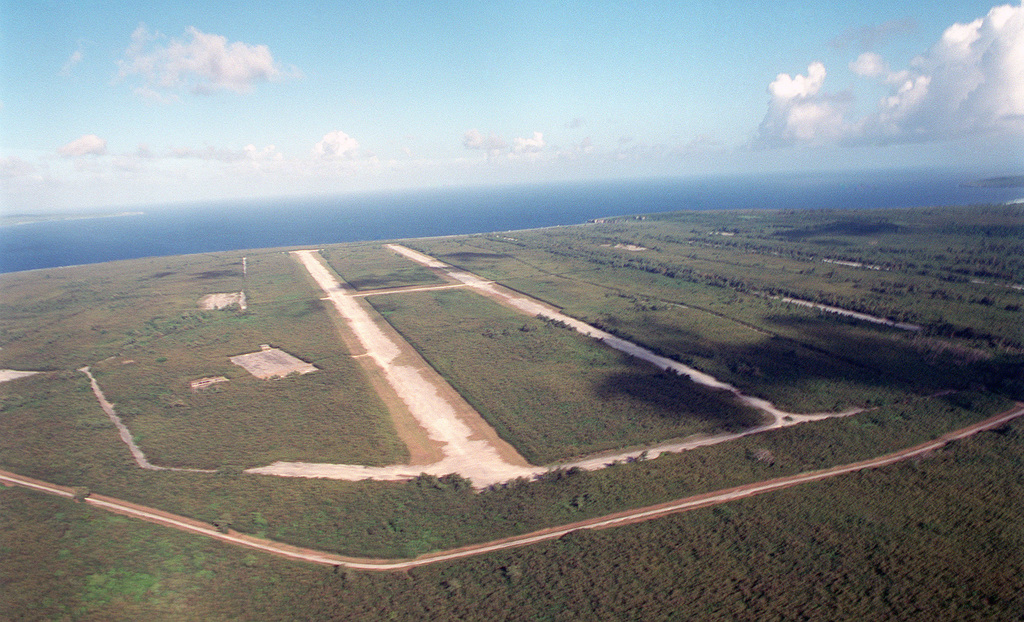
Today, Iwo Jima—now officially known as Iwo To—is one of the most exclusive places on Earth. It is not a tourist destination. There are no hotels, no ferries, and no visitor centers. The island is an active base for the Japan Maritime Self-Defense Force (JMSDF).
Civilian access is strictly prohibited. The only way to set foot on the black sands is to be part of an official military history tour (which are rare and expensive) or to attend the "Reunion of Honor." For the vast majority of the world, Iwo To remains a forbidden island, visible only through the lens of history books and war movies. This isolation has preserved the battlefield in a way that is unique in the world.
The Reunion of Honor
Once a year (historically in March), a singular event takes place: the Reunion of Honor. A chartered flight brings a small group of American veterans, their families, and the families of the Japanese defenders to the island.
It is a surreal and profoundly moving scene. On the same black beaches where thousands were slaughtered, former enemies meet. The few remaining veterans, now in their late 90s, shake hands with the children of the men they killed. They sit together on the ash, weeping. A joint memorial service is held near the landing beaches, where prayers are offered in both English and Japanese. It is a pilgrimage of grief and reconciliation, a powerful acknowledgment that the suffering was shared, even if the cause was not.
A Battlefield Frozen in Time
Because the island has been closed to development, the scars of 1945 remain fresh. Walking through the scrub brush, you stumble upon the rusted hulks of landing craft still buried in the sand. Concrete pillboxes and machine gun nests still gaze out over the ocean, their firing slits dark and empty.
The ground is littered with the detritus of war. You can find Coca-Cola bottles from 1944, bullet casings, shrapnel, and the soles of boots. Unlike Normandy, which has been landscaped and sanitized, Iwo To is raw. It looks much as it did when the guns fell silent, merely overgrown with a layer of tropical vines. It is an archaeological site of violence, preserved by isolation.
Climbing Suribachi Today
For those lucky enough to visit, the hike up Mount Suribachi is the defining experience. A paved road now winds up the volcano, but many choose to walk the old trails.
At the summit, near the spot where the flag was raised, stands a simple memorial. The railing is covered in a thick layer of dog tags, unit challenge coins, and ribbons left by visiting US Marines who treat the climb as a rite of passage. Standing at the top, looking down at the invasion beaches, the tactical reality hits you. The Marines below were bugs on a plate. It seems impossible that anyone survived the landing, let alone captured the mountain.
The Ghost of Iwo To
In 2007, the Japanese government officially reverted the name of the island from Iwo Jima to its pre-war name, Iwo To. "Iwo Jima" was a mispronunciation by the Americans that stuck; "Iwo To" is how the locals knew it.
Before the war, the island was home to a civilian population of about 1,000 people who farmed sugar cane and mined sulfur. They were forcibly evacuated in 1944 and were never allowed to return. For them, the island is not a symbol of military glory, but a lost homeland. The name change was a quiet assertion of identity, a reminder that before it was a battlefield, it was a home.
Sacred Ground and Forgotten Bones
There is a heavy spiritual weight to Iwo To. The Japanese government considers the entire island a mass grave. Despite decades of recovery efforts, the remains of roughly 12,000 Japanese soldiers are still missing, entombed in the sealed caves beneath the surface.
This reality dictates the etiquette of the visit. Taking sand or rocks as souvenirs is strictly forbidden, both by US military custom and Japanese law. There are stories among the Marines of a "curse" attached to the sand—bad luck that follows anyone who steals from the grave. Visitors are urged to tread lightly, conscious that they are walking on the roof of a tomb.
The Green Island
Nature, indifferent to human history, is slowly reclaiming the island. The "Meat Grinder" is now covered in thick, green scrub brush. Birds nest in the firing slits of the bunkers. The sulfur vents still hiss, yellowing the rocks, just as they did a thousand years ago.
The violence has been absorbed by the land. The shattered trees have grown back. The craters have softened. The island is trying to forget. It is a stark reminder that while we build monuments and write histories, the earth eventually erases everything but the geology.
Conclusion: The Silence of the Sulfur
Today, the loudest sound on Iwo To is the wind whipping around the cone of Mount Suribachi. The roar of the artillery and the screams of the dying have been replaced by the rhythmic crashing of the waves against the black shore.
Iwo To remains a place apart—a solitary, steaming rock in the Pacific that demands us to remember the extremes of human capability. It witnessed the absolute worst of human violence and the absolute zenith of human courage. It is a legacy written in ash and blood, guarded by the sulfur and the sea, standing as an eternal witness to the young men who gave their tomorrows for a strip of black sand.
FAQ
Can tourists visit Iwo Jima today?
Iwo Jima (officially known as Iwo To) is generally closed to civilian tourists. The island is currently designated as a strictly restricted military base operated by the Japan Self-Defense Forces (JMSDF). Unlike other historical battlefields in the Pacific, there are no hotels, shops, or tourism infrastructure on the island. Access is almost exclusively limited to official military delegations and the annual "Reunion of Honor" ceremony, which allows a select number of American and Japanese veterans and their families to visit the black sands for a single day in March. Unauthorized travel to the island is prohibited.
What is the difference between Iwo Jima and Iwo To?
The island is the same physical location, but the name was officially changed back to "Iwo To" by the Japanese government in 2007. Historically, the island was always known as Iwo To (meaning "Sulfur Island") by its pre-war inhabitants. The pronunciation "Iwo Jima" became popularized during World War II due to a misreading of the kanji characters by Japanese naval officers who arrived to fortify the island, a mistake that was adopted by American forces and the global media. While "Iwo Jima" remains the historical name for the battle in Western textbooks, "Iwo To" is the correct geographical and legal name today.
Is the black sand on Iwo Jima dangerous?
The iconic black sand of the invasion beaches consists of coarse, volcanic ash and soft soil, which made movement famously difficult for Marines and vehicles in 1945. While the sand itself is not toxic, the island remains a dangerous environment due to geothermal activity and unexploded ordnance. Iwo To is an active volcano, and the ground heat is often intense enough to cook food buried in the soil. Furthermore, thousands of tons of munitions were fired at the island, and live explosives are still frequently uncovered by shifting sands and erosion, making it unsafe to wander off established paths during rare authorized visits.
How can I attend the Reunion of Honor?
The Reunion of Honor is the only established civilian pathway to step foot on Iwo To. This joint memorial service is typically held in March to mark the anniversary of the battle. Attendance is coordinated through specific veteran organizations, such as the Iwo Jima Association of America (IJAA) and the Military Historical Tours company. Priority is strictly given to veterans of the battle and their direct descendants. Seats on the chartered flights from Guam or Tokyo are extremely limited, expensive, and subject to security clearance by the Japanese government.
Does anyone live on Iwo Jima now?
There is no permanent civilian population on Iwo To. Before World War II, a small community of roughly 1,000 civilians lived in villages like Motoyama, mining sulfur and refining sugar. All civilians were forcibly evacuated to the Japanese mainland in 1944 prior to the American invasion and were never permitted to return to live. Today, the only inhabitants are roughly 400 personnel from the Japan Self-Defense Forces who staff the airbase and monitor the island’s volcanic activity. The ruins of the old villages are largely overgrown, leaving the military base as the sole settlement.
Sources & References
- National World War II Museum. "The Battle of Iwo Jima." (Strategic overview and oral histories). National WWII Museum Link.
- U.S. Marine Corps History Division. "Iwo Jima: Amphibious Epic." (Official monograph). USMC History Link.
- Newcomb, Richard F. (1965). Iwo Jima. Henry Holt and Co. (Classic narrative history).
- Bradley, James. (2000). Flags of Our Fathers. Bantam. (Focus on the flag raisers and the bond of the unit).
- Kakehashi, Kumiko. (2005). So Sad to Fall in Battle: An Account of War Based on General Tadamichi Kuribayashi's Letters from Iwo Jima. Presidio Press. (The Japanese perspective).
- Iwo Jima Association of America. "Reunion of Honor." (Details on the joint memorial services). IJAA Link.
- Department of Defense (US). "Iwo Jima: 75th Anniversary." (Commemorative articles and photos).
- Japan Times. "Iwo Jima renamed Iwo To." (Reporting on the 2007 name change). Japan Times Link.
- Naval History and Heritage Command. "Battle of Iwo Jima." NHHC Link.
- Wheeler, Richard. (1980). Iwo. Lippincott & Crowell.
- Natural Resources Defense Council. "The Geology of Iwo Jima."
- BBC News. "US and Japan mark Iwo Jima anniversary." (Coverage of the Reunion of Honor).
- Ross, Bill D. (1985). Iwo Jima: Legacy of Valor. Vintage.
- PBS The War. "Iwo Jima." (Ken Burns documentary archives).
- Military Times. "Why the sands of Iwo Jima are sacred." (Article on the 'curse' and customs).