The Body on the Beach
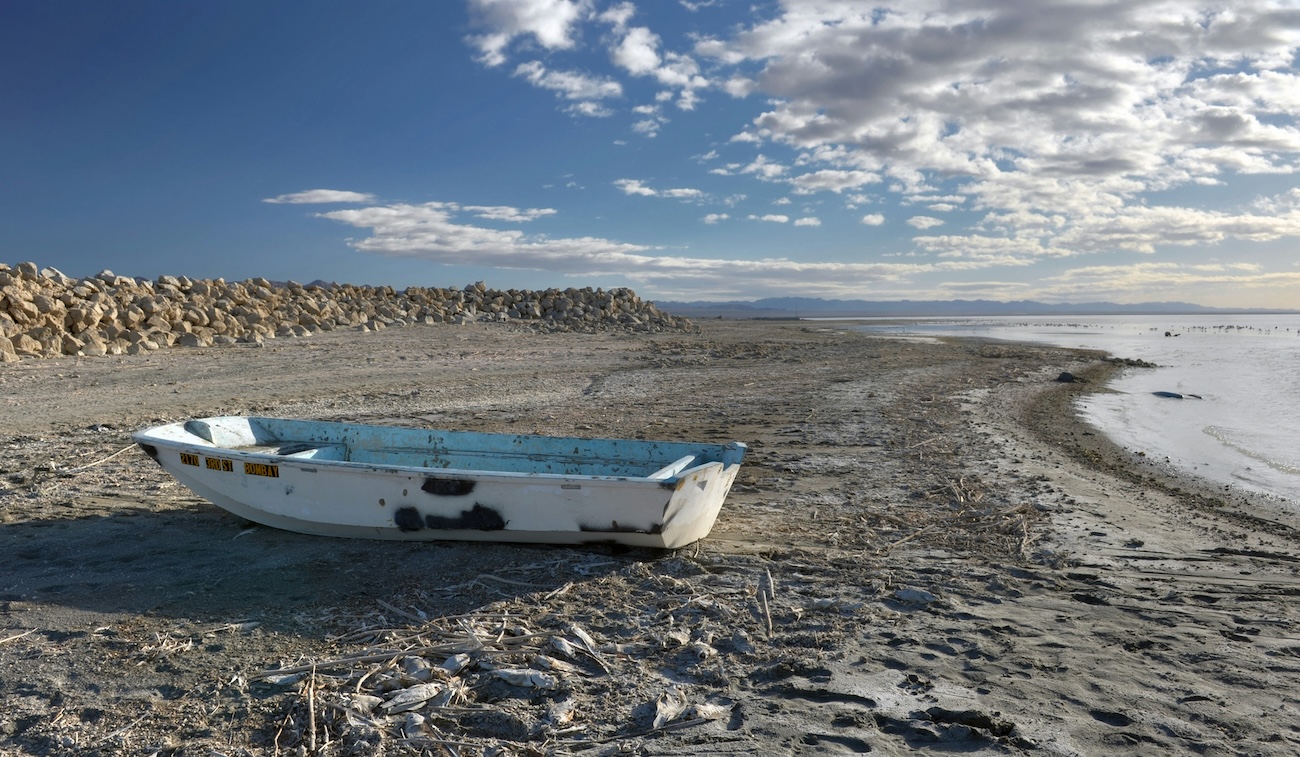
On the morning of November 17, 2018, the Indian fishermen anchored half a mile off the western shore of North Sentinel Island watched a group of Sentinelese drag a body across the sand and bury it just above the tide line. The body was John Allen Chau, a 26-year-old American missionary they had ferried to the island three nights earlier. He had paid them 25,000 rupees. He had also told them, in the small hours of his final approach, not to wait for him.
The Indian government did not retrieve the body. The Indian Navy ringed the island and watched. Diplomats from the U.S. consulate in Chennai asked, quietly, what the procedure was. There was no procedure.
The body stayed where the Sentinelese put it.
North Sentinel Island is the place where, after more than a century of trying, the modern world has agreed to stop trying. The Sentinelese have killed everyone who has come — colonial photographers, shipwrecked sailors, anthropologists, missionaries — and the Indian state has decided, eventually and reluctantly, that they were right to. A five-nautical-mile maritime exclusion zone surrounds the island. Approaching it is a criminal offense under Indian law. The Sentinelese have not asked for the protection. They have made their position clear in the only language that has carried: they shoot at anything that moves toward the beach.
Who Are the Sentinelese: Earth’s Last Uncontacted People
The Sentinelese are the last surviving people of an ancient Andamanese lineage that arrived in the islands tens of thousands of years ago. Their living relatives — the Onge, the Great Andamanese, the Jarawa — descend from the same first wave of modern humans out of Africa, somewhere between 50,000 and 70,000 years ago. The Sentinelese are the population that never assimilated, never traded, never intermarried. They remained.
Estimates of their current population range from 50 to 200. The number is a guess. Nobody has counted them. The 2011 Indian census recorded 15 — a figure produced from a distance by surveyors who could see only the shore. The actual population is unknown and uncountable.
Their language is unique. It is not Hindi, not Tamil, not any Andamanese tongue documented by 19th-century colonial officers. When researchers tried to speak to the Sentinelese in the language of their nearest neighbors, the Onge, the Sentinelese gave no sign of comprehension. The two populations have been linguistically isolated from each other for so long that one cannot be used to translate the other.
What is known about Sentinelese material culture has been observed from distance. They build outrigger canoes that they paddle in the shallows. They make bows roughly two meters long. They use untipped arrows for fishing and metal-tipped arrows for hunting. The metal comes from shipwrecks, salvaged in pieces and hammered into points. They wear nothing but ornamental headbands and bracelets. They have fire — visible from aerial footage as smoke from cooking fires.
Most of what the modern world believes about the Sentinelese has been inferred from photographs taken with telephoto lenses, anthropological notes written from boats, and the bodies of the people they have killed.
1880: Maurice Portman and the Kidnapping of Six Sentinelese
The British Colonial Anthropologist Who Took What He Wanted
Maurice Vidal Portman arrived in the Andaman Islands in July 1879 as a 19-year-old British naval officer assigned to Port Blair, the penal settlement the British had built to hold the rebels of the 1857 uprising and would later use for political prisoners of the Indian independence movement. He was made Officer in Charge of the Andamanese. He held the post for the next twenty years.
He made himself the foremost colonial authority on the Andamanese peoples. He learned the languages of the Great Andamanese groups. He photographed them obsessively — formal portraits, naked anthropometric studies, posed groupings — and published the results in volumes that European anthropologists would cite for the next century. He was knowledgeable, methodical, and entirely convinced of his right to do whatever the work required.
In January 1880, the work required taking six Sentinelese.
Portman’s expedition landed on North Sentinel in the middle of the month with a large armed party. The Sentinelese fled into the forest. Portman’s men entered the abandoned huts along the beach, took whatever objects of cultural interest they could carry, and pursued the inhabitants for several days through the interior. They captured an elderly man, a woman, and four children. They put them on a ship to Port Blair.
The pretense of the seizure was anthropological. The reality was conquest in miniature.
The Two Adult Deaths and What Was Carried Back to the Island
The two adults did not survive Port Blair.
Within days of arrival, both fell catastrophically ill. The British medical staff diagnosed conditions tied to exposure to pathogens the Andaman mainland carried as a matter of routine and to which the Sentinelese had no immunological history. The man and the woman died inside the colonial settlement, hundreds of kilometers from the only world they had ever known.
The four children were also sick, but less severely. Portman and his administration debated what to do. The children were returned to North Sentinel a few weeks later, dropped on the beach with a quantity of gifts. They presumably found their parents or kin. What they carried back with them — in their bodies, in their lungs — has been a question that anthropologists, epidemiologists, and Indian public health officials have circled ever since. The Sentinelese population of the 19th century may have been in the thousands. By the time the Indian government began its modern surveys in the 1960s, it had collapsed to a few dozen.
Portman never landed on the island again. He published photographs. He wrote essays. He retired with honors. The colonial career he built on the bodies of the Andamanese people he had documented gave the British anthropological project its lasting visual record. The price was paid in lives the British did not count.
1974: The National Geographic Crew and the Arrow in the Thigh
In early 1974, a documentary film crew from National Geographic accompanied an Indian anthropological expedition to North Sentinel. The crew included the anthropologist Triloknath Pandit of the Anthropological Survey of India, the documentary’s director, an armed Indian police escort, and a careful set of offerings: coconuts, aluminum pots and pans, a tethered live pig, a doll. The expedition planned to spread the gift-giving over three days. They believed that if the offerings arrived from the sea on motorized boats and were left at the tide line by people who quickly retreated, the Sentinelese might be persuaded to accept them.
The boat broke through the barrier reef. The Sentinelese came down to the beach.
A group of armed men emerged from the forest with bows drawn and arrows already at full draw. The pots, the doll, the coconuts, the pig were left in the sand near the water. The film crew got their footage. Pandit and the Indian anthropologists held their positions in the boats.
Then a Sentinelese man raised his bow, took deliberate aim across the gap of shallow water, and shot the documentary director through the left thigh.
The arrow was metal-tipped — salvaged, almost certainly, from one of the ships wrecked along the surrounding reef. The director collapsed in the boat. The man who had fired the arrow withdrew to the shade of a tree at the edge of the forest and laughed. The other Sentinelese walked down to the pile of gifts. They speared the tethered pig and buried it in the sand without eating it. They smashed the doll. They took the metal pots and pans into the forest.
The documentary was broadcast under the title Man in Search of Man. The Sentinelese photographs from the trip, by Raghubir Singh, ran in National Geographic under the headline “Arrows Speak Louder Than Words.” The Sentinelese had communicated, in the only language that carried, what they thought of the visit.
1981: The Primrose Aground on North Sentinel Reef
The MV Primrose was a 16,000-ton Panamanian-flagged freighter operated by Hong Kong’s Regent Shipping Company, carrying a load of chicken feed from Bangladesh to Australia. On August 2, 1981, a monsoon storm in the Bay of Bengal drove her off course in the night. She struck the coral reef off the western shore of North Sentinel Island just before midnight and lodged there. The thirty-one crew, mostly from Hong Kong and Taiwan, spent the rest of the night being hammered by the storm.
At dawn the Sentinelese came out of the trees.
Captain Liu Chunglong sent the cable that would make the Primrose famous in Hong Kong shipping circles for the next forty years. He reported wild men on the shore, more than fifty of them, carrying bows and spears and building boats. He asked for an emergency airdrop of firearms. He noted that he could not guarantee the safety of his crew if the islanders boarded the ship at sunrise.
No firearms were dropped. The Indian Navy was forty hours away in worse weather. The crew armed itself with axes, a flare gun, and lengths of pipe and kept a 24-hour watch on the deck. They built rough barricades around the cargo bays. They watched the Sentinelese build canoes on the beach.
The Sentinelese launched. They paddled out. The same storm that had wrecked the Primrose kept their canoes off the ship’s hull and blew their arrows off the high deck. Then the seas rose again and the Sentinelese retreated. The standoff lasted nearly two weeks. The crew was eventually winched off by Indian Navy helicopters when the weather broke, under the watchful eyes of the Sentinelese on the beach.
The Primrose was left where she had run aground. Her hull is still there. Over the next decade the Sentinelese stripped her of her iron and hammered the pieces into arrowheads — a single technological generation harvested from a wreck the modern world had given them without intending to.
1991: The First Peaceful Contact with the Sentinelese
Triloknath Pandit and the Indian Goodwill Missions
The Indian government did not give up easily. From 1967 onward, the anthropologist Triloknath Pandit led a series of low-profile expeditions to North Sentinel under the banner of the Anthropological Survey of India. The strategy was patient and one-directional: a boat would approach the shore, drop a quantity of coconuts and metal cookware in the shallows, and retreat. The team would return weeks or months later to see whether the gifts had been taken. They almost always had. The Sentinelese rarely showed themselves. When they did, they shot arrows.
Pandit was Kashmiri, soft-spoken, a Brahmin who would later describe the work as the great obsession of his career. He kept records of every trip. He photographed what he could from a distance. He insisted, even when his colleagues argued for armed escorts, that the Sentinelese were not hostile — they were protective. He believed, against the prevailing view of the Indian administration, that contact would eventually happen on Sentinelese terms or not at all. He waited twenty-four years to be proven right.
January 4, 1991: The Day the Coconuts Worked
On the morning of January 4, 1991, Pandit’s team approached the western beach of North Sentinel in two dinghies launched from the MV Tarmugli. The team included Madhumala Chattopadhyay, the first female anthropologist to take part in a Sentinelese contact expedition. They tossed coconuts into the water near the beach.
The Sentinelese came down. They were unarmed. They waded into the shallows and gathered the coconuts and stood looking at the boats.
The team returned to the ship to resupply. They came back in the afternoon. Two dozen Sentinelese were waiting on the shoreline. One man pointed a drawn bow at the dinghies. A Sentinelese woman walked up to him and pushed the bow downward. The man buried his weapons in the sand. Then the Sentinelese walked, for the first time in recorded history, close enough to the dinghies for the Indian anthropologists to hand them coconuts directly.
Pandit was fifty-six years old. He had been making the trip, in one form or another, since 1967. The day worked. The day that nobody had expected to come came.
A second peaceful encounter followed on February 21, 1991. The Sentinelese boarded the visitors’ boat and accepted coconuts hand to hand. Then they melted back into the forest.
1996: When India Stopped Trying
The expeditions continued for three more years. They never repeated what had happened on January 4. Some of the visits were friendly; others ended in the customary volley of arrows. The pattern that emerged was unsettling: the Sentinelese were beginning to expect the gifts. They were beginning to wait on the shore for the boats. The Indian anthropologists realized, slowly, that what they had been treating as goodwill had begun to look like the early stages of dependence — and that dependence was the historical precondition for everything that had destroyed every other Andamanese tribe.
The Indian government quietly ended the program in 1996. Pandit retired. The photographs from the 1991 expedition were removed from public circulation by government order. The official policy reversed: no more contact. The Sentinelese had made their position known often enough. The state had finally heard.
2004: The Sentinelese Survive the Tsunami
On the morning of December 26, 2004, the Indian Ocean earthquake off Sumatra sent a tsunami racing across the Bay of Bengal. The wave hit the Andaman Islands within ninety minutes. Almost two thousand people died across the archipelago. Whole stretches of the coast were destroyed. The Indian government did not know, for several days afterward, whether the Sentinelese had survived.
A Coast Guard helicopter was dispatched to overfly the island.
The crew expected to find devastation. They found instead that the island’s coral reef had been lifted by the earthquake — in places by more than a meter — and that the new exposed sand and shallow lagoons had effectively extended the shoreline outward. The Sentinelese had moved with it. The team spotted figures on the beach. The helicopter dropped lower.
A Sentinelese man on the sand below raised his bow and drew it taut and fired an arrow at the aircraft.
The photograph the Coast Guard photographer took in that moment is the most widely circulated image of any Sentinelese person ever recorded. The man stands alone on the beach, his back arched, the bow drawn fully, the arrow released or about to be released into a sky he has no other way of warning. He is shouting. The figure beside him on the right of the frame is running. The helicopter banks away.
The Indian government interpreted the photograph as the answer to a question it had been asking for several days. The Sentinelese were alive. They did not need help. They did not want the helicopter to come back.
The helicopter did not come back.
2006: The Killing of Sundar Raj and Pandit Tiwari
Sundar Raj was forty-eight years old. Pandit Tiwari was fifty-two. Both were fishermen from the Indian mainland working the waters around the Andamans illegally, harvesting mud crabs in the protected coastal shallows that fed the Sentinelese as well. On the night of January 25, 2006, they anchored their open-topped wooden boat in the shallow water close to North Sentinel. They drank palm wine. They went to sleep.
The anchor was a rock tied to a rope.
The rock dragged in the current during the night. The boat drifted toward the island. The two men did not wake up. Other fishermen working the channel saw the boat moving and called to them through the dark, but the boat drifted on without answering. By dawn on January 27 it had grounded in the shallows directly off the western shore.
A group of Sentinelese came down to the beach with axes. They waded out to the boat. They killed the two men where they lay, still drunk, probably without ever fully waking.
The Indian Coast Guard sent a helicopter. The Sentinelese met it with a hail of arrows. The recovery pilot saw the two bodies from the air: the islanders had carried them up the beach and posed them upright in the sand on bamboo stakes, faces turned toward the sea. The helicopter could not land. It could not even hover low enough to lower a winch. The pilot photographed what he could and turned back. The bodies were never recovered.
The administration in Port Blair received calls from Sundar Raj’s family demanding justice and compensation. The administration also received a quieter call from Pandit Tiwari’s elderly father, R.K. Tiwari, a schoolteacher on the outskirts of the capital. He had heard the news. He told the officials not to pursue it. His son had broken the law. The Sentinelese had defended their home. There was no case to bring.
2018: John Allen Chau’s Final Mission to North Sentinel
The American Missionary Who Spent Years Preparing
John Allen Chau grew up in Vancouver, Washington, in a Christian family. He read Robinson Crusoe in elementary school and decided, very young, that he wanted to be a missionary on a remote island. By the time he reached high school he had identified the Sentinelese as his specific calling — the people he believed God had chosen him to reach. He spent the next decade preparing.
He completed missionary training in Mexico, Israel, and Iraq. He attended an evangelical organization called All Nations in Kansas City, which ran a boot-camp program for missionaries traveling to dangerous regions. The training included mock encounters with hostile tribespeople played by missionary staff. He studied medicine, linguistics, and survival. He visited the Andamans several times to scout. He vaccinated himself against everything he could find a vaccine for and quarantined himself for weeks before each visit so he would carry no pathogens.
He told no one in the Indian government what he intended to do. He believed, with the absolute confidence of a young man trained by people who had also believed it, that God would protect him.
The Three Approaches and the Arrow Through the Bible
On the night of November 14, 2018, Chau paid five Indian fishermen 25,000 rupees — about $350 — to take him by motorized fishing boat to within half a mile of North Sentinel. The boat stopped in the darkness. He assembled a foldable kayak on the deck.
He did not paddle in that night.
On the morning of November 15, Chau put the kayak in the water with a waterproof Bible and a bag of gifts and paddled toward the beach. The Sentinelese came down to meet him. He hollered, by his own later account, “My name is John, I love you and Jesus loves you.” A boy in the group raised a bow and shot a metal-tipped arrow into the Bible Chau was holding against his chest. The arrow lodged in the pages. Chau turned the kayak around and paddled back to the fishing boat. He wrote down what had happened in a journal he kept in his backpack.
On the morning of November 16, he paddled in again. The Sentinelese broke his kayak this time. He swam back to the fishing boat with one of his bags. He wrote a letter to his family. “You guys might think I’m crazy in all this,” it read, “but I think it’s worthwhile to declare Jesus to these people.” And: “God, I don’t want to die.”
He gave the letter to the fishermen and told them to leave without him. He waded into the surf in the dark of the early hours of November 17 and walked up the beach.
The Body in the Sand
The fishermen circled back at dawn. They saw a group of Sentinelese on the beach. They saw the islanders dragging a body across the sand. They saw the body being buried just above the tide line. They could not see the face. They could see the clothing. They knew what it was.
They returned to Port Blair. They gave Chau’s diary to a local Christian preacher he had befriended. The preacher contacted Chau’s family in Washington. The family contacted the U.S. consulate in Chennai. The consulate contacted the Andaman administration. By November 21, the Director General of Police in Port Blair, Dependra Pathak, had issued a press release headed Death of US National. The world had a new story.
Indian officials made several attempts to plan a body recovery. Each was abandoned. The anthropologist consulted on the question — a colleague of Pandit’s, who had spent his life studying the Sentinelese — told the police that any retrieval attempt would force a confrontation with people who had every right to defend themselves and who had no immunity to whatever pathogens a recovery team would carry. The risk was unacceptable. The body would stay.
Chau’s father later said in a statement that he forgave the Sentinelese. He also blamed the missionary community for what he called the extreme Christian vision that had been instilled in his son. The All Nations organization described Chau as a martyr. The Indian press described him, more accurately, as a man who had been told what would happen and had gone anyway.
The body is still on the island. Nobody outside the Sentinelese knows what the burial looked like, or where exactly above the tide line it was, or whether there was anything left to find a year later, or five.
India’s Five-Mile Exclusion Zone and the Right to Be Left Alone
The legal framework around North Sentinel is older than most of the incidents it has had to handle. The Andaman and Nicobar Islands Protection of Aboriginal Tribes Regulation was passed by the Indian government in 1956 and has been amended several times since. It declares North Sentinel a tribal reserve, prohibits all travel to the island, and prohibits any approach closer than five nautical miles. The Indian Navy enforces the perimeter. The Indian Coast Guard patrols the surrounding waters. Photography of the island closer than the legal distance is treated as a criminal offense.
The policy was not always this strict. The Indian government spent the first three decades of independence trying to figure out what to do with the Sentinelese. The early position was assimilationist. The middle position, after Pandit’s expeditions, was cautiously contact-oriented. The current position — that the Sentinelese have a sovereign right to be left alone, that the state’s only job is to enforce that right against everyone else — was arrived at slowly and against considerable pushback from anthropologists, missionaries, journalists, and politicians who argued that the policy condemned the Sentinelese to permanent isolation.
What changed the argument was disease. The Andamanese groups that had been contacted earlier — the Great Andamanese, the Onge — had collapsed catastrophically. The Great Andamanese, who numbered roughly 5,000 at the time of Portman’s appointment in 1879, were down to a few dozen by the modern censuses. The Onge had fallen from a few thousand to roughly 100. The same pattern, applied to a Sentinelese population estimated at no more than 200, would simply end them.
The Indian government’s position now is that the Sentinelese have refused contact for documented reasons — the Portman kidnapping, the diseases their ancestors carried back, the long history of Andamanese collapse — and that the modern world’s curiosity is not a sufficient reason to override their decision. The policy holds because most parties have, eventually, come to agree with it. Survival International, the international Indigenous rights organization, has campaigned consistently for the exclusion zone to be strengthened, not weakened. The All Nations missionary organization, despite supporting Chau’s preparation, did not send another missionary after him. The Indian Coast Guard arrested an American “thrill seeker” in March 2025 who had briefly landed and left a can of Diet Coke on the beach before fleeing. The legal regime is consistent. The Sentinelese have made it work for them.
The Atlas Entry: Why You Cannot Visit North Sentinel Island
You cannot land on North Sentinel Island. You cannot legally approach within five nautical miles of its shore. You cannot photograph the island from closer than the legal perimeter without committing a federal offense under Indian law. The Indian Navy will turn you away, and if you ignore the warning, the Indian Coast Guard will arrest you and the Andaman administration will prosecute you. If you somehow get past the patrols, the Sentinelese will do what they have always done.
The closest legal experience of the island is from a commercial flight between Port Blair and the Indian mainland on clear days, where the island sometimes shows as a small dark shape under the right window. The Andaman Anthropological Museum in Port Blair holds Maurice Vidal Portman’s photographs — including some of the Sentinelese children he kidnapped in 1880 — and the records of T.N. Pandit’s contact expeditions. The museum is, in effect, the legal substitute for the place. It is where the modern world’s documentation of the Sentinelese is kept. It is also where the moral question that the documentation has been raising for a century is most cleanly visible. Portman photographed Andamanese people he had taken from their homes by force. Pandit photographed Sentinelese people who, eventually, chose to accept a coconut. Chau photographed himself.
The Atlas exists to direct people toward dark and contested places. This one is closed and should stay that way. The Sentinelese have given the modern world its instructions in clear and consistent terms for the better part of two centuries. The fact that the modern world has finally listened is not a defeat for the curious traveler. It is one of the small things the modern world has, occasionally, gotten right.
The body is still on the beach. The beach is still closed. Both will probably stay that way.
Frequently Asked Questions
Where is North Sentinel Island and why is it forbidden?
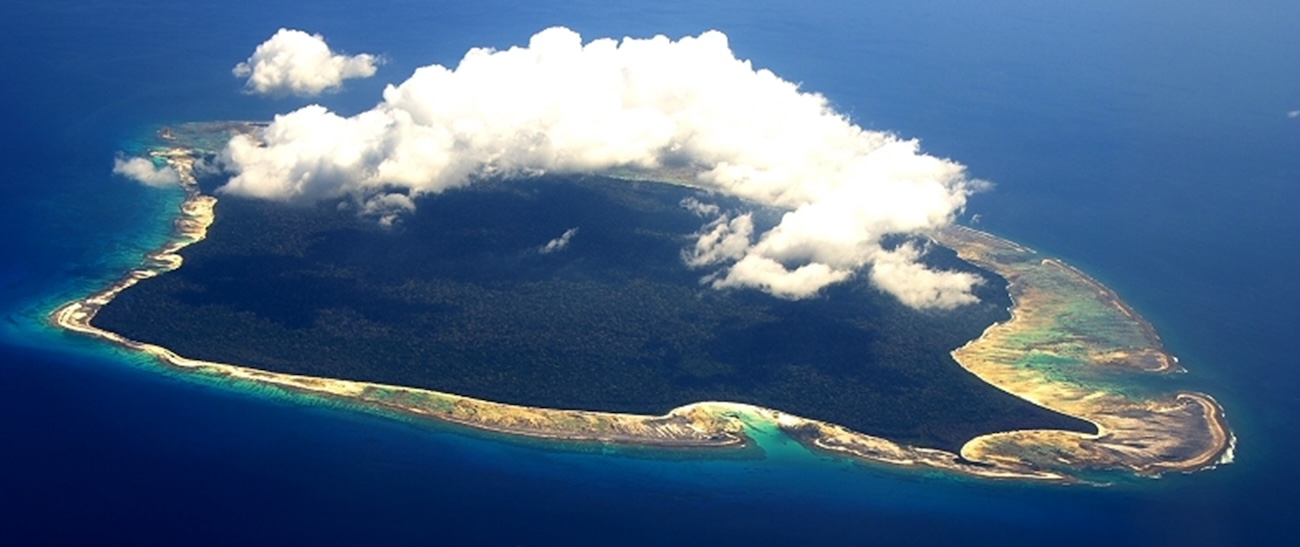
North Sentinel Island is a 60-square-kilometer forested island in the Andaman archipelago, part of India’s Andaman and Nicobar Islands union territory in the Bay of Bengal. It is the home of the Sentinelese, an Indigenous group descended from one of the earliest human migrations out of Africa. The Indian government has declared the island a tribal reserve under the Andaman and Nicobar Islands Protection of Aboriginal Tribes Regulation of 1956 and enforces a five-nautical-mile exclusion zone around it. Approaching the island, photographing it from within the perimeter, or attempting to land is a criminal offense under Indian law. The closure exists to protect the Sentinelese from outside disease, exploitation, and contact they have made clear they do not want.
Who are the Sentinelese and how long have they lived there?
The Sentinelese are the last surviving people of an ancient Andamanese lineage that arrived in the islands tens of thousands of years ago, as part of the first wave of modern humans out of Africa. Their living relatives — the Onge, the Great Andamanese, the Jarawa — share the same ancestral migration but have been contacted, assimilated, or decimated by disease over the past two centuries. The Sentinelese are the population that never assimilated, never traded, and never intermarried. Their current population is estimated at between fifty and two hundred people, but nobody has counted them. Their language has not been translated by any outside researcher.
What happened to John Allen Chau on North Sentinel Island?
John Allen Chau was a 26-year-old American evangelical missionary who paid five Indian fishermen to take him to North Sentinel Island in November 2018. He attempted to land on three consecutive days. On the first attempt, a Sentinelese boy shot a metal-tipped arrow that pierced the Bible he was carrying. On the second, the islanders broke his kayak and he swam back to the fishing boat. On the third night, he walked up the beach in the dark and did not return. The fishermen returned at dawn on November 17 and watched the Sentinelese drag his body across the sand and bury it just above the tide line. Indian authorities have not attempted to recover his body. It is still on the island.
Can you visit North Sentinel Island?
No. The Indian government prohibits all civilian access to North Sentinel Island. The legal exclusion zone extends five nautical miles from the shore, patrolled by the Indian Navy and Coast Guard. Unauthorized landings or even close approaches are prosecuted as federal offenses, and anyone who somehow evades the patrols will be met on the beach by Sentinelese armed with bows and arrows. The closest legal interaction with the island is from a commercial flight between Port Blair and the Indian mainland on clear days. The Andaman Anthropological Museum in Port Blair holds the photographs and records of every documented Sentinelese contact attempt from the colonial period onward.
Why does India enforce a no-contact policy with the Sentinelese?
The other Andamanese groups that were contacted during the British colonial period — the Great Andamanese, the Onge, and the Jarawa — collapsed catastrophically from introduced diseases for which they had no immunological history. The Great Andamanese, who numbered around five thousand in 1879, are down to a few dozen today. The Indian government concluded, after decades of contact attempts in the 1960s through 1990s, that any sustained contact with the Sentinelese would risk ending them in the same way. The current policy is that the Sentinelese have a sovereign right to refuse contact and that the state’s role is to enforce that right against the rest of the world.
Has anyone ever made peaceful contact with the Sentinelese?
Yes, briefly. On January 4, 1991, the Indian anthropologist Triloknath Pandit led a small team that included Madhumala Chattopadhyay — the first female anthropologist to take part in a Sentinelese expedition — toward the western beach of the island with offerings of coconuts. The Sentinelese approached the boats unarmed and accepted the coconuts hand to hand. A second peaceful encounter followed on February 21 of the same year. The Indian government quietly ended the contact program in 1996 after concluding that the Sentinelese were beginning to expect the gifts and that dependence was the historical precondition for every other Andamanese collapse. There has been no documented peaceful contact since.
Sources
The Last Days of John Allen Chau — Alex Perry, GQ (2019)
The Sentinelese of North Sentinel Island: A Reappraisal of Tribal Scenario in an Andaman Island in the Context of Killing of an American Preacher — Mundayat Sasikumar, Journal of Asian and African Studies (2019)
They Live in Isolation on North Sentinel Island — But the World Won’t Leave Them Alone — Adam Goodheart, National Geographic (2024)
Inside the Story of John Allen Chau’s Ill-Fated Trip to a Remote Island — Jason Daley, Smithsonian Magazine (December 2018)
The Last Island of the Savages: Journeying to the Andaman Islands to Meet the Most Isolated Tribe on Earth — Adam Goodheart, The American Scholar (September 2000)
The Land of Naked People: Encounters with Stone Age Islanders — Madhusree Mukherjee, Houghton Mifflin Harcourt (2003)
Notes on the Andamanese: Including the Languages and a Comparative Vocabulary — Maurice Vidal Portman, Government of India (1898)
Survival Comes First for Sentinel Islanders — The World’s Last ‘Stone-Age’ Tribe — The Observer / The Guardian (February 12, 2006)
The Sentinelese of North Sentinel Island — Triloknath Pandit, Anthropological Survey of India (1990)
A Season of Regret for an Aging Tribal Expert in India — Ellen Barry, The New York Times (May 5, 2017)
Andaman and Nicobar Islands Protection of Aboriginal Tribes Regulation, 1956 — Government of India, statutory text and amendments
Sentinelese Tribe of the Andaman Islands — Survival International, institutional reports and campaign archives (ongoing)