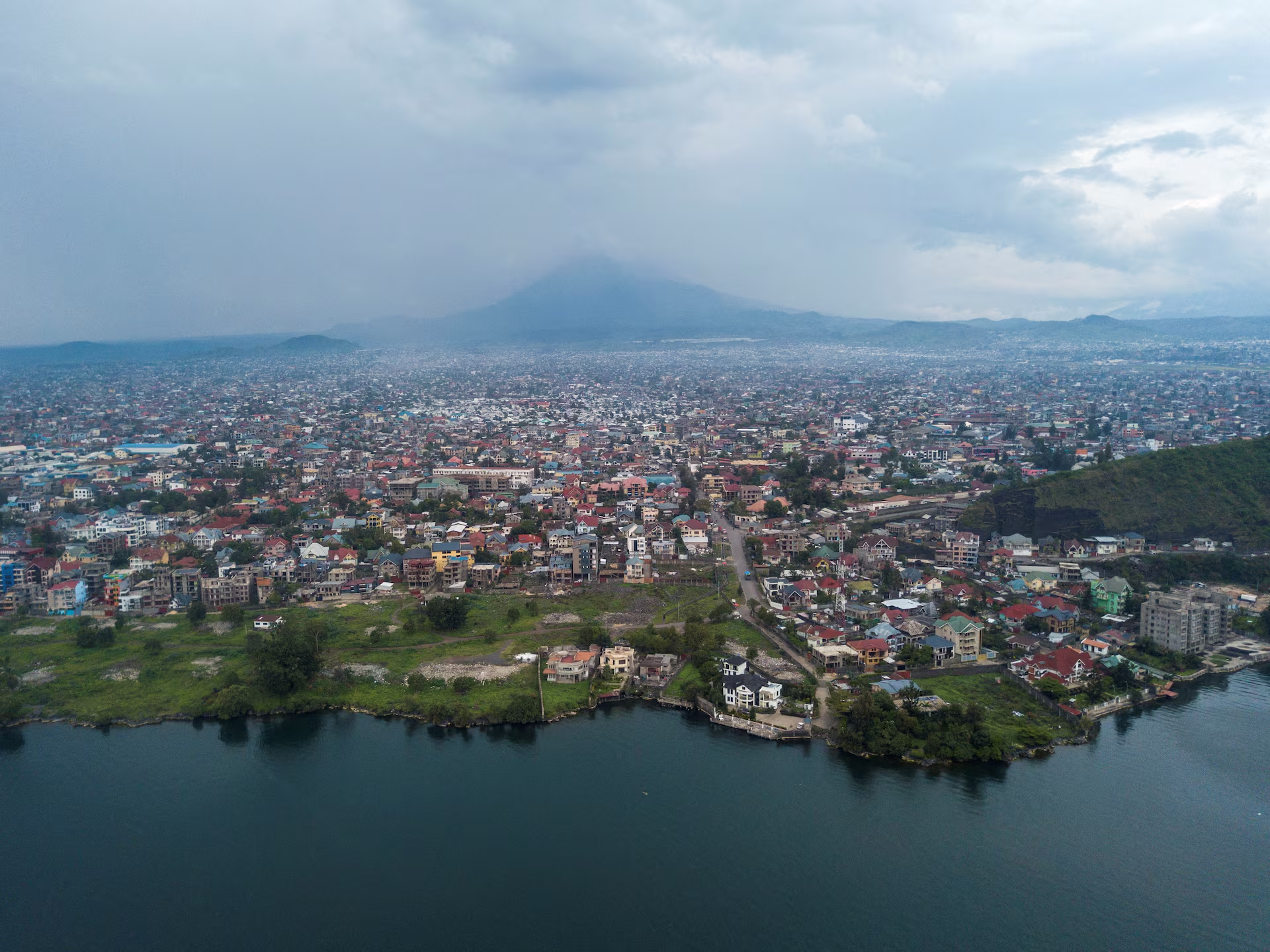
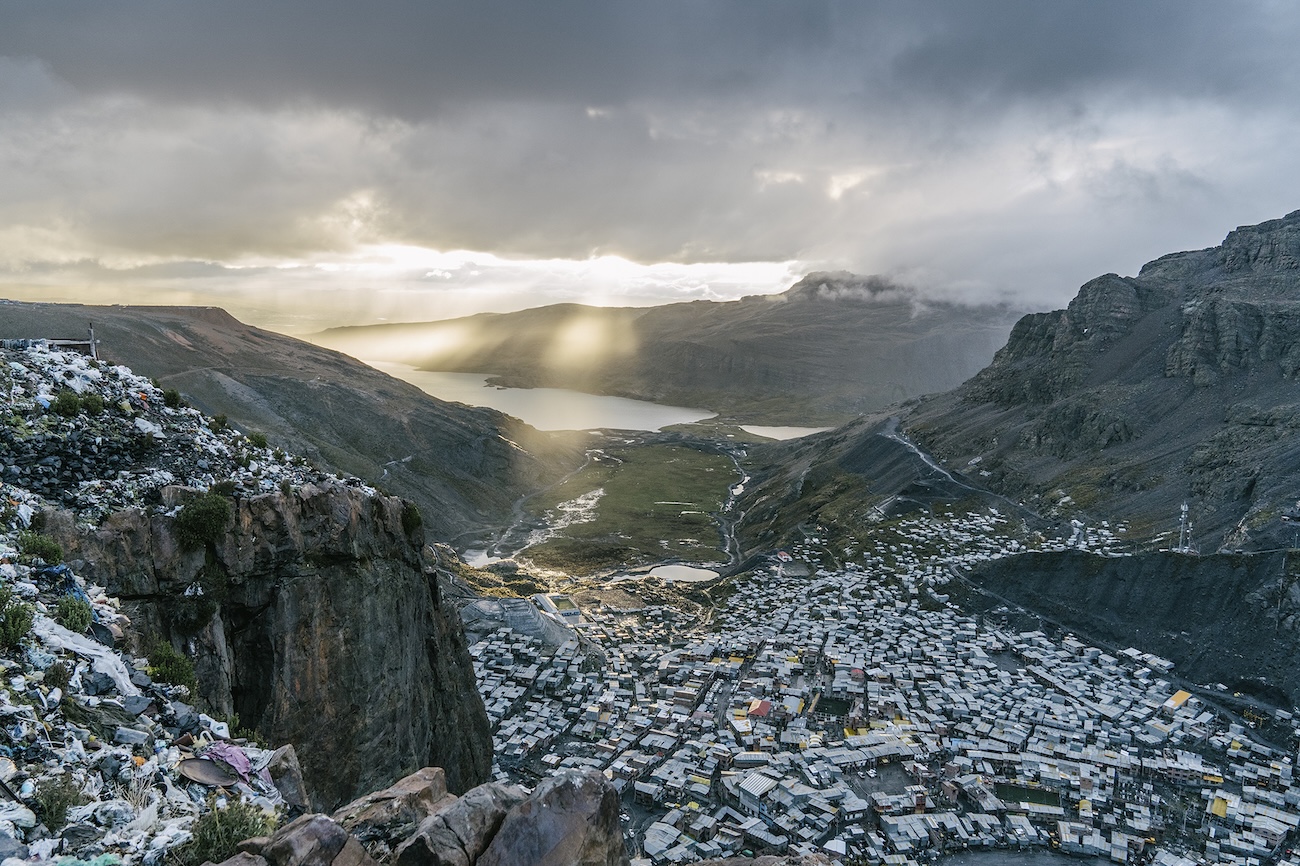
Obuasi is a gold mining town of 175,000 people in Ghana’s Ashanti Region, built on one of the largest known gold deposits on Earth. The British incorporated the Ashanti Goldfields Corporation in London in 1897 and extracted gold from beneath the town for over a century — at peak, more than 500,000 ounces a year from shafts sunk 1,500 meters into the rock. When the mine closed in 2014 and 5,000 workers lost their jobs, thousands of illegal miners flooded into the vacuum with excavators, mercury, and Chinese financing, poisoning the rivers and stripping the cocoa farms that once fed the region. In January 2025, soldiers guarding the reopened mine shot and killed nine illegal miners at the perimeter fence. The town rioted. The gold is still there. So is the question of who it belongs to.
The Night Soldiers Shot Miners at the Obuasi Mine
Late on the night of January 18, 2025, a group of illegal miners breached the security perimeter around AngloGold Ashanti’s Obuasi mine. The army’s account says sixty men armed with locally made rifles, pump-action shotguns, knives, axes, and gas cylinders opened fire on a military patrol from Operation Halt II — the latest in a series of government deployments to protect the mine from intrusion. The soldiers returned fire. Between seven and nine men were killed. Fourteen more were seriously injured.
Kofi Adams, the local chairman of the Ghana National Association of Small-Scale Miners, denied the dead men were armed. He called the killings “unprecedented” and said that in the past, guards had fired warning shots to drive off trespassers. That this had been the standard procedure was evidenced by the government’s own response: President John Dramani Mahama ordered an immediate investigation into the violence and called on AngloGold Ashanti to cover the medical expenses of the injured and the burial costs of the dead.
By morning, residents of Obuasi had poured into the mining company’s compound. They set fire to buses and vehicles. They accused AngloGold of extracting the country’s mineral wealth while doing nothing to develop the town that sits on top of it. The rage was not new. It was the same anger that had been building for 128 years — since the first concession was signed, the first shaft sunk, and the first gold shipped to London.
Obuasi is the town that gave Ghana its colonial name. The Gold Coast was named for Ashanti gold, and Ashanti gold came overwhelmingly from the hills around Obuasi — a deposit so rich that the Victorian explorer Sir Richard Burton called the area “the Neglected El Dorado.” The mine that was incorporated in London in 1897 produced over $10 billion worth of gold across its first century. The town that grew up around it was a company settlement designed to service the operation, not to outlast it. When the operation faltered — first through declining production, then through outright closure — the town was left with the same inheritance every extraction economy leaves behind: a population assembled by the mine, a landscape shaped by the mine, and no economic alternative to the mine. The galamsey crisis that followed was not a deviation from the system. It was the system’s logical conclusion, carried out by people the system had discarded.
The Gold Coast Before Obuasi — Ashanti Gold and the Wars That Opened It
Ashanti Gold and the Kingdom the British Needed to Break
Gold had been mined in the Ashanti region for centuries before any European set foot on the plateau. The Ashanti Empire — one of the most powerful states in West African history — built its wealth partly on the gold trade, channeling metal northward across the Sahara and southward to the coastal forts where European merchants waited. The Ashanti king sat on the Golden Stool, a sacred object believed to contain the soul of the nation. Gold was not merely an economic resource. It was spiritual currency.
The British fought four wars against the Ashanti between 1824 and 1900. The final campaign, in 1896, resulted in the overthrow and exile of Nana Prempeh I to the Seychelles and the declaration of the Ashanti region as a British protectorate. The military conquest did what military conquests do: it opened the interior to commercial exploitation. Soldiers and travelers returning from the Ashanti wars spread word of the region’s gold reserves. “You could pick up gold as you would potatoes,” one traveler reported. The stage was set for industrial extraction.
Ellis, Biney, and Cade — How Two Fante Merchants and a London Clerk Founded the Richest Mine in Africa
The Obuasi concession did not begin with the British. In 1890, Joseph E. Ellis and Chief Joseph E. Biney, Fante merchants from Cape Coast, along with their accountant Joseph P. Brown, negotiated a 100-square-mile mining concession in the Obuasi district from the Bekwaihene. They opened the Ellis Mine and introduced modern techniques — including gunpowder for blasting — to a site that had been worked by hand for generations. The mine operated for five years.
The scale of the deposit demanded capital the three Fante partners could not raise. Biney sent ore samples to a London merchant who supplied his equipment. The samples attracted little interest until Edwin Arthur Cade joined the firm through marriage to the merchant’s daughter. Cade had the ore assayed at Johnson Matthey in London on April 20, 1895. It ran 10.5 ounces of gold per ton — an extraordinary grade. Cade was decisive. He traveled to the Gold Coast, negotiated the purchase of the Ellis Mine concession, and formed the Côte d’Or Mining Company to fund operations.
With the Ashanti protectorate now under direct British control, Cade secured governmental ratification of his concession. On June 11, 1897, he registered the Ashanti Goldfields Corporation in London with a nominal capital of £250,000 and listed it on the London Stock Exchange on the same day. The three Fante merchants who had found the gold, staked the concession, and operated the mine for five years received £200 in deposit money. The corporation Cade registered would produce gold for over a century.
Cade himself did not survive to see it. He died of malaria in 1903, at the age of 46, in the Offin River village of Dominassi. His grave sits in the European cemetery at Obuasi — one colonial administrator among the stones, buried in the land he had signed away from the people who lived on it.
Ashanti Goldfields and the Obuasi Company Town That Gold Built
The Obuasi Mine at Its Peak — Underground to 1,500 Meters
The mine scaled rapidly after the railway from Sekondi reached Obuasi in 1902, cutting the transport bottleneck that had limited early production. Cyanidation was introduced in 1904 to improve ore processing. By the 1930s, annual output had reached 300,000 ounces. New shaft developments — including the Eaton Turner shaft in 1955 — pushed production past 500,000 ounces per year by the mid-twentieth century. At its peak, the Obuasi mine was one of the ten largest gold operations on Earth, and the richest in terms of yield per ton of ore.
The ore body itself is remarkable. Gold mineralization runs along an 8-kilometer north-south strike length within Precambrian greenstones, hosted in graphite-chlorite fault zones. The deposit contains two types of ore: high-grade free gold in quartz veins, and sulphide ore in which gold is trapped within arsenopyrite. Mining has extended to depths of 1,500 meters. The total past production plus remaining resource exceeds 62 million troy ounces — a figure that places Obuasi among the most productive gold deposits in human history.
The Company Town — Tennis Courts, a Stadium, and the Workers Below
Ashanti Goldfields did not merely dig a mine. It built a town. The company constructed housing estates for workers and managers, a hospital, schools, a golf course, and Len Clay Stadium — a 20,000-seat venue that became the home ground of Ashanti Gold Sporting Club, the professional football team that carries the mine’s name. The company town had tennis courts and swimming pools for senior staff. It had a railway station and, eventually, an airport. For the executives and engineers who lived in the upper-tier housing, Obuasi offered a lifestyle that belonged to a different country from the one surrounding it.
The labor force told a different story. Ashanti Goldfields drew migrant workers from across Ghana — particularly from the northern regions, where poverty pushed men southward toward the mines. Underground conditions were punishing: heat exceeding 40°C at depth, silica dust, poor ventilation, and the constant risk of rockfall. A pivotal 18-day strike in November 1945 — sparked by 60 machine drivers demanding reduced hours and spreading to over 2,000 underground workers — halted production and forced the company to investigate working conditions. A multi-mine strike the following year secured wage increases, a reduction from 48 to 45 hours per week, and 14 days of annual leave. Eleven strikes were recorded at Ashanti Goldfields between 1945 and 1957 alone.
The most significant figure to emerge from the mine was Sam Jonah. Born in a military camp in Kibi in 1949, Jonah’s family moved to Obuasi shortly after his birth. He began working at the mine in 1969, studied mining engineering at Camborne School of Mines in England, and was appointed CEO of Ashanti Goldfields in 1986 at the age of 36. Under his leadership, annual production grew from 240,000 to over 1.6 million ounces. In 1996, Ashanti Goldfields became the first operating African company listed on the New York Stock Exchange — a milestone that made Jonah a national figure and, in 2003, earned him an honorary knighthood from Queen Elizabeth II. The mine that two Fante merchants had found and a London clerk had incorporated was now, for the first time, led by a Ghanaian.
The Decline of the Obuasi Mine, the Closure, and the Galamsey Explosion
From AngloGold Merger to the 2014 Shutdown
Jonah’s tenure was not without crisis. In 1999, a disastrous hedging decision nearly destroyed the company when gold prices plummeted. The recovery was managed, but the underlying trajectory at Obuasi was downward. Underground infrastructure was aging. Development and backfill constraints limited access to deeper ore. Production declined almost continuously from the mid-1990s onward.
In 2004, Ashanti Goldfields merged with South Africa’s AngloGold in a $1.4 billion deal, forming AngloGold Ashanti. The merger was supposed to bring fresh capital and technical expertise to Obuasi. Production continued to fall. By 2014, the last year of full operation, the mine produced 243,000 ounces — less than half its output a decade earlier. In the last quarter of 2014, AngloGold halted mining operations entirely. Over 5,000 employees were laid off. The mine was placed on care and maintenance.
The closure was a seismic event for Obuasi. The mine was not merely the town’s largest employer — it was the town’s reason for existing. The company housing, the hospital, the schools, the stadium — all of it had been built to serve the mine. Without the mine, Obuasi was a town of 175,000 people sitting on top of one of the richest gold deposits on Earth, with no legal way to access the wealth beneath their feet.
Galamsey — The Illegal Gold Rush That Filled the Void
The void did not stay empty. Within months of the closure, illegal miners began entering the mine complex. By February 2016, a large number of galamsey operators had physically invaded the concession area. In that year, an AngloGold employee was killed by a mob of illegal miners. The government deployed security forces to evict them, but the evictions were temporary. The miners came back.
Galamsey — from the English phrase “gather them and sell” — is Ghana’s term for illegal small-scale mining. The practice has existed for generations, but the scale exploded after 2008 when an estimated 50,000 Chinese nationals entered the country to mine gold illegally, bringing with them heavy excavators, wash plants, and the capital to operate on an industrial scale. The Small-Scale Gold Mining Act of 1989 had attempted to regulate artisanal mining by requiring licenses, but fewer than 30 percent of small-scale miners are registered. The rest operate outside the law — employing hundreds at a time, using mercury to separate gold from ore, and working with heavy machinery that tears the landscape apart at a pace hand-mining never could.
The highway from Obuasi south to Dunkwa tells the story. Both sides of the road are lined with excavating machines and gold-washing outposts. The land behind them is a wasteland of open pits filled with turbid brown water. Cocoa farms that once fed families and supplied Ghana’s second-largest export crop have been sold to galamsey operators and dug out. Kwaku Asare, a farmer near Obuasi, sold his 14 acres to miners with a Chinese sponsor after years of declining yields. “When the Chinese came, they told me that my plants were not yielding anymore because there was so much gold under the soil,” he told National Geographic. The money is gone. His land is poisoned.
Artisanal and small-scale mining now accounts for roughly 40 percent of Ghana’s total gold production. It employs over one million people. In 2018, Ghana overtook South Africa as Africa’s largest gold producer, and galamsey was a significant driver of that output. The economics are stark: a galamsey miner can earn $125 a week — as much as a teacher earns in a month.
Poisoned Rivers and Bare Cocoa Trees — The Environmental Catastrophe
The environmental damage is not metaphorical. Mercury used in galamsey processing contaminates rivers, groundwater, and soil. The Offin, Pra, Ankobra, and Birim rivers — historically the major water sources for communities across southern Ghana — have been contaminated to the point of unusability. The Ghana Water Company Limited has recorded water turbidity levels of 14,000 NTU, seven times the maximum of 2,000 NTU that treatment plants can process. Experts have warned that Ghana could be importing water by 2030.
Mercury exposure is particularly devastating for the children and teenagers who work galamsey sites, handling the liquid metal with bare hands. Neurological disorders, kidney failure, birth defects, and cancer have all been documented in mining communities. The destruction extends to agriculture: mercury poisons the soil and stunts crop growth, including cocoa. In communities around Obuasi where families once traveled to buy fresh fish and produce, the markets now sell imported food. The Bishop of Obuasi Diocese, Most Rev. John Yaw Afoakwah, described the influx of Chinese miners and their technology as a turning point: “Whether you go north, west, or south, people are playing galamsey.”
Successive governments have declared war on galamsey. Operations Halt, Vanguard, Flush Out, and Galamstop have deployed soldiers, seized equipment, and made arrests. In some instances, excavators were publicly burned. None of it has worked. Five hundred seized excavators have gone missing without a trace. Key state officials, party financiers, and ruling-party politicians have been named as galamsey beneficiaries. Akonta Mining, owned by the Ashanti Region’s ruling-party chairman, was found operating in a forest reserve without a permit. No prosecution followed.
The $500 Million Obuasi Redevelopment and the Soldiers at the Gate
AngloGold’s Obuasi Redevelopment
In 2018, AngloGold Ashanti signed regulatory and fiscal agreements with the Ghanaian government to redevelop Obuasi into a modern mechanized underground mine. The project cost between $450 and $500 million. The first face blast occurred in February 2019. The first gold was poured in December 2019. Commercial production commenced on October 1, 2020.
The redeveloped mine is designed to operate for over twenty years, producing 350,000 to 450,000 ounces annually at an average head grade of roughly 8 grams per ton — a rich grade by global standards. The operation employs roughly 850 staff and 3,360 contractors, with 97.5 percent of positions filled by Ghanaians.
The redevelopment has not been without incident. In May 2021, a sill pillar failure underground killed a worker and forced a voluntary suspension of mining for months. The mine resumed operations in late 2021 after a comprehensive safety review. The deeper question — whether a $500 million corporate investment can coexist with an illegal mining economy that employs a million people across the country — has not been answered by the engineering.
January 2025 — When the Army Opened Fire
The January 2025 shooting crystallized every tension the redevelopment was supposed to resolve. The army’s account — armed intruders breaching the fence, firing on soldiers, being killed in self-defense — followed the template of every previous confrontation. The community’s account — unarmed men shot dead by soldiers protecting a foreign corporation’s profits — followed a different template, one rooted in 128 years of grievance.
The riots that followed the shooting were not random destruction. They were directed at AngloGold’s property — buses, vehicles, equipment. The message was specific: the company extracts gold from Obuasi’s ground but does not share the proceeds with Obuasi’s people. The Ghana Coalition Against Galamsey demanded that President Mahama declare a state of emergency on all water bodies and revoke mining concessions overlapping with rivers. The fundamental question underneath the policy demands was older than the coalition, older than the republic, older than the mine: whose gold is it?
The concession that Ellis and Biney negotiated in 1890 covered 100 square miles. The corporation that Cade registered in London in 1897 operated under a 90-year lease. The lease was renegotiated, extended, nationalized, privatized, and renegotiated again across a century of Ghanaian history. At no point in that history did the people of Obuasi — the town that exists because of the mine — gain meaningful control over the resource beneath their feet. The galamsey miners who breach the fence at night are, in one reading, criminals destroying the environment. In another reading, they are the latest iteration of a population that has never been cut into the deal.
Obuasi Today — The Atlas Entry
A Mining Town Caught Between the Corporation and the Crisis
Obuasi in 2026 is a working town, not a ruin. The streets are busy. Markets operate. The Len Clay Stadium hosts Ashanti Gold SC matches. The golf course — built for colonial and corporate managers — is still played. The town has schools, a university campus, churches, and the infrastructure of a regional center.
The crisis is visible in the landscape around it. Drive any direction out of the town center and the galamsey pits begin — open wounds in the red earth, flooded with brown water, surrounded by stripped vegetation. The rivers that once provided drinking water and fish are unusable. Cocoa trees stand bare or stunted on soil that can no longer support them. The contrast between the functioning town and the destroyed countryside that surrounds it is the defining visual experience of Obuasi.
The mine itself is fenced, guarded, and inaccessible to civilians. The redeveloped operation runs underground, invisible from the surface except for the processing plant, the headgear above the shafts, and the security checkpoints. The gold that made the Gold Coast is still being extracted — at depth, by machine, behind walls. The galamsey miners work the surface and the margins, scratching at the deposits the corporation hasn’t reached or has already passed through. Two extraction economies occupy the same ground, one legal and capitalized, the other illegal and desperate, and neither has found a way to accommodate the other.
Visiting Obuasi and the Ashanti Region
Obuasi sits approximately 60 kilometers south of Kumasi and 260 kilometers northwest of Accra, accessible by paved road (roughly five hours from the capital). The town has a small airport inaugurated in 2012. The mine is not open to the public. The surrounding landscape — the galamsey pits, the damaged rivers, the stripped hillsides — is visible from the road but should be approached with caution; illegal mining sites are active, unregulated, and occasionally guarded.
Kumasi, the Ashanti regional capital, is the natural base for visiting. The Manhyia Palace Museum — seat of the Ashanti king — provides essential context for the gold trade that preceded colonial extraction. The connection between Obuasi’s gold and the coastal forts where that gold was traded (and where enslaved people were held) runs directly through Elmina Castle, 200 kilometers to the south. Elmina was built by the Portuguese in 1482 to control the gold trade. The gold came from the interior — from the same Ashanti deposits that Obuasi would later industrialize. The slave trade and the gold trade operated through the same forts, on the same coast, feeding the same European economies. The extraction did not begin with Ashanti Goldfields. It began with the first European ship that dropped anchor off the Gold Coast and asked where the metal came from.
Obuasi does not present itself as a site of historical tourism. It is a place where history is still happening — where the gold is still being dug, the rivers are still being poisoned, and the soldiers are still at the fence. The ethical weight of standing in Obuasi is the weight of witnessing an extraction economy in real time, not in retrospect. The mine has been producing for 128 years. The town has been waiting for its share for exactly as long.
Frequently Asked Questions About Obuasi, Ghana
What is the Obuasi gold mine?
The Obuasi gold mine is an underground gold mine in Ghana’s Ashanti Region, approximately 60 kilometers south of Kumasi. It is one of the largest known gold deposits on Earth, with past production plus remaining resource exceeding 62 million troy ounces. Large-scale commercial mining began in 1897 with the formation of the Ashanti Goldfields Corporation. The mine is now owned and operated by AngloGold Ashanti. After a five-year closure beginning in 2014, the mine was redeveloped at a cost of $450–$500 million and resumed commercial production in October 2020.
Why did the Obuasi mine close in 2014?
The mine’s production had been declining almost continuously since the mid-1990s due to aging underground infrastructure, development constraints, and difficulty accessing deeper ore. By 2014, annual output had fallen to 243,000 ounces — less than half the levels achieved a decade earlier. AngloGold Ashanti halted operations in the last quarter of 2014 and laid off over 5,000 employees. The mine was placed on care and maintenance while the company developed a redevelopment plan that was ultimately approved by the Ghanaian government in 2018.
What is galamsey and why is it a crisis in Obuasi?
Galamsey — from the English phrase “gather them and sell” — is Ghana’s term for illegal small-scale gold mining. The practice exploded in scale after the Obuasi mine’s closure in 2014, as thousands of unemployed workers and outside operators moved into the mining area. An estimated 50,000 Chinese nationals entered Ghana between 2008 and 2013 to mine gold illegally, bringing heavy excavators and industrial-scale equipment. Galamsey now accounts for roughly 40 percent of Ghana’s total gold production and employs over one million people nationwide. Around Obuasi, the environmental damage includes mercury-contaminated rivers, destroyed cocoa farms, and water turbidity levels seven times beyond what treatment plants can process.
What happened at the Obuasi mine in January 2025?
On January 18, 2025, soldiers from Operation Halt II — a military deployment to protect the mine — shot and killed between seven and nine illegal miners who had breached the security perimeter. The army stated the miners were armed and fired first. Local mining representatives denied the men carried weapons and called the killings unprecedented. The following morning, residents of Obuasi rioted, setting fire to AngloGold Ashanti vehicles and equipment. President John Dramani Mahama ordered an investigation and called on the company to cover burial and medical costs.
Who founded the Ashanti Goldfields Corporation?
The original mining concession in the Obuasi district was negotiated in 1890 by Joseph E. Ellis and Chief Joseph E. Biney, Fante merchants from Cape Coast, who opened the Ellis Mine. The concession was later acquired by Edwin Arthur Cade, a London-based clerk who had the ore assayed and recognized its extraordinary grade. Cade registered the Ashanti Goldfields Corporation in London on June 11, 1897, and listed it on the London Stock Exchange the same day. Cade died of malaria in 1903 at the age of 46 and is buried in the European cemetery at Obuasi.
Can you visit the Obuasi gold mine?
The mine itself is not open to the public — it is a fenced, guarded, active mining operation. Obuasi town is accessible by road from Kumasi (approximately one hour) or Accra (approximately five hours) and has a small airport. The surrounding landscape, including galamsey sites and damaged rivers, is visible from the road. The Ashanti regional capital Kumasi, with the Manhyia Palace Museum, is the natural base for visitors. Elmina Castle, 200 kilometers to the south on the coast, connects to the broader history of gold extraction that predates industrial mining at Obuasi.
Sources
* The Richest Square Mile in Africa - Irus Consulting (2015)
* History of the Ashanti Goldfields Company - AngloGold Ashanti corporate archives
* Ashanti Goldfields Corporation - Encyclopedia.com / International Directory of Company Histories
* Ashanti Goldfields Corporation - Wikipedia, drawing on Edward S. Ayensu, Ashanti Gold: The African Legacy of the World's Most Precious Metal (1997)
* Sam E. Jonah - Wikipedia and samjonah.com (official biography)
* Ghana's Illegal Galamsey Gold Mining Affecting Cocoa Farmers, Chocolate Supply - National Geographic (2021)
* Ghana Must Stop Galamsey Before It Sinks the Country - Institute for Security Studies Africa (2024)
* Exposed: The Devastating Impact of Illegal Mining (Galamsey) in Ghana - SMA International Media Center (2025)
* Ghana's Illegal Mining Crisis - allAfrica.com (2025)
* Ghanaian Army Kills Nine Illegal Miners at AngloGold Ashanti's Goldmine - World Socialist Web Site (2025)
* Reviving Obuasi: AngloGold Ashanti's Gold Mine Transformation - Mining Review Africa (2025)
* Obuasi Gold Mine Redevelopment - NS Energy Business (2020)