Inside the Dungeons: The Brutal Architecture of Elmina Castle
The air inside the ground-floor dungeons of Elmina Castle is a physical weight. It is thick with the residue of five centuries of sea salt, tropical humidity, and the microscopic remnants of human degradation. When you step from the blinding Ghanaian sun into the darkness of the holding cells, the temperature doesn't just drop; the atmosphere curdles. There is no breeze here, only the stagnant breath of a space designed to break the spirit before it broke the body.
Sensory Deprivation in the Slave Holding Cells
The floors of the male dungeons are not made of original stone. Visitors today walk on a layer of compressed filth—a literal geological stratum composed of centuries of human waste, skin cells, and blood that has petrified into a dark, uneven pavement. In the 17th century, hundreds of men were packed into these rooms with less than five square feet of space per person. There were no toilets. There was no drainage. The Dutch and Portuguese guards above understood that sensory deprivation and biological terror were the most effective tools of subjugation. To stand in this space today is to inhale the persistent, metallic tang of the Atlantic, a scent that offers no relief because it is inextricably linked to the sound of the surf hitting the rocks just outside—a sound that, for the captives, signaled the end of their known world.
The Governor’s Quarters: A Contrast in Colonial Luxury
Architecture at Elmina was a weapon of psychological hierarchy. Directly above the filth of the slave dungeons sat the Governor’s quarters, featuring polished wooden floors, expansive windows, and wide stone balconies. From this vantage point, the colonial administrator could look out over the turquoise waters of the Gulf of Guinea while literally standing on top of a thousand dying people. The floorboards of the chapel and the Governor’s dining room served as a sounding board; the screams and groans from below were the ambient noise of colonial commerce. This proximity was not an accident of design; it was a constant, structural reminder of the "civilized" world’s total dominion over the "primitive."
Tropical Decay and the Biology of Captivity
Moisture in Elmina is an agent of decay. The walls of the castle are built from local sandstone and limestone imported as ballast in European ships, materials that breathe and sweat. In the female dungeons, the humidity causes the walls to weep, creating a slick, mossy surface that trapped the heat of hundreds of bodies. The lack of ventilation meant that the oxygen levels were perpetually low, inducing a state of lethargy and despair in the captives. This was industrial-scale biological engineering intended to ensure that by the time a person reached the "Door of No Return," they were physically too weak to resist the chains of the rowing boats waiting in the surf.
Portuguese Origins: The 1482 Construction of São Jorge da Mina
The Portuguese did not come to Elmina to trade in people. In January 1482, Diogo d'Azambuja arrived on the coast of what is now Ghana with ten ships and five hundred men, including masons and carpenters. Their mission was the extraction of gold. They called the site São Jorge da Mina—Saint George of the Mine. The initial negotiation with the local King, Nana Kwamena Ansah, was a masterclass in colonial deception. The Portuguese presented themselves as allies seeking a permanent warehouse for European goods, but the stone they brought with them was pre-cut for a fortress, not a shop.
Building the Gold Coast: 15th-Century Colonial Logistics
Elmina was the first permanent European structure in the tropics. The logistics of its construction were staggering for the 15th century. Because the Portuguese did not trust the local geology or labor, they transported the entire building in the hulls of their fleet. Every brick, every roof tile, and every carved stone lintel was manufactured in Lisbon and shipped across the Atlantic. This was a statement of permanence and intent. By erecting a castle of European stone on African soil, d'Azambuja was claiming the coastline for the Portuguese Crown, creating a sovereign enclave that would serve as the headquarters for the West African gold trade for over a century.
From Gold Trading to the Commodity of Human Flesh
The transition from gold to flesh was driven by the sugar mills of the Americas. By the early 1500s, the Portuguese discovered that the labor requirements of the New World far exceeded the profitability of the West African gold mines. The "warehouses" originally built to store textiles, brass, and gold dust were rapidly partitioned into cells. The architecture of Elmina proved terrifyingly adaptable. The same high walls that kept out rival European pirates were perfect for keeping in human cargo. The infrastructure of the gold trade—the scales, the ledgers, and the shipping manifests—was seamlessly transitioned to the accounting of human lives.
Defensive Engineering and the Slave Trade Infrastructure
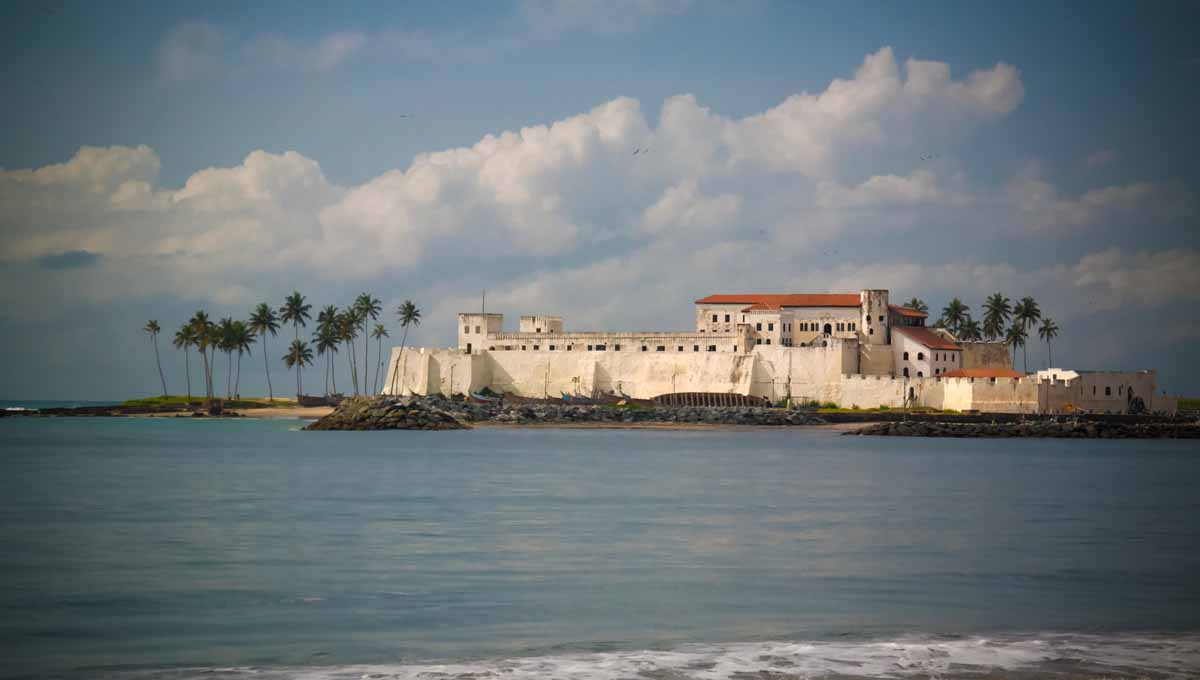
Elmina was built to be impregnable from both the sea and the land. The castle sits on a narrow peninsula, flanked by the Atlantic Ocean and the Benya Lagoon. Its walls are several feet thick, designed to withstand the heavy artillery of the era. However, the true engineering feat was the internal water system. The Portuguese built massive underground cisterns to collect rainwater, ensuring the garrison could survive a prolonged siege by local African forces. This water, filtered through the same ground that held the dungeons, was the only thing keeping the captives alive long enough to be sold. It was a closed-loop system of survival and exploitation.
Dutch Conquest: Industrializing the West African Slave Trade
In 1637, the Dutch West India Company seized Elmina and turned a brutal trade into a cold science. The Dutch did not view the slave trade through the lens of religious crusade or royal glory; they viewed it through the lens of the joint-stock company. Under Dutch rule, Elmina became the administrative heart of a global supply chain. They expanded the dungeons, reinforced the fortifications with the nearby Fort Coenraadsburg on St. Jago Hill, and implemented a rigorous system of quality control for the humans they processed.
1637: How the Dutch West India Company Seized Elmina
The Dutch victory at Elmina ended 155 years of Portuguese dominance. Using superior naval artillery and a strategic land assault from the heights of St. Jago Hill, the Dutch forced the Portuguese to surrender in just a few days. This wasn't just a change of flags; it was a change in philosophy. The Dutch eliminated the Portuguese "feitoria" system of informal trade and replaced it with a bureaucratic machine. They turned Elmina into a massive sorting house where captives from the interior were graded, branded with the VOC (Vereenigde Oost-Indische Compagnie) logo, and filed into categories based on their perceived market value in Brazil or the Caribbean.
Economic Efficiency in Transatlantic Human Logistics
Under the Dutch, the "throughput" of Elmina Castle increased exponentially. They realized that the primary bottleneck in the slave trade was the mortality rate within the castle itself. To protect their "investment," they refined the logistics of the dungeons. They installed iron floor grates to allow for minimal airflow and created a specific corridor for the Governor to inspect the "merchandise" without having to touch the filth. The Dutch were masters of the ledger. Every person who entered Elmina was a line item; every person who died was a recorded loss of capital. This was the birth of the modern corporate mindset applied to the utter destruction of human beings.
The Global Network: Mapping the Extraction of African Labor
Elmina functioned as the terminal point of a sophisticated extraction network stretching hundreds of miles into the African interior. This was a global conveyor belt of human erasure that lasted for 371 years. The merchandise—human beings reduced to cargo—did not simply appear at the gates; they were the product of a calculated destabilization of an entire continent. Similar processing hubs existed, such as Goree Island in Senegal or the slave markets of Badagry in Nigeria, but Elmina remained the architectural blueprint for the trade.
African Origins: The Tribes and Territories of the Interior
The people funneled through Elmina were victims of a manufactured global demand. The primary sources were the ethnic groups of the Akan, Ashanti, Fante, and Ga people. As demand from the Americas spiked in the 1700s, the "catchment area" expanded into modern-day Burkina Faso, Mali, and Niger. Local middlemen and interior kingdoms, supplied with European firearms and textiles, conducted raids on decentralized villages. Captives marched in "coffles"—long lines yoked together at the neck with wooden forks—across hundreds of miles of jungle. Many arrived at the white walls of Elmina only after surviving a three-month death march through the bush.
Mortality Statistics of the Transatlantic Slave Trade
The scale of the operation at Elmina represents a staggering demographic shift. Elmina and its sister fort, Cape Coast Castle, processed a significant portion of the 12.5 million Africans forced into the Middle Passage. Between 1700 and 1810, the Dutch alone shipped roughly 6,000 to 10,000 people per year through this single facility. Approximately 15% to 25% of the captives died within the castle walls before ever reaching a ship. The trade specifically targeted the youth—those aged 15 to 25—creating a permanent "labor drain" that stunted West African development for centuries.
Destination of the Displaced: Brazil, the Caribbean, and America
Ships departing from Elmina’s waters followed a calculated path to colonial hubs across the Atlantic.
- Dutch Brazil and Suriname: Captured labor fueled sugar plantations where life expectancy was often less than seven years due to extreme overwork and disease.
- The Caribbean (Curacao, Jamaica, Barbados): The Dutch used Curacao as a distribution hub, auctioning Elmina captives to Spanish and British buyers for work in salt mines and sugar fields. Some would eventually be traded at sites like Havana’s Plaza Vieja.
- North America (The Carolinas and Virginia): Planters in the American South highly prized Akan and Ashanti captives for their specialized knowledge in rice cultivation. Others were diverted south to the Valongo Wharf in Rio de Janeiro, the largest slave port in the Americas.
The Door of No Return: Finality and the Loss of Identity
The "Door of No Return" is a narrow, vertical slit in the sea-facing wall of the castle. It is the most infamous architectural feature in West Africa. For the captive, this door represented the final severance from the continent of Africa. Once a person passed through this portal, their status as a human being officially ended. They were no longer a member of a family, a practitioner of a faith, or a citizen of a nation. They were "cargo."
The Engineering of the Final Exit to the Middle Passage
The door is intentionally small, forcing captives to stoop as they exited. This was a final act of forced humility. Beyond the door, the terrain changes abruptly from the solid stone of the castle to the shifting, unstable sands of the beach and the violent surf of the Atlantic. Small rowing boats waited in the shallows to ferry the chained captives to the massive frigates anchored in the deep water. Many captives, having never seen the ocean before their arrival at Elmina, believed they were being taken to the horizon to be eaten by the "white ghosts" who had stolen them.
Branding and Chaining: Stripping Human Sovereignty
The process of "processing" at Elmina was a deliberate stripping of identity. Before reaching the door, captives were brought into the central courtyard. There, in the shadow of the Dutch Reformed Church, they were branded. Red-hot irons were used to sear the initials of the trading company into the skin of the chest or shoulder. This was not just a mark of ownership; it was the erasure of the name. In all official Dutch records, the individual ceased to exist. They were replaced by a number and a brand. The chains used at Elmina were short, connecting the ankles of two or three people, ensuring that any movement required a painful, coordinated shuffle.
The Psychology of Seasoning: Breaking the Spirit of the Captive
The horror of Elmina centered on "seasoning"—the deliberate process of breaking a person’s will. The Dutch deliberately mixed people of different languages within the same cells. This was a calculated security measure to prevent rebellion. Forced isolation and sensory deprivation replaced community. The only shared language became the sound of the whip and the rattling of chains. This linguistic murder was the first step in the creation of the Atlantic Creole culture, a desperate blending of traditions born out of the necessity to survive the silence of the cells.
Systematic Abuse: The Reality for Women at Elmina
The experience for women at Elmina involved a unique layer of depravity. Women were held in a separate wing closer to the Governor’s quarters. A small door in the ceiling of the female dungeon allowed officers to select women for the night. These women were taken upstairs, bathed, and raped, before being returned to the filth of the dungeons. Children born from these encounters often became a separate "mulatto" class within the town of Elmina, serving as low-level castle employees—a workforce literally born from the architecture of exploitation.
Religious Hypocrisy: The Chapel Above the Dungeons
The most haunting feature of Elmina is the presence of God. In the center of the upper courtyard, the Dutch built a Reformed Church directly above the female slave dungeons. The floor of the church is punctuated by small square holes—ventilators intended to provide the barest amount of air to the women below. As the Dutch officers and their families sang psalms and listened to sermons on Christian mercy, the screams and pleas of the captives drifted up through the floorboards.
Portuguese Catholicism and the Ritual of Forced Baptism
For the Portuguese, the slave trade was framed as a mission of salvation. The original Catholic chapel at Elmina was used to baptize captives before they were shipped to the Americas. The logic was grotesque: by "saving" their souls through forced baptism, the Portuguese felt justified in destroying their bodies through lifelong bondage. This religious theater provided the moral cover necessary for the garrison to reconcile their daily atrocities with their self-image as pious Christians.
Dutch Calvinism and the Theology of Predestination
The Dutch approach was one of cold, theological detachment. Calvinist doctrine, with its emphasis on predestination, allowed the Dutch administrators to view the captives as people already forsaken by God. If they were meant to be slaves, it was because of a divine decree that the Dutch were merely executing. This belief system allowed the Governor and his staff to live a life of European refinement within the castle walls. They held balls, hosted dinners, and attended church services, all while a few feet beneath their boots, women were being systematically raped and men were starving in the dark.
Visiting Elmina Castle Today: A Dark Tourism Guide
Visiting Elmina Castle is a pilgrimage into the heart of human darkness. Located three hours west of Accra, the castle sits in a vibrant fishing town. The contrast between the colorful fish market and the whitewashed silence of the fortress is jarring. To walk these halls is to participate in a collective act of remembering.
Emotional Toll: What to Expect from an Elmina Tour
The dungeons evoke a visceral reaction in nearly every visitor. Claustrophobia is intense even with modern groups. The guides at Elmina deliver a direct, factual, and unsparing narrative. They lead you through the male dungeons, the "Condemned Cell" where resistors were left to die, and finally through the Door of No Return. The heat is oppressive and the weight of the "hollow silence" lingers long after the tour ends.
Ethics of Heritage Tourism: Respecting the Site of Tragedy
Elmina is a sacred site for the African Diaspora. For many, this is where family history begins in a void. Visitors should recognize they are in a graveyard without headstones. Dress modestly, maintain a quiet demeanor, and avoid "vacation style" photography. Engaging with local vendors outside the castle supports the community, but the gravity of the location must remain the primary focus.
Travel Logistics for Visiting Ghana’s Slave Castles
- Transport: Hire a private driver or take an STC bus from Accra to Cape Coast, followed by a short taxi.
- Timing: Arrive early to avoid midday heat and large crowds.
- The Goal: Leave the site with a firm understanding of the facts rather than a sense of "enlightenment."
FAQ: Understanding the History and Legacy of Elmina Castle
What is the historical significance of Elmina Castle compared to other slave forts?
Elmina Castle is uniquely significant as the first permanent European structure built in Sub-Saharan Africa. Constructed by the Portuguese in 1482, it predates the arrival of Christopher Columbus in the Americas by a decade. While many forts were built along the West African coast, Elmina served as the headquarters for both the Portuguese and later the Dutch, setting the architectural and bureaucratic precedent for the industrial-scale human trafficking that followed.
How did the captives survive the conditions in the dungeons?
Survival was not a guarantee and was often the exception rather than the rule. Captives were subjected to extreme overcrowding, lack of sanitation, and minimal food and water. The castle was designed to facilitate a high turnover of human life, and the Dutch West India Company accounted for a mortality rate of roughly 20 percent as a standard business loss. Those who survived did so through sheer physical resilience and the psychological necessity of enduring a "seasoning" process that broke their ties to their former lives.
Who owns and manages Elmina Castle today?
The castle is currently owned by the Government of Ghana and is managed by the Ghana Museums and Monuments Board. In 1979, it was designated as a UNESCO World Heritage Site under the listing "Forts and Castles, Volta, Greater Accra, Central and Western Regions." It serves as a national monument and a primary site for global heritage tourism and educational research into the Transatlantic Slave Trade.
Is the "Door of No Return" original to the 1482 structure?
The Door of No Return was not part of the original Portuguese design. It was a later modification, likely expanded during the Dutch era when the castle's primary function shifted entirely from gold trading to the mass export of humans. The original 1482 structure was a defensive trade post; the infamous portal seen by modern visitors was engineered specifically to facilitate the loading of chained captives into rowing boats for transport to offshore frigates.
What is the difference between Elmina Castle and Cape Coast Castle?
Elmina Castle is older and was originally Portuguese before becoming Dutch, whereas Cape Coast Castle, located about 8 miles to the east, was the headquarters for the British. While both served as "slave castles" with similar dungeon structures and "Doors of No Return," Elmina represents the earliest phase of European arrival, while Cape Coast represents the peak of British involvement in the 18th century.
Sources & Citations
- Elmina Castle: UNESCO World Heritage Centre - UNESCO Official Record (2026)
- The Portuguese in West Africa, 1415–1670 - Malyn Newitt (2010)
- The Dutch in the Atlantic Economy, 1580–1880 - Pieter Emmer (1998)
- The Door of No Return: The History of Cape Coast Castle and the Atlantic Slave Trade - William St. Clair (2007)
- The Trans-Atlantic Slave Trade Database - Emory University (Updated 2026)
- Forts and Castles of Ghana - Ghana Museums and Monuments Board (2026)
- African Dominion: A New History of Empire in Early and Medieval West Africa - Michael Gomez (2018)
- The Dutch West India Company - Encyclopedia Britannica (2026)
- Visions of Elmina: Portuguese and Dutch Accounts of a Slave Castle - Edited by Harvey M. Feinberg (1989)
- The Economics of the African Slave Trade - Nathan Nunn (2008)
- Slavery and the Birth of an African City: Lagos, 1760–1900 - Kristin Mann (2007)