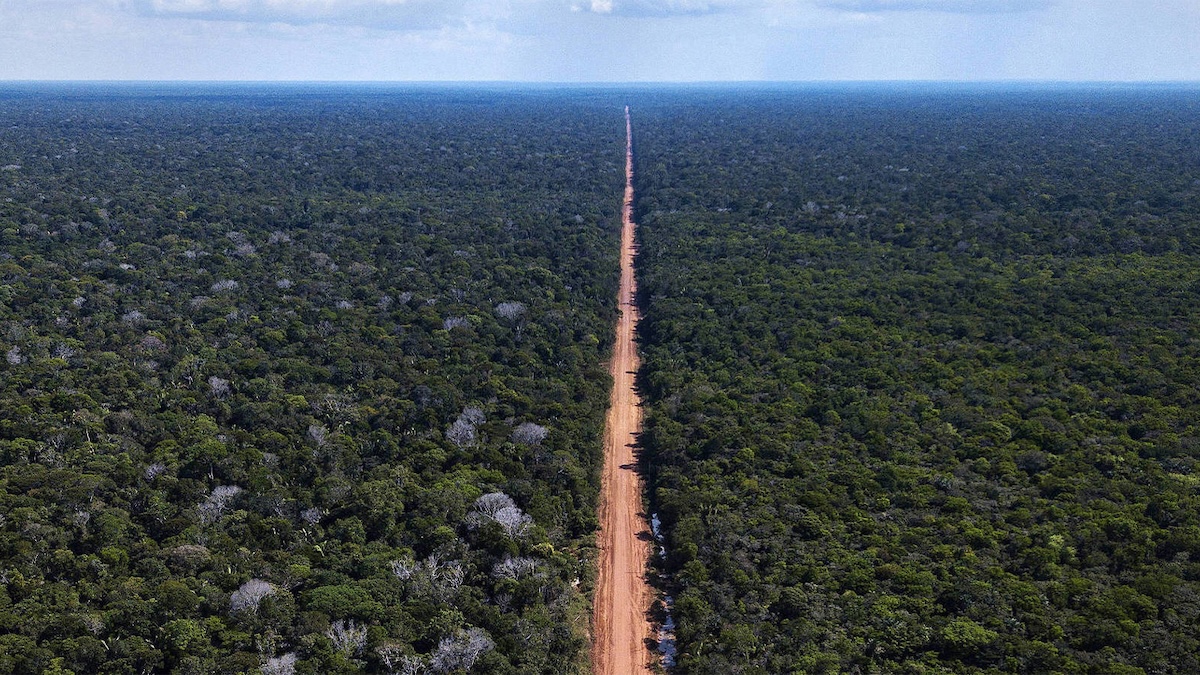
The drive from Dongsheng—the old, coal-choked urban center of Ordos—to the Kangbashi New District is a journey through a tear in the fabric of economic reality. You leave behind the grit of the old world, where trucks laden with black dust rumble over pot-holed asphalt, and suddenly, the horizon opens up. The sky turns an impossible shade of cobalt blue, and the road widens into a pristine, six-lane highway that feels less like public infrastructure and more like a runway for a spacecraft.
But it is the silence that hits you first.
In Beijing or Shanghai, a red traffic light is a cacophony of idling engines, honking taxis, and the frantic shuffle of pedestrians. In Ordos Kangbashi, stopping at a red light is a metaphysical experience. You sit in your car at a massive intersection, surrounded by gleaming glass towers and manicured shrubbery. The light turns red. You stop. There are no other cars. There are no pedestrians. To your left, a row of thirty-story apartment blocks stands sentinel against the wind. To your right, a park the size of a European principality lies perfectly still.
You wait. The only sound is the mechanical click of the signal relay as the light changes from red to green. You press the accelerator, and the engine’s roar feels intrusive, a violation of the city’s meticulously engineered hush. This is not just a city; it is a hallucination in the desert. It is a "SimCity" save file played in infinite money mode, where the player built the roads, the skyscrapers, and the opera houses, but forgot to turn on the population simulation.
The Geography of Nowhere: Where the Steppe Meets the Concrete
To understand the Ordos Kangbashi ghost city, one must first understand the landscape that rejects it. This is Inner Mongolia. Historically, this is the land of the sky and the grass, a harsh plateau swept by the fierce winds of the Gobi and the Siberian north. It is a landscape defined by mobility—by the yurt, the horse, and the flock.
Kangbashi rises from this steppe like a colony on Mars terraformed to resemble a generic global metropolis. The transition is violent. There are no suburbs, no gradual density. One minute you are looking at scrubland and sand dunes, and the next you are staring at a government plaza larger than Tiananmen Square.
The aesthetic is what architects might call "surrealist grandeur." The scale is inhuman. The boulevards are too wide to cross comfortably on foot. The buildings are spaced so far apart that walking from the library to the museum feels like a pilgrimage. It creates an atmosphere of "Sci-Fi Noir"—a pristine, solar-powered future where humanity has seemingly evaporated, leaving behind its greatest monuments to be polished by the wind.
Black Gold: The Inner Mongolian Coal Boom
This mirage is built on carbon. Beneath the hooves of the sheep and the roots of the dry grass lies one of the largest coal deposits on Earth. In the early 2000s, as China’s industrial appetite became insatiable, Ordos became the engine room of the national economy.
This was the era of the "Black Gold." Almost overnight, local farmers found their grazing land sitting atop billions of dollars in mineral wealth. The influx of cash was staggering. For a brief, dizzying period in the late 2000s, Ordos boasted a higher per capita GDP than Beijing. It became a city of sudden, bewildering wealth, where Land Rovers were bought with duffel bags of cash and the local consumption of luxury goods rivaled Paris or Milan.
But capital needs a home. With the Chinese stock market volatile and bank interest rates low, the newly wealthy and the local government turned to the most reliable vault they knew: real estate. Kangbashi was born not out of a desperate need for housing, but out of a desperate need to park surplus cash. It was a vault disguised as a metropolis.
Master Planning the Apocalypse: The One-Million Dream
The government’s ambition was biblical in scale. The master plan for Kangbashi envisioned a shining eco-city that would eventually house one million people. It was to be a center of culture, politics, and education—a "Dubai of the Steppe" that would signal Inner Mongolia’s transition from a resource colony to a modern civilization.
The tragedy of urban planning disasters often lies in the timeline. Kangbashi wasn't built to grow organically over decades; it was built to be finished now. The infrastructure was laid out for the end-state population before the first resident arrived. They built the six-lane highways, the massive water treatment plants, and the sprawling power grids for a million souls.
This is the source of the "urban uncanny valley" feeling. When you visit a small town, the roads are narrow. When you visit a metropolis, the roads are wide but clogged. In Kangbashi, you have the infrastructure of New York City populated by the density of a rural village. The proportions are all wrong. The city feels like a suit of armor three sizes too big for the body inhabiting it.
Alien Architecture I: The Ordos Museum by MAD Architects
If the empty streets are the body of the ghost city, the Ordos Museum is its surreal heart. Designed by the avant-garde firm MAD Architects, the building is a masterpiece of architectural abstraction.
It sits on a gentle rise, looking like a giant, copper-colored amorphous blob that has landed from deep space. There are no sharp angles, no traditional windows, no recognizable human geometry. The metal louvers that cover its skin are designed to protect the interior from the harsh desert winters and sandstorms, giving it the appearance of a biological organism shielding itself from a hostile environment.
Walking around the museum is a disorienting experience. The sun glints off the curved metal, distorting the reflection of the surrounding empty plaza. Inside, the cavernous white halls spiral upward, illuminated by skylights that slice through the gloom. It is a world-class institution, a building that would be the crown jewel of London or Tokyo, yet here it often stands silent, its echoes swallowing the footsteps of the few tourists who wander in. It is architecture as sculpture, existing purely for its own sake, independent of the viewer.
Alien Architecture II: The Books of Giants
The architectural surrealism does not end with the museum. Just across the plaza stands the Ordos Library, a structure designed to look like three massive books leaning against one another on a tilted shelf. The literalism is jarring—a building for books shaped like books—but in the context of Kangbashi, it fits perfectly.
Nearby is the Opera House, shaped like a traditional Mongolian hat, yet rendered in cold, metallic materials. These buildings are monumental, designed to be viewed from the sky or from a speeding car on the highway. They are "The Books of Giants," cultural silos waiting for a culture to emerge.
At night, the scene becomes even more melancholic. The buildings are illuminated by complex LED displays. The library glows; the museum shimmers. They perform a light show for an audience that isn't there. It is a technicolor display of vitality in a vacuum, a desperate signal broadcast into the void: We are here. We are modern. We are alive.
Genghis Khan Square: The Irony of the Warlord
The axis of the city is Genghis Khan Square, a plaza so vast it makes Red Square look intimate. At its center stand monumental statues of the Great Khan and his generals, cast in bronze and stone, gazing out over the city they never conquered.
There is a profound historical irony here. Genghis Khan was the ultimate nomad. He conquered the known world through speed, mobility, and the rejection of static fortifications. He famously said that "the strength of a wall is neither greater nor less than the courage of the men who defend it." His empire was built on the saddle, not in the foundation.
Yet, here he is, the static symbol of the most concrete-heavy, immobile project in the region’s history. The fluidity of the Mongol empire has been frozen into a rigid grid of avenues and blocks. The Khan, who tore down the walled cities of the Jin Dynasty, is now the mascot for a city of walls without people.
The Dubai of the Steppe: A Mirage of Wealth
The moniker "The Dubai of China" was applied early and often. The comparison is rooted in the shared DNA of rapid development, resource wealth, and the desire to build the biggest, the tallest, and the newest. Both cities rose from the desert on a tide of energy money.
However, the comparison falters on closer inspection. Dubai built itself as a global hub, attracting expats, finance, and tourism from every corner of the earth. Ordos was an internal loop. It attracted domestic speculation. It was Chinese money betting on Chinese growth in a closed system.
While Dubai is a chaotic melting pot of cultures, Kangbashi is a monolith. It is surreal travel destinations defined not by who is there, but by who isn't. It is the Dubai of a parallel dimension, where the skyscrapers were built, but the flights never landed.
Potemkin Towers: The Residential Reality
Leaving the monumental core, you enter the residential districts—the forests of high-rises that comprise the bulk of the China real estate bubble narrative. These towers stand in endless, identical rows, painted in beige and pastel hues to mimic the colors of the desert.
In the peak years of the "Ghost City" hysteria (circa 2010–2014), reports circulated of "Potemkin" tactics. It was whispered that the local government installed lights on timers in empty apartments to simulate occupancy, creating a fake skyline of lived-in homes to reassure investors.
The reality of these buildings is perhaps even stranger than the fiction. Many of the units were sold. In fact, during the boom, they sold out instantly. But they were bought by coal barons and speculators as assets, not homes. In China, apartments are often sold as "rough housing"—concrete shells with no flooring, plumbing fixtures, or paint. The owner is expected to finish the interior.
So, you have the phenomenon of "occupied" towers that are physically uninhabitable. They are concrete bank accounts in the sky. If you walk close to them, you see the windows are dusty, the balconies bare of laundry or plants. They are owned, but they are not loved.
The Crash: When the Coal Dust Settled
The dream hit the wall around 2012. The global price of coal plummeted as demand softened and environmental regulations tightened. Simultaneously, the central government in Beijing began to tighten credit to cool the overheating property market.
The flow of cash stopped.
For years, the skyline of Kangbashi was defined by the silhouettes of construction cranes that never moved. They stood like rusted flamingos on top of half-finished towers. Construction sites fell silent. The "Dubai of the Steppe" paused. The investors who had poured their savings into second and third apartments watched the value of their concrete vaults disintegrate. It wasn't an exodus, because you can't have an exodus if no one ever moved in. It was simply a cessation of motion.
The "Human Fill": Manufacturing a Population
Faced with the humiliation of a global media narrative branding their crown jewel a "Ghost City," local officials took drastic measures to generate a population. If people wouldn't come willingly, they would be incentivized—or forced—by the bureaucracy.
The government moved the administrative center of Ordos from Dongsheng to Kangbashi, forcing thousands of civil servants to commute or relocate. More effectively, they played the "Tiger Mom" card. They relocated the region’s most prestigious high school, Ordos No. 1 High School, to the new district.
In China, parents will do anything for their child's education. By moving the best school, the government effectively held the region's families hostage. If you wanted your child to get into a top university, you had to move to the Ghost City.
Today, the city is largely populated by these reluctant pioneers: tired civil servants, stressed students, and the grandparents who care for them. It is a demographic skew that adds to the strangeness—a city of government bureaus and homework, with very little in between.
Is Ordos Still a Ghost City? The Nuanced Truth
So, is the Ordos Kangbashi ghost city still a ghost city? If you check the official statistics, the Kangbashi district population has risen to somewhere between 150,000 and 180,000 people. By Western standards, that is a thriving mid-sized city.
But numbers can be deceiving. The city was built for a million. It was laid out on a grid designed for crushing density. When you pour 150,000 people into a vessel designed for a million, the vessel still feels empty.
It is a "Zombie" status—neither dead nor fully alive. The schools are full, and there are lines at the grocery stores in the evenings. But walk two blocks away from the school gates, and the silence returns. The grand plazas are still desolate. The six-lane highways are still mostly empty. The scale of the architecture continues to dwarf the biological life within it.
Sterile Noir: The Horror of the Vacuum
There is a distinct aesthetic to this emptiness that differs from the "gritty" noir of Gotham or the decaying ruins of Detroit. This is "Sterile Noir."
Kangbashi is impeccably clean. There is no trash on the sidewalks because there are no people to drop it. There is no graffiti because there are no rebellious teenagers roaming the alleys. There is no crime because there are no victims and no perpetrators.
It creates a sense of safety that is paradoxically unsettling. You can walk down the middle of a major boulevard at midnight with thousands of dollars of camera equipment, and you will be perfectly safe—not because of police presence, but because of the total absence of humanity.
Street sweepers in bright orange vests can be seen polishing the dust off sidewalks that have never felt a footprint. The landscaping is manicured to perfection. The city is kept like a model home that has been on the market for ten years—dust-free, furniture arranged, waiting for a buyer who never knocks on the door. It is the horror of the vacuum.
The Tourist Experience: Urbex and Surrealism
In a twist of irony, the "Ghost City" reputation has become Kangbashi's biggest tourism draw. Travelers interested in Urbex (urban exploration) and architectural oddities now make the pilgrimage to Inner Mongolia specifically to see the emptiness.
It is a photographer's dream. The light on the high steppe is harsh and clear, casting long, dramatic shadows through the empty arches of the stadium and the museum. You can set up a tripod in the middle of a traffic circle and take a thirty-second exposure without a single car blurring the shot.
But for the casual visitor, the "uncanny valley" effect takes a toll. After a few hours, the lack of "mess" becomes oppressive. We are used to cities humming with the chaotic energy of life—the smell of street food, the sound of arguments, the visual clutter of advertising. Kangbashi lacks this organic layer. It feels like a movie set where the director has called "Cut," and everyone has gone to lunch, leaving you alone on the soundstage.
Life in the Simulation: Interviews with the Ghosts
If you stop one of the few residents for a chat, the perspective shifts again. For the people who live here, Kangbashi is not a nightmare; it is a paradise of convenience.
"It’s quiet," says a young mother pushing a stroller near the artificial lake. "In Dongsheng, the traffic is terrible, the air is dirty. Here, the air is clean. The parks are beautiful. The housing is cheap."
For the residents, the "Ghost City" provides a quality of life that is unattainable in Beijing or Shanghai. They live in luxury apartments for a fraction of the cost. They have access to world-class athletic facilities and libraries with no wait times. They are living in the ruins of a billionaire’s dream, enjoying the infrastructure paid for by a boom that went bust.
But they also admit to the loneliness. "It’s a bit boring," a taxi driver admits. "There is no night life. No street markets. It feels... cold."
Architectural Critique: The Failure of the Top-Down Approach
Ordos Kangbashi stands as the ultimate monument to the limitations of top-down urban planning. The philosophy behind it was the classic Field of Dreams fallacy: "If you build it, they will come."
The Chinese state proved that it can build the shell of a city with terrifying speed and efficiency. They can lay the pipes, pour the concrete, and wire the grid. But a city is not a machine; it is an organism. It requires a soul—a complex, messy, organic web of social and economic interactions that grows from the bottom up.
You cannot engineer a "Chinatown" or a "Latin Quarter." Those things grow out of necessity and history. Kangbashi attempts to reverse-engineer civilization, providing the container before the contents. It is a stark reminder that while capital can buy concrete, it cannot buy a community.
Conclusion: The Sunset over the Artificial Lake
As evening falls over the steppe, the best place to be is by the artificial lake that separates the museum district from the residential towers. The sun, a burning coin in the vast Mongolian sky, dips below the horizon, painting the clouds in violent streaks of purple and orange.
The streetlights flicker on—thousands of them, stretching out into the desert in perfect geometric lines. The LED screens on the library and the opera house ignite, casting shimmering reflections onto the dark water.
It is undeniably beautiful. There is a melancholic grandeur to the ambition of it all. Standing there, listening to the wind hiss through the decorative reeds, you don't feel anger at the waste or the hubris. You feel a strange sense of pity.
Ordos Kangbashi is a monument to a specific moment in human history—a time of unbridled optimism, cheap credit, and the belief that humanity could conquer any landscape through sheer force of will. It is a beautiful, lonely tomb for a future that arrived late. The city waits, bathed in neon and silence, for an audience that hasn't been born yet.
Sources & References
- Al Jazeera: "China's Ghost Cities: The layout of Ordos."
- Forbes: "China's Ordos: The Ghost City That Isn't."
- ArchDaily: "Ordos Art & City Museum / MAD Architects - Project Review."
- The Guardian: "The resource curse: Inner Mongolia's coal boom and bust."
- MIT Technology Review: "The City That Modernity Built: Urban Planning in China."
- Wired: "Inside the Ghost Cities of China."
- National Geographic: "The reality of China's empty megalopolises."
- Reuters: "From Ghost Town to Havens: The evolution of China's new districts."
- Bloomberg: "The Property Bubble in China's Inner Mongolia."
- Time Magazine: "Ordos: A City Ahead of Its Time?"