The Anchor of the World
Approaching Robinson Crusoe Island from the air, the first instinct is to look for a beach—a stretch of inviting, golden sand where a castaway might lounge under a palm tree. You will not find one. Instead, the ocean below churns a deep, violent cobalt, smashing against vertical walls of volcanic rock that rise thousands of feet into the mist.
The island does not welcome visitors; it confronts them. It is a serrated ridge of basalt jutting out of the South Pacific, a geological shiv carved by wind and rain. The clouds cling to the peaks of El Yunque (The Anvil), shrouding the interior in a perpetual, brooding twilight. This is not the Caribbean paradise of Daniel Defoe’s novel. There are no coconuts here, no cannibals, and no easy living. This is a place of cold winds, treacherous currents, and a silence so profound it can dismantle the human mind. To land here is to step onto the anchor of the world—a place so remote that it feels less like an island and more like a prison cell built by nature itself.
A Jurassic Rock in the Cold Stream
Geographically, the island is an anomaly. Located roughly 400 miles (670 kilometers) west of the Chilean coast, it is the largest of the Juan Fernández Archipelago. While its name evokes tropical fantasies, its reality is tempered by the Humboldt Current. This massive river of cold Antarctic water sweeps up the coast of South America, keeping the island’s climate cool, wet, and unpredictable.
The flora here is not tropical; it is prehistoric. Walking into the interior feels like stepping into the Jurassic period. The landscape is dominated by giant endemic ferns (Dicksonia berteriana) that grow to the height of trees, and the surreal Dendroseris litoralis (cabbage trees) with their oversized, leathery leaves. One hundred and thirty-one species of plants found here exist nowhere else on Earth. The isolation has created a botanical laboratory that has evolved in a vacuum for four million years, utterly indifferent to the world of men.
The Scoundrel Scot: Who Was Alexander Selkirk?
The man who would make this rock famous was not the noble, resourceful hero of fiction. Alexander Selkirk was, by all historical accounts, a difficult, violent, and deeply flawed man. Born in 1676 in Lower Largo, a fishing village in Fife, Scotland, Selkirk was the son of a shoemaker. Records from his youth show him summoned before the Kirk Session for "indecent conduct" in church and for beating his brothers and father in a blind rage.
He fled his domestic troubles to the sea, eventually joining the crew of the Cinque Ports, a privateer vessel. Privateers were essentially state-sanctioned pirates—mercenaries carrying "Letters of Marque" that allowed them to attack enemy ships (usually Spanish or French) during wartime. Selkirk rose to the rank of Sailing Master, a testament to his skill as a navigator, but his temper remained his defining characteristic. He was a man running away from himself, unknowingly sprinting toward a destination where he would have no one else to confront.
The Fatal Choice: Marooned by Ego
In October 1704, the Cinque Ports dropped anchor off the uninhabited archipelago of Juan Fernández to restock water and wood. The ship was in varying states of disrepair, leaking bady and infested with worms. Selkirk, trusting his navigator’s instinct, argued that the ship was unseaworthy and would sink if they continued without a major overhaul.
The captain, Thomas Stradling—a man Selkirk detested—refused to listen. In a fit of bravado, Selkirk declared that he would rather stay on the desolate island than sail on a doomed ship. He expected the crew to rally behind him, or at least for the captain to beg his Sailing Master to stay. It was a bluff born of monumental ego.
Stradling called the bluff. He ordered Selkirk’s sea chest to be landed. As the reality set in, Selkirk’s rage turned to panic. He waded into the surf as the longboat pulled away, screaming to be taken back, his bluff collapsing into the terrified pleas of a drowning man. Stradling ignored him. The Cinque Ports sailed over the horizon, leaving Selkirk alone with a musket, a hatchet, a knife, a cooking pot, a Bible, and his bedding. (Selkirk was right, however; the Cinque Ports later foundered off the coast of Colombia, and the surviving crew were imprisoned by the Spanish).
The Kingdom of Silence
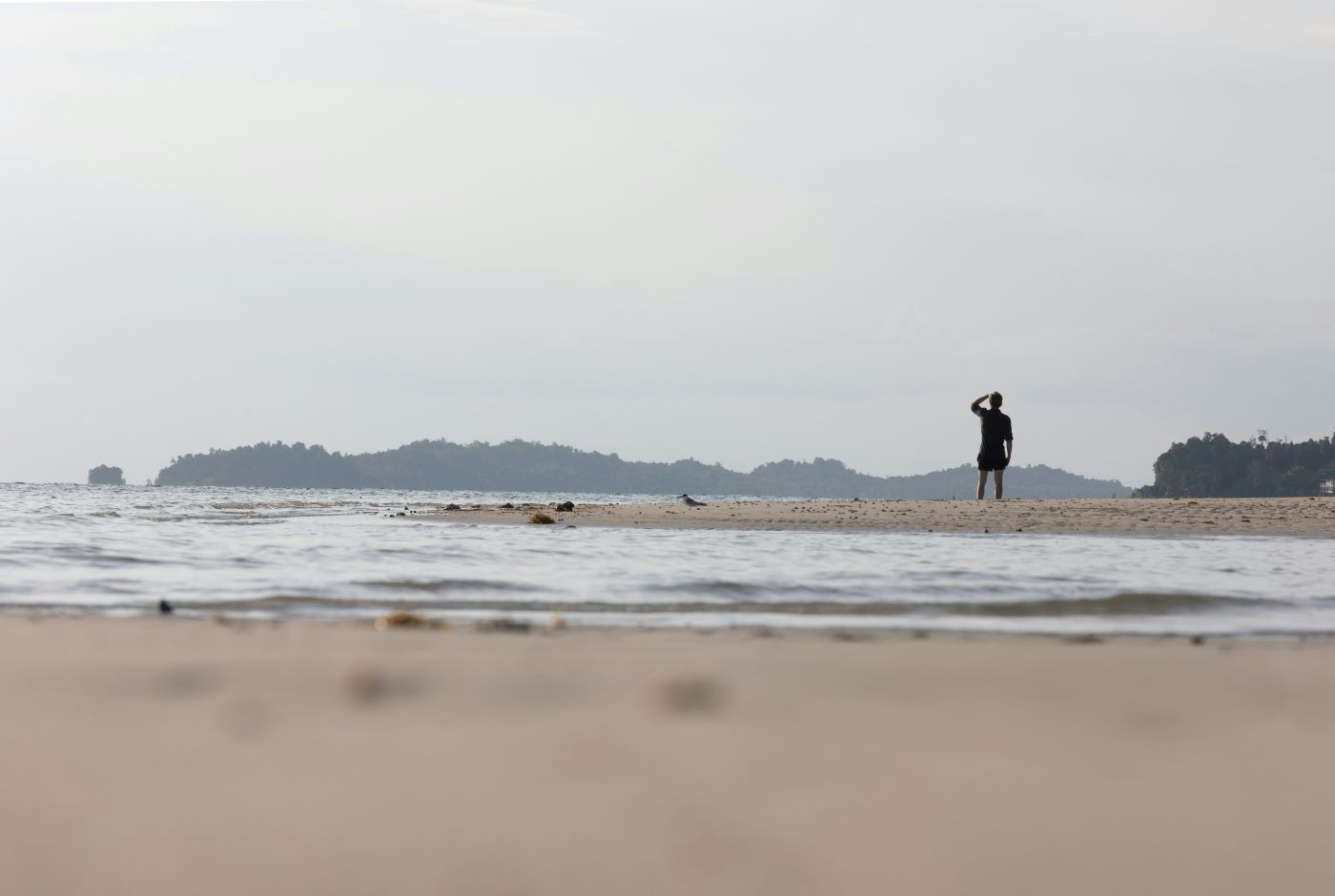
The first eight months were not a test of survival; they were a descent into madness. Selkirk was paralyzed by a "melancholy" so deep he barely moved. He stayed on the shoreline, scanning the horizon until his eyes ached, eating only shellfish he could scrounge from the rocks.
The nights were the worst. The shoreline was crowded with thousands of Juan Fernández fur seals and massive elephant seals. During the breeding season, the darkness was filled with their guttural roars and screams, which the terrified Scotsman interpreted as the howling of demons. He contemplated suicide daily. The silence of the day was deafening, amplified by the wind hissing through the lava tubes. He was the only human being in a million square miles of ocean, a speck of consciousness in a void of blue.
Cats, Goats, and Psalms: The Mechanics of Survival
Hunger eventually forced Selkirk to abandon his vigil on the beach and move inland. This decision saved his life. The interior valleys were lush and, crucially, populated. Spanish sailors had released goats on the island decades earlier to provide meat for future voyages. The goats had gone feral and multiplied into the thousands.
Selkirk had to relearn how to live. He used his musket powder sparingly to hunt initially, but as his ammunition dwindled, he was forced to adapt physically. He chased the goats on foot. He had another problem: rats. The European brown rat, introduced by ships, would gnaw on his feet and clothes while he slept. In a stroke of genius, he domesticated feral cats (also left by ships). He would sleep surrounded by a protective circle of purring felines, finally allowing him to rest. He built two huts from pepper trees and thatched them with long grass—one for reading and sleeping, the other for preparing food, separating the sacred from the profane.
The Spiritual Evolution
As the years passed, the silence that nearly killed him began to reconstruct him. Selkirk had brought a Bible, and to prevent himself from losing the power of speech, he read the scriptures aloud to the trees and the goats. He sang psalms into the wind.
Physically, he became a creature of the island. When his shoes rotted away, the soles of his feet calloused until they were as hard as leather. He could outrun the goats on the sheer cliffs, catching them by hand. He stitched clothes from goatskins using a nail for a needle. In his solitude, the violent, angry youth from Fife dissolved. He later told his rescuers that he was "a better Christian while in this solitude than ever I was before, or than, I am afraid, I shall ever be again." He had found a strange, feral peace.
The Savage Saint: The Rescue
On February 2, 1709, four years and four months after being abandoned, Selkirk saw two sails on the horizon. This time, he lit a signal fire. The ships were the Duke and the Duchess, privateers led by Captain Woodes Rogers.
When Rogers’ men rowed ashore, they were met by a figure that terrified them. "A man clothed in goat-skins, who looked wilder than the first owners of them," Rogers wrote. Selkirk was so overcome with emotion he could barely speak; his English was broken, halting, "speaking his words by halves." He offered the sailors goat meat he had seasoned with pimento peppers. Rogers, impressed by Selkirk’s physical condition and his knowledge of the island, appointed him as a mate on the Duke. The castaway had returned to the world of men, but the island never truly left him.
The Theft of a Life: Defoe vs. Selkirk
In 1719, Daniel Defoe published The Life and Strange Surprising Adventures of Robinson Crusoe. It was a sensation. While Defoe never confirmed Selkirk was the inspiration, the parallels were undeniable. However, Defoe sanitized the story for the colonial imagination.
He moved the island to the warm Caribbean near Trinidad. He gave Crusoe a servant, "Friday," reintroducing the comfort of social hierarchy. He added cannibals to provide a tangible enemy. Defoe’s Crusoe is a civilized man maintaining British order in the wild; Selkirk was a man who had to shed his civilization to survive. Selkirk never saw a penny from the book. He returned to Scotland, famously dug a cave in his father’s garden to sit in solitude, and eventually died at sea of yellow fever, buried in the same ocean that had been his jailer.
The Island of Chains: The Penal Colony Era
Long after Selkirk’s rescue, the island continued to be a place of suffering. During the Chilean War of Independence (1810–1826), the Spanish Royalists used the Juan Fernández islands as a prison for pro-independence patriots.
Hundreds of men were exiled to the island, forced to live in caves dug into the soft volcanic tuff above the bay. These Cuevas de los Patriotas (Patriots' Caves) still exist today—dark, damp holes overlooking the sea where the founding fathers of Chile shivered and starved. For them, the isolation was not a spiritual journey but a political torture.
The Shadow of the Kaiser: The SMS Dresden
The 20th century brought a different kind of violence to the island. In 1915, during World War I, the German light cruiser SMS Dresden sought refuge in Cumberland Bay. It was the sole survivor of the Battle of the Falklands, hunted by the British Royal Navy.
On March 14, British cruisers cornered the Dresden in the bay. Violating Chilean neutrality, they opened fire. The German captain, realizing his situation was hopeless, ordered the crew to abandon ship and scuttled the vessel. The Dresden exploded and sank, coming to rest 60 meters below the surface. Today, the wreck remains a war grave and a historical monument, lying silently in the harbor where Selkirk once fished.
The Wave that Took the Village
The island’s history of tragedy is not confined to the past. On the night of February 27, 2010, an 8.8 magnitude earthquake struck the coast of Chile. While the shaking on the island was mild, the ocean’s reaction was catastrophic.
Because of the distance from the mainland, the islanders had no warning. The tsunami roared out of the darkness in the early morning. A 12-year-old girl named Martina Maturana noticed the boats in the harbor crashing into each other and ran to ring the village gong, alerting her neighbors. Her actions saved hundreds of lives, but the wave still claimed 16 victims and obliterated the lower half of the village of San Juan Bautista. Houses, the school, and the community center were swept into the bay, reminding the residents that their existence on the rock is entirely at the mercy of the Pacific.
San Juan Bautista Today
The village of San Juan Bautista is the only settlement on the island, home to roughly 900 people. It is a community defined by resilience. Life here is slow and dictated by the arrival of the supply ship, which comes only twice a month.
There is limited cell phone service, and the internet is a rumor that comes and goes with the wind. The locals are not actors in a theme park; they are fishermen and park rangers. They live with a duality: they are proud of their "Robinson Crusoe" branding (the island was officially renamed from Más a Tierra to Robinson Crusoe Island in 1966 to attract tourists), but they are fiercely protective of their privacy and their unique way of life.
The Golden Crab: The Lobster Economy
The island does not run on tourism; it runs on the Juan Fernández rock lobster (Jasus frontalis). This crustacean is found nowhere else on earth. For over a century, the islanders have harvested these lobsters using traditional wooden traps.
It is one of the most sustainable fisheries in the world. The regulations are strict: only lobsters of a certain size can be kept, and females with eggs must be returned. The lobster catch is the heartbeat of the island, providing the income that allows this remote community to import fuel, food, and medicine. To eat a lobster here is to consume the very resource that makes human habitation possible.
Dark Tourism I: The Long Road
Visiting Robinson Crusoe Island is an act of determination. There are no direct commercial jets. You must fly from Santiago in a small, twin-propeller aircraft that battles the crosswinds for two hours.
The landing is harrowing; the airstrip is located on the desolate southwestern tip of the island, the only flat piece of land available. But you are not there yet. The village is on the other side of the mountains. You must board a small boat for a 90-minute ride along the coastline, battered by the same swells that terrified Selkirk. As the boat rounds the cliffs, seeing the tiny cluster of lights in San Juan Bautista gives you a profound sense of how small humanity is against the scale of the ocean.
Dark Tourism II: Selkirk’s Lookout
The pilgrimage every visitor must make is the hike to El Mirador (Selkirk’s Lookout). It is a steep, grueling climb through the hummingbirds and ferns to the spine of the island, 565 meters above sea level.
At the top, there is a commemorative plaque, but the real monument is the view. You can see both sides of the island—the green northern slopes and the arid southern cliffs. Standing here, with the wind trying to push you off the ridge, you can physically feel the desperation of Selkirk’s vigil. This is where he stood every day for four years, watching the empty blue line where the sky meets the sea, waiting for a sail that would not come. It is a place of devastating beauty and crushing loneliness.
Dark Tourism III: Iron in the Bay
For those who can dive, the wreck of the SMS Dresden offers a haunting underwater experience. The ship lies on its side in Cumberland Bay. It is a massive steel corpse, its guns still pointing into the gloom.
Because of the isolation, the wreck has not been stripped by looters. Artifacts remain scattered in the silt—ceramics, brass fittings, and the twisted metal of the superstructure. It is a silent reminder of how the tentacles of a European war reached even the most remote sanctuary on the planet.
Ecological Fragility and Respect
The island is a UNESCO Biosphere Reserve, often called the "Galapagos of Botany." But it is under siege. Invasive species—blackberries (brambles), rabbits, and rats—threaten the unique flora. The brambles, introduced to make jam, have become a thorny plague, choking the endemic forests.
Visitors must be hyper-aware of their impact. Hiking boots should be cleaned of seeds before arriving. Water is precious. The island operates on a delicate balance, and "Leave No Trace" is not just a slogan; it is a survival imperative for the ecosystem.
Conclusion: The Mirror of Solitude
Robinson Crusoe Island remains one of the most evocative places on the Dark Atlas because it forces us to confront our oldest fear: being truly alone. The myth of Robinson Crusoe is a story of conquest—of a man taming nature. The reality of Alexander Selkirk is a story of submission—of a man being broken and reshaped by nature.
To stand on the jagged coast of this island is to look into a mirror that strips away the noise of civilization. It remains a place of exile, whether for a Scottish privateer, a Spanish prisoner, or a German warship. The wind that howls over El Mirador is the same wind that Selkirk heard; it speaks no language, offers no comfort, and reminds us that in the end, we are all castaways on a rock, drifting through the dark.
FAQ
What is the "real" story behind Robinson Crusoe Island?
The island is the actual marooning site of Alexander Selkirk, a Scottish privateer who was abandoned there in 1704. Unlike the fictional Robinson Crusoe who had a servant and fought cannibals, Selkirk lived in total solitude for over four years. He survived by hunting feral goats, domesticating cats to fight off rats, and reading the Bible to maintain his sanity. His eventual rescue in 1709 and subsequent accounts likely inspired Daniel Defoe’s famous 1719 novel, though Defoe relocated the setting to the Caribbean and sanitized the narrative for colonial readers.
How do you get to Robinson Crusoe Island?
Reaching the island is a multi-leg logistical challenge. Travelers must first fly from Santiago, Chile, on a small twin-propeller aircraft, a flight that takes approximately two hours and often battles strong crosswinds. The aircraft lands on a desolate airstrip on the island's southwestern tip. From there, visitors must take a 90-minute boat ride along the treacherous coastline to reach the main village of San Juan Bautista, as no roads connect the airstrip to the settlement.
Is the island uninhabited?
No, the island is home to a permanent population of roughly 900 people, primarily concentrated in the village of San Juan Bautista. The community is resilient and somewhat isolated, relying heavily on the sustainable harvest of the Juan Fernández rock lobster for its economy. Supplies arrive by ship only twice a month, and the islanders maintain a distinct way of life that balances pride in their history with a fierce protection of their privacy.
Can visitors dive the wreck of the SMS Dresden?
Yes, the wreck of the German light cruiser SMS Dresden is accessible to divers in Cumberland Bay. The ship was scuttled by its own crew in 1915 after being cornered by British cruisers during World War I. Today, it lies 60 meters below the surface. Because of the island's remote location, the wreck has not been looted, and divers can still see artifacts, brass fittings, and the ship's guns scattered in the silt.
What happened to the island during the 2010 tsunami?
On February 27, 2010, an 8.8 magnitude earthquake on the Chilean mainland triggered a tsunami that struck the island without warning. The wave devastated the lower half of San Juan Bautista, destroying homes, the school, and the community center. While a local 12-year-old girl saved hundreds of lives by sounding the village gong, the disaster still claimed 16 victims, serving as a modern reminder of the island's vulnerability to the Pacific Ocean.
Is there reliable internet or cell service on the island?
Connectivity is extremely limited. The article describes the internet as a "rumor that comes and goes with the wind," and cell phone service is sparse. Visitors should expect to be largely disconnected from the outside world, much like the castaways who defined the island's history.
What are the highlights for hikers?
The primary pilgrimage for hikers is the trek to El Mirador, also known as Selkirk’s Lookout. This steep climb leads to the spine of the island, 565 meters above sea level. It is the exact spot where Alexander Selkirk stood daily for four years, scanning the horizon for a rescue ship. The site offers a commemorative plaque and panoramic views of the island’s contrasting green northern slopes and arid southern cliffs.
Sources & References
- Rogers, Woodes. (1712). A Cruising Voyage Round the World. (The primary source journal detailing Selkirk’s rescue). Project Gutenberg Link.
- UNESCO World Heritage Centre. "Juan Fernández Archipelago." (Biosphere Reserve details). UNESCO Link.
- Lambert, David. (2010). "Tsunami hits Robinson Crusoe Island." The Guardian. (Report on the 2010 disaster). Guardian Link.
- Souhami, Diana. (2001). Selkirk's Island: The True and Strange Adventures of the Real Robinson Crusoe. Houghton Mifflin Harcourt. ( definitive biography).
- Smithsonian Magazine. "The Real Robinson Crusoe." (Historical analysis of Selkirk vs. Defoe). Smithsonian Link.
- Conan Doyle, Arthur. "The War Voyage of the Dresden." (Historical account of the WWI ship).
- Haberle, Simon. (2003). "The Impact of European Discovery on the Vegetation of the Juan Fernández Islands." Review of Palaeobotany and Palynology.
- Diving Specials. "SMS Dresden Shipwreck." (Dive logs and site information).
- Chile Travel (Official Tourism). "Juan Fernández Archipelago." Chile Travel Link.
- BBC News. "Satellites guide aid to Robinson Crusoe Island." (Post-tsunami logistics).
- Severin, Tim. (2002). Seeking Robinson Crusoe. Macmillan.
- Royal Botanic Garden Edinburgh. "The Juan Fernández Islands: A Botanical Paradise." (Research on endemic flora).
- National Geographic. "Chile's Robinson Crusoe Island." (Travel and geography profile).
- Selkirk, Alexander. (Historical court records from Lower Largo, Scotland).
- Sub-Secretariat of Fisheries (Chile). "Fishery status of Juan Fernandez Rock Lobster." (Economic data).