An Inland Sea of Silence
The Geography of Scale
Loch Ness is not merely a lake; it is a volume of water so vast it defies the scale of the island that contains it. Holding more freshwater than all the lakes, rivers, and reservoirs of England and Wales combined, it is a twenty-three-mile geological scar that has become the global epicenter of cryptozoology. To the casual observer scanning a map of the Scottish Highlands, it appears as little more than a thin blue ribbon slicing diagonally across the rugged terrain south of Inverness. However, to stand on its pebble shores is to confront a sensation of profound, substantive awe. The water is not blue, but a churning, opaque black, heavy with peat and hidden depth.
The Global Paradox
It is this specific atmospheric weight—the collision of massive geological reality and poor visibility—that has allowed the modern world’s most enduring myth to take root and flourish. The phenomenon of Loch Ness requires a calibration of expectations. Visitors often arrive anticipating a theme park, spurred by decades of cartoons and caricatures of "Nessie" in a tartan tam o' shanter. What they encounter instead is a place of severe, primitive beauty. The wind tears down the Great Glen with little to obstruct it, whipping the surface into whitecaps that mimic the humps of a living creature.
The Onboarding
The environment demands respect before it invites curiosity. The water temperature hovers near freezing year-round, preserving whatever falls into it in a cold, suspended animation. It is a landscape that feels older than human history, a place where the logic of the modern world feels porous. Before one can debate the existence of a plesiosaur, one must justify the existence of the Loch itself, for the geography is the author of the monster.
Anatomy of the Abyss: The Great Glen Fault
A Scar Across Scotland
To understand the monster, one must first understand the tank. Loch Ness is the most prominent feature of the Great Glen Fault, a massive tectonic fracture that runs definitively from Fort William in the southwest to Inverness in the northeast. This fault line marks the point where the northern Highlands collided with the rest of Scotland hundreds of millions of years ago. The violence of that geological event left a deep fissure in the earth's crust, which was subsequently scoured and deepened by successive ice ages. The glaciers that carved this valley were over a mile thick, grinding the bedrock down to depths that are still difficult to fathom.
The Physics of Obscurity (Peat and Depth)
The result is a bathymetric anomaly. The Loch floor is relatively flat but incredibly deep, plunging to roughly 230 meters (755 feet) near the center. This is deep enough to submerge the Golden Gate Bridge and leave only the very tops of its towers exposed. However, it is not the depth alone that makes Loch Ness unique; it is the water quality. The catchment area feeding the Loch drains from the surrounding mountains, bringing with it massive quantities of peat from the Highland soil. This peat remains suspended in the water, turning it into a substance resembling cold tea. Visibility underwater is practically zero. Divers who have ventured into the Loch report that sunlight disappears completely after the first few meters. Beyond ten meters, it is a world of absolute, crushing blackness.
The Thermocline
This turbidity is the primary engine of the mystery. In a crystal-clear alpine lake, a large animal would have nowhere to hide. In Loch Ness, a nuclear submarine could theoretically pass undetected just fifty feet beneath a boat. This "physics of obscurity" provides the necessary cover for the imagination. The water acts as a dark mirror, reflecting the human need for mystery back at the observer, while physically concealing whatever biological reality exists in the abyss. Furthermore, the Loch possesses a unique thermal structure. It is too deep to freeze, maintaining a steady temperature of around 5 degrees Celsius throughout the year. This lack of thermal layering prevents the water from turning over like shallower lakes, creating a static, silent environment in the deeps—a perfect vault for secrets.
Genesis of a Legend: From Saint Columba to the Surgeon’s Photograph
The River Ness Encounter (565 AD)
While the geology provided the stage, human culture provided the actors. The history of the "Loch Ness Monster" is often erroneously condensed into a twentieth-century phenomenon, but its roots stretch back to the dawn of Scottish Christianity. The earliest recorded encounter appears in the Life of St. Columba, written by Adomnán in the seventh century. The text describes an event in 565 AD where the Irish monk Columba encountered a "water beast" in the River Ness—not the Loch itself—which had killed a local Pict. According to the hagiography, Columba commanded the beast to retreat with the sign of the cross, and the creature obeyed. For centuries, this story was interpreted through a theological lens: it was a demonstration of a saint’s power over nature, similar to St. George and the dragon, rather than a field report of a biological entity.
The Road of 1933
The monster remained a localized piece of folklore until the early twentieth century. The catalyst for the modern phenomenon was not a sudden influx of sightings, but a civil engineering project. In 1933, a major upgrade was completed on the A82 road, which runs along the northern shore of the Loch. Before this construction, the view of the water was obscured by dense vegetation and steep slopes. The new road involved clearing acres of trees and blasting rock, suddenly opening up panoramic views of the water to motorists for the first time in history. It is no coincidence that the "classic" era of sightings began almost immediately after the road opened. On July 22, 1933, George Spicer and his wife reported seeing a most extraordinary animal cross the road in front of their car—a large, long-necked creature with a bulky body, dragging itself toward the Loch.
The Surgeon’s Photo & The Hoax
This report triggered a media firestorm. The Inverness Courier published the account, and soon the London press descended on the Highlands. The defining image of the mystery arrived just a year later, in 1934: the "Surgeon’s Photograph." Attributed to Robert Kenneth Wilson, a gynecologist, the grainy image showed a long, slender neck and small head rising from the rippled water. This single photograph defined the "plesiosaur" archetype that persists to this day. For sixty years, it was cited as the best evidence of the creature’s existence, until it was revealed in 1994 to be a hoax—a toy submarine outfitted with a wood-putty head. Yet, by then, the cultural concrete had set. The image of the long-necked beast had become inextricable from the identity of the Loch itself.
The Science of the Search: Sonar, Submarines, and DNA
The Bureau of Investigation (1960s)
Unlike other cryptids like Bigfoot or the Yeti, the search for the Loch Ness Monster has frequently crossed the line into serious, funded scientific inquiry. The sheer volume of the water makes it an irresistible challenge for marine engineers and biologists. In the 1960s, the Loch Ness Investigation Bureau (LNIB) was formed, a dedicated organization that set up camera stations with telephoto lenses along the shoreline, manned by volunteers hoping to capture definitive footage. While they cataloged hundreds of "unexplained surface anomalies," they failed to produce the smoking gun.
Operation Deepscan (1987)
The search escalated significantly in 1987 with "Operation Deepscan," the largest active sonar search of the Loch ever undertaken. A flotilla of twenty-four boats, equipped with Lowrance sonar gear, lined up abreast across the width of the Loch. Over several days, they swept the entire length of the water, creating a "sonar curtain" that nothing could theoretically pass through undetected. The operation famously recorded three distinct contacts that were larger than sharks but smaller than whales, at depths that ruled out seals. The contacts moved with purpose and strength. Critics argued they were debris or seals that had entered the freshwater system, but the technicians involved maintained that the acoustic signatures were anomalous. Deepscan did not find a monster, but it proved that the Loch contains large, mobile targets that do not fit the standard biological profile of the region.
The Environmental DNA Study (2019)
In the twenty-first century, the hunt shifted from acoustics to genetics. In 2019, Professor Neil Gemmell of the University of Otago led a massive environmental DNA (eDNA) study. The premise was simple: if a breeding population of giant reptiles lived in the Loch, they would leave genetic material behind—scales, feces, urine, and skin cells. The team took water samples from various depths and locations, sequencing every strand of DNA they found. The results were a definitive blow to the Jurassic theory. There was absolutely no reptile DNA found—no plesiosaurs, no crocodiles, no lizards. However, the study did reveal an immense amount of eel DNA. This led Gemmell to propose the "Giant Eel" hypothesis: that the sightings might be attributed to European eels that have grown to abnormal sizes due to the Loch's unique sterility and lack of predators.
The Sentinel on the Shore: Urquhart Castle
Strategic History
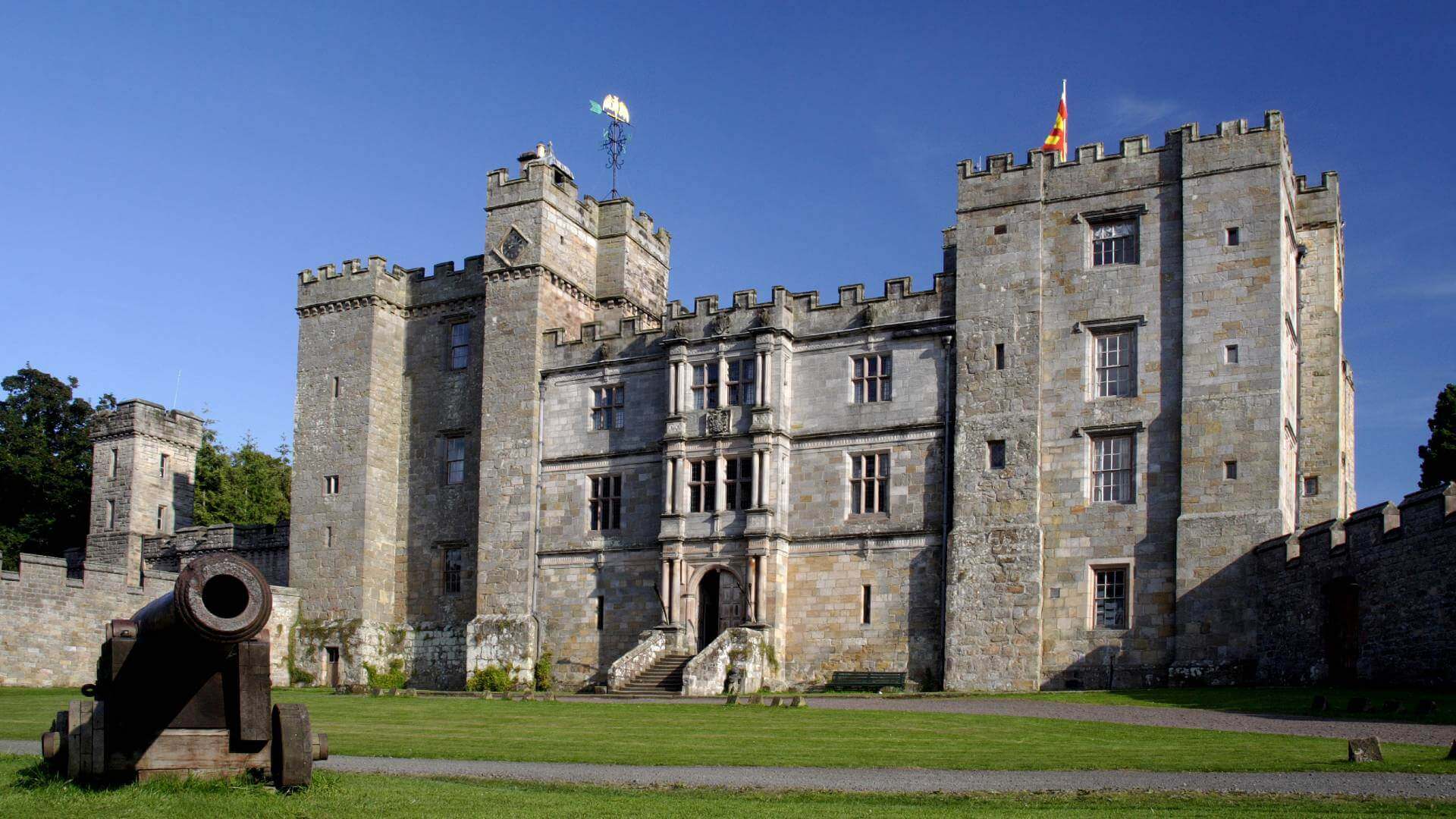
No discussion of Loch Ness is complete without the brooding silhouette of Urquhart Castle. Perched on a rocky promontory jutting into the deepest section of the Loch, the castle ruins offer the definitive vantage point for the observer. Historically, the castle had nothing to do with the monster; it was a strategic military stronghold. Dating back to the 13th century, it played a critical role in the Wars of Scottish Independence. It passed back and forth between the Scots and the English, was raided by the Lords of the Isles, and was eventually blown up by government troops in 1692 to prevent it from falling into Jacobite hands.
The Vantage Point
Today, Urquhart Castle serves as the intersection of violent history and modern myth. It is the most visited site on the Loch, not just for its architectural significance, but because its Grant Tower offers a sweeping view of Urquhart Bay—a location notorious for the high frequency of monster sightings. Standing on the battlements, looking down into the black water, one can understand why the legend endures here. The wind howls through the fractured masonry, and the waves break against the base of the cliffs with a rhythmic violence. It is a place that feels watched. The juxtaposition of the ruined fortress—a symbol of human impermanence—against the timeless, unchanging water creates an atmosphere where the impossible seems slightly more plausible.
Visiting the Void: Accessing Loch Ness Today
The Gateway
Accessing Loch Ness is a study in contrasts. One moves quickly from the urban amenities of Inverness to the wild silence of the Great Glen. The primary hub for visitors is the village of Drumnadrochit on the western shore. Here, the industry of the legend is in full swing. The Loch Ness Centre & Exhibition occupies the old Drumnadrochit Hotel (where the manageress, Mrs. Aldie Mackay, reported one of the first sightings in 1933). The exhibition is surprisingly scientific, guiding visitors through the geological formation and the history of the search rather than relying on jump scares.
The Ethics of Observation
For those wishing to engage with the water directly, the options are regulated but accessible. Cruise boats depart regularly from the Dochgarroch Lock and the Clansman Harbour. These vessels are often equipped with sonar screens visible to passengers, adding a layer of technological participation to the tour. Watching the sonar line trace the uneven bottom of the Loch is hypnotic, turning every passenger into an amateur cryptozoologist. However, the ethics of visiting require a respectful balance. The Loch is a working waterway and a protected environment. While the local economy relies heavily on the "monster dollar," the operators are careful to treat the Loch with ecological reverence.
Water Access
A word of warning to the adventurous: swimming in Loch Ness is physically dangerous and generally discouraged outside of organized events. The water temperature creates a risk of cold-water shock within minutes, even in July. The sides of the Loch drop away precipitously; one step off the shingle beach can plunge a wader into deep water instantly. Furthermore, the buoyancy in fresh water is lower than in salt water, making swimming more exhausting. This is a hostile environment, indifferent to human fragility.
Conclusion: The Necessity of the Unknown
The Psychology of the Deep
Why, in an age of satellite mapping, global surveillance, and genetic sequencing, do we cling so tightly to the idea of the Loch Ness Monster? The answer likely lies not in the water, but in the human condition. We live in a world that has been conquered, categorized, and explained. There are very few blank spaces left on the map. Loch Ness represents one of the last bastions of the unknown in the developed world. It is a place where science has not yet fully extinguished the possibility of magic.
The Final Image
We want the monster to exist because its existence would imply that the world is still bigger, stranger, and more complex than we understand. The "Substantive Awe" of Loch Ness comes from standing on that cold shore, watching the mist roll off the black waves, and realizing that we cannot see the bottom. Whether that darkness hides a plesiosaur, a giant eel, or simply millions of gallons of peat-stained water is almost secondary. The Loch keeps its secrets. And as long as the water remains black and the depth remains unfathomed, the shadow in the Great Glen will continue to swim through our collective imagination, a reminder that there are still things in this world that refuse to be caught.
Frequently Asked Questions (FAQ)
Has the Loch Ness Monster been scientifically disproven?
No, because it is impossible to prove a negative in an open system. However, the 2019 eDNA study by the University of Otago ruled out the existence of plesiosaurs, sharks, and sturgeon. The study found significant amounts of eel DNA, leading scientists to propose that sightings may be attributed to giant eels. No reptile DNA was found in the water.
How deep is Loch Ness?
The official maximum depth is 230 meters (755 feet). This makes it the second deepest loch in Scotland after Loch Morar. However, Loch Ness holds the largest volume of water in the UK. The "depth" perception is amplified by the poor visibility; the water is saturated with peat, creating complete darkness below 10 meters.
Can you swim in Loch Ness?
Swimming is possible but dangerous and generally discouraged for casual visitors. The water temperature remains around 5°C (41°F) year-round, posing an immediate risk of cold-water shock and hypothermia. There are no lifeguards, and the steep drop-offs at the shore mean you are in deep water almost instantly. Organized wild swimming events do occur with safety support.
What was Operation Deepscan?
Operation Deepscan was a massive sonar exploration conducted in 1987. A fleet of 24 boats equipped with sonar gear lined up across the Loch's width and swept the entire length. They recorded three distinct, large contacts in deep water that could not be explained as fish or debris. These contacts remain unidentified but proved the Loch contains large, mobile targets.
Is the "Surgeon's Photograph" real?
No. The famous 1934 image showing a long neck and head rising from the water was revealed to be a hoax in 1994. It was a toy submarine fitted with a wood putty head, created by Christian Spurling and staged by Marmaduke Wetherell to trick the Daily Mail. Despite being a fake, it remains the most iconic image of the legend.
Sources & References
- Environmental DNA Study of Loch Ness | Prof. Neil Gemmell (University of Otago) | 2019
- The Life of St Columba (Vita Columbae) | Adomnán of Iona | c. 700 AD
- Operation Deepscan: The Sonar Exploration | Adrian Shine (Loch Ness Project) | 1987
- Bathymetrical Survey of the Scottish Fresh-Water Lochs | Sir John Murray & Laurence Pullar | 1910
- The Loch Ness Centre & Exhibition | The Loch Ness Centre | 2023
- The Loch Ness Mystery Solved | Ronald Binns | 1984
- British Geological Survey | Geology of the Great Glen Fault | 2024
- Visit Scotland: Loch Ness Destination Guide | VisitScotland National Tourism Organisation | 2024