
The Stone Turtle
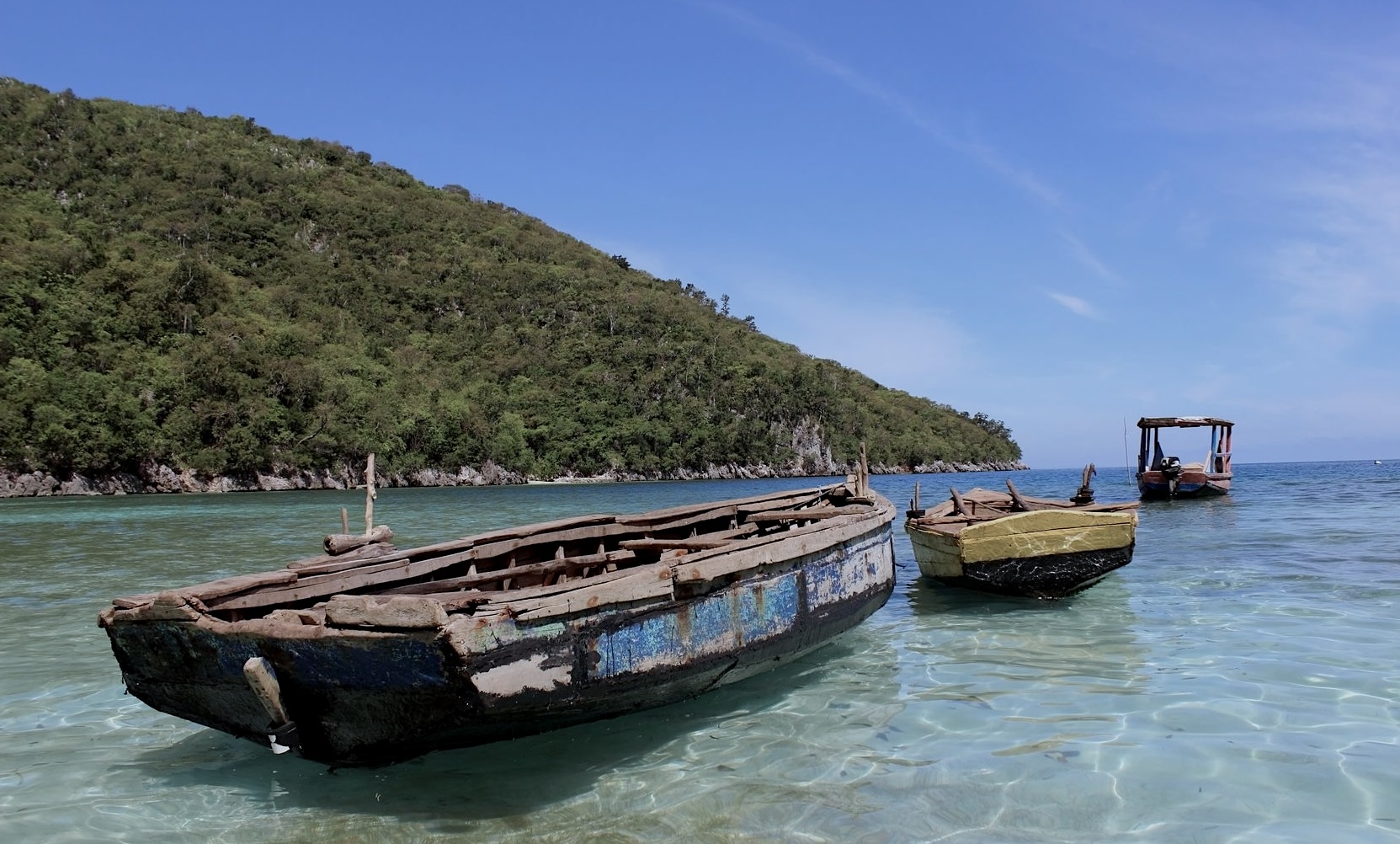
From the heaving deck of a sloop in the Windward Passage, the island first appears not as land, but as a creature. Rising abruptly from the cobalt depths of the Atlantic, the northern coast of Île de la Tortue is a sheer, unforgiving wall of limestone, cloaked in dense, brooding rainforest. It sits just ten miles off the northern coast of Haiti, yet it feels worlds away. The Spanish named it Tortuga for a reason: its humped silhouette resembles a massive sea turtle floating motionless on the horizon, its shell hardened against the elements.
To the modern eye, it is a place of breathtaking, if somewhat menacing, beauty. Clouds frequently snag on the high ridges, creating a perpetual mist that drifts down into the valleys. But in the 17th century, this silhouette was a signal fire for the desperate and the damned. It was a beacon that promised freedom from the suffocating hierarchies of Europe, a sanctuary where the laws of kings and popes dissolved in the salt spray.
A Fortress by Nature: Geography and Strategy
The island is roughly twenty-three miles long and four miles wide, a sliver of rock detached from the Haitian mainland. Its northern shore—the "Iron Coast"—is a navigator’s nightmare, a continuous cliff face battered by the Atlantic swell, lacking any safe anchorage. It is a natural rampart that made a seaborne assault from the north suicidal.
The southern coast, facing the narrow channel separating it from Hispaniola (modern-day Haiti), tells a different story. Here, the land slopes gently toward the sea, offering a grand harbor, Basse-Terre, capable of sheltering hundreds of vessels. This harbor was the island’s lung, allowing it to breathe in plunder and exhale violence.
Strategically, Tortuga was positioned perfectly to act as a parasite on the Spanish Empire. It sat directly upstream from the Windward Passage, the crucial bottleneck through which the Spanish Treasure Fleets had to pass on their return journey to Seville. A ship based in Tortuga did not need to hunt across the vast ocean; it simply had to wait for the prey to come to it. The island had a fatal flaw: a scarcity of fresh water sources on the high plateau. It was a fortress built on rock, but one that would always rely on the mainland for its survival.
The Spanish Vacuum and the Hunters of Hispaniola
In the early 1600s, the Spanish authorities on Hispaniola were plagued by Dutch and English smugglers trading illegally with locals on the north coast. Unable to police the coastline, the Governor ordered the Despoblaciones (depopulations) in 1605—forcibly relocating the entire population of the north to the southern controlled zones near Santo Domingo.
They scorched the earth, burned the settlements, and left a massive geopolitical vacuum. But they left something else behind: livestock. Thousands of cattle and pigs, abandoned by the settlers, went feral. They multiplied rapidly in the lush, unpopulated forests of northern Hispaniola.
Into this void stepped the French outcasts. Drifters, deserters, and runaway indentured servants trickled into the abandoned north. They found a hunter’s paradise. These men had no interest in the sea initially; they were terrestrial hunters, stalking the wild boars and cattle that roamed the ruins of the Spanish colony. They were rough, filthy, and entirely ungovernable. And they needed a base of operations—a place to store their hides and cure their meat, safe from the Spanish patrols that occasionally swept the mainland. They looked across the channel and saw the Turtle.
Smoke and Flesh: The True Origins of the Buccaneer
The word "buccaneer" has been sanitized by centuries of folklore, but its origin is smoky, bloody, and visceral. It comes from the Arawak word barbacoa, which the French adopted as boucan. This was a wooden grate used to slow-roast meat over a low fire of green wood and aromatic leaves, preserving it for long periods.
The men who operated these grates were the boucaniers. They were not sailors; they were backwoodsmen. Dressed in stiff rawhide stiffened by the blood of their kills, carrying long-barreled muskets, they lived a feral existence. They hunted in pairs or small groups, sleeping in temporary shelters, smelling perpetually of rancid fat and woodsmoke.
The transition from hunter to pirate was driven by economics and Spanish aggression. When the Spanish militia began hunting the boucaniers to drive them out, the hunters retreated to the safety of Tortuga. Realizing that the Spanish regarded them as vermin, the boucaniers took to their canoes. They found that the long muskets used to snipe cattle at 200 yards were equally effective at sniping Spanish helmsmen. The boucanier became the flibustier (freebooter), transferring his predatory skills from the forest to the forecastle.
The Engineer’s Stronghold: Jean Le Vasseur’s Reign
Tortuga remained a loose collection of camps until the arrival of a man who would turn anarchy into a state: Jean Le Vasseur. A French Huguenot engineer and former military officer, Le Vasseur arrived in 1640 with a commission from the governor of Saint-Christophe, but he had ambitions of his own.
Le Vasseur recognized that Tortuga’s survival depended on fortifications. He seized the high ground overlooking the harbor of Basse-Terre and constructed the Fort de Rocher (Fort of the Rock). It was a masterpiece of improvisation and military engineering. Built atop a steep precipice, the fort utilized the natural rock, mounting over 40 cannons that commanded the entire bay. Access was limited to a terrifyingly narrow path where visitors had to climb a ladder that could be retracted at a moment’s notice.
Secure in his eagle’s nest, Le Vasseur effectively declared independence. He severed ties with the French crown and ruled Tortuga as his personal fiefdom. He welcomed pirates of all nations—French, English, Dutch—demanding only a percentage of their plunder in exchange for protection. Under Le Vasseur, Tortuga ceased to be a hideout and became a sovereign power, a "Geneva of the Caribbean" where the only religion was profit.
The Brethren of the Coast: A Republic of Outcasts
The society that coalesced under Le Vasseur’s guns was unique in world history. They called themselves the Frères de la Côte (Brethren of the Coast). It was a republic of outcasts, governed not by royal decree but by the Chasse-Partie (hunting articles), a precursor to a constitution.
Before a voyage, the crew would gather to sign articles of agreement. These documents were radically democratic. They stipulated that the captain was elected and could be deposed by a vote for cowardice or cruelty to the crew. They laid out the division of spoils: "No prey, no pay."
Most remarkably, they established one of the world’s first systems of disability insurance. The articles specified fixed compensations for injuries sustained in battle: 600 pieces of eight for the loss of a right arm, 500 for a left arm, 100 for an eye or a finger. This was a pragmatic necessity in their brutal line of work, but it also bonded the men together. The institution of matelotage further cemented these bonds—a formal civil partnership between two buccaneers who shared property, fought back-to-back, and inherited each other’s goods if one died.
The Economics of Plunder
While history focuses on the sea battles, Tortuga was fundamentally a marketplace. The harbor town of Basse-Terre (later Cayona) boomed into a chaotic, vice-ridden service economy. When a ship returned laden with Spanish silver, silks from China, or cocoa from Venezuela, the economy of the island ignited.
Tavern keepers, gambling den owners, and merchants flocked to the island to separate the pirates from their gold. Wine and brandy flowed in industrial quantities. Prostitutes arrived from Europe, often transported by the French government to "stabilize" the colony, though they inevitably joined the chaotic fray of the port.
The economy operated on a gray line between legal privateering and illegal piracy. A "Letter of Marque" from a warring nation (usually France or England) made the plunder of Spanish ships legal acts of war. On Tortuga, these papers were often expired, forged, or purchased from corrupt officials. To the residents of Cayona, the legality didn’t matter. As long as the Spanish were the victims, business was good.
Pierre Le Grand and the Escalation of Ambition
The psychological shift from coastal raiding to high-seas piracy is often attributed to a single, legendary event involving Pierre Le Grand. According to the chronicler Alexander Exquemelin, Le Grand was a desperate man with a small boat and a crew of twenty-eight, drifting near the coast of Hispaniola, starving and empty-handed.
Spotting a straggling ship of the Spanish treasure fleet, Le Grand made a suicidal decision. He ordered his surgeon to bore holes in the bottom of their own small boat so that retreat was impossible. In the dead of night, they silently scaled the hull of the Spanish galleon. They found the captain playing cards in his cabin. With a pistol to the captain’s head, Le Grand took the ship.
The prize was immense—enough to make every man on the crew wealthy for life. They sailed the galleon straight to France, retiring instantly. But the news of the feat electrified Tortuga. It proved that the Spanish colossus was vulnerable, that a handful of desperate men in a canoe could take down a Vice-Admiral. It sparked a "Gold Rush" mentality that drew thousands of fresh recruits to the island.
The Flail of the Spanish: François l’Olonnais
If Le Grand represented the luck of the pirates, Jean-David Nau, known as François l’Olonnais, represented their nightmare capability. L’Olonnais was a sociopath whose hatred for the Spanish bordered on the pathological. He arrived in Tortuga as an indentured servant and rose to become the most feared commander in the Caribbean.
L’Olonnais did not just rob; he terrorized. He is infamous for the sack of Maracaibo and Gibraltar in modern-day Venezuela, expeditions launched from Tortuga. But his reputation was cemented by his cruelty. Historical accounts detail him cutting out the heart of a living Spanish prisoner and gnawing on it to intimidate others into revealing escape routes. On another occasion, he decapitated the entire crew of a Spanish pursuit ship, licking the sword clean after each strike.
Under l’Olonnais, Tortuga projected power far beyond its shores. It was no longer a defensive sanctuary; it was the capital of a terror state. The psychological warfare waged by l’Olonnais paralyzed Spanish shipping; crews would sometimes surrender immediately upon seeing the pirate flag, preferring captivity to a fight against the "Flail of the Spanish."
Henry Morgan and the Indenture System
Among the throngs in Tortuga was a young Welshman named Henry Morgan. While he is most associated with Port Royal, Jamaica, Morgan’s early career was deeply entwined with the network of the Brethren on Tortuga. His rise highlights the dark engine of the pirate economy: indentured servitude.
The "freedom" of the pirate republic was built on the backs of engagés—poor Europeans who sold themselves into three to seven years of slavery to pay for their passage. Life for an engagé on Tortuga was often worse than for a slave; since their master only owned their labor for a few years, they were worked to death without regard for their long-term health.
Morgan, and captains like him, recruited heavily from this class. For an indentured servant, joining a pirate crew was the only escape from the tobacco plantations. It created a class of fighters who had absolutely nothing to lose and who viewed the established order with burning contempt. The integration of escaped African slaves into these crews further diversified the ranks, creating a multi-racial proletariat of the sea.
The Spanish Counter-Stroke
The Spanish Empire did not suffer this thorn in its side quietly. Throughout the mid-17th century, Tortuga was the site of vicious tug-of-war warfare. The Spanish military launched major expeditions to retake the island in 1635, 1638, and 1654.
In 1654, the Spanish capitalized on the Brethren’s absence (many were out raiding) and captured the island, demolishing the fortifications and slaughtering those who remained. But the victory was always pyrrhic. The Spanish did not have the manpower to garrison such a hostile, remote rock permanently.
As soon as the Spanish fleet withdrew, the pirates returned, emerging from the forests or sailing back from Hispaniola. They rebuilt the forts, often stronger than before. It was a war of attrition. The Spanish could burn the towns, but they could not eradicate the idea of Tortuga.
The Geopolitical Shift: Rise of Port Royal and Petit-Goâve
Tortuga’s dominance began to wane not because of defeat, but because of competition. Port Royal—when the English captured Jamaica in 1655, they turned it into a "Tortuga on steroids"—a larger, deeper harbor backed by the official support of the English state. Many English buccaneers migrated there for the better facilities and legal protection. Nassau, a generation later, would inherit the same model — a shallow harbor fortress that became the last true pirate republic before Woodes Rogers crushed it in 1718.
Simultaneously, the French crown began to assert more direct control over western Hispaniola (Saint-Domingue). They established a new administrative center at Petit-Goâve. The French governors viewed the unruly pirates of Tortuga as useful tools in wartime but liabilities in peace. They began to crack down on the independence of the Brethren, demanding they accept official commissions and turn over larger shares of their loot. The "Wild West" era of the independent republic was slowly being strangled by colonial bureaucracy.
From Raiders to Planters: The 18th Century Transformation
By the turn of the 18th century, the Treaty of Ryswick (1697) had formally recognized French control over the western third of Hispaniola. The age of the buccaneer was over; the age of the planter had begun.
Tortuga underwent a jarring transformation. The rough camps and forts were dismantled or repurposed. The forests, once the hunting grounds of the boucaniers, were cleared for plantations producing indigo, coffee, and sugar. The pirates who stayed became respectable (and often brutal) landowners. The demographic shifted from a society of multi-national raiders to a rigid slave colony. The wild, violent liberty of the Brethren was replaced by the systematized horror of chattel slavery, feeding the wealth of the French Empire until the Haitian Revolution burned it all down again.
Tortuga Today: Isolation and Reality
Today, Île de la Tortue is a place of profound isolation. It is one of the poorest municipalities in the poorest country in the Western Hemisphere. There is no electrical grid; the nights are lit by kerosene lamps and the occasional generator. There is no running water system; residents rely on cisterns and natural springs.
The descendants of the people who live here—mostly farmers and fishermen—have little connection to the French and English pirates of lore. They are the descendants of the Africans who liberated themselves from the French plantations. The irony is sharp: the island that was once the wealthiest, most infamous rock in the Caribbean is now almost entirely forgotten by the world economy. The "pirate republic" is now a quiet, struggling community fighting for basic subsistence, far removed from the romanticized visions of Jack Sparrow.
Visiting Tortuga Today: Access and Logistics
For the dedicated traveler, visiting Tortuga is not a vacation; it is an expedition. It is possible, but it is fraught with logistical challenges and genuine risks. There is no airport on the island. The only gateway is the chaotic, dusty port city of Port-de-Paix on the Haitian mainland.
From Port-de-Paix, one must negotiate passage on a wooden sloop—often overloaded with sacks of rice, live chickens, and motorbikes. The channel crossing is notoriously rough; the Atlantic currents funnel through the strait with dangerous velocity. These boats capsize with tragic frequency.
The Nord-Ouest department of Haiti is frequently unstable. Gang activity, roadblocks, and civil unrest are real dangers. A traveler must be fluent in French or Haitian Creole, or possess a highly reliable local fixer. This is not a destination for the casual sightseer; it requires situational awareness and a high tolerance for discomfort.
What Remains of the Pirate Fortress on Tortuga
Once on the island, the "attractions" are subtle. There are no museums, no ticket booths, and no plaques. The ruins of Fort de Rocher are notoriously difficult to locate. The jungle has reclaimed the stone. What remains are moss-covered foundations and the occasional rusted cannon barrel, half-buried in the earth, indistinguishable to the untrained eye from the natural rock.
The most accessible site is the Grotte au Bassin (Cave of the Basin). High in the cliffs, these caverns were used by buccaneers for storage and shelter during hurricanes. Standing at the mouth of the cave, looking out over the channel, one can see the exact view that L’Olonnais or Le Vasseur would have scanned for Spanish sails.
The true "sight" of Tortuga is the atmosphere. It is walking the ridges of the Morne de la Vigie, feeling the trade winds, and seeing the geography that made piracy possible. It is a place of ghosts, where the landscape itself is the only remaining monument to the history.
Ethical Travel and the Myth-Making Machine
Visiting Tortuga demands a rigorous ethical code. The poverty here is stark. "Pirate tourism" has historically been a flashpoint for controversy. In the mid-2000s, Carnival Corporation proposed building a massive cruise ship port on the island, turning it into a "Pirate Theme Park" fenced off from the local population. The plan was fiercely opposed by Haitians and eventually abandoned.
Travelers must avoid the trap of romanticizing the colonial past while ignoring the present suffering. The pirates were not heroes; they were agents of violence and exploitation. The people living there today are not props for a pirate fantasy.
Responsible exploration means engaging with the local economy directly—hiring local guides, buying food from local markets, and listening to the stories of the residents, which are often about survival and resilience, not buried treasure. It means acknowledging that the "Golden Age of Piracy" was, for the victims, an age of terror.
Tortuga remains one of the most evocative places on the Dark Atlas. It is a place where the map of the modern world was drawn in blood and gunpowder. It was here that the empires of Europe were defied by a mongrel army of outcasts, establishing a brief, brutal experiment in self-governance. The pirate networks that Tortuga spawned left traces across the Caribbean and beyond. Norman’s Cay in the Bahamas — centuries later a logistics hub for the Medellín Cartel — echoed Tortuga’s model of using a remote island as a base for illegal commerce. St. Mary’s Island off Madagascar served as the Indian Ocean equivalent, hosting pirates who preyed on the Mughal trade routes. And the Kasbah of the Udayas in Morocco was the North African counterpart — a fortified pirate republic on the Bou Regreg that raided European shipping from the opposite direction.
The stone turtle still floats on the horizon, indifferent to the empires that rise and fall around it. In the Caribbean, paradise and hell have always occupied the exact same coordinates.
Sources
- The Buccaneers of America — A.O. Exquemelin (1678)
- Pillaging the Empire: Global Piracy on the High Seas, 1500–1750 — Kris Lane, Routledge (2016)
- Buccaneers of the Caribbean: How Piracy Forged an Empire — Jon Latimer, Harvard University Press (2009)
- History of the Buccaneers of America — James Burney, Cambridge University Press
- Wars of the Americas — David Marley, ABC-CLIO (1998)
- "An-arrgh-chy: The Law and Economics of Pirate Organization" — Peter T. Leeson, Journal of Political Economy (2007)
- UNESCO World Heritage Convention — Fortifications of Portobelo-San Lorenzo
- The British National Archives — Pirates and Privateers research guide
- The Guardian — "Haiti’s Pirate Island" (2009)
- Royal Geographical Society — "The grim reality of the Caribbean’s pirate islands"
- U.S. Department of State — Haiti Travel Advisory



%2C%20Konjic%2C%20Bosnia.jpg)


