

The Cold War Logic of Weaponizing Disease
The Soviet biological weapons program was the largest in human history. At its peak, it employed over 50,000 people across more than 50 facilities scattered throughout the Soviet empire, from closed cities in Siberia to converted pharmaceutical plants in Moscow's suburbs. The program's purpose was straightforward: to produce enough anthrax, plague, and smallpox to exterminate entire populations in the event of total war. Vozrozhdeniya Island was the place where these weapons were taken outside the laboratory and detonated in open air, on living subjects, under real atmospheric conditions. The island was not a research facility in any traditional sense. It was a proving ground for extinction.
The deeper truth of Vozrozhdeniya is one of institutional paranoia metastasizing into industrial-scale production. The Soviet Union signed the 1972 Biological Weapons Convention, which banned the development, production, and stockpiling of biological arms. It then immediately expanded its program, creating a civilian front organization called Biopreparat to absorb the new work. The island became the critical link in this chain of deception — the place where laboratory theory was converted into battlefield capability, far from the eyes of treaty inspectors and the conscience of the international community. Every container of weaponized anthrax buried in its sand represents a treaty violation. Every unmarked grave on the island represents a human being sacrificed to a program that officially did not exist.
Biopreparat and the Scale of the Soviet Biological Weapons Complex
Biopreparat was established in the early 1970s as a network of ostensibly civilian biotechnology institutes. In practice, it coordinated the research, mass production, and weaponization of some of the most lethal pathogens known to science. The organization operated alongside two older pillars of the Soviet bioweapons apparatus: the Ministry of Defence's own laboratories, including the Virology Centre in Zagorsk (now Sergiev Posad), and the Anti-Plague system, a network of regional health institutes repurposed for weapons research. Together, these three branches formed a triangle of redundancy designed to ensure that no single strike could eliminate Soviet biological warfare capability.
The scale defied rational comprehension. Facilities in Sverdlovsk (now Yekaterinburg) produced anthrax in industrial fermenters. The Institute of Ultra-Pure Biopreparations in Leningrad worked on aerosolization technology. The Vector laboratory in Koltsovo, Siberia, housed one of the world's only repositories of live smallpox virus — and engineered new, vaccine-resistant strains of it. The entire apparatus was connected by dedicated rail lines, guarded perimeters, and a culture of secrecy enforced by the KGB. Scientists who worked within the program lived in closed cities that did not appear on any public map. Vozrozhdeniya Island was the terminus of this pipeline — the place where the finished product was taken out of the fermenter and tested against the wind.
Why the Soviets Chose an Island in the Aral Sea
The search began in the 1920s. Red Army planners needed a location that met specific criteria: a relatively large island, at least five to ten kilometers from the nearest inhabited coast, in a climate hostile enough to neutralize stray pathogens after testing. Initial candidates included Lake Baikal, the Solovetsky Islands in the White Sea, and Gorodomlya Island on Lake Seliger. Each was rejected. Vozrozhdeniya, sitting in the center of the Aral Sea between the Kazakh and Uzbek Soviet Socialist Republics, was ideal. The island was remote — 150 kilometers from the nearest towns of Muynak and Aralsk. Summer surface temperatures regularly exceeded 60°C, intense enough to kill most exposed bacteria and viruses within hours. The surrounding water provided a natural quarantine barrier. The desert climate meant almost no vegetation and virtually zero civilian interest in the land.
The island had been mapped in 1848 by Russian naval officer Alexei Butakov during an expedition of the Aral Sea. One of the expedition's members was the Ukrainian poet and artist Taras Shevchenko, who painted the barren shoreline. At the time, the island measured roughly 200 square kilometers — a flat, sun-scorched disc of sand and scrub in the middle of what was then the world's fourth-largest lake. A small fishing village existed on the island before the military arrived. Its inhabitants were evacuated without explanation when the laboratory was established. Their community was erased from the map, replaced by a secret that would last half a century.
From Expedition to Extermination: The Origins of Aralsk-7 (1936–1954)
Ivan Velikanov and the First Bioweapons Expeditions (1936–1937)
The first scientific expedition to Vozrozhdeniya Island arrived in 1936, led by Ivan Mikhailovich Velikanov, the man now considered the architect of the Soviet Union's bacteriological weapons program. Velikanov was the director of the Biotechnical Institute, the Red Army's primary bioweapons research body. His mission was to assess whether the island could serve as a permanent open-air testing ground. The expedition confirmed what the planners suspected: the island's isolation, its extreme heat, and its distance from populated areas made it a near-perfect natural containment zone for pathogen release experiments.
Velikanov began planning a second, more ambitious expedition for 1937. He never completed it. In July of that year, at the height of Stalin's Great Purge, Velikanov was arrested by Soviet security services. The charges were fabricated. He was executed. The second expedition proceeded without him, led by Leonid Moiseevich Khatanever, an expert on Francisella tularensis, the bacterium responsible for tularemia. Khatanever was given two ships and two aircraft to conduct the Soviet Union's first confirmed open-air dissemination tests of a biological agent on Vozrozhdeniya. The results were deemed successful. Testing was then halted abruptly in late 1937, for reasons that remain unclear — possibly connected to the cascading purges that were consuming the Soviet military-scientific establishment. For the next eleven years, the island sat silent.
The 1948 Laboratory and the Construction of Kantubek
The full-scale military-scientific complex on Vozrozhdeniya Island was activated in 1948, driven by the emerging Cold War and Soviet fears of falling behind NATO in biological weapons capability. All remaining civilian residents — primarily fishermen — were evacuated, and the fish processing plant that had operated on the island was shut down. In its place, the Soviet military constructed an entire secret town.
Kantubek, also known by its military designation Aralsk-7, was built to house approximately 1,500 people: research scientists, military personnel, security staff, and their families. The town contained 15 three-story residential buildings, a social club, a cafeteria, shops, a school, a stadium, a parade ground, and its own power station. Free immunizations, medical care, and hardship pay were offered to offset the brutal conditions. Three kilometers west of Kantubek, the military built the Barkhan airfield — the only airfield in the entire Soviet Union with four intersecting runways. The starburst configuration was not aesthetic; it was functional. The island experienced constant, violently shifting winds, and the four-runway design ensured that aircraft could land regardless of wind direction. Barkhan served as the sole supply line, ferrying food, equipment, and personnel to a place that did not officially exist.
Aralsk-7: Expansion and the Microbiological Warfare Group (1954)
The facility was significantly expanded in 1954 and formally designated Aralsk-7. The Soviet Ministry of Defence stationed its Field Scientific Research Laboratory (PNIL) on the island, along with Military Unit 25484, a garrison of several hundred soldiers who reported to a larger command structure based in the city of Aralsk on the mainland. The expansion incorporated the neighboring Komsomolskiy Island into the testing complex. Seven dedicated test zones were established approximately 2.5 kilometers south of Kantubek, separated from the residential town by a buffer of open desert.
The catalog of agents tested at Aralsk-7 reads like a compendium of humanity's worst nightmares: Bacillus anthracis (anthrax), Yersinia pestis (plague), Variola major (smallpox), Francisella tularensis (tularemia), Brucella suis (brucellosis), Coxiella burnetii (Q fever), Rickettsia prowazekii (epidemic typhus), Venezuelan equine encephalitis virus, and botulinum toxin. These were not merely natural strains. According to defectors and declassified documents, many of the pathogens tested in aerosol form at Vozrozhdeniya were genetically modified to resist existing antibiotics and vaccines, producing atypical disease processes specifically designed to complicate diagnosis and overwhelm medical response.
Testing the Apocalypse: Biological Warfare Trials on Vozrozhdeniya Island
Open-Air Pathogen Dissemination and the Testing Methodology
The testing methodology at Aralsk-7 was designed to simulate real-world battlefield deployment. Weaponized biological agents were loaded into explosive devices or spray systems and detonated in the open air at the seven test sites south of the laboratory complex. Aerosol clouds of plague, anthrax, and smallpox drifted across the island while monitoring equipment measured particle dispersion, concentration decay, and viability at various distances. Animals — primarily monkeys and horses — were staked at measured intervals from the detonation point, exposed to the pathogen cloud, then observed as they sickened and died. The data generated was fed back to production facilities across the Soviet Union to refine dosage, particle size, and delivery mechanisms.
The laboratory complex itself, located 2.5 kilometers south of Kantubek, housed the technical infrastructure required for this work: containment rooms, decontamination showers, necropsy facilities for dissecting infected animals, and cold storage for pathogen samples shipped from mainland institutes in Kirov, Sverdlovsk, and Zagorsk. Bacterial simulants were also used to study aerosol behavior in the island's unpredictable winds before live agents were released. The island functioned as a bridge between the controlled sterility of the laboratory and the chaos of an actual biological attack — and the data it produced was considered irreplaceable.
The 1971 Smallpox Outbreak in Aralsk: A Weapon Escapes the Island
On July 30, 1971, researchers at Aralsk-7 detonated 400 grams of weaponized Variola major — the virus that causes smallpox — in an open-air aerosol test. The island's standard exclusion zone prohibited any vessel from approaching within 40 kilometers. The research vessel Lev Berg, part of the Aral Sea fishing fleet, violated this perimeter, passing within 15 kilometers of the island. A 24-year-old female lab technician aboard the ship was collecting plankton samples from the open top deck. The weaponized smallpox formulation, still viable in the atmosphere at that distance, reached her.
She returned home to the port city of Aralsk in present-day Kazakhstan. Within days, she developed fever and a rash. Over the following weeks, she infected nine other people. Three of them — all unvaccinated, including two young children — died from haemorrhagic smallpox, the most severe and lethal form of the disease. The high proportion of haemorrhagic cases strongly suggested that the strain released was not natural but an enhanced, weaponized variant. Once the diagnosis was confirmed, Soviet authorities mounted a militarized response: nearly 50,000 Aralsk residents were vaccinated within two weeks, hundreds were quarantined in a makeshift isolation facility, and all traffic in and out of the city was halted. General Pyotr Burgasov, the USSR's chief sanitary physician, later called KGB chief Yuri Andropov to inform him of the incident. Andropov's response was immediate: not another word. The outbreak was classified. The world did not learn of it until 2002.
The Unnamed Dead: Accidents, Cover-Ups, and the Invisible Human Cost
The 1971 smallpox outbreak was the most dramatic incident at Aralsk-7, but it was not the only one. An unmarked grave was discovered near the laboratory complex in the years following the Soviet collapse. Defectors later identified the remains as those of a female scientist who had contracted a lethal infection while handling bioweapons on the island. Her death was never officially recorded. The surrounding region experienced recurring anomalies that scientists and local residents attributed to the island's work: mass die-offs of fish in the Aral Sea, regional outbreaks of plague that followed no natural epidemiological pattern, and the sudden death of saiga antelope herds in the surrounding steppe.
The culture of secrecy was absolute. Scientists working at Aralsk-7 were forbidden from discussing their work with anyone, including family members living in Kantubek. Publications were classified. Deaths were erased from the record. The KGB maintained a permanent presence on the island, and any breach of operational security was treated as a state crime. The full scope of human casualties caused by accidents at Vozrozhdeniya will likely never be known. The Soviet system was designed not merely to conceal its failures, but to ensure they were never documented in the first place.
The Collapse: Evacuation, Abandonment, and Buried Anthrax (1991–1992)
The November 1991 Meeting and the Decision to Shut Down
In November 1991, with the Soviet Union in its final weeks of existence, military authorities convened at the Ministry of Defence's Virology Centre in Zagorsk to decide the fate of Aralsk-7. The conclusion was straightforward: terminate all experimental work. The newly independent republics of Kazakhstan and Uzbekistan, on whose shared border the island sat, had no interest in inheriting a biological weapons facility. The following year, Russian President Boris Yeltsin publicly acknowledged the existence of the Soviet offensive bioweapons program and pledged compliance with the 1972 Biological Weapons Convention — the same treaty the USSR had been violating for two decades.
The information that reached the West came primarily from two defectors. Vladimir Pasechnik, a senior Biopreparat scientist, fled to Britain in 1989 and provided MI6 with the first detailed account of the program's scope. Kanatjan Alibekov, who later adopted the name Ken Alibek, was the former first deputy director of Biopreparat. His 1999 book became the definitive public record of Soviet biological warfare — and of Vozrozhdeniya Island's central role within it.
The Hasty Retreat from Kantubek and the Anthrax Burials
The evacuation of Vozrozhdeniya Island was completed by late April 1992. All military units withdrew. The approximately 1,500 residents of Kantubek were evacuated within weeks. The speed of the departure left no time for systematic decontamination. Laboratory buildings were locked but not sterilized. Equipment was abandoned in place. Storage containers holding residual biological agents were left behind, and over the following years, many of these containers developed leaks.
The most dangerous legacy was deliberate. Before departing, Soviet military personnel buried tons of anthrax spores in pits on the island. The burials were not a safety measure; they were a concealment operation, designed to destroy evidence of treaty violations before international inspectors could arrive. The spores were mixed with bleach in a crude attempt at neutralization, but anthrax — specifically Bacillus anthracis in its spore form — is one of the most resilient biological entities on Earth. Anthrax spores can survive in soil for decades, potentially centuries. The bleach degraded. The spores, in all likelihood, did not.
The Aral Sea's Disappearance and the Exposure of a Toxic Legacy
Vozrozhdeniya Island's natural quarantine — the water of the Aral Sea — was vanishing. Soviet irrigation projects had been diverting the sea's feeder rivers since the 1960s, and by the time the bioweapons facility closed, the Aral Sea had lost the majority of its volume. The island, which measured 200 square kilometers in the 19th century, swelled to approximately 2,300 square kilometers as the seabed was exposed. By the early 2000s, the southern channels dried completely, and Vozrozhdeniya ceased to be an island at all. It became a peninsula — connected to the mainland by a land bridge.
This was not merely an ecological disaster compounding a military one. It was a biosecurity catastrophe. The land bridge created a pathway for rodents to cross between the former island and the populated mainland. Scientists who had worked on the Soviet bioweapons program warned that weapons-grade plague bacteria could still be cycling through rodent populations on the island, passed from generation to generation, waiting to reach a human host. The dual catastrophe of Vozrozhdeniya — biological weapons and ecological collapse — made it one of the most contaminated and strategically dangerous sites on Earth, a place where two of the Soviet Union's most reckless projects converged on the same patch of dying ground.
Decontamination, Demolition, and the Legacy of Aralsk-7
The 2002 US-Uzbekistan Anthrax Decontamination Operation
In 2002, the United States government organized and funded a major decontamination operation on Vozrozhdeniya Island in cooperation with Uzbekistan. American and Uzbek teams identified and treated ten anthrax burial sites, excavating contaminated soil and applying chemical neutralization agents. Several warehouses containing abandoned laboratory materials — test tubes, petri dishes, bottles, and containers — were set on fire. The US Defense Department declared the operation a success and stated that the anthrax spores had been destroyed. Independent scientists were less certain. Gennady Lepyoshkin, a former Soviet bioweapons researcher who had worked on the island, warned that the super-resilient, weapons-grade bubonic plague bacteria could still be propagating in local rodent populations — a self-sustaining biological reservoir that no decontamination crew had addressed.
The 2002 operation was narrowly focused on anthrax. The broader question of what else remained in the island's soil, water table, and animal populations was never fully answered. The extreme ultraviolet radiation and summer temperatures likely killed most surface-exposed pathogens over the intervening decade. But "likely" and "certainly" are very different words when the pathogens in question include genetically enhanced smallpox and antibiotic-resistant plague.
The Demolition of Kantubek and the Erasure of Aralsk-7 (By 2021)
Uzbek authorities systematically demolished the remaining structures of Kantubek and the Aralsk-7 laboratory complex over the decade following the decontamination operation. By 2021, the ghost town that had fascinated dark tourism explorers and journalists was gone. The 15 residential buildings, the social club, the stadium, the laboratories — all reduced to rubble and cleared. Today, only the faint traces of building foundations and the distinctive cruciform pattern of the Barkhan airfield's four runways remain visible from above, scored into the desert like a scar that refuses to fully heal.
Before the demolition, the site had attracted scavengers who stripped the abandoned buildings of metal, wiring, and anything of resale value. These scavengers worked without protective equipment among the ruins, handling debris from buildings that had once stored weaponized pathogens. The risk they faced was real but largely invisible — a characteristic that defined Vozrozhdeniya's entire history. The island's danger was never something you could see. It was carried on the wind, buried in the sand, and hidden inside the bodies of animals that crossed the land bridge.
Vozrozhdeniya's Place in the History of Biological Warfare
Vozrozhdeniya Island is the largest and longest-running open-air biological weapons testing site in recorded history. Its operational span — from the first expeditions in 1936 to the final evacuation in 1992 — covers 56 years of continuous or intermittent weapons development. The site's existence was a direct and sustained violation of the 1972 Biological Weapons Convention, a treaty the Soviet Union signed with full knowledge that it intended to expand, not dismantle, its program.
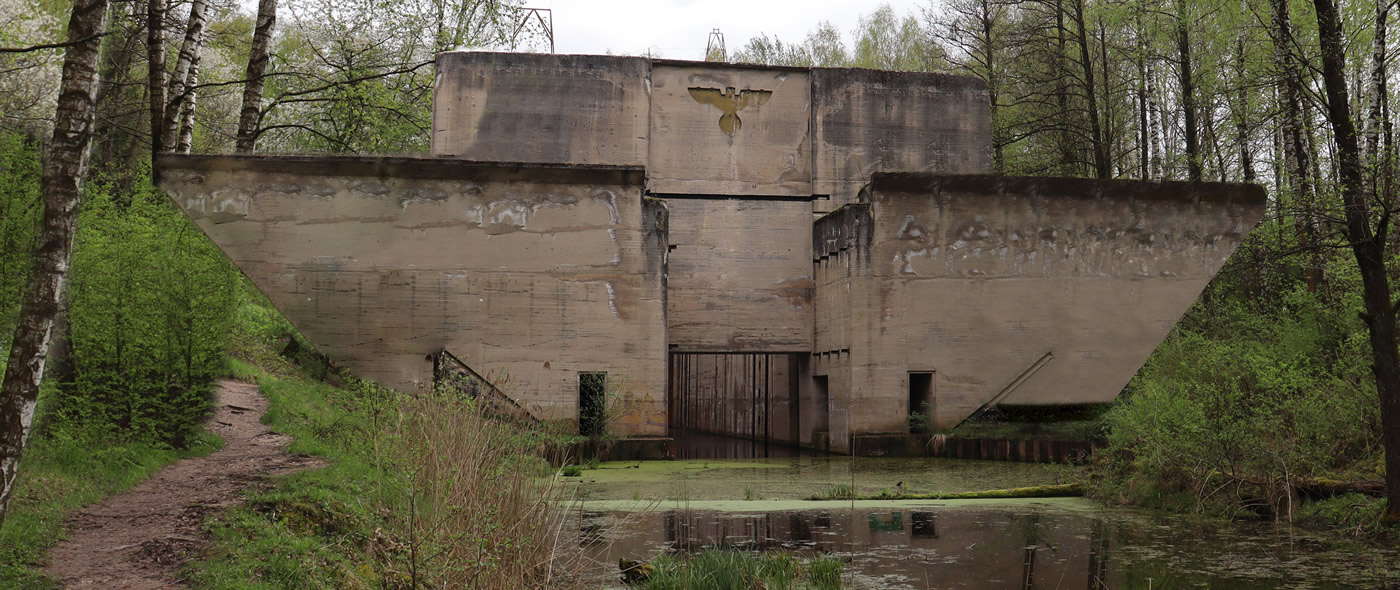
The island's legacy extends beyond its physical boundaries. The defections of Pasechnik and Alibek in the late 1980s and 1990s did not merely expose a Cold War secret; they reshaped the global understanding of biological threats. The revelation that a superpower had maintained a clandestine bioweapons apparatus of this scale — even while publicly committed to disarmament — became a foundational case study in arms control verification. Aralsk-7 proved that treaties without robust inspection regimes are paper promises. The parallels to other concealed Cold War weapons sites are direct: the Plokštinė Missile Base in Lithuania hid Soviet nuclear missiles underground, the Duga Radar broadcast early warning signals across continents, and Camp Century concealed American nuclear ambitions beneath Greenland's ice. Vozrozhdeniya stands apart because its weapon was alive. A missile, once launched, is spent. A pathogen, once released, can reproduce.
Visiting Vozrozhdeniya Island: The Atlas Entry
How to Reach the Former Island from Nukus, Uzbekistan
Vozrozhdeniya is accessible from the Uzbek side, with most expeditions departing from Nukus, the capital of the Karakalpakstan autonomous republic. The drive takes approximately six hours across the arid flatlands of the former Aral seabed. There is no public transport, no signage, and no infrastructure along the route. A local guide with a capable 4x4 vehicle is essential — the terrain is loose sand, salt crust, and dried mud with no marked roads. Uzbekistan began opening formerly secret sites to visitors after the death of President Islam Karimov in 2016, and Vozrozhdeniya, while not an official tourist destination, is accessible to determined travelers who arrange logistics through local operators in Nukus or Muynak.
Permits are not formally required for foreign visitors at the time of writing, but the political and bureaucratic landscape in Karakalpakstan can shift. Travelers should confirm current access conditions before departing. The nearest accommodation and supplies are in Muynak, the former fishing port that once sat on the Aral Sea's shore — itself a haunting destination, with rusting ship hulls beached in what is now desert. The journey to Vozrozhdeniya is best combined with a broader exploration of the Aral Sea region, one of the most striking examples of human-caused environmental devastation on the planet.
What Remains and What to Expect at the Former Aralsk-7 Site
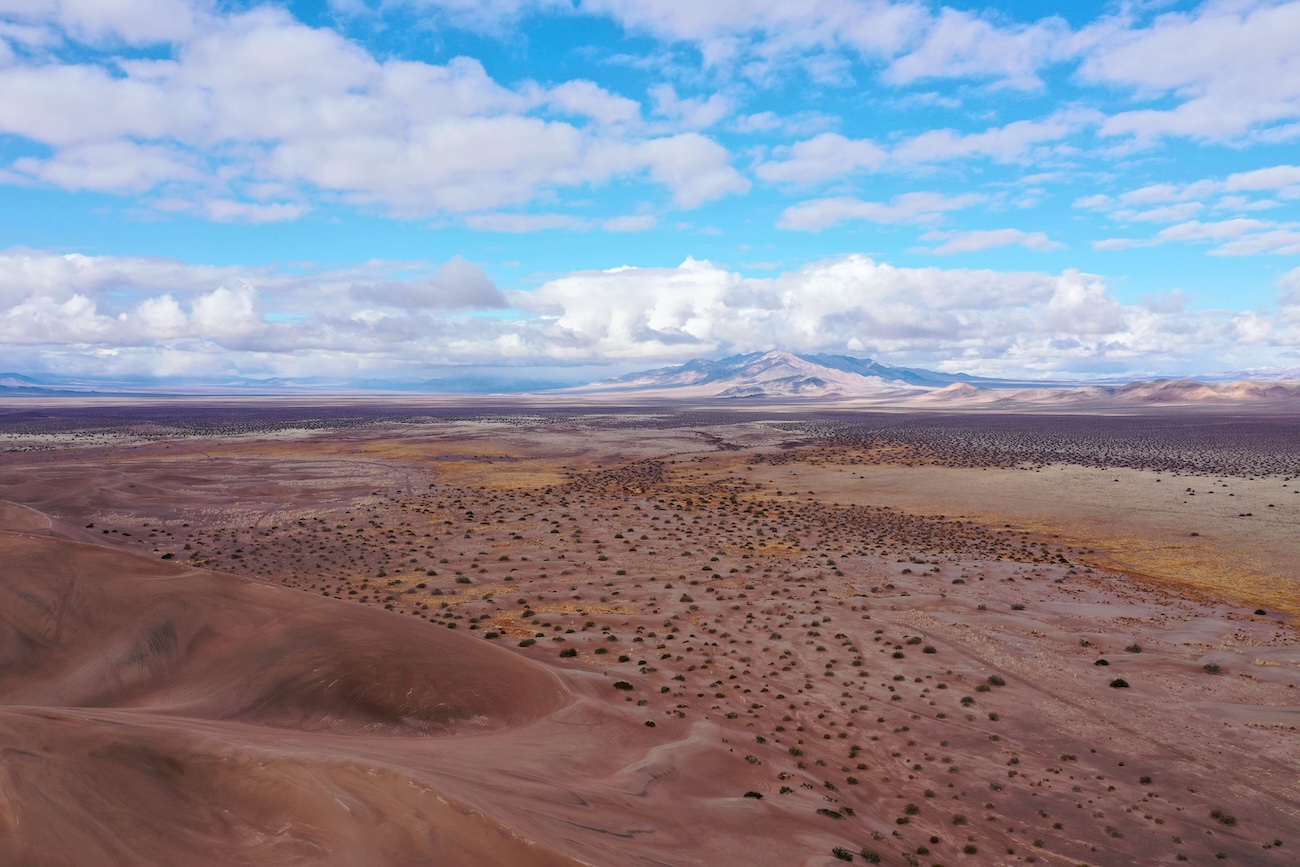
The demolition of Kantubek and the laboratory complex means that there is very little left to see in conventional terms. The residential blocks, the laboratories, the warehouses — all have been razed. What remains is landscape and geometry: the rectangular outlines of foundations in the sand, the long straight scars of the Barkhan airfield's four runways, and the vast, flat emptiness of the former island stretching to a horizon that once met water and now meets only more desert.
The physical conditions are extreme. Summer temperatures can exceed 50°C in the shade — of which there is none. Wind is constant and unpredictable. There is no potable water on site. Visitors should carry all supplies, including significant water reserves, sun protection, and a first aid kit. The biosafety situation is officially considered resolved following the 2002 decontamination, but experts have never fully guaranteed that all pathogens have been neutralized. Common sense dictates avoiding contact with soil, avoiding disturbing any remaining debris, and not touching any objects found on the ground.
Standing on the former island, the silence is the dominant sensation. The Aral Sea is gone. The town is gone. The laboratories are gone. The people who lived, worked, and in some cases died here have been scattered and silenced. What remains is the ground itself — and whatever it still holds beneath the surface. Vozrozhdeniya means "rebirth" in Russian. The name was given long before the bioweapons arrived, when the island was just a speck of sand in a vast inland sea. The irony is total. This is a place where the Soviet Union tried to master death on an industrial scale, and where the earth, the water, and the wind conspired to ensure that the evidence would never fully disappear. The Chernobyl Exclusion Zone fenced its contamination behind barbed wire. Pripyat preserved its ruins as a monument to failure. Vozrozhdeniya took a different path. It was demolished, flattened, and returned to the desert — a ghost erased, but not exorcised.
Frequently Asked Questions
What Was Aralsk-7 on Vozrozhdeniya Island?
Aralsk-7 was the military codename for a top-secret Soviet biological weapons testing facility located on Vozrozhdeniya Island in the Aral Sea. Established in 1948 and formally expanded in 1954, the complex included a laboratory, seven open-air testing zones, the Barkhan airfield, and the residential town of Kantubek, which housed approximately 1,500 scientists, soldiers, and their families. The facility operated under the Soviet Ministry of Defence and was part of the largest biological weapons program in history. It was abandoned in 1992 following the collapse of the USSR.
What Biological Weapons Were Tested on Vozrozhdeniya Island?
The facility tested a wide range of the most dangerous pathogens known to science. These included anthrax, plague, smallpox, tularemia, brucellosis, Q fever, epidemic typhus, Venezuelan equine encephalitis, and botulinum toxin. Many of the strains tested were not natural but had been genetically modified to resist existing antibiotics and vaccines, making them significantly more lethal than their natural counterparts. Agents were typically disseminated via aerosol explosions in open-air tests, with animals staked at measured distances to assess lethality and dispersal patterns.
What Happened During the 1971 Aralsk Smallpox Outbreak?
In July 1971, a field test of 400 grams of weaponized smallpox was conducted at Aralsk-7. A research vessel, the Lev Berg, passed within 15 kilometers of the island, violating the 40-kilometer exclusion zone. A young lab technician aboard the ship was infected while collecting plankton samples on the open deck. She returned to the city of Aralsk and infected nine others. Three unvaccinated people, including two children, died from haemorrhagic smallpox. Nearly 50,000 residents were vaccinated in an emergency response, and the city was locked down. The Soviet government classified the incident, and it was not publicly revealed until 2002.
Is Vozrozhdeniya Island Safe to Visit Today?
The 2002 US-Uzbekistan decontamination operation treated ten anthrax burial sites and destroyed abandoned laboratory materials. The US Defense Department considers the anthrax threat neutralized, and extreme summer temperatures likely killed most surface-exposed pathogens over the decades. However, some former Soviet bioweapons scientists have cautioned that weapons-grade plague bacteria could persist in local rodent populations. The structures of Kantubek and the laboratory complex were demolished by Uzbek authorities by 2021, so there is minimal physical infrastructure to explore. Visitors should avoid contact with soil and debris, carry all supplies, and be prepared for extreme desert heat.
Why Did the Aral Sea Dry Up and Expose the Island?
The Aral Sea began shrinking in the 1960s after Soviet irrigation projects diverted the rivers that fed it — primarily the Amu Darya and Syr Darya — to supply cotton farming in Central Asia. By the early 2000s, the sea had lost approximately 90% of its original volume. Vozrozhdeniya Island, which measured 200 square kilometers in the 19th century, grew to roughly 2,300 square kilometers as the seabed was exposed, and eventually merged with the mainland entirely. The desiccation of the Aral Sea is considered one of the worst environmental disasters in modern history and compounded the biosecurity risks of the abandoned weapons facility by eliminating the water barrier that had kept the island isolated.
What Happened to the Ghost Town of Kantubek?
Kantubek was a purpose-built secret town that housed the workers and families of the Aralsk-7 facility. After the 1992 evacuation, it became a ghost town, with its apartment blocks, social club, stadium, and school left to decay. Scavengers stripped the buildings of metal and materials over the following years, working without protective equipment. Between approximately 2010 and 2021, Uzbek authorities systematically demolished all remaining structures. Today, only traces of building foundations and the four runways of the Barkhan airfield are visible at the site.
Sources
- [The 1971 Smallpox Epidemic in Aralsk, Kazakhstan, and the Soviet Biological Warfare Program] - Jonathan B. Tucker & Raymond A. Zilinskas, Center for Nonproliferation Studies (2002)
- [Biohazard: The Chilling True Story of the Largest Covert Biological Weapons Program in the World] - Ken Alibek (1999)
- [Former Soviet Biological Weapons Facilities in Kazakhstan: Past, Present and Future] - Gulbarshyn Bozheyeva, Yerlan Kunakbayev & Dastan Yeleukenov, CNS Occasional Paper No. 1 (1999)
- [The Deadly Germ Warfare Island Abandoned by the Soviets] - Zaria Gorvett, BBC Future (2017)
- [Vozrozhdeniye Open-Air Test Site] - Nuclear Threat Initiative (NTI) Education Center (2021)
- [Visiting the Now Demolished Secret Soviet Bioweapons Lab of Aralsk 7] - Adventures of Nicole (Updated 2025)
- [Vozrozhdeniya, The Anthrax Island] - Kaushik Patowary, Amusing Planet (2017)
- [Soviet Bioweapons Escaped into Civilian Life] - Ming Yang, Health Checks on History (2026)
- [The Mysterious Island Where the Soviets Tested Extreme Bio-Weapons] - The Vintage News (2019)

%2C%20Konjic%2C%20Bosnia.jpg)


