
The Flame in the Polar Night
The Arctic sky does not forgive. It is a vast, crushing dome of darkness during the winter months, illuminated only by the spectral dance of the Aurora Borealis and the piercing cold of the stars. On the morning of January 25, 1995, at the far northern edge of the Vesterålen archipelago, that darkness was shattered not by nature, but by human engineering.
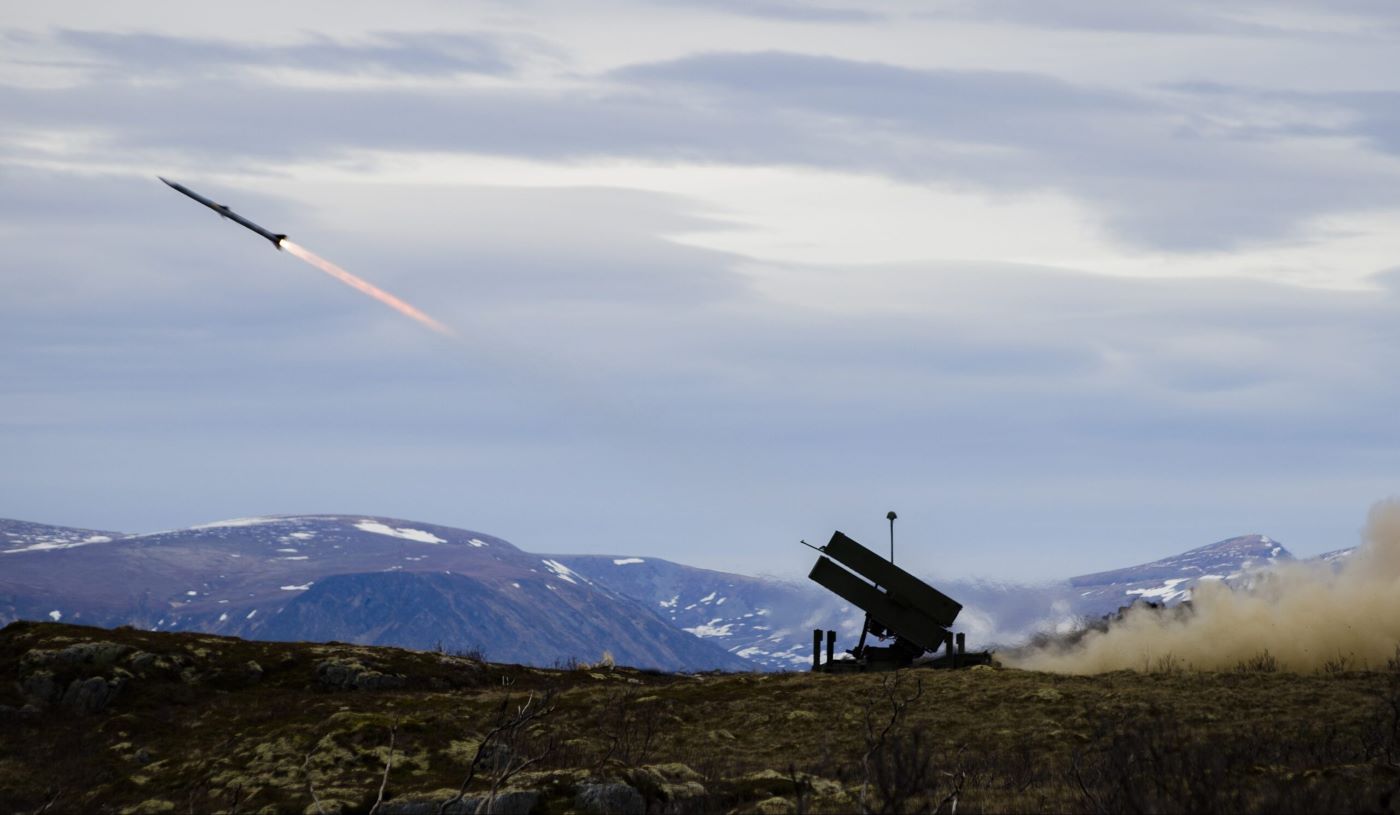
At 06:24 UTC, the frozen silence of Andøya was ripped apart by the ignition of a solid-propellant motor. A Black Brant XII four-stage sounding rocket screamed off the launch pad at the Andøya Rocket Range, riding a pillar of fire into the upper atmosphere. To the scientists on the ground in Norway and their American colleagues from NASA, this was a moment of triumph—a routine, pre-scheduled mission to study the physics of the Northern Lights.
But to the radar operators sitting in the claustrophobic gloom of a bunker in Olenegorsk, Russia, the heat signature rising over the Norwegian Sea was not science. It was the end of the world.
For the next few terrifying minutes, the fate of human civilization hinged on a single trajectory. This was not the Cuban Missile Crisis, where diplomacy played out over thirteen days. This was the Norwegian Rocket Incident of 1995—a flashpoint where the window for decision-making was measured in seconds, and the finger on the button belonged to an ailing, unpredictable Boris Yeltsin.
Today, Andøya is a place of breathtaking stark beauty, a destination for whale watchers and seekers of the Northern Lights research phenomenon. Yet, as you stand on the windswept shores of Andenes, looking north toward the polar ice, it is impossible to shake the "technological sublime"—the overwhelming realization that this remote island, a peaceful outpost of science, was very nearly the ground zero of World War III.
The Spy Nest: Geography of the NATO Flank
To understand why a research rocket could trigger a nuclear alert, one must first understand the geography of paranoia. Andøya is not merely an island; it is a sentinel. Located at 69° North, it sits on the very edge of the continental shelf, where the jagged teeth of the Norwegian coast give way to the abyssal depths of the Norwegian Sea.
During the Cold War, and continuing into the modern strategic landscape, this region was the "NATO Flank." To the east lies the Kola Peninsula, home to the Russian Northern Fleet and the densest concentration of nuclear weapons on Earth. For decades, Soviet submarines—the "Boomers" carrying ballistic missiles—had to pass through the watery corridor between Norway, Svalbard, and Iceland to reach the Atlantic.
Andøya was, and is, the ear of the West pressed against the Iron Curtain. It was the perfect location for maritime surveillance aircraft (the P-3 Orions) to hunt for magnetic anomalies in the water. But its location also made it the ideal launch site for sounding rockets. The magnetic field lines here plunge vertically into the Earth, creating a unique laboratory for studying the ionosphere.
However, this geography is a double-edged sword. A rocket launched from Andøya shares the exact same flight corridor as a hypothetical U.S. nuclear first strike aimed at blinding Russian radar systems. On that January morning, geography was not an ally; it was a trap.
A History of High Altitudes: Origins of the Rocket Range
Long before it became the epicenter of a global crisis, the site was known as the Andøya Rocket Range. Established in the frantic, optimistic early days of the Space Age, the range saw its first launch on August 18, 1962. That rocket, named Ferdinand 1 (after the gentle bull who preferred flowers to fighting), rose to a modest height of 100 kilometers.
For over thirty years, the range operated with a singular, peaceful purpose: Andøya Space history is built on international cooperation. Scientists from Europe, the United States, and Japan flocked to this remote outpost to pierce the ionosphere. They launched hundreds of rockets, measuring electron density, solar winds, and the mysteries of the polar atmosphere.
The facility became a point of pride for Norway—a high-tech jewel in a community of fishermen. It was a place where the "music of the spheres" was transcribed into data tapes. There was no secrecy here. Launch schedules were public; notifications were routine. The range was a civilian entity, a testament to transparency. Yet, in the high-stakes game of nuclear deterrence, transparency is only as good as the communication channels that carry it.
The Science of the Aurora: Why We Shoot at the Sky
Why risk launching rockets so close to a nervous nuclear superpower? The answer lies in the mesmerizing ribbons of green and violet light that drape over Vesterålen in winter.
The Aurora Borealis is not just a pretty light show; it is a violent celestial event. It occurs when charged particles from the sun slam into Earth’s magnetosphere. At the poles, these field lines funnel the particles down into the atmosphere, stripping electrons from atoms and releasing energy as light.
To understand this, satellites are too high, and weather balloons are too low. The only way to measure the "Cusp"—the funnel where the solar wind enters directly—is with sounding rockets. These sub-orbital vehicles fly in a parabolic arc, spending five to twenty minutes in microgravity, directly sampling the plasma turbulence of the aurora.
The scientists involved in the Black Brant XII mission of 1995 were hunting for answers about the "polar wind," an outflow of atmospheric gas into space. They were looking for the secrets of planetary evolution. They never intended to mimic a ballistic missile. They were simply looking up, while the Russians were looking out.
The Black Brant XII: A Harmless Rocket with a Deadly Silhouette
The vehicle on the pad that day was a Black Brant XII, a towering, four-stage Canadian-designed sounding rocket. It is a beast of a machine, capable of carrying heavy scientific payloads to altitudes of over 1,500 kilometers.
While a standard meteorological rocket might go unnoticed, the Black Brant XII is different. It is large. It is fast. And most critically, its flight profile involves the staging of multiple solid-fuel boosters.
As the rocket climbed through the atmosphere, shedding its boosters, it appeared on the radar screens at Olenegorsk not as a single scientific instrument, but as a ballistic missile deploying warheads. To the Russian early-warning systems, the separation of the rocket stages looked terrifyingly similar to the deployment of Multiple Independently-targetable Reentry Vehicles (MIRVs) from a U.S. Navy Trident missile.
The Trident D5 is a submarine-launched ballistic missile. A single Trident submarine, lurking in the Norwegian Sea, could decapitate the Russian leadership in minutes. The Black Brant XII was not a weapon, but in the graininess of the long-range radar return, it cast the shadow of one.
The Olenegorsk Mistake: The View from Russia
To understand the terror of the Norwegian Rocket Incident 1995, one must step into the boots of the technicians at the Olenegorsk early-warning radar station in the Murmansk region.
The date is crucial. It is 1995. The Soviet Union has collapsed. The Russian military is in a state of decay, morale is broken, and the geopolitical humiliation of the Chechen War is raging. The Russian defense establishment is paranoid, fearing that the West might take advantage of their weakness to launch a surprise attack.
When the radar blip appeared, moving rapidly upward from the Norwegian Sea, the technicians froze. The computer systems, programmed with Cold War logic, flagged the object immediately. The trajectory was high. The speed was consistent with a ballistic missile.
The terrifying logic of the scenario took hold: This looked like a High-Altitude Electromagnetic Pulse (HEMP) attack. The theory was that a single missile would be detonated high above the atmosphere, frying Russian radar and command electronics, blinding them seconds before the main barrage of hundreds of missiles arrived.
The technicians did not hesitate. They issued the highest alert level. The message went up the chain of command: Nuclear Attack Imminent.
The Nuclear Briefcase: Boris Yeltsin’s Ten Minutes
For the first and only time in history, the Cheget—the Russian equivalent of the American "Nuclear Football"—was activated in response to a perceived attack.
The briefcase was brought to President Boris Yeltsin. At the time, Yeltsin was recovering from surgery, and his administration was notoriously unstable. Yet, in this moment, the burden of the apocalypse was placed in his hands. He was joined by Defense Minister Pavel Grachev and the Chief of the General Staff, Mikhail Kolesnikov.
They stared at the screen on the briefcase. It showed the trajectory of the missile. It showed the countdown.
The math of Mutual Assured Destruction is unforgiving. If this was a Trident missile launched from off the coast of Norway, the flight time to Moscow was approximately 10 to 15 minutes. By the time the Cheget was activated, perhaps five minutes had already passed.
Yeltsin had less than ten minutes to decide whether to authorize a retaliatory strike. The Russian doctrine was "Launch on Warning." If they waited for the missile to hit to confirm it was nuclear, their own silos might already be destroyed. The pressure to launch—to empty the silos before they were lost—was immense.
For several agonizing minutes, the Russian Strategic Rocket Forces held their breath. Keys were inserted. The world effectively stood at the precipice, held back only by the hesitation of a man often caricatured for his erratic behavior.
The Lost Fax: The Bureaucratic Error of the Century
While Yeltsin debated the end of civilization, the tragic irony was that the entire crisis was the result of a paperwork error.
Weeks before the launch, the Norwegian Foreign Ministry had done everything right. They had sent detailed notifications of the upcoming Black Brant XII launch to all neighboring countries, including Russia. The notification included the launch window, the trajectory, and the impact zone.
The fax arrived in Moscow. It was received by the Russian Foreign Ministry. But in the chaotic, crumbling bureaucracy of post-Soviet Russia, the message died there. It was never forwarded to the General Staff. It was never sent to the radar crews at Olenegorsk.
The notification that could have prevented the panic was likely sitting in a dusty "in-tray" or misfiled under general correspondence. It is a chilling reminder that the end of the world does not need a villain; it only needs a misplaced memo.
De-escalation: The Longest Minutes in History
Back in the Kremlin, the tension was breaking. The radar operators at Olenegorsk continued to track the object. As the Black Brant XII reached its apogee of 1,453 kilometers, gravity began to take hold.
The trajectory became clear. The object was not heading toward Murmansk or Moscow. It was heading north, toward the uninhabited ice near Spitsbergen. It was falling away from Russia, not diving toward it.
The assessment was updated: No threat.
Yeltsin closed the briefcase. The orders to the silo commanders were rescinded. The screens went dark. In the span of perhaps eight minutes, the world had gone from a peaceful Wednesday morning to the brink of nuclear winter and back again. The scientists in Andøya, popping champagne to celebrate a successful launch, had no idea that they had nearly been the catalyst for Armageddon.
Andøya Space Today: From Sounding Rockets to Orbital Launch
In the years following the incident, the Andøya Rocket Range did not retreat from its mission; it doubled down. Today, renamed Andøya Space, the facility has evolved from a Cold War outpost into a cutting-edge hub for the "New Space" economy.
The site is no longer just for sounding rockets. In a massive expansion, Andøya Spaceport was officially opened in late 2023, positioning itself as the premier orbital launch complex in Europe. It is the new home for Isar Aerospace and other commercial partners looking to launch small satellites into polar orbit.
The rusted gantries of the past are being supplemented by sleek, modern integration halls. The clang of metal against the Arctic wind remains, but the mission has shifted. The focus is now on Earth observation, climate monitoring, and global connectivity. The facility stands as a testament to resilience, proving that science can survive even the darkest misunderstandings.
Andenes: Life in the Shadow of the Gantries
The town of Andenes, which hosts the spaceport, is a place of stark contrasts. It is a settlement of roughly 2,000 souls, clinging to the northern tip of the island. Here, the smell of drying cod hangs heavy in the air, mixing with the ozone scent of the approaching snowstorms.
It is a community of fishermen and physicists. You are as likely to see a survival suit drying on a line as you are to see a flight engineer grabbing a coffee at the local bakeri. The iconic red wooden houses stand defiant against the gales, while on the horizon, the radomes and antennas of the space center rise like alien monoliths.
The locals are hardy, used to the darkness and the isolation. They live with the knowledge that their home is a target, yet they welcome visitors with a warmth that defies the climate.
Visiting Andøya Space: The Spaceship Aurora Experience
For those who wish to touch this history, Spaceship Aurora offers an immersive gateway. Located directly at the Andøya Space center, this visitor and education center allows tourists to step into the world of the researchers.
The experience is far more than a museum. It is an active education center where you can join a virtual mission to Mars, wear a flight suit, and engage with interactive exhibits on the magnetosphere.
Critically, the center demystifies the science that caused the 1995 scare. You can learn about the physics of the aurora, seeing the data visualizations that the scientists were chasing that day. It is a place where the "technological sublime" becomes accessible, grounding the terror of the past in the wonder of discovery.
Beyond the Rockets: The Kingdom of the Whales
While the rockets look up, the rest of Andenes looks down—into the deep. The same geological feature that makes this area strategic for submarines—the rapid drop-off of the continental shelf—makes it a paradise for marine life.
Just a short boat ride from the harbor lies the Bleik Canyon, a deep-sea trench that brings nutrient-rich water to the surface. This is one of the only places in Europe where you can see male Sperm Whales year-round.
Whale safaris departing from Andenes offer a profound counterpoint to the space center. To see a 50-ton leviathan breach the freezing waters, with the radar domes of the Cold War visible in the background, is to witness the full spectrum of earthly power. It is a reminder that there are giants in the ocean as well as in the sky.
Driving the Edge: National Scenic Route Andøya
To reach the spaceport, one must traverse one of the most dramatic roads on the planet. The National Scenic Route Andøya runs along the island's west coast, a ribbon of asphalt pinned between vertical mountain walls and the roaring Atlantic.
The drive is a mood piece in Nordic Noir. The jagged peaks of the jagged coastline near Bleik rise like shark fins from the sea. The beaches, such as Bleikstranda, are shockingly white, creating a surreal contrast with the grey ocean and black rocks.
Travelers should stop at Bukkekjerka, an old Sami sacrificial site now transformed into a modern architectural rest area. Here, you can walk out onto the rocks, feeling the salt spray, and look north toward the nothingness. It is a landscape that demands respect—beautiful, hostile, and utterly indifferent to human affairs.
Travel Logistics: How to Visit the Edge of the World
Getting There:Reaching Andøya requires effort, which is part of the allure. The quickest route is to fly into Andøya Airport, Andenes (ANX). Widerøe operates flights connecting through Tromsø (TOS) or Bodø (BOO).
When to Go:
- The Dark Season (Late November – January): For those chasing the ghost of the 1995 incident and the Northern Lights. The sun does not rise, creating a perpetual twilight that is hauntingly atmospheric. This is the prime time for Northern Lights research tourism.
- Summer (Late May – July): For the Midnight Sun. The landscape is bathed in golden light 24 hours a day. This is ideal for driving the Scenic Route and whale watching.
Safety & Access:While Spaceship Aurora is open to the public, the actual launch pads and operation centers are restricted military and industrial zones. Do not attempt to cross fences or ignore signage. This is still an active NATO asset.
The Technological Sublime and the Great Filter
Standing on the breakwater at Andenes, watching the green fire of the aurora twist overhead, one is struck by a sense of vertigo. We are a species capable of understanding the fusion of stars and the physics of the ionosphere. We built machines to touch the edge of space to learn more about our universe.
And yet, that same technology, filtered through fear and bureaucracy, almost extinguished us.
Andøya is a monument to the "Great Filter"—the concept that civilizations might destroy themselves before they can spread to the stars. The Norwegian Rocket Incident was a test we passed by the thinnest of margins. The Spaceport stands today not just as a center for science, but as a silent guardian of that memory. It reminds us that in the nuclear age, the line between a scientific breakthrough and a tragic ending is as thin as a sheet of fax paper.
Sources & References
- PBS Frontline: "The Man Who Saved the World" (Historical context on the Nuclear Briefcase).
- CIA Electronic Reading Room: Declassified Intelligence Memoranda regarding Russian Early Warning Systems (1990s)
- Andøya Space Official Site: History of the Range & Spaceship Aurora
- The Washington Post (1995 Archive): War Scare in the North
- Visit Norway: National Scenic Route Andøya Guide
- Smithsonian Magazine: The Rocket That Almost Started World War III
- NATO Archives: The High North and Alliance Strategy
- Atomic Heritage Foundation: The Black Brant Scare
- Visit Vesterålen: Whale Safari and Travel Logistics
- Federation of American Scientists (FAS): Russian Command and Control Systems
- NRK (Norwegian Broadcasting Corporation): Historien om da verden holdt pusten (The Story of When the World Held its Breath)
- NASA Sounding Rockets Program: Black Brant XII Vehicle Information



%2C%20Konjic%2C%20Bosnia.jpg)


