

A Lake of Fire on Launch Pad 41
On the evening of October 24, 1960, around 150 people were standing near a fully fuelled intercontinental ballistic missile on Launch Pad 41 at Baikonur. They should not have been there. Most were supposed to be a kilometre away in concrete bunkers. Instead, technicians swarmed over the rocket fixing last-minute electrical faults, and Marshal Mitrofan Nedelin — commander of the entire Soviet missile force — had a chair brought out so he could watch the work up close. He sat down a few dozen metres from 141 tons of what Soviet engineers called "Devil's venom": hypergolic propellant so corrosive and toxic it ignites the instant fuel touches oxidiser.
At 6:45 p.m., a technician reset a switch. A short circuit fired the missile's second-stage engine while it was still bolted above a full first stage. The exhaust ripped open the tanks below. A fireball seen from fifty kilometres away rolled across the pad at three thousand degrees. Men nearest the rocket vanished instantly. Those farther out ran for the perimeter and found the security fence locked; they died against it, or in the wave of burning fuel, or later from breathing the poison gas. The asphalt itself melted, and some of the dead were fused into it. Marshal Nedelin was identified afterward only by the heat-warped Gold Star medal in the ash where his chair had been.
The chief designer of the rocket, Mikhail Yangel, survived because he had walked behind a bunker to smoke a cigarette. When the Soviet leadership demanded to know why he was still alive, Yangel could only answer, in a shaking voice, that he had stepped away to smoke. He had a heart attack soon after and disappeared from work for months.
Baikonur is the place that gave humanity the stars. It is also the place that taught the twentieth century how completely a state could bury its dead. The two facts are not separate. The same machine that broadcast Gagarin's smile to the world was built to hide the men who burned on Pad 41 — and almost everything else about how the Space Age was really made. Triumph went out on the loudspeaker. The corpses went into the sand.
How a Gulag Prisoner Became the Soviet Union's Chief Designer
Sergei Korolev and the Road from a Prison Camp to the Stars
The man who built the Soviet space program nearly died in it before it existed. Sergei Korolev was a brilliant young rocket engineer in Moscow when the secret police arrested him in June 1938, at the height of Stalin's purges. He was accused of sabotage on fabricated evidence, beaten during interrogation until his jaw was broken, and sentenced to ten years. He was shipped to Kolyma, the deadliest region of the Gulag, where prisoners panned for gold in temperatures that froze men where they fell.
Korolev lost most of his teeth to scurvy and starvation. He very nearly lost his life — at one point, sources from his own later accounts describe him collapsing on the road, too weak to walk, saved only by a stranger who shared bread. He was pulled out of Kolyma after a year, not from mercy but because the regime realized it needed its engineers more than it needed them broken, and transferred to a sharashka, a prison design bureau where convicted specialists worked under guard. The Soviet Union built its rockets, in part, with slave labor it had itself condemned.
Korolev was released during the war and rose to lead the entire missile and space effort. The regime that had jailed and tortured him now made him the most important engineer in the country — and kept his identity a state secret. To the world, the architect of Sputnik and Gagarin was known only as "the Chief Designer," an anonymous title, because the Soviets feared the Americans would assassinate him if they learned his name. Korolev won the space race for a government that had knocked out his teeth in a basement, and he did it without the world ever being allowed to know who he was. He died in 1966 on an operating table, his health wrecked by the camps, and only then was his name finally made public.
Why the Soviets Hid a Spaceport in the Kazakh Desert
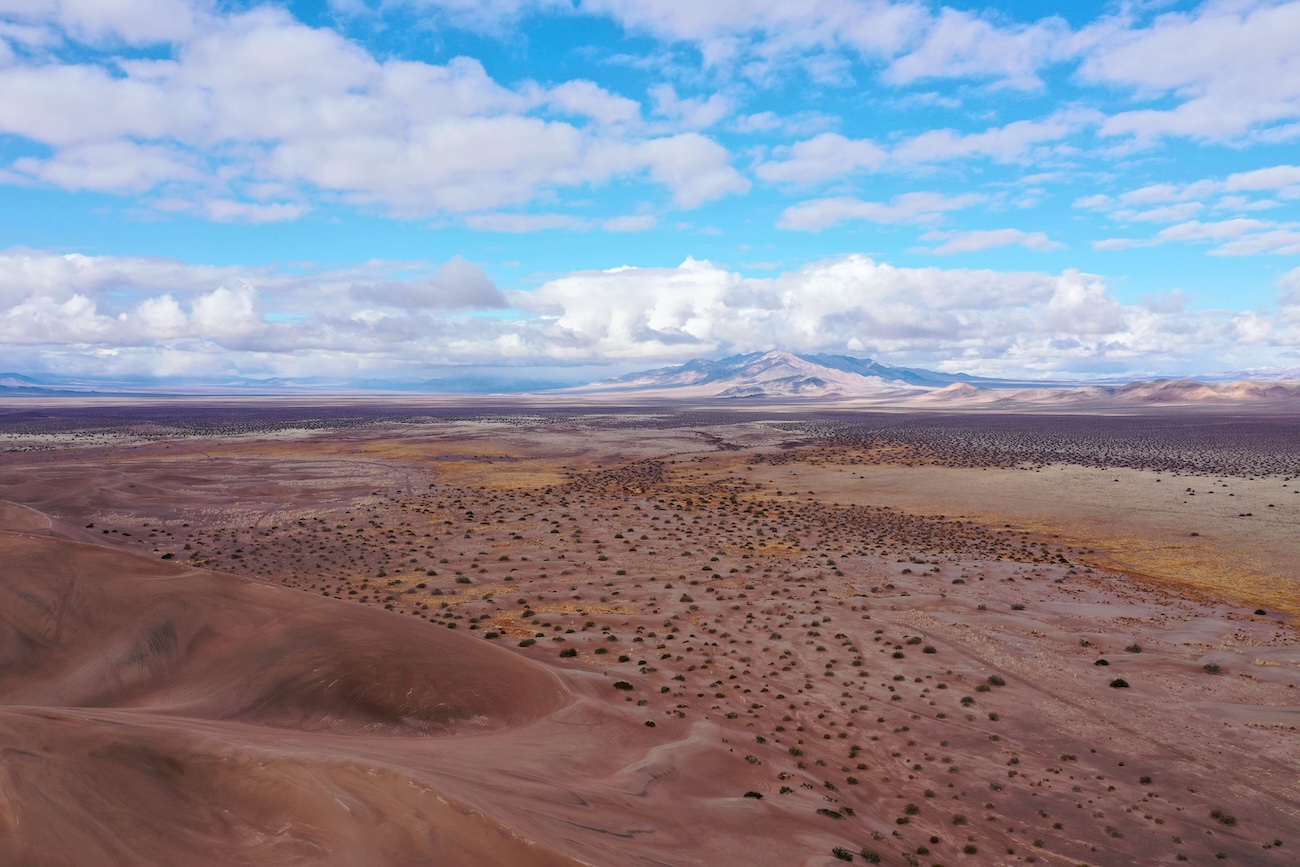
The Soviet Union chose the Kazakh steppe for cold, practical reasons. A rocket range needs flat, empty land stretching east for hundreds of kilometres, so that spent stages and failed launches fall on nothing. It needs to be far from the prying eyes and listening posts of the West. And the early R-7 rocket required a radio-guidance system whose ground stations had to be spaced precisely across open country. In 1955, Soviet surveyors settled on a desolate site near the rail stop of Tyuratam, in what was then the Kazakh Soviet Socialist Republic — a place of scorching summers, brutal winters, and almost no one to see what was being built. The same emptiness that made the desert lethal to its builders made it perfect for secrets.
The Lie in the Name: How "Baikonur" Was a Decoy
The spaceport's name was a deliberate act of deception. The real site was at Tyuratam, but when the Soviets needed a name for the public record, they chose "Baikonur" — a small mining town roughly 320 kilometres to the northeast. The hope was that Western intelligence, hearing the name, would point its cameras and spies at the wrong patch of desert entirely. For a while the Soviets even built dummy structures near the real Baikonur town to sell the lie.
It did not work for long. American U-2 spy planes and later satellites found Tyuratam quickly enough. But the fake name stuck so thoroughly that it became the official one, and the world's most famous spaceport is to this day named after a town that has nothing to do with it. The deception outlived its own purpose — a fitting birth certificate for a place whose entire history would be a contest between what happened and what the public was allowed to know.
Building the Baikonur Cosmodrome in a Desert That Tried to Kill Its Builders
The Conscripts Who Raised Gagarin's Start from Sand
The men who built Baikonur were mostly soldiers, and the desert nearly killed them before any rocket did. Construction began in 1955 under crushing deadlines. Summer temperatures climbed past forty degrees Celsius; in winter the steppe dropped far below freezing, and a wind carrying fine grit scoured everything it touched. Dust got into the food, the machinery, the lungs. The Syr Darya river water made men sick. There was almost no shelter at first, and the labor force — military conscripts and construction battalions — lived in tents and dugouts while they poured the foundations of the launch complex that would become Gagarin's Start, Site No. 1.
These soldiers excavated a vast pit for the flame trench by hand and machine, moving over a million cubic metres of earth, working shifts that broke bodies. The people who made the first launch pad on Earth capable of sending a human into space are almost entirely anonymous. No statue carries their names. They built the doorway to the cosmos out of sand and their own endurance, and then the history books moved on to the man who would ride their work into orbit.
Sputnik and Laika: The Baikonur Launches That Started the Space Race
The Beep That Terrified the West
On October 4, 1957, an R-7 rocket lifted off from the newly finished Site 1 and placed a polished metal sphere the size of a beach ball into orbit. Sputnik 1 weighed about 83 kilograms and did almost nothing — it carried a radio transmitter that emitted a simple, rhythmic beep. That beep, picked up by receivers all over the planet, was enough to change the world. Ordinary Americans went outside at dusk to watch a Soviet machine cross their sky, and understood for the first time that the country they had been told was technologically backward had just leapt over their heads into space.
The strategic message was sharper than the scientific one. A rocket that could lift Sputnik could lift a hydrogen bomb. The same Korolev-designed R-7 that launched the satellite was, at its core, an intercontinental ballistic missile. The Space Age and the threat of nuclear annihilation arrived together, from the same pad, on the same engine. Baikonur announced itself to history with a beep that was also a warning.
Laika and the One-Way Flight
One month later, on November 3, 1957, Baikonur launched a passenger who was never coming home. Laika was a stray dog picked up from the streets of Moscow, a small mongrel chosen because strays were thought to endure hardship better than pampered animals. The Soviets, riding the propaganda triumph of Sputnik, wanted a living creature in orbit for the anniversary of the revolution, and they wanted it fast. There was no plan to bring her back. The capsule had no return mechanism. Laika was launched to die.
The official story for years was that she had survived for several days and been peacefully euthanized. The truth, revealed decades later by one of the scientists involved, was that Laika died within hours of launch, killed by overheating when the capsule's temperature control failed. One of the men who had prepared her later said he regretted the mission, that they had not learned enough to justify the death of the animal. A dog plucked from a Moscow gutter became the first living being to orbit the Earth, and she did it inside a metal coffin that cooked her alive while the world was told she was resting comfortably. The pattern was already set: the public got the clean version, and the real one stayed sealed.
The Nedelin Catastrophe: The Worst Disaster in Rocketry History
The Rushed R-16 and the Anniversary Deadline
The disaster on Pad 41 was born from a deadline and a rivalry. By 1960, Korolev's R-7 was a triumph in space but a poor weapon — it used liquid oxygen, which boils away and cannot be kept loaded for long, making it useless for the hair-trigger readiness an ICBM needed. A rival design bureau under Mikhail Yangel was building the answer: the R-16, fuelled by storable hypergolic propellants that could sit ready for launch indefinitely. The propellants were also savagely toxic and corrosive — "Devil's venom" — but they solved the military's problem.
Marshal Nedelin wanted the first test flight done before November 7, the anniversary of the Bolshevik Revolution, a date that carried enormous political weight. The schedule was already running ahead of plan when he pushed it harder, demanding a launch in time for the celebration. When technical faults appeared during fuelling — leaks, a ruptured membrane in the wrong place — the correct procedure was to drain the missile and fix it safely. Draining and refuelling would have blown the deadline. Nedelin ordered the repairs done with the rocket fully loaded, men climbing over a primed bomb, and sat down beside it to make sure the work did not stop.
Ninety Seconds on the Pad
The fireball gave no warning. When the second-stage engine ignited by accident, the first stage beneath it ruptured almost instantly, and the entire fuelled missile became a column of fire on the pad. Automatic film cameras positioned around Pad 41 to record the launch instead recorded the deaths of the people who built it. The footage, kept secret for decades, shows figures running from the rocket and being overtaken by the spreading flame.
The death toll has never been settled with certainty, which is itself a measure of how thoroughly the event was hidden. A 1994 state commission gave the official figure as 78. Most historians regard that as low; the generally accepted estimate is around 120, and some accounts run higher when later deaths from burns and poisoning are counted. Among the dead were the Marshal commanding the Soviet missile forces and the chief designer of the missile's guidance system. Eighty-four of the victims were buried together in a common grave in the park of the support town. It remains the deadliest single accident in the history of rocketry, anywhere, by any nation.
The 29-Year Cover-Up
The lie was immediate and total. Nikita Khrushchev imposed complete secrecy within hours, and Leonid Brezhnev was sent to lead the investigation. The official announcement stated that Marshal Nedelin had died in a plane crash on an undisclosed mission. The families of the dead engineers and soldiers were instructed to tell anyone who asked that their husbands and sons had died the same way — in an aviation accident that never happened.
Western intelligence suspected something. Seismic sensors and informants suggested a major explosion in Soviet missile country, and a captured spy later confirmed pieces of the story; an Italian news agency reported in December 1960 that Nedelin and around a hundred men had died in a rocket blast. But the Soviet Union did not acknowledge a word of it until April 1989, when the magazine Ogoniok published the first real account during the glasnost thaw. For twenty-nine years, more than a hundred men killed in the worst accident in spaceflight history simply did not exist in the official record of the country that killed them. The same secrecy that protected the cosmodrome's existence had erased its dead.
Yuri Gagarin and the First Human in Space
"Poyekhali!" — Vostok 1 Lifts Off from Site 1
On the morning of April 12, 1961, a 27-year-old former foundry worker named Yuri Gagarin was strapped into a spherical capsule atop a Korolev-designed rocket on the same Site 1 the conscripts had carved from the desert. He had been a farm boy from the village of Klushino, a smelter's apprentice, a fighter pilot — and now he was about to become the first human being to leave the planet. As the rocket lifted off, Gagarin called out a single word over the radio: "Poyekhali!" — "Let's go!"
The whole flight was a gamble dressed as certainty. No one knew whether a human mind could function in weightlessness, so the capsule's manual controls were locked behind a code in case Gagarin panicked, the automation flying the ship for him. He orbited the Earth once, saw the curve of the planet against black space that no person had ever seen, and came down by parachute after ejecting from the capsule — a detail the Soviets hid for years because international rules required a pilot to land inside his craft to set a record. Even the triumph came wrapped in a small, careful lie.
How Baikonur Turned a Smiling Farmer's Son into a Global Icon
Gagarin's face went around the world within hours, and the Soviet propaganda machine built him into something close to a saint of the new age. He toured continents, met crowds in the millions, and put a warm human grin on a program built by a tortured prisoner and paved over a hundred burned men. The contrast was the entire point. The state showed the world Gagarin and showed it nothing else — not Korolev's name, not Laika's real death, not the fused asphalt of Pad 41 six months earlier. Baikonur had learned to manufacture two products at once: spacecraft, and the story about them. The world bought both.
Leninsk: The Soviet Secret City That Didn't Exist on Any Map
Life Inside a Closed Town in the Desert
The thousands of engineers, soldiers, and their families who ran Baikonur lived in a city that officially did not exist. Built beside the cosmodrome to house its workforce, the town was a "closed" settlement — sealed behind checkpoints, absent from public maps, its residents forbidden to describe where they lived or what they did. It had apartments, schools, a hospital, theatres, and parks, an entire ordinary life conducted in total secrecy in the middle of the steppe. Children grew up watching rockets climb the sky from their balconies and learned not to talk about it.
This was a standard tool of the Soviet system. Across the USSR, sensitive work was hidden inside closed cities scrubbed from the record — the same logic that produced Sillamäe, the Estonian uranium town erased from every map, and the secret settlements that served the nuclear and biological weapons programs. Baikonur's town was the space-age version: a place full of people the state pretended were nowhere.
From Leninsk to Baikonur: A City Renamed Twice
The town carried several names before it settled. Known for years by code designations and then as Leninsk, it was finally renamed Baikonur in 1995 — adopting the same decoy name as the cosmodrome it served, long after the deception had any purpose. The renaming came at a strange moment. The Soviet Union that built the city had dissolved in 1991, and the town now sat inside the newly independent nation of Kazakhstan while remaining under Russian administration. A secret Soviet city woke up one morning to find its country gone and itself stranded, a Russian enclave on foreign soil, named after a lie, governed under a lease.
Buran: The Soviet Space Shuttle and the Hangar That Crushed It
One Perfect Automated Flight, Then Collapse with the USSR
The Soviet space shuttle flew once, flawlessly, and it had no pilot. Buran — Russian for "blizzard" — was the USSR's answer to the American Space Shuttle, which Soviet planners feared could be used to drop nuclear weapons from orbit. It looked almost identical to its American cousin, down to the delta wings and the black-and-white tile pattern, because the Soviets had studied NASA's published designs closely. But Buran could do something the American shuttle never did: fly itself.
On November 15, 1988, Buran lifted off from Baikonur on the back of the giant Energia rocket, climbed to orbit, circled the Earth twice in under three and a half hours, and came home entirely on automation. A storm had moved over the cosmodrome, with gusts of fifteen to twenty metres per second across the runway. The orbiter's computer assessed the wind, recalculated, and chose to swing around and land from the opposite direction the controllers expected. It touched down and rolled to a stop within about a metre and a half of the runway centreline. Of its 38,000 thermal tiles, only a handful were missing. It was, by some measures, the most sophisticated automated flight of its era — and it was the only time Buran ever flew. Three years later the Soviet Union ceased to exist, the money vanished, and Boris Yeltsin formally killed the program in 1993. The orbiter that had flown itself home through a storm was rolled into a hangar to gather dust.
The 2002 Roof Collapse That Killed Eight and Destroyed the Only Buran
The hangar that killed Buran was originally built to send men to the Moon. Site 112 had been raised in the 1960s to assemble the colossal N1 lunar rocket, and after that program failed it was repurposed to house Buran and its Energia booster. The building was thermally insulated against the desert's temperature swings but never properly waterproofed, and its foam insulation absorbed water like a sponge. In the spring of 2002 it rained unusually hard.
On May 12, 2002, an eight-man crew was on the roof of Site 112 doing maintenance — the very work meant to keep the building safe — when the rain-soaked structure gave way beneath them. The roof fell the full height of the cavernous hangar, more than sixty metres, onto the orbiter below. All eight workers on the roof were killed. Beneath the rubble lay the only Buran that had ever flown, crushed along with a mock-up of the Energia rocket. The single spacecraft that had completed a fully automated orbital mission ended its existence flattened under its own collapsing building, in a hangar built for a Moon rocket that never reached the Moon, in a country that no longer existed. Eight men died maintaining the tomb of a program that had been dead for nine years.
Baikonur Today: A Crumbling Spaceport Leased to a Nation at War
The $115-Million Lease and a Russian Enclave on Kazakh Soil
Russia runs Baikonur on a tenant's terms. After the Soviet collapse left the cosmodrome stranded inside independent Kazakhstan, the two countries signed a lease that, extended in 2004 and reaffirmed since, runs to 2050 at a fixed rent of $115 million a year. Both the cosmodrome and the city of Baikonur are administered by Russia — Russian law applies, Russian police patrol the streets, and the town functions as a Russian enclave on Kazakh land. Kazakhstan collects the rent and, increasingly, the resentment.
The arrangement has frayed badly since Russia's 2022 invasion of Ukraine. In March 2023, the Kazakh government seized control of the Baiterek launch complex at Baikonur and barred some Russian space officials from leaving the country, citing among other things Russia's failure to pay a debt of nearly $30 million. War sanctions had already gutted the budget that was supposed to modernize the facilities. The host country is quietly distancing itself from a tenant it can no longer fully trust, and the spaceport that once symbolized Soviet unity has become a pressure point between a nation at war and the neighbor whose desert it borrowed.
Half a Spaceport Left to Rot
Most of Baikonur is already dead. The cosmodrome sprawls across thousands of square kilometres of steppe, and the great majority of its launch pads, assembly halls, and support structures are abandoned — gantries rusting in the wind, buildings stripped and silent, the Buran infrastructure a ruin since 2002. Even Gagarin's Start, Site 1, the most historic launch pad on Earth, fell quiet. Its final launch lifted off on September 25, 2019, after which the pad was shut down for a modernization that lost its funding, in part to the war. Plans now point toward turning the birthplace of human spaceflight into a museum.
A working spaceport and an industrial graveyard now occupy the same ground. A shrinking number of Soyuz pads keep firing crews and cargo to the International Space Station, while a few kilometres away the abandoned hangars sag and the desert reclaims the concrete. Baikonur is the rarest kind of ruin — one that is still operating. The place has the strange quality of Pripyat, the frozen Soviet city beside Chernobyl, except that here the machinery has not all stopped. Rockets still rise from a corpse.
The Toxic Rain: Rocket Debris and the Villages in the Drop Zones
The cost of every launch falls on the Kazakhs who live downrange. When a rocket sheds its lower stages, those stages drop back onto the steppe in vast designated impact zones — and they are not always empty of fuel. Many of Russia's heavy rockets, including the Proton, burn unsymmetrical dimethylhydrazine, the same toxic hypergolic propellant called heptyl that killed the men on Pad 41. It is among the most poisonous manmade chemicals in use, classed as carcinogenic and mutagenic, and residue rides down with the falling metal.
The villagers do not flee the debris. They harvest it. Across the drop zones, especially in the Altai region beneath the main flight path, locals scavenge the fallen stages for scrap metal — aluminium and titanium worth real money in places with little else — sometimes reaching the wreckage before the official recovery teams. The catastrophes make the danger plain. In July 2013, a Proton-M rocket veered off course seconds after liftoff and slammed back to earth in a fireball, releasing roughly 600 tons of toxic fuel near inhabited areas; residents of Baikonur city were told to stay indoors with their windows shut. Activists have for years documented elevated rates of cancer, birth defects, and illness in the affected districts, bringing photographs of disabled children to protests, while Russia has largely refused to pay the compensation Kazakhstan demands. One Kazakh environmental expert called the cumulative damage "ecological genocide." The space program that lifted the first human off the planet still poisons the people who happen to live where its discarded parts come down.
Vostochny and the Slow Death of Baikonur
Russia is building its way off Kazakh soil. To escape both the lease payments and its dependence on a foreign country, Moscow has been constructing its own cosmodrome — Vostochny, in the Russian Far East — for years. It has so far proven a troubled, expensive, scandal-plagued substitute, unable to take over crewed launches and far behind schedule, which is the main reason Russia has not simply walked away from Baikonur. The tenant wants to leave but cannot yet afford to.
The slow abandonment hangs over the city of Baikonur and the workers who remain. If Russia eventually pulls out, the enclave inherits a vast, contaminated, half-derelict spaceport and the population that depends on it. The desert that the conscripts fought in 1955 is patient. It has already swallowed the Buran hangars and Gagarin's pad, and it is waiting for the rest. The doorway to the cosmos is being left to the sand that it was built on.
Visiting Baikonur Cosmodrome: Access, Permits, and the Ethics of the Spaceport
Baikonur is one of the hardest legitimate tourist destinations on Earth to reach, and that difficulty is by design. Because the city and cosmodrome are administered by Russia under tight security, visitors cannot simply arrive. Access runs through Roscosmos-approved tour operators who arrange permits that must be filed well in advance — typically a month or two ahead — and independent wandering is not permitted. Standard guided tours of the historic sites run several hundred to a little over a thousand dollars; tours timed to an actual launch, watched from a viewing area a safe distance from the pad, cost more and sell out far ahead. The post-2022 geopolitical situation adds a further layer of complication and risk to any travel involving Russian-controlled territory, and conditions can change with little notice.
What the approved tours offer is genuine: the launch pad where Gagarin lifted off, still operational and used for crewed missions to this day; the museum; and, depending on access, the haunting carcass of the Buran program. The ruined hangars and dead pads of the wider cosmodrome exert a powerful pull on urban explorers, but the abandoned structures are unstable, the toxic-fuel history is real, and the security around the working spaceport is unforgiving. The decay is not a backdrop to wander through casually; it is a hazard with a body count.
Standing at Baikonur means standing on a contradiction. This single stretch of desert launched the first satellite, the first animal, and the first human into space — the proudest achievements of an entire civilization. The same ground holds the common grave of the men who burned on Pad 41, the crushed remains of Buran and the eight workers killed above it, and the toxic residue that still drifts onto Kazakh villages downrange. The triumph and the bodies share the same sand. Like the other secrets the Soviets buried in this desert — the nuclear fire of Semipalatinsk and the bioweapons of Vozrozhdeniya Island — Baikonur was built to be both magnificent and unseen. The difference is that here the rockets are still flying, and the visitor who comes to admire the doorway to the stars is also standing in a graveyard the world was told for decades did not exist.
Frequently Asked Questions
Where is Baikonur Cosmodrome located?
Baikonur Cosmodrome is in the desert steppe of southern Kazakhstan, in the Kyzylorda Region, roughly 200 kilometres east of the Aral Sea and near the Syr Darya river. Although it sits on Kazakh territory, it is operated and administered by Russia under a lease agreement that runs until 2050. The cosmodrome's actual location is near the rail town of Tyuratam; the name "Baikonur" originally referred to a mining town some 320 kilometres away and was chosen to mislead Western intelligence.
Why is Baikonur called Baikonur if that isn't where it is?
The name was a Cold War deception. When the Soviet Union needed to record a location for its new missile and space range, it deliberately chose the name of Baikonur, a mining town roughly 320 kilometres from the real site at Tyuratam, hoping Western spies would search the wrong area. The trick failed once U-2 aircraft and satellites located the true site, but the false name became the official one and remains in use today.
What was the Nedelin catastrophe?
The Nedelin catastrophe was a launch-pad explosion at Baikonur on October 24, 1960, during preparations to test the R-16 intercontinental ballistic missile. A short circuit ignited the rocket's second stage while it was fully fuelled and surrounded by personnel, producing a fireball that killed Marshal Mitrofan Nedelin and a large number of engineers and soldiers. The official death toll was later given as 78, but most estimates put it around 120 or higher, making it the deadliest accident in the history of rocketry. The Soviet Union hid the disaster for 29 years, claiming Nedelin had died in a plane crash.
Did Yuri Gagarin really launch from Baikonur?
Yes. On April 12, 1961, Yuri Gagarin became the first human in space aboard Vostok 1, which lifted off from Site 1 at Baikonur — the launch pad now known as Gagarin's Start. The same pad remained in use for crewed missions to the International Space Station for decades afterward, before being shut down for modernization following its final launch in September 2019.
What happened to the Soviet space shuttle Buran?
Buran flew a single, fully automated orbital mission on November 15, 1988, landing itself at Baikonur despite stormy weather. The program was cancelled in 1993 after the Soviet collapse, and the only orbiter that had flown was stored in a hangar at Site 112. On May 12, 2002, the rain-soaked roof of that hangar collapsed, killing eight workers who were performing maintenance and crushing the Buran orbiter along with a mock-up of its Energia booster.
Can tourists visit Baikonur Cosmodrome?
Tourists can visit, but only through Roscosmos-approved tour operators who arrange the required permits weeks in advance; visitors cannot enter independently. Tours include the historic launch sites, the museum, and sometimes launch viewing from a designated area. Costs range from several hundred dollars for standard tours to substantially more for launch-day packages. Travel to Russian-administered territory carries added complications and risks in the current geopolitical climate.
Sources
Rockets and People (Vols. I–IV) — Boris Chertok (2005–2011)
Korolev: How One Man Masterminded the Soviet Drive to Beat America to the Moon — James Harford (1997)
Challenge to Apollo: The Soviet Union and the Space Race, 1945–1974 — Asif A. Siddiqi (2000)
The Nedelin Catastrophe: Reconstructing the 1960 Baikonur Disaster — Asif A. Siddiqi / Quest: The History of Spaceflight Quarterly (1994)
Baikonur launchpad explosion — Encyclopædia Britannica (2024)
The Nedelin Disaster — Smithsonian Air & Space Magazine (2013)
Remembering Buran — The Shuttle's Estranged Soviet Cousin — NASASpaceflight.com (2013)
Eight Feared Dead in Baikonur Hangar Collapse — Spaceflight Now (2002)
Scavenging Russia's Rocket Graveyard Is Dangerous and Profitable — Nautilus / Raffi Khatchadourian (2018)
Kazakhstan: Fallout Continues From Russian Rocket Mishap — Radio Free Europe/Radio Liberty (2006)
Soyuz Incident Leaves Mark on Kazakhstan's Environment — Eurasianet (2022)
Kazakhstan Denies Russia Plans Early Exit From Baikonur Spaceport — The Moscow Times (2025)


%2C%20Konjic%2C%20Bosnia.jpg)


