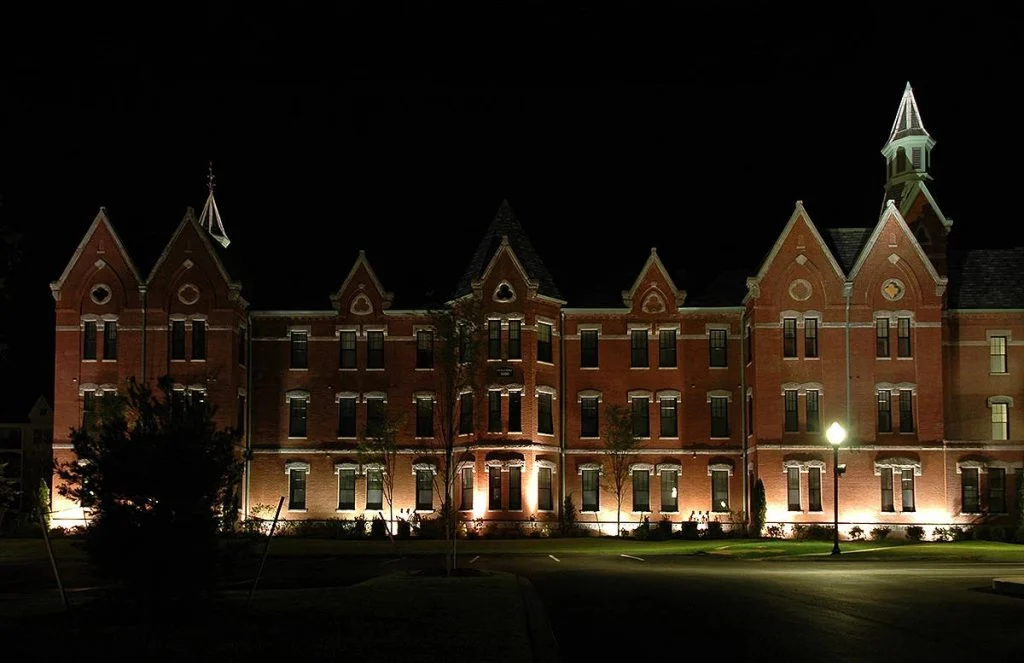
Inside Danvers State Hospital's Locked Wards
Marie Balter was seventeen years old when she was admitted to Danvers State Hospital. Born in 1930 in Gloucester, Massachusetts, to a penniless alcoholic mother who gave her up at birth, she had been adopted at six by an elderly Italian-born couple who disciplined her by locking her in a dark cellar and tying her to a post. By her late teens, crippling anxiety and psychotic depression had consumed her. The doctors at Danvers diagnosed her with schizophrenia — a misdiagnosis that would define the next two decades of her life — and placed her on near-lethal doses of an experimental antipsychotic drug that only deepened her deterioration.
From her locked ward in the 1950s, Balter watched what the hospital had become. Lobotomized patients wandered the corridors in a slow, blank shuffle, staring at walls, unable to remember their own names. The wards designed for 450 people now held more than 2,000. Patients walked naked through hallways slick with their own waste. Staff were outnumbered, overwhelmed, and reaching for straitjackets, electroshock machines, and ice picks.
Danvers State Hospital is the American asylum story compressed into a single building — a monument to the gap between what a society promises its most vulnerable citizens and what it actually delivers. The architecture was humane. The philosophy was progressive. The funding was never sufficient, the oversight never adequate, and the results catastrophic. The same institution that pioneered nurse training programs and refused to use physical restraints in its early decades would, within a generation, become known as the birthplace of the prefrontal lobotomy. The arc from idealism to horror was not the product of evil intent. It was the product of political indifference — a legislature that built a cathedral for the mentally ill and then slowly stopped paying to keep the lights on.
How Dorothea Dix's Crusade Built America's Asylum System
The institution that became Danvers State Hospital was born from outrage. In 1841, a Boston schoolteacher named Dorothea Dix volunteered to teach Sunday school at the East Cambridge jail in Massachusetts. In the basement, she found four mentally ill women confined alongside violent criminals in cells that were dark, unheated, and reeking. The women were chained. Some had no clothing. None had received medical attention.
Dix spent the next two years traveling across Massachusetts, visiting every jail, almshouse, and poorhouse she could reach. The system she uncovered was medieval. Towns contracted with local individuals to house their mentally ill — an unregulated arrangement that guaranteed abuse. In 1843, Dix presented her findings to the Massachusetts legislature in a document that still reads like an indictment: the insane of the Commonwealth were confined in cages, stalls, and pens, chained, beaten with rods, and lashed into obedience. Her lobbying secured expanded funding for the Worcester State Asylum and ignited a national movement. Between 1843 and 1880, Dix helped establish or expand more than thirty mental hospitals across the United States.
Thomas Kirkbride's Vision of Healing Through Architecture
The philosophical engine behind these new institutions was Dr. Thomas Story Kirkbride, superintendent of the Pennsylvania Hospital for the Insane from 1841 to 1883. Kirkbride believed that mental illness was not a permanent condition but a curable imbalance — one that beautiful surroundings could help restore. His design philosophy, which became known as the Kirkbride Plan, prescribed a specific architectural form: a central administration building flanked by staggered, radiating wings, each positioned to allow maximum sunlight and ventilation into every ward. Patients would be classified by severity and housed in progressively distant wings, with the most acute cases farthest from the center.
The design was radical for its time. Kirkbride rejected the fortress model of earlier asylums — the bolted doors, the windowless cells, the architecture of containment. His hospitals were meant to feel like retreats. Expansive grounds with farms, gardens, and orchards surrounded the buildings. Patients were expected to work outdoors, breathe clean air, and recover in an environment that resembled a gentleman's estate more than a prison. Kirkbride's writings influenced nearly every state hospital built in America during the second half of the nineteenth century. The Trans-Allegheny Lunatic Asylum in West Virginia, begun in 1858 and expanded over four decades, became the largest Kirkbride building ever constructed — and would follow an almost identical trajectory to Danvers, swelling from a designed capacity of 250 to a population exceeding 2,400, its wards collapsing into the same overcrowded squalor that the architecture had been specifically engineered to prevent.
Nathaniel Bradlee's Gothic Monument on Hathorne Hill
In 1873, the Massachusetts legislature voted to build a new hospital for the insane in the northeastern part of the state. The commission selected a 197-acre site in Danvers: a glacial drumlin called Hathorne Hill, rising 240 feet above the surrounding farmland. The location carried a dark historical weight that no one involved in the project could have missed. The hill was named for William Hathorne, a colonial magistrate whose son, Judge John Hathorne, had presided over the Salem witch trials just two miles away. Danvers itself was originally Salem Village — the epicenter of the 1692 hysteria that sent twenty people to their deaths.
Boston architect Nathaniel Jeremiah Bradlee designed the hospital in the Victorian Gothic style, adapting Kirkbride's principles to the hilltop terrain. Construction began on May 1, 1874, and took four years, costing $1.5 million — an enormous sum for a state still recovering from the financial strain of the Civil War. The completed structure was staggering in scale: 313,000 square feet of red Danvers brick stretching 1,100 feet across the hilltop, with a central administration tower and eight radiating wings — four for men, four for women — connected by an elaborate labyrinth of underground tunnels. Locals called it the Castle on the Hill. The first patient was admitted on May 13, 1878.
How Danvers State Hospital Went from Model Institution to Overcrowded Nightmare
The First Decades of Humane Treatment at Danvers
The hospital's first superintendent, Dr. Calvin S. May, set an ambitious tone from the beginning. His stated goal was to run a hospital for the cure of patients, not merely an asylum for the chronic insane. The administration refused to use mechanical restraints — straitjackets, chains, manacles — declaring them unnecessary and harmful. Patients worked the hospital's farms and gardens, attended social events in the auditorium, and received what was, by the standards of the era, genuinely progressive care. A nurse training program was established in 1889, a pathological research laboratory in 1895. By 1899, the hospital employed roughly 125 people and had treated nearly 9,500 patients since opening.
In the 1890s, superintendent Dr. Charles Page went further, formally declaring all mechanical restraint unnecessary in the treatment of mental illness — a position that placed Danvers at the vanguard of American psychiatric reform. The hospital operated school clinics to assess mental deficiency in children and developed an early occupational therapy program that became a model for other institutions. For its first two decades, Danvers was precisely what Kirkbride and Dix had envisioned: a working demonstration that humane treatment could produce real results.
When the Wards Overflowed: Overcrowding and the Collapse of Care
The system began to crack almost immediately. The hospital had been designed to hold 450 patients, with attic dormitories providing emergency capacity for roughly 1,000. A sudden influx of elderly patients, individuals with substance dependencies, and the criminally insane — populations the hospital was never designed to serve — pushed the numbers steadily upward. By the 1920s, the population exceeded 1,000. By the late 1930s, more than 2,300 patients occupied a building designed for a fraction of that number.
The 1939 trustees' report documented the crisis in bureaucratic language that barely concealed the horror beneath it: the rate of elderly psychotic admissions had surged, and for the first time, this group outnumbered younger patients. The overcrowding was not abstract. Patients slept in hallways and basements. Wards designed for careful classification by severity became undifferentiated holding pens. Staff, catastrophically outnumbered, could no longer provide individual care — or even basic supervision. That year, 278 patients died at Danvers. A 1938 state investigation had already revealed that over the hospital's lifetime, 400 patients had died from causes other than natural causes — a number that encompassed killings by fellow patients, neglect, and deaths that were never adequately explained.
The Prefrontal Lobotomy and the Darkest Chapter in American Psychiatry
Walter Freeman's Ice Pick and the Promise of a Surgical Cure
By the late 1930s, the staff at Danvers were desperate for any tool that could make the overcrowded wards manageable. Electroshock therapy and hydrotherapy had failed to control the chaos. Into this vacuum stepped the prefrontal lobotomy — and its most zealous American evangelist, Dr. Walter Freeman.
Freeman, a neurologist in Washington, D.C., had performed the first American lobotomy in September 1936 with neurosurgeon James Watts. The original procedure required drilling holes in the skull — expensive, time-consuming, and limited to operating rooms. Freeman wanted something faster. By the late 1940s, he had developed the transorbital lobotomy: an orbitoclast — essentially a modified ice pick — inserted through the eye socket, punched through the thin bone behind the eye with a mallet, and swept laterally to sever the connections to the frontal lobes. The procedure took ten minutes. It required no anesthesia beyond electroshock-induced unconsciousness. It cost $25.
Freeman traveled from institution to institution in a van he called the Lobotomobile, performing the procedure on anyone referred to him. Over his career, he performed approximately 3,500 lobotomies in twenty-three states. His partner Watts eventually severed their professional relationship, disgusted by what the procedure had become. Some of Freeman's patients were children — one was four years old. His most infamous patient was Rosemary Kennedy, sister of the future president, whose father authorized the operation without her mother's knowledge. The lobotomy left Rosemary permanently incapacitated.
Danvers became one of the institutions most closely associated with the procedure. Visitors to the hospital in the early 1940s reported lobotomized patients drifting through the corridors in what observers described as a drugged, hellish daze — staring blankly, unable to recognize where they were or who they had been. The hospital earned a reputation that neurology experts would later codify: the birthplace of the prefrontal lobotomy, a label derived from the procedure's widespread use and refinement within its walls.
From Straitjackets to Thorazine: The Chemical Lobotomy
The lobotomy era at Danvers ended in 1954, not because of moral awakening but because a cheaper alternative arrived. Thorazine (chlorpromazine), the first antipsychotic drug, offered institutional psychiatry what it had always wanted: a way to pacify patients without surgical intervention. Critics called it the chemical lobotomy — the sedation was profound, the side effects severe, and the underlying conditions remained untreated — but it was easier to administer and left no visible scars.
The introduction of psychotropic medications coincided with a broader shift in American mental health policy. The community mental health movement of the 1960s promoted deinstitutionalization — moving patients out of large state hospitals and into smaller, community-based facilities. The theory was humane. The execution was not. State legislatures embraced deinstitutionalization largely because it was cheaper than maintaining aging institutions. At Danvers, the inpatient population began to decline, but the budget cuts that accompanied the decline were devastating. Wards closed one by one. By 1969, the hospital had begun shuttering its original wings. By 1985, most of the Kirkbride building stood empty.
Marie Balter, Ann Houghton, and the Human Cost of Danvers State Hospital
Twenty Years Behind Locked Doors: Marie Balter's Fight for Her Own Mind
Marie Balter spent twenty years inside Danvers State Hospital. Misdiagnosed, overmedicated, and written off as hopeless, she existed in the institution's locked wards through the worst of the overcrowding crisis, the lobotomy era, and the early years of Thorazine. Staff at the hospital placed quarter bets on how quickly she would be readmitted each time she was briefly released. She always came back.
The turning point came when a doctor finally diagnosed her correctly — not schizophrenia, but severe anxiety and panic disorder, conditions that had been catastrophically worsened by the medications she had been given for the wrong diagnosis. In 1966, Balter was discharged. She married a man she later described as the love of her life. She enrolled in college, then earned a master's degree in social work from Harvard University. She returned to Danvers State Hospital — not as a patient but as its Director of Community Affairs and chief spokeswoman. Her 1987 memoir, Nobody's Child, co-authored with psychologist Richard Katz, documented her two decades inside the institution in detail that remains among the most important first-person accounts of American institutional psychiatry. In 1986, Marlo Thomas starred as Balter in a television movie of the same name. Balter spent the rest of her career advocating for the mentally ill, founding the Balter Institute to promote patient-led mental health care.
The staff who bet against her had been wrong for twenty years.
400 Unnatural Deaths and the Patients Who Vanished
Balter survived. Many did not. The 1938 state investigation that uncovered 400 non-natural patient deaths across the hospital's history was only the beginning of a pattern that would continue for decades. In 1987, a patient named Ann Houghton wandered out of the hospital and was found dead the next day just 200 yards from the building, having suffered a heart attack. The incident triggered an investigation that revealed systemic lapses in security under administrator William Bonnes, who left his position in January 1988 after the state Department of Mental Health documented additional failures — including a female patient who had been raped by a male patient in a women's restroom.
Reports from the 1980s described even more disturbing patterns. One account alleged that as many as 115 patients had disappeared within a three-month period. When staff were questioned about where these patients had gone, the only answer given was that they had been assigned to a new doctor. The hospital's closure was by then imminent, and no public accounting was ever made.
The two cemeteries on the hospital grounds hold over 770 bodies. Former patients and volunteers have worked since 1997 to restore the gravesites, many of which had fallen into disrepair. Some headstones carry names. Others carry only numbers — a final institutional indignity for people who had already been stripped of everything else.
Abandonment, Arson, and the Demolition of a National Landmark
The Decade of Decay: Danvers After 1992
Governor William Weld's budget cuts delivered the final blow. Danvers State Hospital closed permanently on June 24, 1992, its remaining operations transferred to the smaller Bonner Medical Building across the campus. The Kirkbride complex — all 313,000 square feet of Victorian Gothic brick — was simply abandoned.
For the next thirteen years, the Castle on the Hill rotted. Rain poured through collapsed roofs. Ceilings caved in. Floors developed gaping holes. The underground tunnels flooded. Trespassers broke in constantly — urban explorers, thrill-seekers, homeless individuals seeking shelter, paranormal investigators drawn by the building's growing reputation as one of the most haunted sites in New England. More than 120 people were arrested for trespassing over the years. Arson fires damaged the structure twice. Medical equipment, patient records, staff paperwork, canceled payroll checks, and personal files were left scattered through the buildings, exposed to the elements and to anyone who walked in.
The building had been placed on the National Register of Historic Places in 1984 — eight years before its closure. A 1985 state study concluded that the structure, while architecturally impressive, was neither appropriate for nor capable of cost-effective rehabilitation to modern hospital standards. The listing, in the end, protected nothing.
AvalonBay and the Fire Visible from Boston
In December 2005, the state of Massachusetts sold the 77-acre property to AvalonBay Communities, a residential apartment developer, for redevelopment into 497 luxury apartments. A local preservation fund filed a lawsuit to stop the demolition. It failed. In January 2006, the wrecking crews arrived.
By June, every building on the property had been torn down except for the outermost brick shell of the Kirkbride's central administration section and two flanking wards. The preservation compromise — if it could be called that — involved propping up this shell while an entirely new apartment building was constructed behind and inside it. A replica of the original tower steeple, which had been removed around 1970 due to structural decay, was rebuilt to approximate what had been lost.
On April 7, 2007, a massive fire erupted on the construction site. Four apartment buildings under construction and four construction trailers burned. The blaze was visible from Boston, seventeen miles away. The remaining Kirkbride spires caught fire from the radiant heat. Richard Trask of the Danvers Archival Center wrote what amounted to an epitaph for the building and the preservation effort that had failed to save it: the failure to protect and adaptively reuse this grand exterior, he argued, was a monumental blot in the annals of Massachusetts preservation — a magnificent structure originally built to serve the best intentions, lost through human frailty, leaving only a ghost-image of itself.
In 2014, AvalonBay sold the property for $108.5 million to the DSF Group, which continued further renovations. The complex is now called Bradlee Danvers.
From Arkham Asylum to Session 9: Danvers in Literature and Film
The cultural afterlife of Danvers State Hospital may outlast its physical remains. Literary historians believe the institution served as the primary inspiration for the Arkham Sanitarium in H.P. Lovecraft's fiction — the asylum referenced in stories including "The Thing on the Doorstep" and named explicitly in "Pickman's Model." Lovecraft's Arkham, set in a fictionalized Massachusetts, became one of horror literature's most enduring locations. DC Comics later borrowed the name for Arkham Asylum, the Gotham City institution housing Batman's most dangerous villains — a lineage that traces directly back to the Gothic towers on Hathorne Hill.
The hospital itself became a filming location. The 2001 horror film Session 9, directed by Brad Anderson, was shot inside the abandoned Kirkbride complex before its demolition, using the decaying wards and tunnels as its primary set. The 1958 film Home Before Dark was also set at Danvers. The institution appears in Bethesda's 2015 video game Fallout 4 as the Parsons State Insane Asylum. Episode 6 of the podcast Lore, titled "Echoes," is dedicated to the hospital's history. Laurie Faria Stolarz's novel Project 17 centers on teenagers breaking into the abandoned building. The tabletop roleplaying scenario "Genius Loci" for Call of Cthulhu is set within its walls.
The pattern is consistent: Danvers has become shorthand in American popular culture for the asylum as a place of irreversible horror. The irony is that the building was designed to be the opposite — a place where horror ended and healing began.
Visiting the Danvers State Hospital Site Today
The Kirkbride complex that once dominated Hathorne Hill is gone. What stands in its place is Bradlee Danvers, a residential apartment community built around and behind the preserved brick shell of the original administration building and its two flanking wards. The replica steeple rises above the roofline, a facsimile of the tower that was removed decades before demolition. The underground tunnel leading up from the old power plant still exists but is sealed at the top. The transformation is thorough enough that a visitor arriving without context might not recognize the site as anything other than a well-maintained apartment complex.
The two cemeteries are the most significant surviving features of the original hospital. One contains 768 graves, the other 93. Restoration efforts by former patients, family members, and community volunteers have been ongoing since 1997. The cemeteries are maintained by the state and are accessible to visitors. Standing among the numbered headstones — markers for people who lived and died inside an institution that was supposed to cure them — is a different experience than reading about overcrowding statistics or lobotomy procedures. The abstraction collapses.
The broader Danvers area offers significant historical context. The Salem witch trials sites are less than three miles away, and the connection between Judge Hathorne's hill and the hospital built upon it two centuries later is one of those convergences of American darkness that feels almost scripted. The Peabody Essex Museum in nearby Salem houses extensive collections on regional history.
Danvers State Hospital was built because a schoolteacher walked into a jail basement and refused to look away. It was destroyed because a state legislature decided that luxury apartments were a better use of the land than preserving the physical evidence of what happened when a society builds institutions it isn't willing to sustain. The 770 graves remain. The building does not. The question of which carries more weight is not architectural.
Frequently Asked Questions About Danvers State Hospital
What happened at Danvers State Hospital?
Danvers State Hospital was a psychiatric institution in Danvers, Massachusetts, that operated from 1878 to 1992. Originally designed as a progressive facility for 450 patients, it became severely overcrowded — housing more than 2,300 people by the late 1930s. Conditions deteriorated as funding failed to keep pace with the growing population, leading to widespread use of straitjackets, electroshock therapy, and prefrontal lobotomies. A 1938 state investigation found that 400 patients had died from non-natural causes over the hospital's history. The institution closed in 1992 due to budget cuts and was largely demolished in 2006 to make way for luxury apartments.
Is Danvers State Hospital the birthplace of the prefrontal lobotomy?
Danvers State Hospital is widely described by neurology historians as the birthplace of the prefrontal lobotomy, a label that reflects the procedure's extensive use and refinement at the institution rather than its literal invention there. The first American lobotomy was performed in Washington, D.C., in 1936 by Dr. Walter Freeman and neurosurgeon James Watts. Freeman later developed the faster transorbital lobotomy — performed through the eye socket with an ice-pick-like instrument — and traveled to institutions across the country, including Danvers, to perform the procedure. Visitors to Danvers in the early 1940s reported seeing lobotomized patients wandering the halls in a blank, unresponsive state. The use of lobotomies at Danvers ended in 1954 with the introduction of the antipsychotic drug Thorazine.
Can you visit Danvers State Hospital today?
The original Kirkbride complex was demolished in 2006, and the site is now a residential apartment community called Bradlee Danvers, built around the preserved brick shell of the central administration building. The two patient cemeteries — containing over 770 graves — remain on the grounds and are maintained by the state. The cemeteries are accessible to visitors and represent the most significant surviving features of the original hospital. The underground tunnels that once connected the hospital buildings still partially exist but are sealed and inaccessible.
Who was Marie Balter and what is her connection to Danvers?
Marie Balter was admitted to Danvers State Hospital at age seventeen after a childhood of abuse and abandonment. She was misdiagnosed with schizophrenia and spent twenty years in the institution's locked wards, subjected to experimental medications that worsened her condition. After being correctly diagnosed with severe anxiety and panic disorder, she was discharged in 1966. Balter went on to earn a master's degree from Harvard University and returned to Danvers as its Director of Community Affairs. Her 1987 memoir, Nobody's Child, documented her experiences inside the institution and was adapted into a television movie starring Marlo Thomas.
What is the connection between Danvers State Hospital and Arkham Asylum?
Literary historians believe that Danvers State Hospital served as the primary inspiration for the Arkham Sanitarium in H.P. Lovecraft's horror fiction, including stories such as "The Thing on the Doorstep" and "Pickman's Model." Lovecraft set his fictional Arkham in a fictionalized version of Massachusetts, and the Gothic architecture and dark reputation of Danvers align closely with his descriptions. DC Comics later borrowed the name Arkham for Arkham Asylum in the Batman universe — meaning that one of pop culture's most iconic fictional institutions traces its origins back to the real hospital on Hathorne Hill.
Why was Danvers State Hospital demolished?
Danvers State Hospital was listed on the National Register of Historic Places in 1984, but this designation did not prevent its demolition. After the hospital closed in 1992, the buildings sat abandoned for over a decade, suffering from collapsed roofs, structural decay, and repeated arson. In 2005, the state of Massachusetts sold the 77-acre property to AvalonBay Communities for redevelopment into 497 apartments. A preservation lawsuit failed to stop the project, and demolition began in January 2006. Only the outermost brick shell of the administration building and two flanking wards were preserved, with a new apartment structure built behind and inside the remaining facade.
Sources
- [On the Construction, Organization, and General Arrangements of Hospitals for the Insane] - Thomas Story Kirkbride (1854)
- [Memorial to the Legislature of Massachusetts] - Dorothea Dix (1843)
- [Nobody's Child] - Marie Balter and Richard Katz (1987)
- [Danvers State: Memoirs of a Nurse in the Asylum] - Angelina Szot and Barbara Stillwell (2004)
- [Images of America: Danvers State Hospital] - Katherine Anderson (2013)
- [The Eye of Danvers: A History of Danvers State Hospital] - Michael Ramseur
- [National Register of Historic Places Nomination Form: Danvers State Hospital] - Candace Jenkins, Marcia Cini, and Richard Trask (1983)
- [Hathorne Hill in Danvers, With Some Account of the Major William Hathorne] - Arthur H. Harrington, Historical Collections of the Essex Institute, Vol. XLVIII (1912)
- [Voice for the Mad: The Life of Dorothea Dix] - David Gollaher, Free Press (1995)
- [The Lobotomist: A Maverick Medical Genius and His Tragic Quest to Rid the World of Mental Illness] - Jack El-Hai (2005)
- [Annual Reports of the Trustees of the State Lunatic Hospital at Danvers] - Danvers State Hospital (1878–1900)
- [History of Danvers State Hospital] - Richard B. Trask, Danvers Archival Center (1981)