

The Invisible Village of the Dahar
Arrival in Matmata is a disorienting experience. Driving south from the coastal bustle of Gabès, the road winds upward into the Dahar Mountains, leaving the Mediterranean blue behind for a landscape that becomes increasingly parched and alien. The vegetation strips away, replaced by scrub and naked rock, until you reach a high plateau that looks, at first glance, completely abandoned.
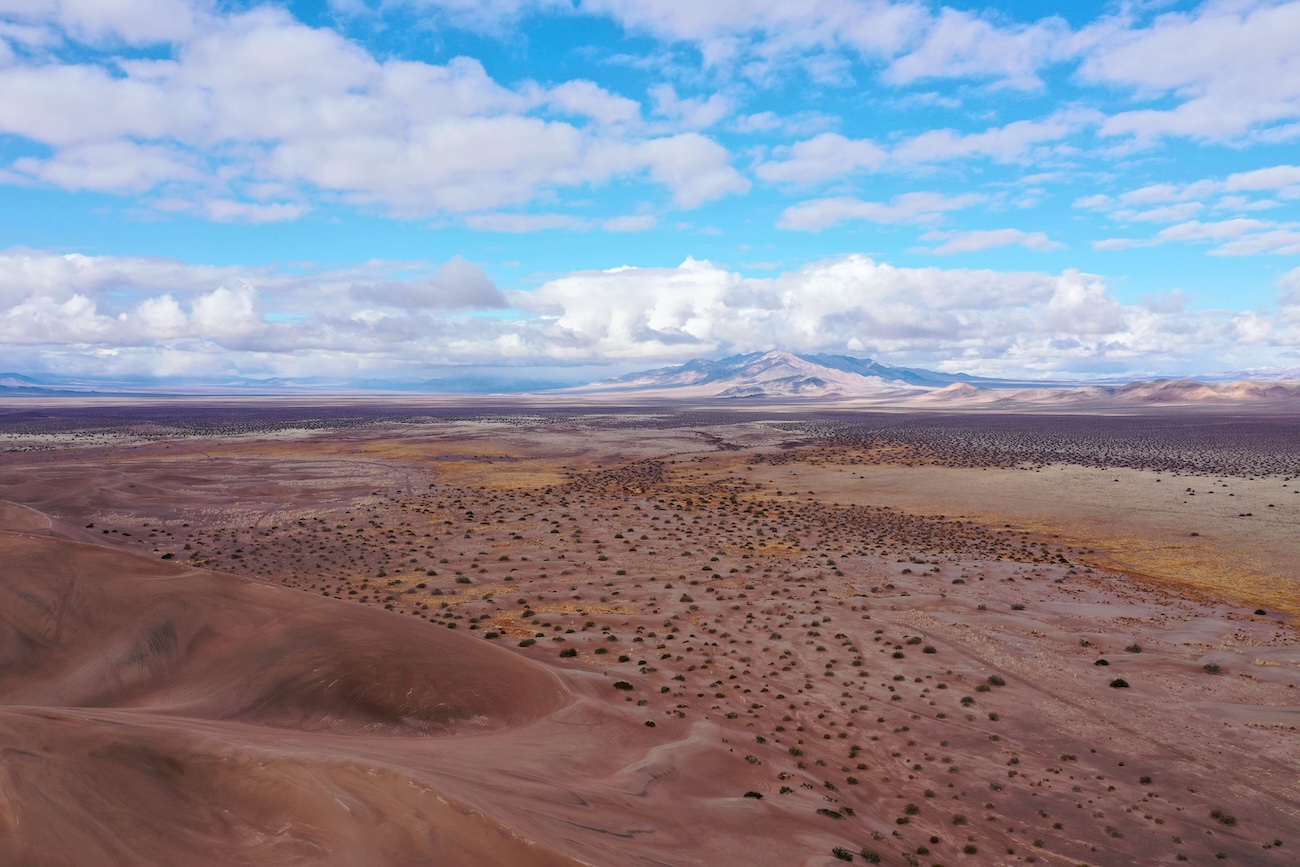
There is no skyline here. There are no minarets piercing the horizon, no tiled roofs reflecting the harsh North African sun, and no grid of streets. Instead, the landscape is pocked with crater after crater, resembling the surface of the moon more than a human settlement. It is a vista of ochre earth, undulating hills, and silence.
But the ground is alive. If you walk to the edge of one of these craters and look down, the illusion of emptiness shatters. Ten meters below, in a circular courtyard, a woman might be sweeping the dust from a clay floor. A loom rests against a whitewashed wall; the smell of baking bread drifts up from an unseen oven; a donkey brays from a tunnel hidden in the shadows.
This is the genius of the Matmata caves is famous for: a city of thousands that remains invisible until you are standing directly on top of it. For centuries, this subterranean architecture has provided a sanctuary for the indigenous people of the region, shielding them not only from the blistering Saharan heat but from the eyes of invading armies. Standing on the rim of a pit home, the silence of the Dahar region feels heavy, a protective blanket over a culture that chose to merge with the earth rather than conquer it.
The Geology of Solitude: Why the Earth Here is Special
The Dahar Mountain range is not formed of hard granite or crumbling shale, but of a unique geological layering of limestone and soft sandstone, interspersed with layers of clay.
This composition is the architectural blueprint of the troglodyte homes. The earth here is soft enough to be carved with hand tools, yet structurally sound enough to support broad ceilings without the need for timber beams or pillars—resources that are scarce in this arid environment. The soil acts as a natural cement; when the dry earth is excavated and packed, it holds its shape for centuries, provided it is protected from excessive water.
It is a landscape defined by erosion, where wind and ancient waters sculpted the valleys, leaving behind a plateau ripe for habitation. The indigenous builders didn’t fight the geology; they capitalized on a specific stratum of the earth that allowed them to dig vertically, then horizontally, creating homes that are essentially negative sculptures, carved out of the planet’s crust.
The Architecture of Survival: Bioclimatic Genius
The design of a Matmata dwelling is a triumph of vernacular engineering and bioclimatic function. These are not merely holes in the ground; they are sophisticated machines for thermal regulation.
The structure begins with the haush, a large circular pit dug vertically into the sandstone, typically 5 to 10 meters deep and open to the sky. This serves as the central courtyard, the lungs of the house. From this central hub, rooms are excavated laterally into the walls. These underground chambers serve as bedrooms, kitchens, and storage granaries.
The genius of this layout lies in its temperature control. In the height of the Tunisian summer, when the external temperature on the plateau can soar above 45°C (113°F), the interior of the caves remains at a constant, comfortable 20°C to 23°C (68°F–73°F). The earth has high thermal inertia, absorbing the heat of the day slowly and releasing it only when the ambient temperature drops. Conversely, in the biting cold of the desert winter, the caves retain the earth's warmth, requiring little to no heating.
The courtyard acts as a light well, capturing the sun but protecting the lateral rooms from direct solar gain. A long, sloping tunnel, often curved to block direct lines of sight and wind, connects the courtyard to the surface, serving as the main entrance for both people and livestock. This architecture is the ultimate expression of sustainability—homes built with zero material transport costs, zero carbon footprint for cooling, and a lifespan measured in generations.
The Amazigh of Tunisia: Indigenous Identity in the Shadows
The architects of these subterranean homes are the Imazighen (singular: Amazigh), known to the West by the exonym "Berbers." The term "Berber" is derived from the Greek barbaros and the Latin barbarus, a label applied by colonizers to anyone who did not speak their language. Today, there is a strong movement across North Africa to reclaim the name Amazigh, which translates roughly to "Free People."
While Amazigh culture is often overshadowed by the country’s Arab-Islamic identity, the south remains a stronghold of indigenous heritage. In the Dahar region, the genetic and cultural roots run deep. The language, Tamazight, is still spoken by the elders in these mountain communities, distinct from the Tunisian Arabic dialect spoken on the coast.
For millennia, the Imazighen have inhabited North Africa, from the Siwa Oasis in Egypt to the Atlantic coast of Morocco. In Tunisia, their history is one of resilience against waves of Phoenician, Roman, Vandal, Byzantine, Arab, and Ottoman incursions. The caves of Matmata are physical manifestations of this resilience—a culture that literally entrenched itself to survive.
Historical Necessity: A Fortress of Invisibility
Why did the Imazighen of Matmata choose to bury themselves in the rock? While the climate provided a compelling reason, the primary driver was likely defense.
The history of underground living in this region is inextricably linked to the Hilalian invasion of the 11th century. When the Banu Hilal and Banu Sulaym tribes migrated from the Arabian Peninsula into North Africa, they swept across the coastal plains, displacing the local indigenous populations. To preserve their culture, language, and lives, many Amazigh tribes retreated to the inhospitable hinterlands—the mountains of the Dahar.
In this context, the Matmata caves were the ultimate camouflage. From a distance, a roving army or a raiding party would see nothing but a barren wasteland. There were no walls to siege, no towers to topple, and no visible wealth to plunder. The smoke from cooking fires would disperse before it rose high enough to be seen from afar. The homes were fortresses of invisibility, allowing the Imazighen to live in relative peace while empires clashed on the fertile plains to the north.
The 1969 Deluge: The Year the Caves Collapsed
For centuries, Matmata remained a rumor to the outside world—a place known to locals but largely ignored by the Bey of Tunis and later, the French colonial administration. The isolation was so complete that some historical accounts suggest the inhabitants were unaware of the World Wars raging in Europe.
However, this isolation ended catastrophically in 1969. That year, the heavens opened over southern Tunisia. Torrential rains battered the Dahar Mountains for 22 days straight. The soft sandstone and clay, so perfect for carving, proved disastrously soluble under such an onslaught. As the water saturated the ground, the structural integrity of the pits failed.
Countless ancestral homes collapsed, burying possessions and leaving families destitute. The scale of the disaster forced the community to send a delegation to the regional governor in Gabès to beg for assistance. It was a pivotal moment: the "invisible" people were forced to reveal themselves to the modern state to survive the elements that had once protected them.
Nouvelle Matmata: The Concrete Displacement
The response from the central government, led by Tunisia’s first president, Habib Bourguiba, was swift but culturally devastating. Bourguiba was a modernist who viewed the troglodyte lifestyle as backward, a remnant of a primitive past that did not fit his vision of a progressive, modern Tunisia.
The government seized the opportunity provided by the floods to construct "Nouvelle Matmata" (New Matmata), a settlement of concrete block houses built on the surface, several kilometers north of the ancient cave dwellings. Financial incentives and promises of modern amenities—electricity, running water, schools—were used to lure the population out of the ground.
This created a schism that exists to this day between Nouvelle Matmata vs. ancient Matmata. The move to the new town offered physical safety from future floods but resulted in a profound loss of cultural cohesion. The thermal comfort of the caves was traded for concrete boxes that turned into ovens in the summer and freezers in the winter. The communal structure of the courtyard living was replaced by the isolation of the grid. While many moved, a resilient minority refused, choosing to repair their damaged caves and remain in the earth, clinging to a way of life that was rapidly being erased.
Luke Skywalker’s Home: The Star Wars Connection
In the mid-1970s, a new kind of visitor arrived in Matmata, bringing a force that would change the village forever. George Lucas was scouting locations for a space opera, looking for a landscape that felt essentially extraterrestrial. He found it in the troglodyte hotel of Sidi Driss.
This location became the Lars Homestead on the planet Tatooine—the childhood home of Luke Skywalker. The film Star Wars: A New Hope (1977) seared the image of the Matmata courtyard into the collective consciousness of the world. The whitewashed crater walls, the frescoed ceiling of the dining room (which remains intact), and the intricate tunnels became iconic.
Star Wars filming locations remains a massive search term, and for Matmata, the franchise is both a blessing and a shadow. The Hotel Sidi Driss is now a pilgrimage site. Fans travel thousands of miles to stand in the pit where Mark Hamill stood, to eat in the dining alcove, and to sleep in the small, rock-cut rooms. The set dressings remain, maintained by the hotel owners as sacred relics of cinema history.
The Double-Edged Sword: Tourism as a Lifeline and a Curse
The cinematic fame brought tour buses. For the families who refused to move to Nouvelle Matmata, tourism became a crucial economic lifeline. As agriculture became more difficult due to droughts and modernization, opening their homes to strangers became a way to survive.
However, this has created a complex dynamic. Matmata is now trapped in a strange feedback loop of performance and reality. Is the culture being preserved, or is it being staged? When a busload of tourists descends on a home, snapping photos of a grandmother grinding grain, the line between living history and a human zoo blurs.
The "Star Wars economy" keeps the Hotel Sidi Driss and a few souvenir shops afloat, but it can also obscure the deep Amazigh history of the site. Visitors often come looking for Jedi ghosts and miss the profound reality of the indigenous struggle that created these structures long before the Empire struck back.
Visiting an Inhabited Home: Tea, Oil, and Tabouna Bread
Despite the commercialization, visiting Matmata can still be a deeply moving human experience if approached with respect. There are still families living in the old caves, and many will welcome travelers into their haush.
The experience is visceral. You walk down a sloping tunnel, the blinding white light of the desert fading into cool, dim shadows. You emerge into the courtyard, which feels like a private sanctuary. The walls are often whitewashed to reflect light, contrasting with the deep blue circle of sky above.
Hospitality is a cornerstone of Amazigh culture. You will likely be offered mint tea, incredibly sweet and hot, served in small glass cups. Alongside it comes tabouna bread, a flat, round loaf baked in a clay oven, served with a dish of golden olive oil and perhaps some honey or harissa.
Sitting on a low bench carved from the living rock, dipping warm bread into oil, you begin to understand the pull of this life. It is quiet. It is cool. The chaos of the modern world feels very far away. You can see the handprints of the family in the clay walls, the scorch marks from the fire, the simple, functional beauty of a life stripped of excess.
The Ethics of "Poverty Tourism" and Cultural Exchange
For the conscientious traveler, a visit to Matmata raises ethical questions. Is this "poverty tourism"? Are we romanticizing a difficult life?
The reality is nuanced. The families who open their homes rely on the tips (usually 10-20 Dinars) left by visitors. This income allows them to maintain the caves, pay for electricity (which many caves now have), and send their children to school. Without this revenue, the pressure to abandon the caves for the concrete town would be insurmountable.
However, the transaction must be handled with dignity. It is not an entrance fee to a museum; it is a gift to a host. Ask permission before taking photos of people, particularly women. Engage in conversation—many younger inhabitants speak French or some English. Treat the interaction as a cultural exchange rather than a viewing. By showing interest in their history and architecture, rather than just the movie sets, you validate their heritage.
Beyond Matmata: The Ksour of the Dahar Mountains
Matmata is the crown jewel of the Dahar, but it is part of a larger system of Amazigh architecture that deserves exploration. The Dahar Mountains are dotted with ksour (singular ksar), which are fortified granaries.
While the people of Matmata dug down to hide, other Amazigh communities built up. Places like Ksar Ouled Soltane (another Star Wars location, used as the slave quarters in The Phantom Menace) and Ksar Hallouf demonstrate a different defensive strategy. These structures consist of multi-story vaulted cells called ghorfas, stacked on top of each other like honeycomb.
Used primarily for storing grain and olive oil, these granaries were the banks of the ancient world. They were built on hilltops to be easily defended against raiders. Visiting the ksour provides a complete picture of the region's history: the caves were for living, the ksour were for securing the harvest. Both are architectural responses to the threat of theft and the brutality of the climate.
The Ghost Villages: Chenini and Douiret
To fully grasp the scale of the Amazigh retreat, one must visit the semi-abandoned hilltop villages of Chenini and Douiret. Located south of Matmata, near Tataouine, these villages cling to the peaks of ridges.
Here, the architecture is a hybrid—homes are dug horizontally into the cliff face, with masonry facades built outward. Chenini is still partially inhabited, a white mosque gleaming at the summit, while the ancient houses cascade down the slope, blending perfectly with the rock. These "ghost villages" are hauntingly beautiful, offering panoramic views of the desert and a stark reminder of the rural depopulation threatening the region.
Logistics: How to Get to the Underground
Visiting Berber cave homes requires some planning. Matmata is located in southern Tunisia, about 40km southwest of Gabès.
- Gateway Cities: The most common approach is from the island of Djerba (an international tourism hub) or the coastal city of Gabès.
- Transport: While "louages" (shared taxis) run from Gabès to Matmata, renting a car is highly recommended. The Dahar region is vast, and having your own vehicle allows you to explore the ksour and the ghost villages at your own pace. The roads are generally good, though winding.
- Timing: Avoid the peak summer months (July/August) when the heat is oppressive. Spring (March-May) and Autumn (September-November) offer the best light for photography and comfortable temperatures for hiking.
Sleeping in Stone: The Troglodyte Hotel Experience
To truly understand the thermal magic of the caves, you must sleep in one. Several old dwellings have been converted into hotels.
- Hotel Sidi Driss: The most famous option. Accommodations are basic—shared bathrooms and simple beds in windowless rock chambers. You are paying for the atmosphere and the Star Wars connection, not luxury.
- Hotel Marhala: Often cited as a more authentic and slightly more comfortable experience than Sidi Driss. It was originally dug for the locals before being converted.
Warning: Staying in a troglodyte hotel is not a 5-star experience. The caves can be damp, and the bathrooms are often communal and dated. There is no soundproofing, yet the earth absorbs sound so effectively that the nights are profoundly silent. It is a rustic adventure. Waking up in the womb of the earth, seeing the sun hit the rim of the courtyard above, is a memory that stays with you forever.
Conclusion: The Future of the Subterranean
As the sun sets over the Matmata plateau, casting long shadows into the craters, the landscape feels timeless. Yet, the future of this subterranean sanctuary is fragile.
The young generation is leaving. The allure of the cities, with their modern jobs and connectivity, is draining the Dahar of its population. The skills required to maintain the caves—to mix the clay, to carve the sandstone, to manage the water flow—are fading.
However, in a warming world, Matmata offers a lesson we may need to relearn. As modern architecture struggles with rising global temperatures and soaring energy costs for air conditioning, the passive cooling of the troglodyte homes stands as a testament to ancient sustainability. The Imazighen proved that we do not need to fight the environment to live comfortably; we only need to understand it.
If the last family leaves the last cave, moving up into the concrete boxes of Nouvelle Matmata, we will have lost more than just a tourist attraction. We will have lost a living library of resilience, a way of life that honored the earth by living within it. For now, the fires are still lit, the tea is still brewing, and the sanctuary of the shadows remains open.
Sources & References
- UNESCO World Heritage Centre – Tentative List: Habitat Troglodytique et le monde des ksour du Sud tunisien.
- Encyclopaedia Britannica – Berber | Definition, People, Languages, & Facts.
- NASA Earth Observatory – Matmata, Tunisia: Satellite Imagery and Geological Analysis.
- The Guardian – Tunisia's Star Wars hotel: the dark side of tourism.
- Reuters – Tunisia's cave dwellers cling to their homes.
- StarWars.com – Galactic Backpacking: Visiting Real-World Tatooine.
- Lonely Planet – Tunisia Travel Guide.
- Wikivoyage – Matmata Travel Guide.



%2C%20Konjic%2C%20Bosnia.jpg)


