
The Visceral Reality: Life Inside the Medellín Cartel’s Island Fortress
The Mechanical Roar: How Pratt & Whitney Engines Silenced the Tropics
The first thing you noticed was not the heat, but the noise. In the Exumas, the soundtrack is usually composed of the rhythmic lapping of the Atlantic against limestone and the whisper of trade winds through casuarina trees. But on Norman’s Cay in 1979, the sound of nature was annihilated by the mechanical roar of Pratt & Whitney engines.
The Scars of Ambition: 3,300 Feet of Tarmac Paved with White Gold
A twin-engine aircraft drops out of the sky, skimming so low over the turquoise water that its prop-wash kicks up a spray of salt mist, blurring the windshield. The pilot isn't admiring the view; he is hunting for the "radar shadow," hugging the deck to stay invisible to the American AWACS patrolling the Florida Straits. Ahead of him, a slice of white coral cuts through the organic curves of the ocean like a scar.
This is the runway. 3,300 feet of tarmac, paved by ambition and paid for with a commodity that was quickly becoming more valuable than gold.
An Unsinkable Aircraft Carrier: The Geopolitical Weapon of Carlos Lehder
Welcome to Norman’s Cay. To the nautical charts, it was just another comma in the sentence of the Exuma chain. To the few terrified residents who hadn't yet been evicted at gunpoint, it was a prison. But to Carlos Lehder Rivas, a man who worshipped both John Lennon and Adolf Hitler with equal, manic fervor, this wasn't just an island. It was a geopolitical weapon. It was the unsinkable aircraft carrier of the Medellín Cartel, a sun-drenched fortress where the primary export was anarchy, and the primary import was pure, uncut cocaine.
While history often focuses on the violence of Pablo Escobar in Colombia or the flashy violence of Miami, Norman’s Cay represents the crucial logistical link that made the cocaine boom possible. It was here, under the blinding Bahamian sun, that drug smuggling evolved from a mule-based cottage industry into a global industrial complex.
The Origins of Norman’s Cay: A Caribbean Paradise Corrupted
The Geography of Smuggling: Why the Exuma Chain Became a Smuggler’s Dream
To understand how a single man could hijack an entire island, one must first understand the geography of the Exumas. It is a necklace of cays stretching over 100 miles, a place of shallow banks and deep channels that has attracted pirates, rum-runners, and privateers for three centuries.
Old Bahamas vs. New Blood: The Quiet Enclave Before the Storm
By the late 1970s, the geography that made the Exumas a sailor’s paradise also made it a smuggler’s dream. Norman’s Cay sat at the northern end of the chain, roughly 210 miles from the Florida coast—a distance easily traversable by small aircraft, yet just far enough to be international waters. Crucially, it possessed a deep-water anchorage capable of accommodating ocean-going vessels, and a pre-existing, albeit modest, airstrip.
It was isolated, yet accessible. It was beautiful, yet functional. For Carlos Lehder, who was scouting the Caribbean for a base of operations, looking down from the cockpit of his Piper Navajo, Norman’s Cay didn't look like a vacation spot. It looked like a distribution center.
The Strategic Value: Buying the Land to Own the Law
The island was originally a quiet enclave for wealthy retirees and yacht owners. It had a marina, a club, and a scattering of private homes. It was the epitome of "Old Bahamas"—slow, gin-soaked, and polite. It was unprepared for the hurricane of Carlos Lehder's ambition that was about to make landfall. Lehder saw the strategic value immediately: if he owned the land, he owned the law. Or at least, he could buy the silence required to ignore it.
The Hostile Takeover: How Carlos Lehder and George Jung Evicted a World
The Danbury Blueprint: How a Federal Prison Cell Revolutionized the Drug Trade
The transformation of Norman’s Cay was not an overnight coup; it was a creeping sickness. It began with money and ended with terror. Lehder, flush with cash from his early successes in the marijuana trade, began buying property on the island in 1978.
The blueprint for this takeover was drafted years earlier, inside the walls of Danbury Federal Correctional Institution in Connecticut. This was where Lehder, a petty car thief with delusions of grandeur, met George Jung, the marijuana smuggler immortalized in the film Blow. Jung had the connections to the American market; Lehder had the vision of a transport network.
The Joe Rivas Strategy: Implementing the Industrial Supply Chain
They realized that the "mule" system—people swallowing balloons or carrying false-bottomed suitcases—was inefficient. To move ton-quantities, they needed aircraft. But aircraft needed pit stops. They needed a sovereign garage. Lehder, operating under the alias "Joe Rivas," executed the plan they had whispered about in their prison cells. He didn't just want to smuggle; he wanted to revolutionize the supply chain.
Psychological Warfare: Sharks in Pools and the Death of the Yacht Club
Once Lehder secured the critical infrastructure—the marina and the hotel—the atmosphere on the island shifted violently. The politeness of the yacht club was replaced by the swagger of armed Colombian sicarios.
The eviction of the remaining residents was a masterclass in psychological warfare. It started with noise. All-night parties, revving engines, and the constant coming and going of aircraft shattered the peace. When the residents complained, the harassment escalated. Homeowners would return to their villas to find them ransacked. Fuel lines on boats were cut.
In one particularly grim anecdote that defines the drug smuggling 1980s ethos, a resident reportedly found a dead shark in their swimming pool—a Mafia-style warning delivered with a nautical twist. One by one, the wealthy Americans and Europeans fled, selling their properties to Lehder’s shell companies for pennies on the dollar, or simply abandoning them to the salt air. By 1980, the takeover was complete. Norman’s Cay was no longer part of the Commonwealth of the Bahamas; it was a feudal state ruled by a kingpin.
The Logistics of the Air Bridge: Industrializing the Cocaine Boom
The Mechanics of the Cocaine Train: Radar Shadows and C-46 Commandos
This is where the story shifts from crime drama to industrial espionage. The brilliance of Lehder’s operation wasn't in the violence; it was in the logistics. He applied the principles of a FedEx hub to the cocaine trade.
The Medellín Cartel transport routes were dependent on the "Air Bridge." Cocaine paste was refined in Colombia, loaded onto medium-range aircraft, and flown north. But these planes couldn't reach the US stealthily with a full load. They needed a transfer point.
High-Octane Anarchy: The Cowboys of the Sky and 50-Foot Flight Paths
Norman’s Cay became the funnel. Jets and large propeller planes would land on the island, guided by Lehder’s newly installed, state-of-the-art radar systems. The cocaine was offloaded, stored, and then reloaded onto smaller, faster aircraft for the final hop to Georgia or Florida.
The pilots flying these runs were the cowboys of the sky. They flew "on the deck," sometimes 50 feet above the waves, to stay below the horizon of US radar stations. They utilized the "radar shadows"—geographic blind spots caused by the curvature of the earth and atmospheric conditions.
Industrializing the Tropics: Refrigeration Units and 300 Kilos Per Hour
Lehder didn't just occupy the island; he paved it. He extended the runway to 3,300 feet, allowing for heavier payloads. He installed massive, industrial refrigeration units. To the casual observer, it might have looked like he was storing seafood. In reality, tons of cocaine were being kept cool to prevent degradation in the tropical heat.
The scale was staggering. At its peak, the airstrip on Norman’s Cay was handling flights every single day. It is estimated that up to 300 kilograms of cocaine were moving through the island per hour during the busiest operational windows. The hangers were hives of activity where mechanics worked around the clock to keep the fleet airborne, often cannibalizing parts from one plane to keep another flying.
The Empire of Noise: Carlos Lehder’s Neo-Nazi Delusions
The Volcano House: Surveillance, Dobermans, and Hedonistic Paranoia
If the runway was the engine of the operation, The Volcano house was the cockpit of the madness. Carlos Lehder was not a stoic businessman like the leaders of the Cali Cartel; he was a rock star with a god complex.
Lehder built his headquarters on the highest point of the island. Known as "The Volcano" due to its distinctive conical chimney and modern, fortress-like architecture, the house was a testament to his paranoia and hedonism. It was equipped with high-tech surveillance gear, surrounded by armed guards with automatic weapons, and patrolled by Doberman Pinschers that were rumored to be trained to attack on command.
The King of the Cay: Mixing Lennon, Hitler, and Pure Cocaine
Lehder’s behavior on the island was erratic, fueled by his own product. He cultivated a bizarre ideology that blended anti-American imperialism, Pan-American nationalism, and a disturbing fascination with Nazism. He was known to blast the Beatles’ Imagine immediately followed by speeches from Adolf Hitler over the island's PA system.
He would lecture his pilots—mercenaries who cared only about the paycheck—on the "Latin American destiny" to poison the United States with cocaine. To Lehder, the drugs were a weapon to destabilize the "Empire of the North."
The Political Shield: How Lynden Pindling and Robert Vesco Bought Silence
How did a neo-Nazi drug lord operate a massive international airport on a British Commonwealth island for four years without being stopped? The answer was money.
The government corruption during the tenure of Prime Minister Lynden Pindling is a matter of historical record. While Pindling himself always denied direct involvement, a Commission of Inquiry in the 1980s found that he had spent far more money than he had earned. Lehder understood that sovereignty was for sale. He poured millions of dollars into the local economy and, allegedly, into the pockets of officials. This "political shield" effectively insulated Norman’s Cay from Bahamian law enforcement.
The Fall of the Kingdom: Operation Turning the Tide and the Legacy of Hubris
The End of the Party: DEA Pressure and the 1982 Crackdown
The sheer volume of cocaine flowing through Norman’s Cay eventually made it impossible to ignore. The violence of the Miami Drug Wars, fueled by Lehder’s shipments, brought extreme pressure from the United States government. The cracks began to show with the arrival of outside observers like Professor Richard Novak.
By 1982, the party was over. The Bahamian government, forced by geopolitical reality, finally cracked down. Lehder fled the island, retreating to the jungles of Colombia where he would eventually be captured and extradited. The "Volcano" house was looted and abandoned, left to the termites and the salt spray.
Snorkeling the Wreckage: The Sunken Curtiss C-46 as a Dark Tourist Attraction
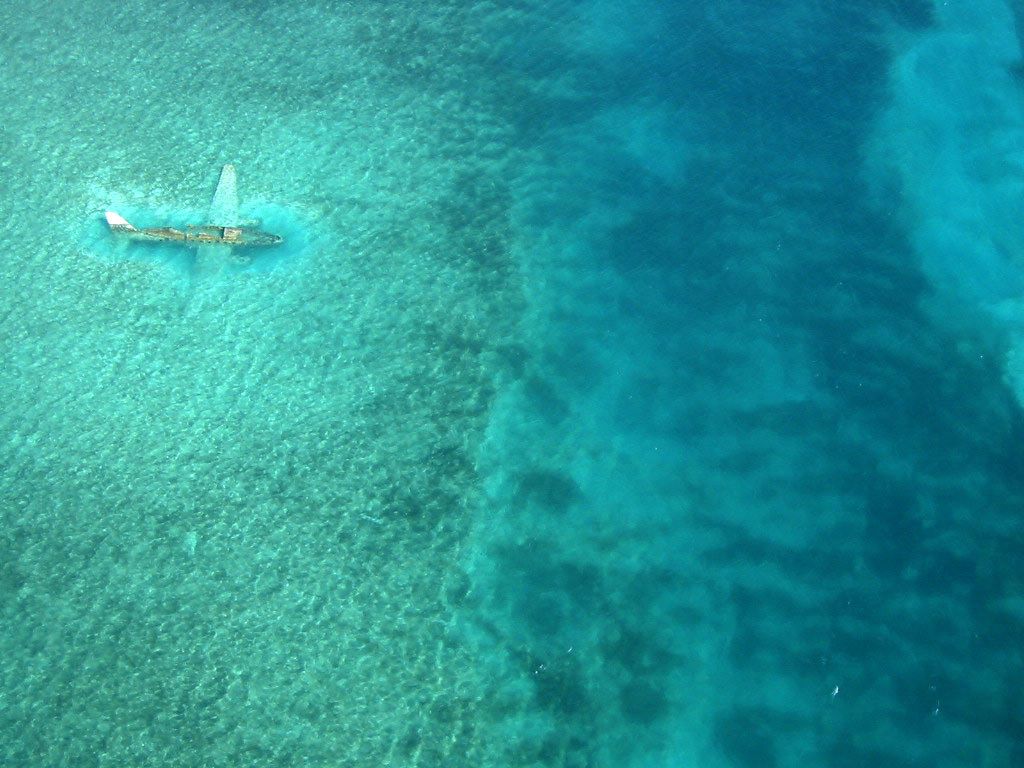
Today, the most enduring symbol of Carlos Lehder’s reign is not the ruins of his house, but a skeleton resting in the harbor. Just off the southern tip of the runway, sitting in roughly ten feet of crystal-clear water, lies the wreckage of a large transport plane. Tourist guides often identify it as a DC-3, but aviation historians know it as a Curtiss C-46 Commando. The wreck has become a darkly ironic tourist attraction; the cargo hold, once stuffed with cocaine, is now home to grouper and snapper.
The Fyre Festival Connection: Modern Hubris on a Narco-Island
In 2017, the island was briefly thrust back into the spotlight by Billy McFarland and the Fyre Festival. Marketing materials teased a treasure hunt on "Pablo Escobar’s private island." The copywriters conflated the myths; it was Lehder’s island, not Escobar’s.
Today, Norman’s Cay is attempting to return to gentility. MacDuff’s Norman's Cay offers high-end cottages. The runway is still there, but the planes landing now carry fly-fishermen and CEOs. Developers have worked hard to demolish the ruins of "The Volcano," wanting to sell paradise, not history. But for those who know where to look, the scars remain.
High-End Reclamation
Today, Norman’s Cay is attempting to return to its pre-Lehder gentility. MacDuff’s Norman's Cay, a boutique resort, offers high-end cottages and a bar that serves excellent burgers to passing yachts. The runway is still there, maintained and usable, but the planes landing now carry fly-fishermen and CEOs, not kilos.
Developers have worked hard to demolish the ruins of "The Volcano" and other cartel structures. They want to sell paradise, not history. But for those who know where to look, the scars remain. Bullet holes in old cisterns, the oversized concrete pads for refrigeration units, and the hulking wreck in the harbor serve as silent witnesses to the time when this slice of heaven was the engine room of hell.
Ethics of the Void: The Hollow Silence of a Reclaimed Paradise
Norman’s Cay is a place of beautiful contradictions. It is a study in how quickly paradise can be paved, and how slowly it recovers. Carlos Lehder looked at these islands and saw a kingdom; he saw a way to reshape the geopolitical map with white powder and propellers.
But looking at the island today, with the turquoise water lapping against the rusted fuselage of the C-46, one is reminded of the transience of power. The drug lords are dead or imprisoned. The dirty money has been laundered or seized. The neo-Nazi speeches have faded into the ether. In the end, the ocean always wins. It washes away the footprints, rusts the steel, and reclaims the reef. All that remains is the sun, the sand, and the ghost of a roar that once shook the palms.
Frequently Asked Questions: The Narco-History of Norman’s Cay
Who actually owned Norman’s Cay during the cartel era?
While the island was technically part of the Commonwealth of the Bahamas, Carlos Lehder acquired the majority of the island's property through a series of shell companies and coerced sales between 1978 and 1980. Lehder effectively operated the island as a private fiefdom, using armed guards and a private police force to maintain total control over the land, the harbor, and the airstrip.
Was Norman’s Cay ever owned by Pablo Escobar?
No. This is a common historical misconception fueled by modern marketing, most notably by the organizers of the Fyre Festival. While Pablo Escobar was the head of the Medellín Cartel and benefited from the logistics hub, the island was the vision and property of Carlos Lehder. Escobar’s primary operations remained centered in mainland Colombia and various "safe houses" elsewhere.
Can you visit the sunken drug plane today?
Yes. The wreckage of the Curtiss C-46 Commando remains one of the most accessible "narco-wrecks" in the world. It sits in shallow water (approximately 10 feet deep) just off the coast of the island. It is a popular spot for snorkelers and divers, though the structural integrity of the aircraft has significantly degraded over decades of saltwater exposure and storm surges.
What happened to Carlos Lehder after he left the island?
After being forced off the island in 1982, Lehder fled to the Colombian jungle. He was eventually captured by Colombian authorities in 1987 and became the first high-level Medellín Cartel member to be extradited to the United States. After serving a lengthy prison sentence and testifying against Panamanian dictator Manuel Noriega, he was released and deported to Germany in 2020.
Is Norman’s Cay safe for tourists now?
Today, Norman’s Cay is an upscale, peaceful destination. The days of armed sicarios and cocaine processing are long gone, replaced by boutique tourism and private vacation homes. The island features a modern boutique resort, MacDuff's, and the airstrip is now used for legitimate private aviation. The "danger" associated with the island today is purely historical.
Sources & References
- Drug Wars: The Medellín Cartel - PBS Frontline (2000)
- The Exumas: History & Culture - The Bahamas Ministry of Tourism (2024)
- Kings of Cocaine: Inside the Medellín Cartel - Guy Gugliotta & Jeff Leen (1989)
- The Real Story Behind the 'Blow' Connection - Vice Media (2014)
- The Bubba of the Bahamas: The Fyre Festival Scandal - Vanity Fair (2017)
- Curtiss C-46 Commando Accident Reports (Bahamas) - Aviation Safety Network (1980)
- Operation Turning the Tide: DEA Archives - US Department of Justice (1982-1987)



%2C%20Konjic%2C%20Bosnia.jpg)


