The Descent of Kukulcan: Shadow, Light, and the Dying Sun
In the oppressive humidity of the Yucatán jungle, the air does not merely touch you; it clings to you, heavy with the scent of wet limestone and decaying vegetation. It is here, in this stifling green void, that a miracle of geometry and terror occurs twice a year.
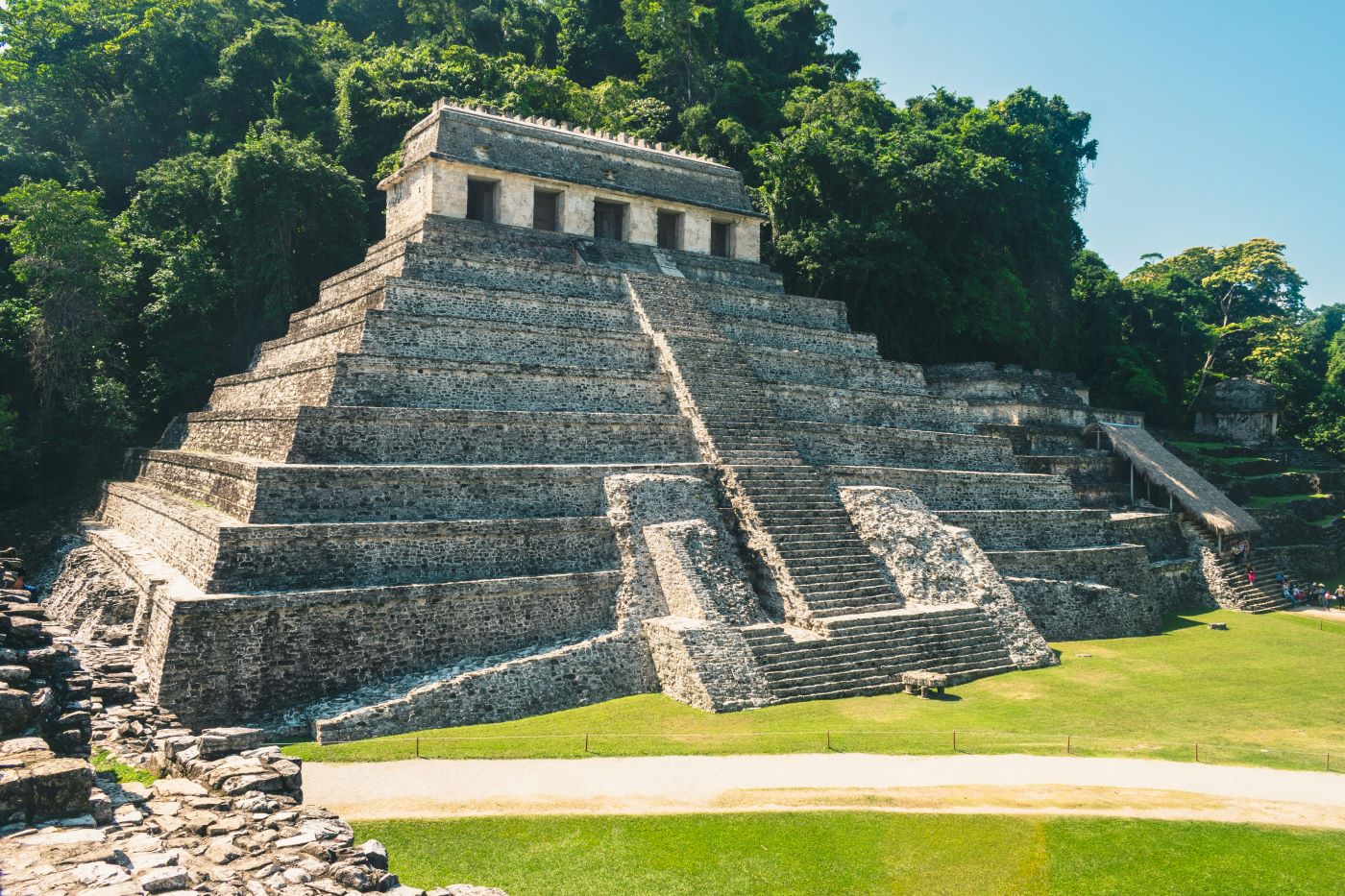
As the sun begins to set on the spring and autumn equinoxes, a hush falls over the thousands of spectators gathered at the base of El Castillo pyramid. They are waiting for a shadow. As the light strikes the northwest corner of the terraced pyramid, a distinct pattern of triangles creates the illusion of a massive serpent slithering down the balustrade. This is the Kukulcan descent—the return of the Feathered Serpent god to the earth.
For the modern tourist, it is a photo opportunity, a marvel of archaeoastronomy. But for the ancient Maya, this was theater of the highest order—a celestial validation of their rulers' power. It was a terrifying reminder that the cosmos was a machine, and the priests held the instruction manual. Chichen Itza history is often sanitized into a tale of architectural wonder, but the reality is far more visceral. This city was built on the premise that the sun was a hungry god, a dying ember that required a steady diet of human hearts to keep burning.
The precision required to align a 79-foot stone pyramid so that a shadow behaves like a living creature is inducing of a specific kind of intellectual vertigo. It forces us to confront a civilization that possessed a mathematical genius rivaling ancient Greece, yet applied that genius toward a theology of ritualized slaughter.
To understand Chichen Itza, you must look past the postcards and into the obsession with time, blood, and the inevitable end of the world.
El Castillo Pyramid: A Calendar Carved in Limestone
Domineering the center of the Great Plaza is the Temple of Kukulcan, known universally as El Castillo. While it serves as the visual anchor of the site, to view it simply as a temple is a mistake. It is a physical manifestation of time itself—a calendar carved in limestone.
The mathematics of El Castillo pyramid are rigorous and undeniable. The structure consists of four stairways, each containing 91 steps. When you multiply 91 by the four sides, you get 364. Adding the top platform as the final step yields 365—the exact number of days in the solar year (the Haab'). Furthermore, the pyramid consists of nine terraces, bisected by the staircases to create 18 distinct sections on each face, representing the 18 months of the Maya solar calendar.
This structure was not built merely to house a dead king; it was built to track the movement of the heavens. For the Maya, time was cyclical, a burden that had to be carried by the gods. The burden of the years was heavy, and if the rituals were not performed with mathematical exactitude, the cycle would break, and the universe would collapse into darkness. Standing at the base, looking up at the vertiginous angle of the stairs, one feels the crushing weight of this cosmic anxiety. The Maya did not just measure time; they feared it.
The World Inside a World: The Red Jaguar Throne and Hidden Tunnels
Like a Russian nesting doll made of stone, the visible pyramid of El Castillo hides a secret. In the 1930s, archaeologists discovered that the current pyramid was built over an older, smaller pyramid. This practice of superimposition was common in Mesoamerica; when a 52-year calendar cycle ended, a new "layer" of time was often constructed over the old.
Deep inside the damp, claustrophobic tunnels of the interior structure, explorers found a chamber containing a Chac Mool statue—a reclining figure holding a bowl on its stomach, waiting for offerings. Behind it lay a discovery that whispers of the city's ferocity: the Red Jaguar Throne.
Carved from stone and painted a vibrant, blood-red cinnabar, the jaguar is encrusted with 73 discs of jade to represent its spots, with eyes made of piercing jadeite. The jaguar, the apex predator of the jungle, was the avatar of the night sun and the underworld. Hidden in the blackness of the pyramid's core, this throne was not for public display. It was a sanctum for the high priests and kings, a place where the ruler would sit in the womb of the pyramid, communing with the forces of darkness before emerging into the blinding light of the plaza.
The Toltec Invasion Theory: A Fusion of Warrior Cultures
Chichen Itza stands apart from other Maya sites like Tikal or Palenque. Its art is stiffer, its themes more martial, its scope more imperial. This distinction has long fueled the "Toltec Invasion" theory.
Archaeologists have noted striking similarities between Chichen Itza and Tula, the capital of the Toltec civilization located nearly 1,000 kilometers away in central Mexico. The theory suggests that a warrior king, perhaps the legendary Topiltzin Quetzalcoatl (the Aztec name for Kukulcan), was exiled from Tula and marched east, conquering the Yucatán and establishing a new capital at Chichen Itza.
While modern scholarship debates whether this was a military invasion or a cultural diffusion through trade, the result is undeniable: a fusion of two warrior cultures. The classic Maya focus on divine lineage merged with the Toltec cult of militarism and human sacrifice. This hybridization created a super-state, a militarized capital unlike any other in the Maya world. The art here does not just depict gods; it depicts eagles and jaguars devouring human hearts. It is the architecture of a society organized entirely around war and the tribute of blood.
The Great Ball Court: An Arena of Death and Acoustics
To the west of the pyramid lies The Great Ball Court, the largest and most impressive playing field in all of Mesoamerica. Measuring 545 feet in length and enclosed by vertical walls 27 feet high, the scale of the arena is overwhelming. It was here that the sacred game of Pok-ta-Pok was played—a game that was far more than sport. It was a reenactment of the Maya creation myth, where the Hero Twins battled the Lords of the Underworld.
The rules were brutal: players had to keep a heavy, solid rubber ball (weighing up to 9 pounds) in motion using only their hips, elbows, and knees. The goal was to pass the ball through stone rings set high on the walls—a feat that seems nearly impossible given the height and the small diameter of the rings.
The stakes of the game are etched into the stone itself. Along the lower benches of the court, elaborate friezes depict the aftermath of a match. One panel explicitly shows a player—identified by his elaborate protective gear—kneeling. A distinct stream of seven snakes spurts from his neck, representing blood, while another player holds his severed head.
There is a long-standing debate in Chichen Itza history: Was it the loser who was sacrificed, or the winner? While Western logic suggests the loser pays the price, Maya theology viewed sacrifice as the ultimate offering. To give one's life to the gods was a way to ensure the continuity of the sun. Some scholars argue that the captain of the winning team was granted the "honor" of a swift death, transforming into a deity. Regardless of who died, the Great Ball Court was an arena where the boundary between sport and ritual murder was non-existent.
The Acoustics of the Dead: Whispers Across 500 Feet
The engineering genius of the Maya is perhaps most hauntingly realized in the Chichen Itza acoustics of the Great Ball Court. The parallel walls are perfectly aligned to convey sound. A visitor standing at one end of the 545-foot court can speak in a mere whisper, and it will be heard clearly by someone standing at the opposite end, despite the open air and the wind.
This was not accidental. It was theatrical intimidation. Imagine the High Priest standing at the North Temple, his voice amplified by the stone architecture, booming commands or chanting prayers that seemed to come from the air itself. During a sacrifice or a high-stakes game, the acoustics ensured that every gasp, every command, and perhaps the dull thud of the heavy rubber ball against ribs, was audible to the elite spectators. It is an architecture of surveillance and omnipresence.
The Tzompantli: The Wall of Skulls and the Theater of Terror
Just east of the Ball Court stands a low, T-shaped platform that serves as a grim catalog of the city’s activities: the Tzompantli skull rack.
The stone walls of this platform are carved with row after row of human skulls in profile, impaled on horizontal poles. In Central Mexican cultures like the Aztecs, the Tzompantli was a wooden rack used to display the actual severed heads of sacrificial victims and enemies. At Chichen Itza, the Maya solidified this gruesome display into permanent limestone.
The repetition of the carvings is hypnotic and disturbing. It signifies the industrial scale of Mayan human sacrifice at the site. This was a billboard of power, a clear message to visiting diplomats, rival kings, and the local populace: We control life, and we possess the power of death. The fusion of Toltec militarism is most evident here; the skull rack is a hallmark of the warrior cults of the Mexican highlands, imported to the Maya lowlands to instill obedience and terror.
El Caracol Observatory: Tracking Venus, the Star of War
South of the violent grandiosity of the Great Plaza lies a structure that looks surprisingly modern: El Caracol, or "The Snail." Named for the spiral staircase inside, this round building is an ancient observatory, a testament to Maya astronomy.
The windows of the dome are aligned not just to the sun, but specifically to the movements of Venus. To the Western mind, Venus is the planet of love. To the Maya, Venus was the "Great Star," a volatile and dangerous celestial body associated with war.
The kings of Chichen Itza did not gaze at the stars for abstract knowledge; they used El Caracol to plan their conquests. The appearance of Venus in the morning sky was often the signal to launch a "Star War"—a raid calculated to capture high-value prisoners for sacrifice. The mathematics developed here, tracking the synodic cycle of Venus (584 days) with an error of less than two hours over 500 years, was brilliant. But it was brilliance weaponized. The astronomers were the intelligence officers of the state, determining the astrological feasibility of bloodshed.
The Sacred Cenote: A Gateway to the Underworld and a Grave for Children
If El Castillo is the tower to the heavens, the Sacred Cenote is the throat of the underworld. Located at the end of a 300-meter white stone causeway (sacbe), this natural sinkhole is a gaping wound in the jungle floor, 60 meters in diameter with sheer vertical cliffs dropping to the water below.
The water is a murky, opaque green, choked with algae and depth. For the Maya, cenotes were sacred; they were the primary source of fresh water in a landscape devoid of rivers. But the Sacred Cenote was different. It was the pilgrimage destination for the entire Maya world, believed to be the home of Chaac, the rain god. It was a place of petition, and the price of rain was high.
Standing at the edge of the pit, looking down into the stillness, one confronts the most disturbing aspect of Chichen Itza. This was not a place of peaceful meditation. It was a place where offerings were hurled into the abyss to appease the lords of Xibalba.
Dredging the Depths: Edward Thompson’s Macabre Discovery
The true nature of the Sacred Cenote remained largely folklore until the arrival of Edward Thompson (archaeologist). In 1894, Thompson, the U.S. Consul to Yucatán, purchased the plantation that included the ruins of Chichen Itza for $75. Obsessed with the legends of virgins sacrificed to the rain god, he began dredging the cenote in 1904.
What the dredge bucket pulled from the muck confirmed the darkest legends. Thompson recovered gold discs embossed with scenes of warfare, copper bells, jade jewelry, and wooden idols preserved by the lack of oxygen. But mixed with the treasure were the bones.
Thompson, and later divers, recovered the skeletal remains of over 200 individuals. Contrary to the Victorian myth of "sacrificial virgins," modern osteological analysis reveals a different demographic. While there were adult males (likely warriors) and females, a significant portion of the victims were children. The rain god Chaac, it seems, preferred the small. The artifacts found were not just local; gold from Panama and Colombia and turquoise from the American Southwest proved that Chichen Itza was the center of a trade network that spanned continents, all converging on this pit of green water.
The Chemistry of Sacrifice: Blue Pigments and Broken Bones
Recent forensic science has added a vivid layer of horror to the Sacred Cenote. Analysis of the bones and the silt at the bottom of the well revealed high concentrations of "Maya Blue"—a highly resistant pigment made from indigo and palygorskite clay.
Before being thrown into the well, the victims were stripped, painted blue (the color of the rain god and sacrifice), and likely ritually intoxicated. The blue pigment was so abundant on the victims and the offerings that it settled into the sediment, creating a layer of blue mud at the bottom of the cenote.
Many of the skulls show signs of blunt force trauma or precise cracks consistent with ritual execution before the body was cast into the water. This was a systematic processing of human life. The beauty of the jade and the gold cannot be separated from the blue-painted children who wore them into the dark water.
The Quetzal Clap: Sound Engineering or Divine Accident?
Returning to the light of the main plaza, visitors often encounter a strange sound: hundreds of people clapping their hands in front of the staircase of El Castillo. This is the "Quetzal Clap."
If you stand at the base of the central staircase and clap your hands sharply, the echo that bounces back from the limestone tiers is not a dull thud. It is a high-pitched, descending chirp that sounds almost exactly like the call of the Resplendent Quetzal, a bird sacred to the Maya and associated with Kukulcan (the Feathered Serpent).
Acoustic engineers have studied this phenomenon, analyzing how the sound waves diffract off the stepped surfaces of the pyramid. While some argue it is a coincidence of geometry, the Maya’s obsession with mimicry and auditory theater suggests otherwise. It is likely that the priests could clap—or strike a drum—and have the pyramid itself sing with the voice of the god, a terrified awe rippling through the gathered crowd.
The Vendor Gauntlet: Navigating the Modern Maya Marketplace
To visit Chichen Itza today is to navigate a jarring contrast. As you walk the sacred causeways, your reverie is constantly broken by the sound of "jaguar whistles"—plastic toys that emit a guttural roar, sold by the hundreds of vendors that line every path of the site.
The site is one of the most visited in the world, and the local Maya population relies on this commerce. The paths are a gauntlet of carved wooden masks, t-shirts, and obsidian trinkets. The cacophony of vendors shouting "One dollar, almost free!" competes with the ghosts of the past. It creates a surreal atmosphere where the ancient economy of blood tribute has been replaced by the modern economy of tourism dollars. It is a sensory overload that requires patience to navigate, but it is also a reminder that the Maya are not a dead people; they are here, surviving and adapting in the shadow of their ancestors' monuments.
Why You Can’t Climb El Castillo: Preservation and the Price of Popularity
For decades, the defining memory of a trip to Chichen Itza was the terrifying climb up the steep, narrow steps of El Castillo. Visitors would scramble up on hands and knees, clutching a rusted chain, to see the view from the summit.
That ended in 2006. Following the tragic death of a tourist who fell from the stairs, and citing the severe erosion caused by millions of feet grinding the limestone, the National Institute of Anthropology and History (INAH) banned climbing.
While some travelers lament the loss of the experience, the ban has restored a sense of dignity to the monument. The pyramid is no longer an ant hill of tourists; it stands solitary and untouchable, a sacred object rather than a jungle gym. It forces the visitor to look up, the intended perspective for a human approaching the divine.
Swimming with Ghosts: The Contrast of Ik Kil Cenote
Most tours to Chichen Itza include a stop at the nearby Ik Kil Cenote. Here, vines hang dramatically into a circular opening, and sunlight streams down onto crystal-clear blue water. It is beautiful, refreshing, and filled with tourists in life jackets jumping from platforms.
The contrast with the Sacred Cenote inside the archaeological zone is stark and unsettling. Geologically, they are the same formation. Yet, in one, tourists frolic and take selfies; in the other, dredgers pulled up the bones of children. Swimming in Ik Kil induces a strange dissonance—a realization that you are swimming in the same geological veins that the Maya viewed as the literal mouths of the underworld. It brings the history of the landscape into immediate, tactile focus.
Logistics of a Dark Pilgrimage: Beating the Heat and the Crowds
To truly appreciate the heavy atmosphere of Chichen Itza, one must strategize. The Yucatán heat is not merely hot; it is aggressive. By noon, the sun beats off the white limestone with blinding intensity, and the humidity can be dangerous.
- Arrive Early: The gates open at 8:00 AM. Be there then. The tour buses from Cancun and Tulum usually arrive between 10:00 AM and 11:00 AM. The first two hours offer a window of relative silence and cooler air.
- The Equinox: If you visit during the Spring (around March 20) or Autumn (around September 22) equinox to see the serpent shadow, expect massive crowds. It is a festival atmosphere, not a solemn one.
- Nights of Kukulcan: The site offers a night show with light projections on the pyramid. While spectacular, it is a modernized narrative. For the true "Dark Atlas" experience, the silent, sun-baked ruins in the early morning are far more evocative.
The Silence of the Jungle: Drought, Collapse, and Abandonment
For all its power, military might, and astronomical precision, Chichen Itza eventually fell silent. By the time the Spanish Conquistadors arrived in the 16th century, the great city was largely abandoned, its buildings reclaimed by the voracious jungle.
Why did the system fail? Evidence points to a perfect storm of overpopulation, environmental degradation, and catastrophic drought. The very rain god Chaac, whom they fed with gold and blood in the Sacred Cenote, turned his back on them. As the crops failed and the water reservoirs dried up, the authority of the priests and kings—who claimed to control the cosmos—crumbled.
The civil wars likely intensified, the sacrifices perhaps became more desperate, but the sun eventually set on the Itza. The abandonment of the city serves as the final, somber lesson of the site: no amount of stone, mathematical genius, or violence can permanently hold back the forces of nature. Walking out of the site, leaving the Great Ball Court behind, one hears the jungle insects screaming in the trees—the only sound that has remained constant for a thousand years. The blood has washed away, the paint has faded, but the silence of the collapse remains deafening.
Sources & References
- UNESCO World Heritage Centre: Pre-Hispanic City of Chichen-Itza
- National Institute of Anthropology and History (INAH): Zona Arqueológica de Chichén Itzá
- National Geographic: Maya Blue: The Mystery of the Blue Pigment
- Archaeology Magazine: The Cenotes of Chichen Itza
- Smithsonian Magazine: The Sound of the Quetzal at Chichen Itza
- Britannica: Chichén Itzá - History and Architecture
- World History Encyclopedia: Chichen Itza
- JSTOR Daily: The Acoustics of Maya Temples
- Live Science: Maya 'Snake' Pyramid Has Secret Trapdoor
- ThoughtCo: The Great Ball Court of Chichen Itza