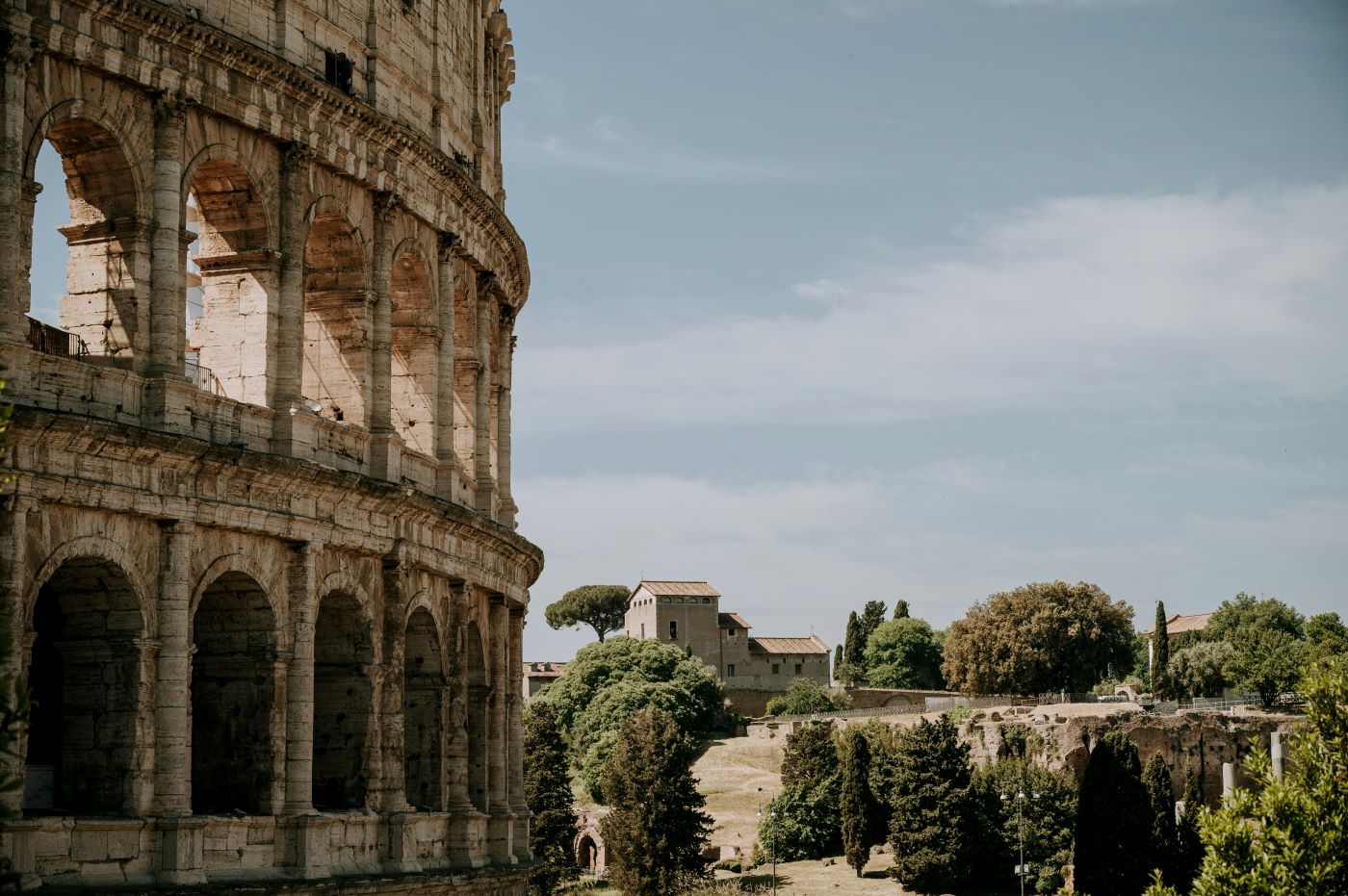
A Monument to Power and Spectacle
Stand in the heart of Rome, and you’ll feel it—the weight of two thousand years pressing down on the cobblestones. The air hums with the echoes of roaring crowds, the clash of swords, the desperate prayers of those who knew their fate was sealed the moment they stepped into the arena. This is the Colosseum, the Flavian Amphitheatre, a structure so audacious it still steals the breath of millions every year.
It is more than stone and mortar. It is a testament to human ambition, cruelty, and the relentless pursuit of legacy. Built to awe, to entertain, and to remind every citizen of Rome’s might, the Colosseum was the beating heart of an empire. It was where emperors curried favor, where gladiators became legends, and where the line between life and death was as thin as the edge of a blade.
But beneath the grandeur lies a tapestry of human stories—of slaves who fought for freedom, of emperors who gambled their reputations on public spectacle, and of ordinary Romans who came to witness both triumph and tragedy. This is not just the story of a building. It is the story of humanity itself, writ large in blood and marble.
The Birth of an Icon: Why the Colosseum Was Built
A Gift to the People
The Colosseum was not born from whim. It was a calculated masterstroke. In 72 AD, Emperor Vespasian, fresh from quelling the Jewish Revolt and seizing power after the chaotic reign of Nero, needed to restore Rome’s morale. His solution? A gift so extravagant it would dwarf anything that came before: an amphitheatre capable of holding 50,000 spectators, where the masses could forget their troubles in the spectacle of combat and drama.
Vespasian’s son, Titus, inaugurated the Colosseum in 80 AD with a hundred days of games so lavish they included gladiatorial combats, animal hunts, and even mock naval battles (the arena was flooded for the occasion). The message was clear: Rome was back, and its emperors were generous.
Engineering a Marvel
The Colosseum was a feat of engineering unmatched in the ancient world. Built with travertine stone and concrete, it stood four stories high, its arches and columns a testament to Roman ingenuity. The velarium, a retractable awning, shielded spectators from the sun, while a labyrinth of tunnels and cages beneath the arena floor—known as the hypogeum—housed gladiators, animals, and stage machinery. This was not just a venue; it was a machine designed for spectacle.
The construction of the Colosseum was a massive undertaking. It required the labor of tens of thousands of Jewish slaves, brought to Rome after the sack of Jerusalem in 70 AD. The amphitheatre was built on the site of Nero’s Golden House, a palace so opulent it had angered the Roman people. By replacing it with a public venue, Vespasian sent a powerful message: the excesses of the past were over, and a new era of shared prosperity had begun.
The Politics of Bread and Circuses
The phrase “bread and circuses” (panem et circenses) was coined by the poet Juvenal, who saw the games as a tool to pacify the masses. Free grain and free entertainment kept the people content—and the emperors in power. The Colosseum was the ultimate expression of this philosophy. Here, the poorest citizen could rub shoulders with senators, all united in their thirst for entertainment.
The games were not just about distraction; they were a display of imperial power. Emperors used the Colosseum to showcase their wealth, their generosity, and their ability to control both nature and humanity. Exotic animals from the farthest reaches of the empire—lions from Africa, tigers from India, bears from the forests of Germania—were paraded and slaughtered in the arena. The message was clear: Rome ruled the world, and the Colosseum was its stage.
The Inaugural Games: A Spectacle Like No Other
The inaugural games of 80 AD were legendary. Titus spared no expense, ordering the slaughter of thousands of animals and the staging of gladiatorial combats that lasted for months. The highlight was a mock naval battle, for which the arena was flooded. This was not just entertainment; it was propaganda, a way to remind the people of Rome’s dominance over land and sea.
The games were also an opportunity for the emperor to connect with his subjects. Titus was known for his generosity, and his games were a way to cement his popularity. The Colosseum became a symbol of the Flavian dynasty’s legitimacy, a place where the emperor and the people could come together in shared excitement.
Inside the Walls: The Anatomy of the Colosseum
The Arena Floor: Stage of Life and Death
The arena floor, covered in sand (the Latin word harena gives us our word “arena”), was where the magic—and the horror—unfolded. Trapdoors concealed beneath the sand allowed for dramatic entrances: a lion appearing from nowhere, a gladiator rising to face his fate. The sand itself was there to soak up blood, ensuring the footing remained firm for the combatants.
The arena was not just a stage for combat; it was a carefully designed space that maximized visibility and drama. The floor was elliptical, ensuring that every spectator had a clear view of the action. The sand was regularly replaced to keep the surface clean and to cover the blood of previous battles.
The Hypogeum: The Underworld Beneath
Beneath the arena lay the hypogeum, a maze of tunnels and cages. This was the domain of slaves, animal handlers, and condemned prisoners. Gladiators waited here, listening to the roar of the crowd above, knowing that their next steps could be their last. Animals—lions, tigers, bears—were kept in cramped cages, their growls adding to the tension. The hypogeum was the backstage of death, a place of shadows and whispers.
The hypogeum was a marvel of Roman engineering. It consisted of two levels of tunnels and 36 trapdoors, which allowed for the sudden appearance of animals or scenery. Elevators and pulleys were used to lift heavy props and cages to the arena floor. This underground network was also where the dead were removed, ensuring that the spectacle above remained uninterrupted.
The Seating: A Mirror of Roman Society
The Colosseum’s seating was a microcosm of Roman hierarchy. The best seats, closest to the action, were reserved for the elite. The emperor and his entourage sat in the imperial box, while senators and wealthy citizens occupied the lower tiers. Women and the poor were relegated to the upper tiers, far from the action. Even in entertainment, Rome reinforced its social order.
The seating arrangement was not just about status; it was also about safety. The upper tiers were further from the danger of the arena, while the lower tiers were exposed to the risks of combat. This reflected the Roman belief that the elite were more valuable to society and therefore deserved protection.
The Velarium: Shading the Spectacle
Above it all stretched the velarium, a vast awning operated by sailors from the Roman fleet. It was a marvel of its time, providing shade for the crowd and ensuring that nothing—not even the sun—could distract from the spectacle below. The velarium was made of canvas and was supported by a network of ropes and poles. It could be retracted or extended depending on the weather, ensuring that the games could proceed regardless of the conditions.
The Exterior: A Facade of Power
The exterior of the Colosseum was just as impressive as the interior. The facade was decorated with statues of gods, emperors, and heroes, each one a reminder of Rome’s greatness. The arches and columns were not just decorative; they were structural, supporting the weight of the upper tiers and the velarium.
The Colosseum was also a canvas for imperial propaganda. Statues of the emperor and his family were prominently displayed, and the building itself was inscribed with the names of the Flavian dynasty. This was not just a place of entertainment; it was a monument to the power and prestige of the emperor.
Gladiators: The Faces Behind the Legend
Not All Were Slaves
Contrary to popular belief, not all gladiators were slaves. Some were volunteers, drawn by the promise of fame and fortune. Others were prisoners of war or criminals, fighting for their lives. The most skilled gladiators, like the legendary Spartacus, became celebrities, their names chanted by adoring fans.
Gladiators were divided into different classes, each with its own weapons and armor. The retiarius, armed with a net and trident, was pitted against the secutor, a heavily armored fighter. The murmillo, with his distinctive helmet and shield, was a crowd favorite. Each type of gladiator had its own fighting style, and matches were carefully choreographed to maximize drama and excitement.
The Life of a Gladiator
Training was brutal. Gladiators lived in schools (ludi) where they were drilled in combat, fed a high-energy diet, and treated like valuable assets. Victory in the arena could mean freedom, but defeat often meant death. Yet, for some, the arena offered a chance at glory they could never find elsewhere.
Gladiators were not just fighters; they were performers. They were trained to put on a show, to engage the crowd, and to die with dignity if necessary. A good gladiator knew how to play to the audience, how to make each battle a spectacle. This was not just about combat; it was about entertainment.
Famous Gladiators: Heroes and Legends
- Spartacus: The Thracian gladiator who led a slave revolt in 73 BC, striking fear into the heart of Rome. His rebellion was eventually crushed, but his name became a symbol of resistance against oppression.
- Flamma: A Syrian gladiator who won 21 battles before finally falling in his 22nd. His bravery and skill made him a legend in the arena.
- Commodus: The emperor who fancied himself a gladiator, often fighting (and cheating) in the arena to the embarrassment of the Senate. His antics were seen as a sign of his madness and contributed to his eventual assassination.
The Code of the Arena
Gladiatorial combat was governed by strict rules. A defeated gladiator could appeal to the crowd for mercy, who would signal their verdict with a thumbs-up or thumbs-down. But the final decision lay with the editor of the games—usually the emperor himself. A gladiator who fought well might be spared, even if he lost. A gladiator who showed cowardice, however, was almost certain to be executed.
The games were not just about death; they were about honor. A gladiator who died well, who faced his fate with courage, was remembered and respected. A gladiator who begged for mercy was despised. The arena was a place where character was tested, and only the strongest—both in body and in spirit—survived.
The Training Schools: Factories of Death
Gladiators were trained in special schools, where they were taught to fight and to die with dignity. The most famous of these schools was the Ludus Magnus, located near the Colosseum. Here, gladiators lived and trained, preparing for their moment in the arena.
The schools were run by lanistae, former gladiators who knew the business of death. They were responsible for training the fighters, arranging the matches, and ensuring that the games were as exciting as possible. The lanistae were also responsible for the financial side of the business, buying and selling gladiators like commodities.
The Economics of Gladiatorial Combat
Gladiatorial combat was big business. The cost of training, feeding, and equipping a gladiator was high, but the rewards were even higher. A successful gladiator could earn his owner a fortune in prize money and betting. The games were also a major source of revenue for the state, as wealthy citizens and emperors competed to put on the most extravagant spectacles.
The gladiators themselves were a mix of volunteers and slaves. Some were professionals, fighting for money and fame. Others were criminals or prisoners of war, fighting for their lives. Regardless of their background, all gladiators were bound by the same code: to fight with honor and to die with dignity.
The Dark Side: Bloodshed, Executions, and Myths
The Games: More Than Just Combat
The Colosseum hosted more than gladiatorial battles. Exotic animals were hunted to extinction for the games. Prisoners were executed in elaborate spectacles, reenacting myths or historical events. Christians, too, were said to have been martyred here, though historical evidence is scarce.
The animal hunts (venationes) were particularly brutal. Thousands of animals were slaughtered in a single day, often in staged battles that pitted different species against each other. Elephants, lions, tigers, and bears were all used in the games, and many species were driven to extinction as a result.
The Myth of Christian Martyrdom
While the Colosseum is often associated with the persecution of Christians, most martyrdoms likely occurred elsewhere. The myth persists, however, a testament to the power of storytelling and the Colosseum’s dark reputation. The idea of Christians being fed to lions in the Colosseum has been perpetuated by art and literature, but there is little historical evidence to support it.
The Psychology of the Crowd
What drove tens of thousands to cheer for bloodshed? For many, the games were a release—a way to confront death in a controlled setting. For others, it was pure entertainment. The Colosseum was a place where society’s darkest impulses were given free rein.
The crowd was not just a passive audience; it was an active participant in the spectacle. The roar of the crowd could mean life or death for a gladiator, and the emperors knew how to manipulate this to their advantage. The games were a way to channel the people’s aggression and to reinforce the power of the state.
The Role of Women in the Games
Women were not just spectators in the Colosseum; they were also participants. Female gladiators (gladiatrices) were rare but not unheard of. They fought in the same battles as their male counterparts, though their matches were often seen as novelties.
The presence of women in the arena was controversial. Some saw it as a sign of Rome’s decadence, while others saw it as a testament to the empire’s progressiveness. Regardless of the opinions, female gladiators were a part of the spectacle, and their battles were just as brutal as those of the men.
The Execution of Criminals
The Colosseum was also a place of execution. Criminals and prisoners of war were often put to death in the arena, sometimes in elaborate spectacles that reenacted famous battles or myths. These executions were not just about punishment; they were about entertainment. The crowd came to see death, and the emperors were happy to oblige.
One of the most famous executions in the Colosseum was that of the Christian martyr Saint Ignatius of Antioch. According to legend, he was fed to the lions in the arena, though there is no historical evidence to support this claim. The story of his martyrdom, however, has become a powerful symbol of faith and resistance.
The Colosseum in Decline: Earthquakes, Neglect, and Survival
The Fall of Rome, The Fall of the Colosseum
As the Roman Empire crumbled, so too did the Colosseum. Earthquakes in the 5th century damaged the structure, and the arena was gradually stripped of its marble and stone, repurposed for churches and palaces. By the Middle Ages, it had become a fortress, a quarry, and a symbol of Rome’s lost glory.
The Colosseum was not just a victim of neglect; it was a victim of changing times. As the empire declined, the games became less popular, and the Colosseum fell into disuse. The building was damaged by earthquakes and fires, and much of its stone was taken for use in other projects.
A Symbol of Resilience
Yet, the Colosseum endured. Popes in the 18th century declared it a sacred site, halting its plunder. Today, it stands as a ruin, but a ruin that still commands awe. It is a reminder that even the mightiest empires fall, but their legacies linger.
The Colosseum was also a symbol of Rome’s resilience. Despite centuries of neglect and damage, it remained standing, a testament to the skill of its builders and the enduring power of its legacy. In the 18th and 19th centuries, efforts were made to restore the Colosseum, and it became a symbol of the city’s rebirth.
The Colosseum in the Middle Ages
During the Middle Ages, the Colosseum was used as a fortress, a church, and even a cemetery. It was seen as a symbol of Rome’s past greatness, and many believed that it was haunted by the ghosts of the gladiators and animals that had died there.
The Colosseum was also a source of inspiration for artists and writers. Dante Alighieri mentioned it in The Divine Comedy, and it became a popular subject for painters and poets. The building’s ruined state only added to its mystique, making it a powerful symbol of the passage of time.
The Restoration of the Colosseum
In the 19th and 20th centuries, efforts were made to restore the Colosseum to its former glory. The most significant of these was the removal of the vegetation that had grown on the structure, which was threatening to damage it further. The restoration work was controversial, with some arguing that it was destroying the building’s authenticity. Others saw it as a necessary step to preserve a monument that belonged to the world.
Today, the Colosseum is one of the most visited sites in Rome, attracting millions of tourists every year. It is a UNESCO World Heritage Site and a symbol of the city’s rich history. The restoration work continues, ensuring that the Colosseum will stand for generations to come.
The Colosseum Today: A Symbol of Resilience and Memory
A UNESCO World Heritage Site
In 1980, the Colosseum was declared a UNESCO World Heritage Site, recognized as one of the greatest achievements of Roman engineering and a symbol of the eternal city. It is a place where history comes alive, where visitors can walk in the footsteps of gladiators and emperors.
Restoration and Controversy
Recent restoration efforts have sparked debate. Some argue that modern interventions detract from the Colosseum’s authenticity. Others see them as necessary to preserve a monument that belongs to the world. The most recent restoration, completed in 2016, cleaned the exterior of the building and repaired some of the damage caused by pollution and weathering.
The Colosseum in Popular Culture
From films like Gladiator to books and video games, the Colosseum continues to captivate. It is a canvas for our imaginations, a place where history and myth intertwine. The building has been featured in countless works of art and literature, and its image is instantly recognizable around the world.
The Colosseum as a Symbol
The Colosseum is more than just a building; it is a symbol. It represents the power and the glory of Rome, but also its cruelty and its decline. It is a reminder of the fragility of human achievements and the enduring power of memory.
The Colosseum at Night
One of the most magical experiences in Rome is visiting the Colosseum at night. The building is illuminated, and the crowds are gone, leaving visitors to contemplate its history in peace. The Colosseum at night is a place of shadows and echoes, where the past feels closer than ever.
Visiting the Colosseum: What You Need to Know
Practical Information
- Location: Piazza del Colosseo, 1, 00184 Roma, Italy
- Hours: Open daily, 8:30 AM to 7:00 PM (varies by season)
- Tickets: Purchase in advance to skip the lines. Combined tickets include access to the Roman Forum and Palatine Hill.
- Tips: Visit early in the morning or late in the afternoon to avoid crowds. Consider a guided tour to fully appreciate the history.
What to See
- The Arena Floor: Walk where gladiators once fought. The floor is now partially reconstructed, giving visitors a sense of what it was like to stand in the center of the action.
- The Hypogeum: Explore the underground tunnels (accessible via guided tour). This is where the gladiators and animals waited before entering the arena, and it offers a fascinating glimpse into the mechanics of the games.
- The Third Tier: Offers the best views of the arch of Constantine and the Roman Forum. From here, you can see the full extent of the Colosseum and its surroundings.
The Colosseum by Night Tour
For a truly unforgettable experience, consider taking a night tour of the Colosseum. The building is lit up, and the crowds are smaller, allowing for a more intimate connection with the past. The night tour also includes access to areas that are closed during the day, such as the underground tunnels.
The Colosseum and the Roman Forum
The Colosseum is just one part of a larger complex that includes the Roman Forum and Palatine Hill. Together, these sites offer a comprehensive look at the history of Rome, from its founding to its fall. A combined ticket allows you to explore all three sites, and it is well worth the time.
References
- Hopkins, Keith. The Colosseum. Harvard University Press, 2011.
- Claridge, Amanda. Rome: An Oxford Archaeological Guide. Oxford University Press, 2010.
- Futrell, Alison. Blood in the Arena: The Spectacle of Roman Gladiatorial Combat. University of Texas Press, 1997.
- UNESCO World Heritage Centre. The Colosseum, Rome.
- Coarelli, Filippo. Rome and Environs: An Archaeological Guide. University of California Press, 2007.
- Coleman, Kathleen. The Colosseum’s Story. Cambridge University Press, 2021.
- Dunkle, Roger. Gladiators: Heroes of the Roman Amphitheatre. Routledge, 2013.
- Kyle, Donald G. Spectacles of Death in Ancient Rome. Routledge, 1998.
- Potter, David. The Roman Empire at Bay. Routledge, 2004.
- Welch, Katherine. The Roman Amphitheatre: From Its Origins to the Colosseum. Cambridge University Press, 2007.