The Last Men to See Them Alive
Two Brazilian guides stood at the edge of a clearing in late May 1925 and watched three men disappear into the trees. The clearing was called Dead Horse Camp, named for the pack animal Fawcett had been forced to shoot there five years earlier, and it sat at the threshold of country no outsider had mapped. Fawcett had just handed the guides a bundle of letters and dispatches to carry back to civilization, along with the last of the expedition's spare animals. He was sending them home on purpose. From here he wanted only his son Jack and Jack's closest friend, Raleigh Rimell — three men traveling light and fast into the unknown.
The guides turned south toward the settlements. Fawcett, Jack, and Raleigh turned north into the forest. The two Brazilians were the last people with any connection to the outside world to see them alive.
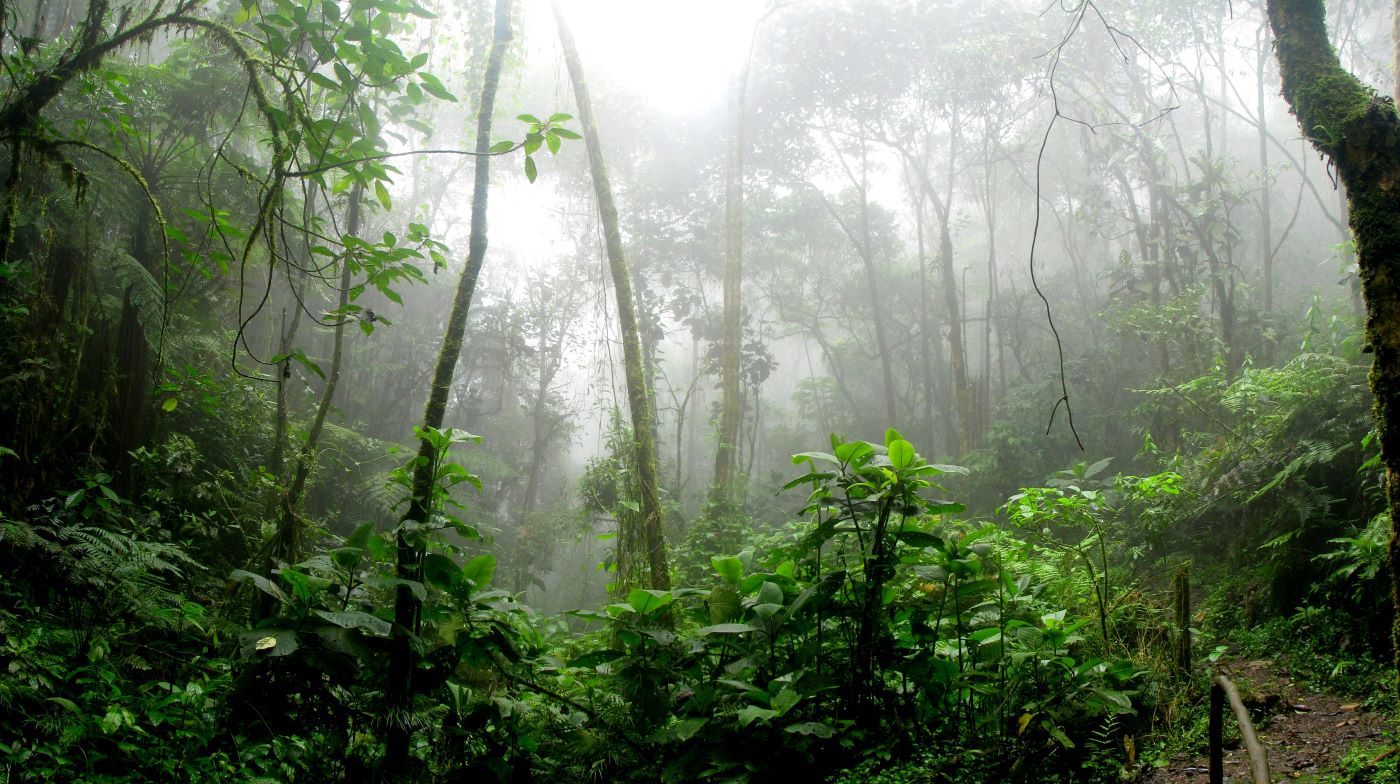
Percy Fawcett had spent nearly twenty years treating the Amazon as an obstacle — a green wall standing between him and the stone city of his obsession. He was wrong about the city, as the buried earthworks of Kuhikugu would eventually prove. But he was wrong about the jungle, too. It was never the backdrop to his story. It was the predator at the center of it. The real Z — the thing that was vast, ancient, and capable of erasing a man without a trace — was the forest he kept walking into, and in 1925 it finally closed over him for good.
The Last Expedition: From Cuiabá to Dead Horse Camp
Fawcett's final expedition was the best-funded and most secretive of his life. He had learned from twenty years of failure, and he was determined that this time nothing — not a rival, not a sponsor, not the jungle — would stop him from reaching Z.
A Deliberately Small Party and a Secret Route
Fawcett designed the 1925 expedition around speed and secrecy. He had come to believe that the large, lumbering parties of the past — porters, soldiers, pack trains — were what killed expeditions, slowing them until disease and starvation caught up. So this time he would go small. The expedition that left the frontier town of Cuiabá on April 20, 1925, was funded by a consortium of newspapers and societies, including backing arranged through the Royal Geographical Society and American money, in exchange for the exclusive story. In return, Fawcett guarded his route like a state secret. He refused to record his exact path plainly, terrified that a competitor would steal his discovery or that a rescue party would one day blunder in and claim it. The secrecy that he believed would protect his triumph would instead help ensure that no one ever found him.
He set out with Jack and Raleigh, two Brazilian laborers, two horses, eight mules, and a pair of dogs. Jack was twenty-one, raised on his father's legend and built like an athlete, convinced the expedition would make them all famous. Raleigh was his devoted best friend. Neither had any real experience of the Amazon. They were walking into the most dangerous terrain on earth on the strength of one man's certainty.
The Final Dispatches and the Last Letter to Nina
For five months, thin paper carried Fawcett's voice out of the jungle. As the party pushed deeper, Fawcett sent dispatches back by native runners, and they reached his wife, Nina, and the newspapers that had paid for them. The letters charted a journey of mounting hardship — heat, insects, exhaustion, sick animals — but Fawcett's tone stayed relentlessly optimistic, the voice of a man who believed his life's vindication lay just over the next ridge.
The last letter came from Dead Horse Camp, dated May 29, 1925. In it, Fawcett described sending the Brazilian guides back and pressing on with only Jack and Raleigh into territory no outsider had entered. He was confident. He told Nina there was no reason to fear failure and that they would vanish from the civilized world only until the next year, when they would emerge with the discovery that would rewrite history. A native runner carried the letter out of the forest. Then the dispatches stopped. There was never another word.
Into Unexplored Territory: The Vanishing
Everything after the last letter is reconstruction, pieced together from the people who lived in that country and the few physical traces that surfaced over the following decades. The clearest account comes from the Indigenous people who actually saw the three men in their final days.
The Kuluene River Crossing and the Kalapalo
The last human beings to see Fawcett alive were the Kalapalo, a people of the Upper Xingu, and their account has stayed consistent for a century. Three white men arrived at their village, exhausted and ill-supplied. Both of the younger men were limping and sick; Raleigh in particular was failing, his leg infected, barely able to walk. The Kalapalo ferried the party across the Kuluene River and watched them set off eastward, toward the territory of peoples the Kalapalo considered fierce and dangerous. The Kalapalo warned them not to go. Fawcett went anyway.
For five days, the Kalapalo could see the smoke of the strangers' campfires rising over the forest to the east, marking their slow progress. On the fifth day, there was no smoke. There was no smoke the next day, or any day after. The Kalapalo drew the obvious conclusion: the men who had ignored their warning were dead.
The Most Credible Account of Their Deaths
The likeliest end is also the simplest, and it does not involve a lost city. Fawcett's party crossed the Kuluene already broken — the younger men lame and feverish, the expedition low on the gifts that bought safe passage through Indigenous territory. According to accounts later gathered from the region, the party had suffered a mishap on the water and lost much of the trade goods they were carrying, the beads and tools and trinkets that signaled friendly intent to the peoples whose land they were crossing. Arriving among strangers empty-handed, with a sick and irritable leader who would not or could not observe the courtesies of the forest, was an invitation to disaster. The three men most likely died within days of leaving the Kalapalo — killed by a tribe they had offended or could not communicate with, or simply finished by illness, hunger, and exhaustion in country that offered no mercy to the unprepared. They were three men, two of them already failing, alone in the largest forest on earth. The wonder is not that they died. It is that anyone ever expected them to live.
The Search for Percy Fawcett: A Century of Failed Expeditions
Fawcett's disappearance did something his discoveries never had. It made him immortal. The silence from the jungle became a vacuum that pulled in adventurers, journalists, mystics, and fools for the next hundred years, and the search for the lost explorer became a darker, stranger story than the expedition itself.
George Dyott and the First Rescue Mission
The first major search came in 1928, led by the American explorer George Miller Dyott under the banner of the Royal Geographical Society. Dyott pushed into the Xingu, gathered secondhand stories, and emerged convinced that Fawcett was dead, claiming the explorer had been killed by a local chief. But he had no bodies, no belongings beyond rumor, and no proof, and his account soon began to fall apart under scrutiny. In London, Nina Fawcett refused to accept it. She insisted there was still no evidence her husband and son were dead, and she clung to that hope for the rest of her life, telling reporters that no one had proven anything. She would die without ever knowing what happened to them.
The Sightings, the Hoaxes, and the Myth of the Hundred Dead
The vacuum filled with ghosts. Over the following decades, travelers reported seeing Fawcett alive across the Brazilian interior — most famously a Swiss trapper named Stephen Rattin, who claimed in 1932 to have encountered an old, white-bearded Englishman held captive by a tribe deep in the bush. Rumors spread that Fawcett had found Z and stayed, or that he was living as a white god among an isolated people, or that he had gone mad and never wanted to return. None of it was ever substantiated. The most enduring legend held that the search for Fawcett had itself killed around a hundred would-be rescuers in dozens of doomed expeditions. That figure, repeated for generations, is almost certainly a myth — careful accounting suggests the real number of searchers who died was a tiny fraction of it. But the legend captured an emotional truth: the hunt for Fawcett had become its own obsession, drawing men to risk everything chasing a man who had chased a city that did not exist. The pattern of a single vanishing consuming wave after wave of searchers is the same one that played out around the lost ships of the Franklin Expedition in the Arctic — a disappearance so total that finding the searchers became as deadly as the original loss.
The 1951 Bones and the Question That Won't Close
The closest thing to an answer arrived in 1951, and it satisfied no one. The Brazilian Indigenous-rights advocate Orlando Villas-Bôas announced that the Kalapalo had confessed to killing Fawcett's party and had handed over a sack of human bones said to be the explorer's. The confession matched the older accounts — the lost gifts, the offense, the killing. But when the bones were examined, they did not match what was known of Fawcett's body. Crucially, Fawcett's surviving son Brian — who had edited his father's papers into a famous memoir but had never gone to the Amazon himself — rejected the bones and the confession outright, and refused to provide the family DNA that might have settled the question. The remains ended up stored in a forensic institute in São Paulo, unclaimed and unresolved. The one moment the mystery came close to closing, the family slammed it shut.
Why the Jungle Keeps Its Secret
A century on, the disappearance of Percy Fawcett has hardened into one of the great unsolved vanishings, alongside the lost colony of Roanoke — cases where the absence of an answer has become more powerful than any answer could be. But the truth, as far as it can be known, is not really a mystery at all.
What the Evidence Now Says
The most rigorous modern investigation came from the journalist David Grann, who retraced Fawcett's route for his book on the expedition. Grann's conclusion aligned with the oldest and most consistent evidence: the Kalapalo testimony. The Kalapalo had always said the same thing — that they were the last to see the three men, that they watched the campfire smoke for a few days until it stopped, and that the strangers died to the east, in the territory of hostile peoples, not by Kalapalo hands. Stripped of romance, the evidence points to three exhausted, under-supplied men dying within days of their last sighting in 1925, somewhere in the forest east of the Kuluene. There is no captivity, no hidden city, no white god. There is only the jungle and three men who did not come out of it.
The Real Z and the Civilization He Walked Past
The final irony is the cruelest one. Fawcett vanished in the exact region of the Upper Xingu where, decades later, archaeologists would map the earthworks, plazas, and roads of a genuine pre-Columbian civilization — the network of garden cities whose largest known site is Kuhikugu. He died searching for proof of an advanced Amazonian society, and he died standing on top of it, possibly within walking distance of the buried plazas that would have vindicated everything he believed. He could not see it because it was made of earth and forest rather than the stone he was looking for. The civilization he gave his life to find had been all around him the whole time, in the shaped land beneath his boots and in the faces of the very people who ferried him across his last river. He was looking for ruins. He was surrounded by descendants.
Standing at the Edge of the Xingu
The Mato Grosso that swallowed Fawcett is no longer the blank space on the map he walked into. Its southern frontier has been cleared for vast soy fields and cattle ranches, and the forest that once stretched unbroken now ends, in places, at a hard line of agriculture. But the heart of the Upper Xingu survives inside the Xingu Indigenous Territory, the protected homeland of the Kalapalo, the Kuikuro, and the other peoples whose ancestors saw Fawcett pass. The land where he died is not open to casual visitors; it belongs to the communities who live there, and entry is theirs to grant.
There is nothing to find. No grave marks the spot, no monument names the men, and the searchers who promised to bring back the truth brought back only more silence. To stand at the edge of the Xingu is to confront a kind of disappearance that the modern world is no longer used to — total, permanent, unsolved. Fawcett walked into that forest certain he would emerge as the man who revealed its greatest secret. The forest revealed nothing. It simply took him, the way it had taken the cities before him, and closed over the space where he had been. Some places are not meant to give up what they hold. The deadly heart of the Amazon is one of them, and Percy Fawcett is still inside it.
Frequently Asked Questions
What happened to Percy Fawcett?
Percy Fawcett, his son Jack, and Jack's friend Raleigh Rimell disappeared in the Mato Grosso region of Brazil in 1925 while searching for a lost city Fawcett called Z. Their last message came from a campsite called Dead Horse Camp on May 29, 1925, after which they were never heard from again. The most credible reconstruction, supported by Kalapalo testimony and modern research, is that the three exhausted and ill-supplied men died within days of their last sighting — killed by a tribe whose territory they entered, or by illness and starvation. No bodies were ever conclusively identified.
Where did Percy Fawcett disappear?
Fawcett disappeared in the Upper Xingu region of Mato Grosso, in the southern Amazon basin of Brazil. The last people to see the party alive were the Kalapalo people, who ferried them across the Kuluene River and watched them head east into the territory of tribes the Kalapalo considered dangerous. This is the same region where archaeologists would later discover the pre-Columbian settlement network that includes Kuhikugu, the most plausible real-world candidate for Fawcett's lost city.
Did anyone find Fawcett's body?
No remains have ever been conclusively identified as Fawcett's. In 1951, the advocate Orlando Villas-Bôas obtained bones said to be the explorer's, along with a Kalapalo account of the killing, but forensic examination found the bones did not match what was known of Fawcett. His son Brian rejected the remains and declined to provide family DNA that might have confirmed or ruled them out. The bones remain stored in São Paulo, and the case is officially unresolved.
How many people died searching for Percy Fawcett?
A popular legend claims that around a hundred would-be rescuers died in the many expeditions launched to find Fawcett over the decades. This figure is widely considered an exaggeration, and careful accounting suggests the real number of searchers who lost their lives was far smaller. The myth persists because it captures how powerfully Fawcett's disappearance drew adventurers into the same dangerous jungle, turning the search itself into a long chain of obsession and risk.
Was Percy Fawcett the inspiration for Indiana Jones?
Percy Fawcett is widely cited as one of the real-life inspirations for the fictional adventurer Indiana Jones, and his earlier exploits inspired Arthur Conan Doyle's 1912 novel The Lost World. His disappearance and the search for Z were the subject of David Grann's 2009 book The Lost City of Z, which was adapted into a 2016 feature film. Fawcett's blend of scientific ambition, physical endurance, and doomed obsession made him a model for the archetype of the swashbuckling explorer.
Sources
The Lost City of Z: A Tale of Deadly Obsession in the Amazon — David Grann (2009)
Exploration Fawcett — Percy Harrison Fawcett, ed. Brian Fawcett (1953)
The Lost Explorer — Vincenzo Petrullo, Expedition Magazine, University of Pennsylvania Museum
Lost Trails, Lost Cities — Percy Harrison Fawcett (1953)
The Ecology of Power: Culture, Place and Personhood in the Southern Amazon, A.D. 1000–2000 — Michael J. Heckenberger (2005)
1491: New Revelations of the Americas Before Columbus — Charles C. Mann (2005)
The Enduring Mystery Behind Percy Fawcett's Disappearance — History.com (2020)
Beyond the Lost City of Z — Royal Geographical Society archives
The Man Who Died Searching for the Lost City of Z — National Geographic (2024)
Explorers of the Amazon — Anthony Smith (1990)