The Fairfax Bombing That Exposed the Osage Murders
The explosion came at ten minutes before three in the morning on March 10, 1923. Someone had buried five gallons of nitroglycerin beneath the frame house where Rita and Bill Smith slept in the small oil town of Fairfax, Oklahoma. The blast lit the sky, threw debris across the neighborhood, and blew out windows blocks away. By the time neighbors reached the lot, there was almost nothing left — twisted metal, burning furniture, and the charred remains of Rita Smith and the couple's seventeen-year-old servant, Nettie Brookshire, whose body was so destroyed that little of it was ever recovered.
Bill Smith was alive when the searchers pulled him from the wreckage, burned nearly beyond recognition. He held on for four days. Before he died, he managed to repeat what he had been telling friends for weeks — that he had only two enemies in the world, and they were Bill Hale and Ernest Burkhart. Ernest Burkhart had been among the men who arrived in the dark to dig through the rubble of his sister-in-law's house.
Rita Smith was the third of Mollie Burkhart's sisters to die in two years. With her gone, Mollie was the last surviving member of her immediate family, and every headright the family had owned — the oil shares that made them millionaires — now flowed to her. Mollie was married to Ernest Burkhart. Ernest's uncle was William Hale.
The Osage murders were not a spree or a string of random killings. They were a business plan. A people had done everything right — kept the rights to the oil under their feet, grown richer than the white men around them — and the law answered by declaring them incompetent to manage their own money and surrounding them with guardians. Some of those guardians, and some of the men who married into Osage families, decided that the shortest path to an Osage fortune ran through an Osage grave. What happened in Osage County is a study in greed engineered into a system, where erasing the owners was simply the most efficient way to take the wealth.
How the Osage Came to Sit on America's Richest Oil Field
The Land Nobody Else Wanted
The Osage chose their reservation, which made them almost unique among American tribes. Driven out of their Kansas lands in the 1870s, the Osage used money from the sale of those lands to buy a new reservation in Indian Territory — a stretch of broken, rocky, hilly ground in what is now northeastern Oklahoma. White officials considered the purchase a kind of joke. The land was too stony to farm and too rough to want.
Violence had defined the previous half-century of Native life on the plains. The U.S. Cavalry had spent decades pushing tribes off their hunting grounds and onto reservations, a campaign that ended in the frozen massacre at Wounded Knee in 1890. The Osage understood the pattern. When the federal government moved to break up the reservation under the allotment policy of the early 1900s — carving communal land into individual plots and opening the rest to white settlement — the Osage held out longer than almost anyone. They stalled Oklahoma statehood until they got the one provision that mattered.
The Osage Allotment Act of 1906 divided the surface of the reservation among the 2,229 people on the tribal roll, giving each enrollee roughly 657 acres — nearly four times what most tribes received elsewhere. The crucial clause concerned what lay beneath that surface. The tribe kept the mineral rights in common. Whatever was found underground belonged to the whole Nation, and every person on the 1906 roll held one equal share of it.
The Headright System and the Birth of Osage Wealth
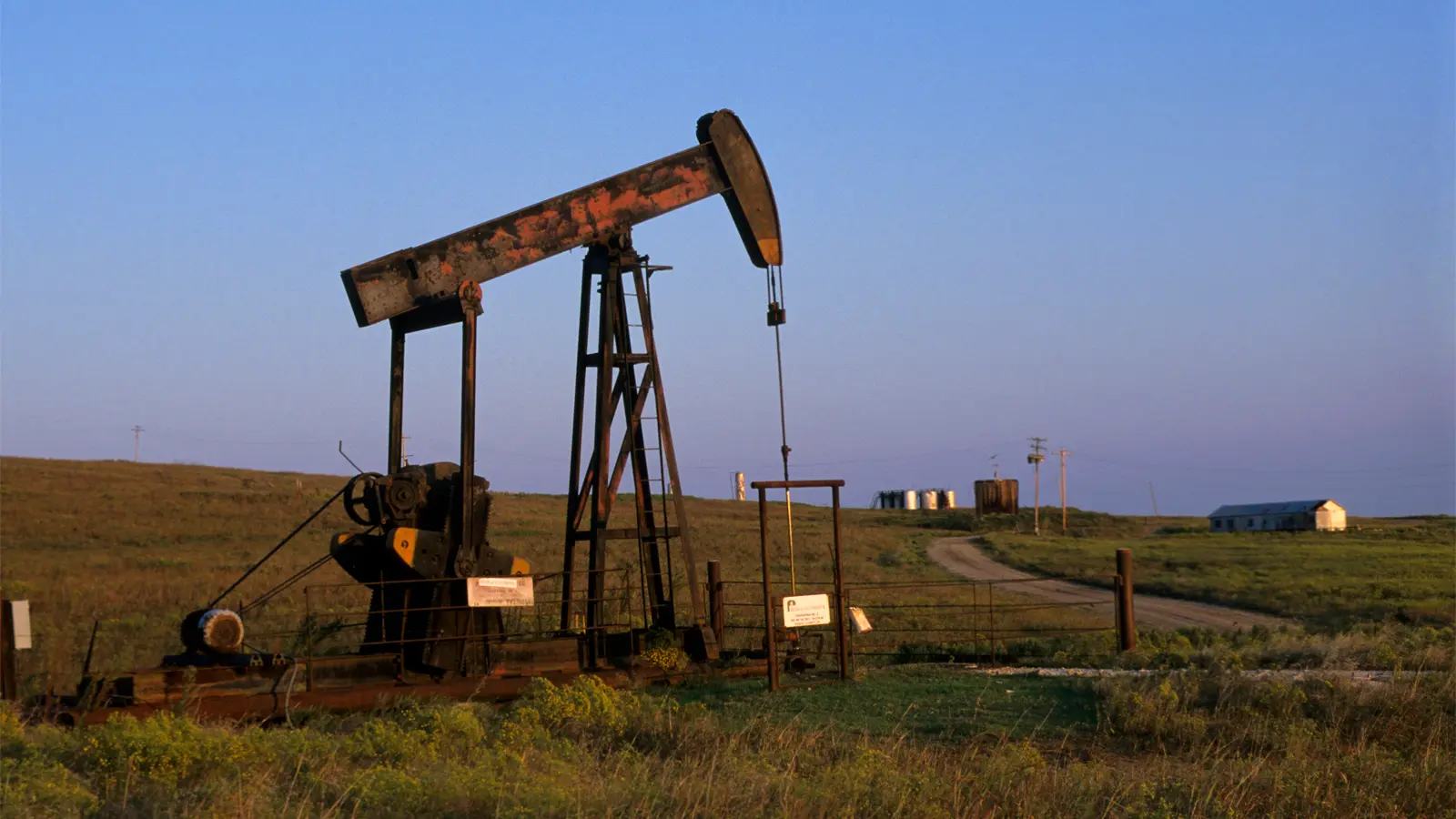
That share was called a headright, and it changed everything. A headright entitled its holder to an equal cut of all royalties, rents, and bonuses paid for drilling on Osage land. The first commercial oil well in the area had been drilled in 1897. Within two decades the rocky reservation revealed itself to be sitting on one of the richest oil deposits in North America, the fields at Burbank and elsewhere producing high-grade crude that refined almost effortlessly into gasoline.
The architecture of the headright contained the seed of the tragedy. Headrights could not be bought or sold — a deliberate design meant to keep the oil money in Osage hands and out of reach of speculators. They could only be inherited. An outsider who wanted a piece of the wealth had exactly two options: become the legal guardian of an Osage owner, or marry into an Osage family and wait to inherit. Both routes ran through the death of an Osage person. The system built to protect the tribe had quietly written a motive for murder into law.
The Richest People Per Capita in the World
The Million Dollar Elm and the Oil Barons of Pawhuska
Every few months, the wealth of the Osage went up for auction in the open air. On a hill in Pawhuska, the county seat, between the Osage council house and the courthouse, stood a large elm tree. Beneath its branches, an auctioneer named Colonel Ellsworth Walters sold the rights to drill on Osage tracts, and the men who came to bid were the founders of the American oil industry: Frank Phillips, E.W. Marland, William Skelly. Reporters and magazine writers, dazzled by the sums, named the tree the Million Dollar Elm.
Walters worked for ten dollars a day and made the Osage rich. He was a showman who knew the oilmen so intimately that their signals were nearly invisible — one Phillips brother was said to have raised a bid by a hundred thousand dollars by brushing a fly from his nose. Bidding often ran from mid-morning until past nine at night. On March 19, 1924, a single 160-acre tract sold for $1,990,000. In 1923 alone, the tribe took in more than thirty million dollars, the equivalent of well over three hundred million today. An Osage family of five could expect tens of thousands of dollars a year at a time when good farmland sold for a hundred dollars an acre.
The country read about it with a mixture of fascination and resentment. Newspapers called the Osage the richest people on earth and ran stories about the cars, the European travel, the white chauffeurs and white servants in Osage households. In the same Oklahoma spring that the wealth peaked, white mobs a hundred miles east burned the prosperous Black district known as Tulsa's Black Wall Street to the ground, killing hundreds. The two events shared a logic. Both were responses to the same intolerable fact — that the wrong people had grown rich.
Guardianship: How Federal Law Made the Osage Targets
The federal answer to Osage wealth was to take control of it. In 1921, Congress passed a law requiring that any Osage of half or more Indian ancestry be assigned a court-appointed guardian until that person could prove their "competency" to handle money. Competency had nothing to do with capacity. The criterion was blood quantum. A full-blood Osage was virtually guaranteed a guardian; a person of mixed ancestry rarely got one. A decorated Army pilot was declared incompetent on the basis of his blood. One woman was assigned a guardian because the size of her savings supposedly proved she did not understand the value of money.
The guardians were the most prominent white men in the county — lawyers, bankers, ranchers, merchants — and the system handed them legal control over the finances of people far richer than themselves. By law a guardian released only $4,000 a year to an Osage adult, while the headright that money came from was paying $11,000 or $12,000 annually. The difference sat under the guardian's control, with almost no requirement to account for it. Mollie Burkhart, a wealthy woman, had to ask a white guardian for permission to spend her own money.
The opportunities for theft were enormous, and the theft was open. A guardian could buy goods through his own business at inflated prices, charging his Osage ward and pocketing the markup. He could steer his ward's money into banks and stores he controlled. A 1924 study by the Indian Rights Association estimated that guardians had stolen at least eight million dollars directly from the restricted accounts of their wards, and called it an orgy of graft and exploitation. Pawhuska, a town of eight thousand, had eight lawyers — the same number working in Oklahoma City, a city of a hundred and forty thousand. The lawyers had not come for the population. They had come for the headrights.
The Reign of Terror: The Osage Murders Begin
Anna Brown and the First Killings of 1921
Hunters found Anna Brown's body in late May 1921, in a remote ravine north of Fairfax. She had been dead long enough that the corpse had begun to decompose. The undertaker who prepared her later discovered what the first examination had missed: a bullet hole in the back of her head. Anna was thirty-six, an Osage woman with headrights, and she had no known enemies. Local officers ruled that she had died of accidental poisoning, then revised the verdict to murder by parties unknown, and let the case die with her.
The same day Anna's body was found, the body of her cousin Charles Whitehorn turned up near Pawhuska. He had been shot too. Two Osage with oil money, killed within a window of days, and no one in authority treated it as anything but coincidence. The killings would not stay isolated for long.
The Destruction of Mollie Burkhart's Family
Mollie Burkhart watched her family disappear one death at a time. A sister, Minnie, had already died a few years earlier of what doctors vaguely called a peculiar wasting illness. Anna was shot in May 1921. Two months later their mother, Lizzie, in good health, sickened and died — poison was suspected, though no one was permitted to prove it. By then Lizzie had inherited the headrights of her dead husband and daughters, which made her death worth a fortune, and that fortune passed downward toward Mollie.
Henry Roan, a cousin, was found in February 1923 in his car in a pasture outside Fairfax, killed with a single shot to the head. Hale had quietly arranged to make himself the beneficiary of Roan's $25,000 life insurance policy. The following month came the bomb that killed Rita and Bill Smith. Each death moved more headrights toward the last surviving sister.
Mollie was being killed too, slowly. She suffered from diabetes, and her health was failing in ways her family could not explain, until the federal investigators later concluded she was being deliberately poisoned. She survived only because the killing was interrupted. She lived in the same house as Ernest Burkhart, the husband she trusted, the man helping to engineer the destruction of everyone she loved so that her inheritance — and through her, his and his uncle's — would grow. By 1923 Mollie Burkhart had inherited the headrights of nearly her entire family, and she was the most carefully watched target left.
The True Death Toll of the Osage Reign of Terror
The official tally of the Reign of Terror is roughly two dozen murders. That number is almost certainly a fraction of the truth. At least sixty wealthy, full-blood Osage were reported killed between 1918 and 1931, and later research suggests the real toll may have reached into the hundreds. The machinery of the cover-up made counting impossible. Coroners signed false death certificates, attributing deaths to alcohol or suicide or simple "wasting." The law that governed the Osage did not entitle them to autopsies, so bodies that should have been examined were buried with their secrets.
The killers murdered anyone who tried to break the silence. Barney McBride, a white oilman trusted by the Osage, traveled to Washington in 1922 to demand a federal investigation; after a night of billiards he stepped outside, was set upon, had a sack tied over his head, and was stabbed more than twenty times. The attorney W.W. Vaughan, who had gathered evidence, was thrown from a train. Witnesses against the conspiracy had a way of dying before they could testify. Years later the Osage writer Robert Allen Warrior walked through a tribal cemetery and was struck by how many of the graves belonged to people who had died young in those years. In the 1990s the journalist Dennis McAuliffe traced the 1925 death of his own grandmother, Sybil Bolton — told as kidney disease, then suicide — and found a falsified death certificate and a stepfather-guardian whose other Osage wards had also died.
William Hale, the King of the Osage Hills
The Cattleman Who Built an Empire of Murder
William K. Hale arrived in Osage County from Texas with nothing and made himself its most powerful man. He built a cattle empire, took on banking and business interests, learned the Osage language, donated to local causes, and styled himself a friend and protector of the tribe. People called him the King of the Osage Hills, and he played the part. Behind it, he ran the conspiracy that was killing the people he claimed to love.
Hale's plan was patient and precise. He pushed his nephew, Ernest Burkhart, to marry Mollie Kyle, a full-blood Osage with headrights. He used his other nephew, Bryan Burkhart, as muscle. The logic was a matter of arithmetic: if Anna, Lizzie, and the two other sisters died in the right order, the family's accumulated headrights would funnel through Mollie to Ernest, and from Ernest within reach of Hale himself. The income at stake amounted to at least half a million dollars a year in 1920s money. Hale was not killing in rage. He was consolidating an estate.
The Web of Hired Killers and the Cover-Up
Hale never pulled a trigger himself. He bought the work. Kelsie Morrison, an associate, took Anna Brown out drinking with Bryan Burkhart and shot her in the head. John Ramsey killed Henry Roan for the promise of five hundred dollars and a new car. The bootlegger and rodeo champion Henry Grammer served as a fixer who could supply men and explosives, and Asa Kirby was among those tied to the Smith bombing.
The cover-up was as ruthless as the murders. When the investigation closed in, the men who could implicate Hale began to die. Grammer was killed in a car crash. Kirby was shot dead while robbing a store — the shopkeeper had been tipped off in advance about the robbery, and the man who tipped him was Hale. Hale was prepared to murder his own accomplices to protect himself. Years later, after his eventual parole, relatives said he remarked that if his nephew Ernest had only kept his mouth shut, they would still be rich.
The Case That Made J. Edgar Hoover's FBI
Tom White and the Undercover Agents
The Osage stopped waiting for local justice. In 1925, with state and county officials either powerless or complicit, the Osage Tribal Council pressed the federal government to send help, and the case landed with the young Bureau of Investigation — the agency that would soon become the FBI. It was the Bureau's first major murder investigation, and J. Edgar Hoover, eager to prove his new organization, knew that failure would humiliate it.
Hoover assigned the case to Tom White, a former Texas Ranger with a reputation for straight dealing. White built a team of agents who went into Osage County undercover — posing as an insurance salesman, a cattle buyer, an oil prospector, and an herbal doctor, with at least one Native agent among them. They spent months earning the trust of the Osage and pulling at the threads no local lawman had been willing to follow. The threads kept leading back to the same place. The deaths in Mollie Burkhart's family, the murder of Henry Roan, the bombing of the Smith house — each carried the fingerprints of William Hale.
The Trials and the Limits of Justice
The case broke when Ernest Burkhart talked. Confronted with the evidence, he pleaded guilty to a role in the bombing of his sister-in-law's home and agreed to testify against his uncle. Other accomplices confessed in turn. The trials dragged through state and federal courts, fought over questions of jurisdiction, with Hale's high-priced lawyers battling an all-star prosecution on Hale's home ground in Osage County. In January 1929, William Hale was convicted and sentenced to life in the federal penitentiary at Leavenworth. John Ramsey was convicted for killing Roan.
Justice arrived in pieces, and incompletely. Kelsie Morrison was convicted of Anna Brown's murder in 1926, then saw the conviction overturned and walked free. Hale, the architect of the entire scheme, was paroled in 1947. Ernest Burkhart received a full pardon from Oklahoma's governor in 1965. The men who were caught accounted for only a handful of the dead. The great majority of the Osage murders were never prosecuted and never solved, their victims filed under whiskey poisoning, suicide, and causes unknown.
What Happened to the Osage Headrights
The killings forced a change in the law, too late to save the dead. In 1925, Congress barred anyone who was not at least half Osage from inheriting the headright of a tribal member — closing the inheritance loophole that had turned marriage into a murder weapon. The damage was already done, and some of it has never been undone.
Roughly a quarter of all Osage headrights are now held by people and institutions that are not Osage — corporations, churches, universities, and, in some cases, the descendants of the very men who stole and killed for them in the 1920s. The Bureau of Indian Affairs still manages the Osage mineral estate, and Osage citizens still cannot collect their own oil payments directly; the money flows through the same federal office that once issued and revoked certificates of competency. In 2011, after an eleven-year legal fight, the Osage Nation won a $380 million settlement from the federal government for decades of mismanaging the tribe's oil trust.
The grief did not stay buried. David Grann's 2017 book Killers of the Flower Moon brought the murders back to national attention and gave the period its widest audience, and Martin Scorsese's 2023 film, shot on the Osage reservation with the participation of the Nation, put Mollie Burkhart's family before millions. The Osage Nation today counts around 25,000 enrolled citizens. Many descend from people who were murdered, and many know exactly which family took the headright that should have been theirs.
Visiting Osage County: Pawhuska, Fairfax, and the Osage Nation Museum
Pawhuska remains the seat of the Osage Nation and the natural starting point for understanding what happened here. The Osage Nation Museum, opened in 1938 and among the oldest tribally owned museums in the country, holds the tribe's own account of its history, including the oil years and the Reign of Terror. A short walk away, on the hill between the council house and the courthouse, a monument marks the site of the Million Dollar Elm, where the fortunes that drew the killers were auctioned beneath the branches.
Fairfax, smaller and quieter, was the center of the murders. The nearby Osage village of Grayhorse and the cemeteries around Fairfax hold the graves of Mollie Burkhart and the family who died around her, and visitors who come will find a landscape of low hills, scattered derricks, and the wide tallgrass prairie that the Tallgrass Prairie Preserve protects just to the north.
This is not a ruin or a closed chapter. The descendants of the victims and the killers still live in these towns, the headrights are still contested, and the federal trust still controls the money. Visitors who come to Osage County are walking into living history, and the only fitting way to stand at Mollie Burkhart's grave is to arrive having learned why she outlived everyone she loved — and to leave the place, and its people, the dignity that the law once refused them.
Frequently Asked Questions About the Osage Murders
Is Osage County the real story behind Killers of the Flower Moon?
Osage County is the real-world setting of Killers of the Flower Moon, David Grann's 2017 book and Martin Scorsese's 2023 film. Both follow the Osage murders of the 1920s, centering on Mollie Burkhart, whose family was systematically killed for their oil headrights, and the conspiracy led by William Hale. The events took place in and around the towns of Fairfax and Pawhuska, and the film was shot on location on the Osage reservation with the participation of the Osage Nation. The "flower moon" in the title refers to the Osage name for the season in May when small prairie flowers are crowded out by taller plants — the time of year when some of the first killings occurred.
What was the Osage Reign of Terror?
The Reign of Terror was a period in the early 1920s when dozens of Osage people in Osage County, Oklahoma, were murdered for the oil wealth they controlled. Victims were shot, poisoned, and bombed, and local coroners and lawmen routinely failed to investigate or falsified death certificates to disguise the killings. The campaign was driven by white outsiders who could only access Osage oil rights by inheriting them, which meant the owners had to die. It became one of the most systematic murder-for-profit conspiracies in American history.
Why were the Osage so wealthy in the 1920s?
The Osage had purchased their reservation in Indian Territory and, during the 1906 allotment of their land, insisted on keeping the mineral rights in common ownership. When enormous oil deposits were found beneath that supposedly worthless rocky ground, every person on the 1906 tribal roll held an equal share, called a headright, in the royalties. By 1923 the tribe was taking in more than thirty million dollars a year, making the Osage the wealthiest people per capita on Earth.
How many Osage people were killed during the Osage murders?
The official count of the Reign of Terror is roughly two dozen murders, but that figure is widely considered far too low. At least sixty wealthy full-blood Osage were reported killed between 1918 and 1931, and later research suggests the true toll may have run into the hundreds. The undercounting was deliberate, with deaths attributed to alcohol, suicide, or unexplained wasting illnesses, and with autopsies legally denied to most Osage.
Who was William Hale and what happened to him?
William K. Hale was a Texas-born cattleman who became the most powerful man in Osage County and styled himself the King of the Osage Hills. He masterminded the murders of Mollie Burkhart's family and others to funnel their headrights to his nephew Ernest Burkhart, and ultimately to himself. He was convicted of murder in 1929 and sentenced to life at Leavenworth, but was paroled in 1947, and the great majority of the Osage murders connected to him and others were never prosecuted.
Did the FBI solve the Osage murders?
The case became the first major murder investigation of the Bureau of Investigation, the agency that would become the FBI. Agent Tom White led a team that went undercover in Osage County and built the case against William Hale, securing convictions of Hale and John Ramsey and a confession from Ernest Burkhart. The Bureau solved the killings within Mollie Burkhart's family, but most of the wider Reign of Terror went unsolved, and the convicted men were eventually paroled or pardoned.
Can you visit Osage County today?
Pawhuska, the seat of the Osage Nation, is the main destination and home to the Osage Nation Museum and the monument marking the site of the Million Dollar Elm. The town of Fairfax and the nearby Osage village of Grayhorse, where the murders centered, hold the cemeteries where Mollie Burkhart and her family are buried. The Tallgrass Prairie Preserve lies just to the north, and the entire area remains living Osage territory, where descendants of both victims and perpetrators still reside.
Sources
Killers of the Flower Moon: The Osage Murders and the Birth of the FBI — David Grann (2017)
The Underground Reservation: Osage Oil — Terry P. Wilson (1985)
The Osage Oil Boom — Kenny A. Franks (1989)
The Osage Indian Murders — Lawrence J. Hogan (1998)
The Deaths of Sybil Bolton: An American History — Dennis McAuliffe Jr. (1994)
Osage Murders, The Encyclopedia of Oklahoma History and Culture — Jon D. May, Oklahoma Historical Society (2010)
The Osage Murders Case — Federal Bureau of Investigation, History Division (2023)
The Osage Reign of Terror Murder Trials: An Account — Douglas O. Linder, Famous Trials, UMKC School of Law (2018)
Oklahoma's Poor Rich Indians: An Orgy of Graft and Exploitation — Indian Rights Association (1924)
Osage Million Dollar Elm Oil Leases — American Oil & Gas Historical Society (2024)
How Marriage and Murder Were Used to Steal Osage Oil Riches — History.com, A&E Television Networks (2023)