The Burning of Pingfang — Seventy-Two Hours to Erase a War Crime
August 10, 1945. Soviet armored columns are grinding across the Manchurian border in the largest land offensive of the Pacific War. Inside a six-square-kilometer compound in Harbin's Pingfang district, Lieutenant General Shirō Ishii — a military physician who had spent thirteen years building the most ambitious biological weapons program in history — gives the final order. Kill the remaining prisoners. Destroy everything. Scatter.
Over the next three days, the compound becomes a furnace. Roughly 400 surviving human subjects — the last of the men and women catalogued internally as "logs" — are executed by lethal injection and poison gas. Incinerators run without pause. Dynamite charges bring down the laboratory buildings. Staff are ordered to carry cyanide capsules and told that capture by the Soviets means death. In the chaos of the evacuation, crates of plague-infected fleas and rats are released into the surrounding countryside. The outbreaks that follow will kill an estimated 30,000 Chinese civilians in the Harbin region over the next several years — a final, uncontrolled act of biological warfare committed not as a military strategy, but as evidence disposal.
The compound at Pingfang was not a rogue operation or a madman's laboratory. It was a fully funded, centrally administered program of the Imperial Japanese Army, supported by the country's top universities and medical schools, staffed by career scientists who published papers and received promotions. Unit 731 is the place where the modern state proved that science without ethical constraint does not produce brilliance — it produces industrial-scale murder. Its legacy was compounded by the Cold War's ugliest transaction: the United States chose data over justice, and the men who vivisected prisoners alive walked free into comfortable retirements. The victims — most of them unnamed to this day — received nothing.
Manchukuo and the Birth of Japan's Germ Warfare Obsession
Shirō Ishii and the Idea That Won an Army
Shirō Ishii was born in 1892 in Chiba Prefecture, the son of a wealthy landowner, and entered the Imperial Japanese Army Medical Corps after graduating from Kyoto Imperial University. Ambitious, politically shrewd, and fixated on biological warfare from an early stage in his career, Ishii spent two years in the late 1920s touring laboratories across Europe and North America, studying the state of bacteriological research — and, crucially, the 1925 Geneva Protocol that banned the use of biological weapons in war. Ishii returned to Tokyo with a counterintuitive argument that would define his career and the fate of thousands: the fact that the Western powers had banned biological weapons proved they feared them, which meant Japan should build them.
The argument found a receptive audience. Japan's military leadership, already planning the expansion into mainland Asia that would culminate in the occupation of Manchuria in 1931, saw biological weapons as a strategic equalizer — cheap to produce, devastating in effect, and difficult to trace. Ishii received funding to establish a small research unit in 1932, initially based in Tokyo and later moved to the occupied territory where human subjects would be easier to obtain and secrecy easier to maintain.
From the Zhongma Fortress to the Pingfang Complex
The first dedicated facility was built near the town of Beiyinhe, about 100 kilometers south of Harbin, in a repurposed fortress known as the Zhongma Fortress. The operation was small — perhaps 500 to 600 prisoners passed through between 1932 and 1934 — but it established the template: subjects procured through the military police, experiments conducted under medical pretense, bodies incinerated on-site. The facility's end came abruptly in 1934 when a group of prisoners broke out, and the resulting security breach — combined with an explosion that may have been sabotage — forced Ishii to relocate.
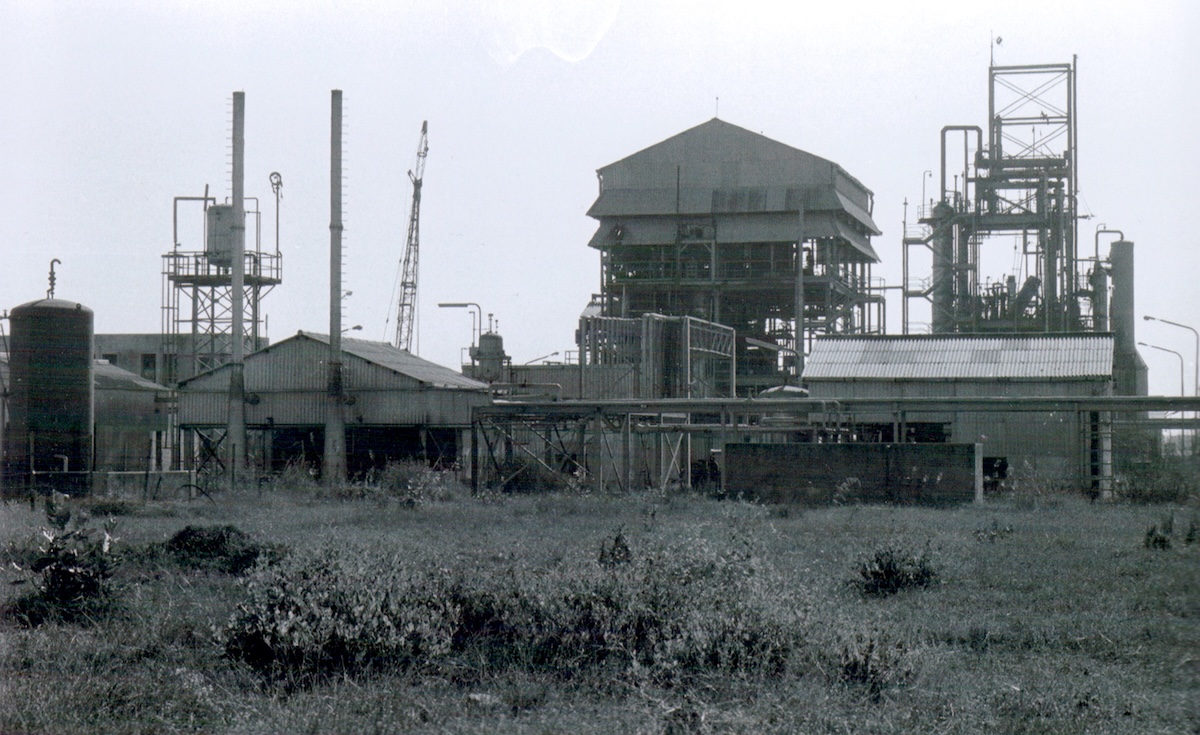
The replacement facility was built on a completely different scale. Constructed between 1935 and 1938 on agricultural land in Harbin's Pingfang district, the new compound covered approximately six square kilometers. It contained more than 150 buildings, including laboratories, holding cells, an autopsy theater, incinerators, a power station, dormitories for over 3,000 staff, an airfield for testing aerial delivery of biological agents, and its own railway siding connected to the South Manchuria Railway. A prison block at the compound's center — known internally as Blocks 7 and 8 — could hold between 200 and 400 subjects at any given time. Guard towers, a moat, and high earthen walls ringed the perimeter. Officially, the complex was designated the "Epidemic Prevention and Water Purification Department of the Kwantung Army." Locals who lived near the compound knew only that people went in and did not come out.
Inside the Pingfang Complex — The Machinery of Human Experimentation
The "Logs" — How Victims Entered the System
The subjects of Unit 731's experiments were referred to internally as "maruta" — Japanese for "logs." The term was not a slip of dark humor. It was embedded in the administrative language of the program. Shipments of prisoners were recorded as "lumber deliveries." Body counts were tallied as "logs processed." The word served a deliberate psychological function: it allowed scientists and technicians to discuss, in clinical memos and over meals, the systematic killing of human beings without ever using a human noun.
Victims were procured primarily through the Kempeitai, the Imperial Japanese military police, which operated across occupied Manchuria and northern China. The pipeline fed a steady supply: Chinese civilians accused of espionage or resistance activity, Korean forced laborers, captured Soviet soldiers, Mongolian nomads, and — in smaller numbers — Allied prisoners of war, including Americans, British, Australians, and Dutch. Women and children were not excluded. Infants were used in experiments alongside their mothers to study disease transmission. Demographic records recovered after the war and testimonies from the 1949 Soviet Khabarovsk trial indicate that the majority of victims were Chinese men between 20 and 50, but the full composition will never be known — Ishii's destruction order in August 1945 consumed most of the program's documentation.
A prisoner arriving at Pingfang entered a closed system from which there was no exit. Subjects were given numbers, photographed, medically examined for baseline health — the healthier the subject, the more useful the data — and assigned to specific experimental programs. The average lifespan of a subject inside the compound was estimated at roughly three to six weeks, depending on the experiment. No subject is known to have survived.
Vivisection, Infection, and Frostbite — The Experiments
The experimental programs at Pingfang fell into three broad categories: the study of infectious diseases, weapons delivery testing, and the limits of human physiology under extreme conditions. All three shared a common methodology — the use of live, unanesthetized human subjects.
The infectious disease program was the compound's primary mission. Subjects were deliberately infected with bubonic plague, cholera, typhoid, anthrax, smallpox, botulism, and dysentery, among other pathogens. Methods of infection included injection, forced ingestion of contaminated food and water, and — in the case of plague — exposure to infected flea bites. Once symptomatic, subjects were vivisected alive to observe the progression of the disease through living organs. Anesthesia was not used, on the explicit rationale that chemical sedation might alter the pathological results. Former Unit 731 member Naoji Uezono testified decades later that he had witnessed a conscious Chinese prisoner strapped to a table, his abdomen opened, organs removed one by one for examination while the man was still breathing.
The frostbite experiments, conducted primarily during Manchuria's brutal winters, involved forcing subjects to expose their limbs to subzero temperatures — sometimes by soaking arms in water and leaving them outside at minus 20 to minus 40 degrees Celsius — and then documenting the stages of frostbite, gangrene, and tissue death. Different thawing methods were tested on the frozen limbs: warm water, fire, body heat. Hisato Yoshimura, the physiologist who led these experiments, published his findings in Japanese medical journals after the war under sanitized titles, never mentioning the human cost.
Other experiments tested the limits of the human body in ways that had no plausible medical or military application. Subjects were placed in centrifuges and spun until death. They were locked in pressure chambers until their eyes burst from their sockets. They were injected with animal blood, seawater, and air. They were hung upside down to determine how long it took to die. Limbs were amputated and reattached to opposite sides of the body to study transplant rejection. The compound was, in the blunt assessment of historian Sheldon Harris, "a death factory that systematically made use of human beings as though they were laboratory rats."
Plague Bombs Over China — The Field Tests
Unit 731 was not a research-only facility. Its explicit purpose was to develop biological weapons for operational military use, and beginning in 1940, it did exactly that. The first major field test, codenamed Operation Cherry Blossoms at Night in its later iterations, involved low-flying aircraft dropping ceramic bombs filled with plague-infected fleas over the Chinese city of Ningbo in October 1940. Bubonic plague broke out within days. Over 100 people died in the initial wave.
The attacks expanded over the following years. Changde, a strategically important city in Hunan Province, was hit with plague-laden fleas in November 1941. Rice and wheat grains contaminated with cholera and typhoid were dropped over villages in Zhejiang and Jiangxi provinces during the Zhejiang-Jiangxi Campaign of 1942 — a retaliatory operation after the Doolittle Raid, designed to punish Chinese civilians who had aided downed American aircrews. Wells and reservoirs were poisoned. Contaminated food was left for retreating populations to find.
The total death toll from Unit 731's biological warfare operations across China remains disputed, with estimates ranging from 200,000 to over 580,000. The higher figure, advanced by Chinese historians and supported by regional epidemic records, accounts for secondary and tertiary waves of disease that continued for years after the initial attacks. The lower estimates restrict the count to confirmed outbreaks directly attributable to documented operations. Either figure places Unit 731's field program among the deadliest uses of unconventional weapons in history — comparable in scale, if not in method, to the atomic bombings of Hiroshima and Nagasaki.
A Network of Atrocity Across Occupied Asia
Pingfang was the headquarters, but the biological warfare program extended across the Japanese empire. Unit 100, based near Changchun, specialized in the weaponization of animal diseases and the sabotage of livestock and agriculture. Unit 516 tested chemical weapons — mustard gas, phosgene, hydrogen cyanide — on human subjects in a separate compound near Qiqihar. Unit 1644 operated in Nanjing, the city that had already endured the 1937 massacre, producing pathogens for deployment in central China. Unit 8604 ran a parallel operation from Guangzhou, and Unit 9420 extended the network into Southeast Asia from Singapore. The total number of personnel involved across all units has been estimated at over 10,000 — a figure that underscores the institutional scale of the program. This was not a rogue operation. It was a bureaucracy.
The Deal — American Immunity and the Theft of Justice
The Soviet Khabarovsk Trials — The Evidence the West Dismissed
The Soviet Union, whose soldiers had overrun the Pingfang compound in August 1945 and captured a number of lower-ranking Unit 731 personnel, held a war crimes tribunal in the city of Khabarovsk in December 1949. Twelve Japanese defendants stood trial. The testimony was detailed and specific: descriptions of vivisection, plague bombing, forced infection, and the murder of prisoners during the compound's final evacuation. Several defendants confessed openly. Major General Kawashima Kiyoshi, a senior administrator, described the procurement of human subjects in clinical language. Lieutenant Colonel Nishi Toshihide testified about experiments he personally oversaw.
The Khabarovsk trial produced a detailed published record. The United States dismissed it as Soviet propaganda — a characterization that aligned with the early Cold War climate but served a more specific purpose. By the time the Soviet trial began, Washington had already made its choice.
The Faustian Exchange — Data for Silence
The negotiations between Unit 731's leadership and U.S. military intelligence began almost immediately after Japan's surrender. Ishii, who had returned to Japan and initially feigned his own death, was located by American investigators in early 1946. The conversations were led by Lieutenant Colonel Murray Sanders and later Dr. Edwin Hill of Camp Detrick (now Fort Detrick), the U.S. Army's own biological weapons research facility in Maryland. The terms were straightforward: Ishii and his senior researchers would provide complete access to their experimental data — pathogen cultivation methods, weapons delivery systems, human lethality thresholds — in exchange for immunity from war crimes prosecution.
General Douglas MacArthur, Supreme Commander of the Allied Powers in occupied Japan, endorsed the arrangement. A 1947 memo from the U.S. State-War-Navy Coordinating Committee made the calculation explicit: the data was of such "great value" to American biological defense research that it justified shielding the perpetrators from trial. The arrangement was classified. When the Soviet Union presented evidence at Khabarovsk and publicly demanded that Ishii be tried as a war criminal, Washington denied knowledge of the program's full scope.
Ishii spent his post-war years in quiet anonymity. Some accounts place him briefly as a lecturer at a Tokyo medical school; others suggest he offered biological warfare consulting to U.S. forces during the Korean War, though this remains disputed and unconfirmed. He converted to Catholicism in his later years and died of laryngeal cancer on October 9, 1959, at the age of 67. He was never charged with a crime. Neither were the vast majority of his colleagues. Many returned to prominent positions in Japan's post-war medical establishment, pharmaceutical industry, and universities. Masaji Kitano, who commanded Unit 731 from 1942 to 1944, became president of Green Cross Corporation, one of Japan's largest blood product companies — a firm that would later be implicated in distributing HIV-contaminated blood products in the 1980s.
The data itself — thousands of pages of experimental findings delivered to Camp Detrick — was assessed by American scientists and found to be, in many cases, scientifically flawed: sample sizes were small, controls were absent, and the conditions of the experiments made the results difficult to replicate or generalize. The United States had traded justice for research data of questionable scientific value. The transaction remains one of the Cold War's most damning moral failures, a direct parallel to Operation Paperclip's absorption of Nazi rocket scientists — but with a body count measured not in abstract complicity but in thousands of individually murdered prisoners.
The Cold War bioweapons race that Unit 731's data was meant to fuel produced its own horrors on both sides of the Iron Curtain. The Soviet Union built its largest open-air biological weapons testing ground on Vozrozhdeniya Island in the Aral Sea, where weaponized anthrax, smallpox, and plague were detonated over open water for decades — the direct ideological descendant of the same germ warfare doctrine that Ishii had pioneered in Manchuria. The logic that made Pingfang possible did not end with Japan's surrender. It migrated, mutated, and scaled.
The Museum at Pingfang — Preserving What the Perpetrators Tried to Burn
The Ruins and the Exhibition Hall
The Pingfang compound was not entirely destroyed. The incinerators and dynamite of August 1945 consumed the laboratory buildings and prison blocks, but several structures on the periphery survived: a large boiler building, administrative offices, and sections of the compound's infrastructure — including the distinctive chimney stack that has become the site's most recognizable silhouette. Foundation outlines of the destroyed buildings remain visible in the ground, marked by low walls and signage.
The Unit 731 Museum (formally the Exhibition Hall of Evidence of Crime Committed by Unit 731 of the Japanese Imperial Army) opened in 1985 on the grounds of the former compound. A major expansion in 2015 added a modern exhibition hall of over 9,400 square meters, designed to accommodate the growing body of evidence — documents, photographs, artifacts, and recorded testimonies — that Chinese researchers have assembled over decades. The exhibition follows a chronological structure, moving from the founding of the program through the experiments, field operations, and post-war immunity deal.
The most affecting elements are the smallest. Glass cases hold surgical instruments recovered from the ruins. Photographs show the compound in its operational state — wide avenues, neat buildings, the clinical orderliness of a place designed to process human beings as raw material. Testimony screens play the recorded words of Chinese survivors who lived in villages surrounding the compound, describing the disappearances, the columns of smoke, the smell that drifted over the farmland on certain nights. A wall of victim names — those few who have been identified through decades of research — confronts visitors with the fact that the vast majority of the dead remain anonymous.
Denial, Memory, and the Unfinished Reckoning
Japan's relationship with Unit 731 remains one of the most contentious unresolved legacies of the Second World War. The Japanese government has never issued a formal, comprehensive acknowledgment of the biological weapons program or an official apology to its victims. School textbooks in Japan either omit Unit 731 entirely or mention it in passing, a pattern consistent with the broader controversies over wartime history education that have strained relations between Japan and its neighbors for decades.
Legal efforts have been met with partial acknowledgment and practical refusal. In 2002, the Tokyo District Court ruled in a landmark case brought by 180 Chinese plaintiffs that Unit 731's activities — including biological warfare attacks on Chinese cities — were historically factual. The court accepted the evidence. It then denied all claims for compensation, ruling that individuals had no standing to sue a foreign government under Japanese law. The plaintiffs left the courtroom having won the factual argument and lost everything else.
Grassroots efforts within Japan have pushed against official silence. Historian Tsuneishi Keiichi and journalist Morimura Seiichi — whose 1981 book The Devil's Gluttony brought Unit 731 to mainstream Japanese attention for the first time — have spent careers documenting the program. Former unit members, aging and approaching death, have in some cases broken their silence: Shinozuka Yoshio, who was conscripted into Unit 731 as a teenager, testified publicly about his participation in experiments and spent his later years speaking at schools and memorials. These individual acts of testimony exist against a backdrop of institutional reluctance that, as of the mid-2020s, shows no sign of fundamental change.
Visiting the Unit 731 Museum — The Atlas Entry
How to Get There and What to Expect
The Unit 731 Museum is located in the Pingfang district of Harbin, the capital of Heilongjiang Province in northeastern China — about 20 kilometers south of the city center. Harbin is accessible by direct flights from Beijing, Shanghai, and other major Chinese cities, as well as by high-speed rail. From central Harbin, the museum can be reached by taxi (approximately 40 minutes) or by bus. The site is open daily except Mondays, with free admission. Audio guides and guided tours are available in Chinese and English.
The exhibition takes roughly 90 minutes to two hours to walk through at a considered pace. The outdoor ruins — foundation lines, the surviving boiler building, and the chimney — require an additional 30 to 45 minutes. Photography is permitted in most areas. The museum can be combined with a broader visit to Harbin, a city known for its Russian-influenced architecture along Zhongyang Dajie (Central Street), its winter Ice and Snow Festival, and the Church of St. Sophia, a former Russian Orthodox cathedral now serving as a museum of Harbin's multicultural history.
Visitors should be prepared for graphic content. The exhibition does not sanitize. Photographs of experiments, surgical instruments, and recorded testimonies describe specific acts of violence against specific human beings. The museum is not designed for young children, and even for adults, the cumulative effect is heavy. There are benches in the exhibition hall and open-air spaces between the indoor and outdoor sections that offer a moment to breathe.
The Weight of a Place That Almost Disappeared
The compound at Pingfang was built to be erased. Ishii designed the destruction protocol before the first experiment was ever conducted — the same man who built the laboratories planned the furnaces that would consume the evidence. The fact that anything survives at all is a consequence of incomplete demolition, the speed of the Soviet advance, and decades of painstaking Chinese archaeological and archival work. Every foundation stone visible in the grass is a fact that someone tried to burn.
The museum's most disquieting quality is not the graphic content but the administrative orderliness it documents. Unit 731 was not a place of frenzy. It was a place of paperwork, schedules, supply chains, and career advancement. Scientists competed for postings. Technicians clocked in and out. The killing was systematic not because the perpetrators were uniquely monstrous, but because the system was designed to make monstrousness routine. The lesson of Pingfang is not that evil is extraordinary. The lesson is that it scales.
The unnamed dead — the men, women, and children catalogued as lumber — have no graves. Their ashes were scattered, their records burned, their identities reduced to numbers in files that no longer exist. The museum at Pingfang cannot return their names. What it can do — and what it does, with quiet, unrelenting force — is make it impossible to pretend they were never there.
Frequently Asked Questions About Unit 731
What was Unit 731 and what did it do?
Unit 731 was a covert biological and chemical warfare research program operated by the Imperial Japanese Army from 1937 to 1945, headquartered in a massive compound in the Pingfang district of Harbin, Manchuria (now northeastern China). The unit conducted experiments on live human subjects — including deliberate infection with deadly pathogens, vivisection without anesthesia, frostbite studies, and pressure chamber tests — killing an estimated 3,000 to 12,000 people inside the facility. It also developed and deployed biological weapons against Chinese cities, with a broader death toll that may have exceeded 300,000.
Why was no one from Unit 731 prosecuted for war crimes?
The United States secretly granted immunity to Unit 731's leadership, including its commander Shirō Ishii, in exchange for access to the program's experimental data. General Douglas MacArthur endorsed the arrangement, and the deal was classified for decades. The Soviet Union held a trial of twelve lower-ranking members in Khabarovsk in 1949, but the United States dismissed the proceedings as propaganda. Most of Unit 731's scientists returned to civilian careers in Japan's medical and pharmaceutical industries without ever facing charges.
Can you visit the Unit 731 Museum in Harbin?
The Unit 731 Museum (formally the Exhibition Hall of Evidence of Crime Committed by Unit 731 of the Japanese Imperial Army) is open to the public in Harbin's Pingfang district. Admission is free, and the museum is open daily except Mondays. The site includes a modern exhibition hall built in 2015 and outdoor ruins of the original compound, including foundation lines and a surviving boiler building. Guided tours are available in Chinese and English. The exhibition contains graphic content and is not recommended for young children.
How many people died because of Unit 731?
Estimates vary significantly. Inside the Pingfang compound itself, between 3,000 and 12,000 prisoners are believed to have been killed through experimentation between 1937 and 1945. The broader death toll from Unit 731's biological warfare operations — including plague, cholera, and anthrax attacks on Chinese cities and the contamination of water supplies — is estimated between 200,000 and 580,000, depending on how secondary epidemic waves are counted. An additional estimated 30,000 Chinese civilians died from pathogen-infected materials released during the compound's destruction in August 1945.
Has Japan officially acknowledged Unit 731?
Japan has not issued a comprehensive formal acknowledgment or apology for Unit 731's activities. In 2002, the Tokyo District Court accepted as historical fact that Unit 731 conducted biological warfare experiments and attacks, but denied compensation to Chinese plaintiffs on jurisdictional grounds. Japanese school textbooks have historically omitted or minimized the program, and the subject remains a source of diplomatic tension between Japan and China. Individual Japanese historians and former unit members have worked to document and publicize the history, but official government acknowledgment remains limited.
What happened to the data the United States received from Unit 731?
The experimental data — covering pathogen weaponization, disease progression in human subjects, and biological delivery systems — was transferred to Camp Detrick (now Fort Detrick) in Maryland, the U.S. Army's biological weapons research center. American scientists who reviewed the data found much of it to be of limited scientific value due to poor experimental methodology, small sample sizes, and lack of controls. The exchange has been widely criticized as a moral catastrophe: the United States traded legal accountability for research data that proved largely unusable.
Sources
- [A Plague Upon Humanity: The Secret Genocide of Axis Japan's Germ Warfare Operation] - Daniel Barenblatt (2004)
- [Factories of Death: Japanese Biological Warfare, 1932–1945, and the American Cover-Up] - Sheldon H. Harris (2002)
- [Unit 731: Testimony] - Hal Gold (1996)
- [The Devil's Gluttony (Akuma no Hōshoku)] - Morimura Seiichi (1981)
- [Materials on the Trial of Former Servicemen of the Japanese Army Charged with Manufacturing and Employing Bacteriological Weapons] - Moscow Foreign Languages Publishing House (1950)
- [Gruesome Harvest: The Allied Aftermath of World War II] - Ralph Franklin Keeling (1947), supplemented by declassified U.S. State-War-Navy Coordinating Committee memos on the Ishii immunity agreement
- [Unmasking Horror: A Special Report on Japan's Wartime Atrocities] - Nicholas D. Kristof, The New York Times (1995)
- [Japan Confronting Gruesome War Atrocity] - Howard W. French, The New York Times (2002)
- [Unit 731 and the Japanese Imperial Army's Biological Warfare Program] - Tsuneishi Keiichi, translated in The Asia-Pacific Journal (2005)
- [Japan's Wartime Medical Atrocities: Comparative Inquiries in Science, History, and Ethics] - Jing-Bao Nie et al., eds., Routledge (2010)