The Arrest That Sent Typhoid Mary to North Brother Island
On a March morning in 1907, Dr. S. Josephine Baker of the New York City Department of Health arrived at a boarding house on Park Avenue with five police officers. Their target was a cook. Mary Mallon, thirty-seven years old, Irish-born, had been linked by a sanitary engineer's investigation to twenty-two cases of typhoid fever across seven wealthy households. She had no symptoms. She felt perfectly healthy. She did not believe she was sick, and she had no intention of cooperating.
Mallon saw Baker and the officers coming and ran. She evaded them for five hours, hiding in a neighbor's outdoor closet behind a stack of ash cans, until she was physically dragged out and restrained. Baker later wrote that Mallon fought like a caged animal. The officers put her in an ambulance and drove her to the East River, where a boat was waiting. It carried her across the water to a twenty-acre island visible from the Bronx shoreline — a place most New Yorkers had never heard of and would never visit. The island held the city's quarantine hospital. Mallon would spend the next three years there, be released, then be brought back to the same island in 1915. She would not leave again until her body was carried off for burial in 1938.
North Brother Island was built for exactly this purpose. For eighty years, it served as New York City's mechanism for erasure — the place where the city deposited the contagious, the inconvenient, and the addicted, everything the mainland wanted to forget. Smallpox patients, typhoid carriers, a thousand bodies from a burning steamship, war veterans with nowhere else to go, teenage heroin addicts locked in rooms. The island absorbed them all. Then the city forgot the island itself.
Riverside Hospital: The Quarantine Colony on North Brother Island
Why New York Built a Quarantine Hospital on an Island
New York City in the 1880s was a metropolis buckling under its own growth. Tenement neighborhoods on the Lower East Side packed dozens of families into buildings designed for four. Tuberculosis, typhus, smallpox, and yellow fever swept through the immigrant wards in rolling waves. The city's public health apparatus — rudimentary and underfunded — relied on a brutal but effective strategy: remove the contagious from the population and put them somewhere the healthy could not reach. Islands were the answer.
Blackwell's Island (now Roosevelt Island) had already served this function, housing the city's smallpox hospital alongside its lunatic asylum and workhouse. By the 1880s, Blackwell's was overcrowded and the proximity of its institutions — the sick, the mad, and the criminal pressed together on a narrow strip of land — had become a political embarrassment. The city needed a new quarantine site, and North Brother Island, a twenty-acre patch of uninhabited land in the East River between the Bronx and what would become Rikers Island, fit the requirement perfectly: isolated, accessible only by water, and far enough from the wealthy Bronx estates to avoid complaint.
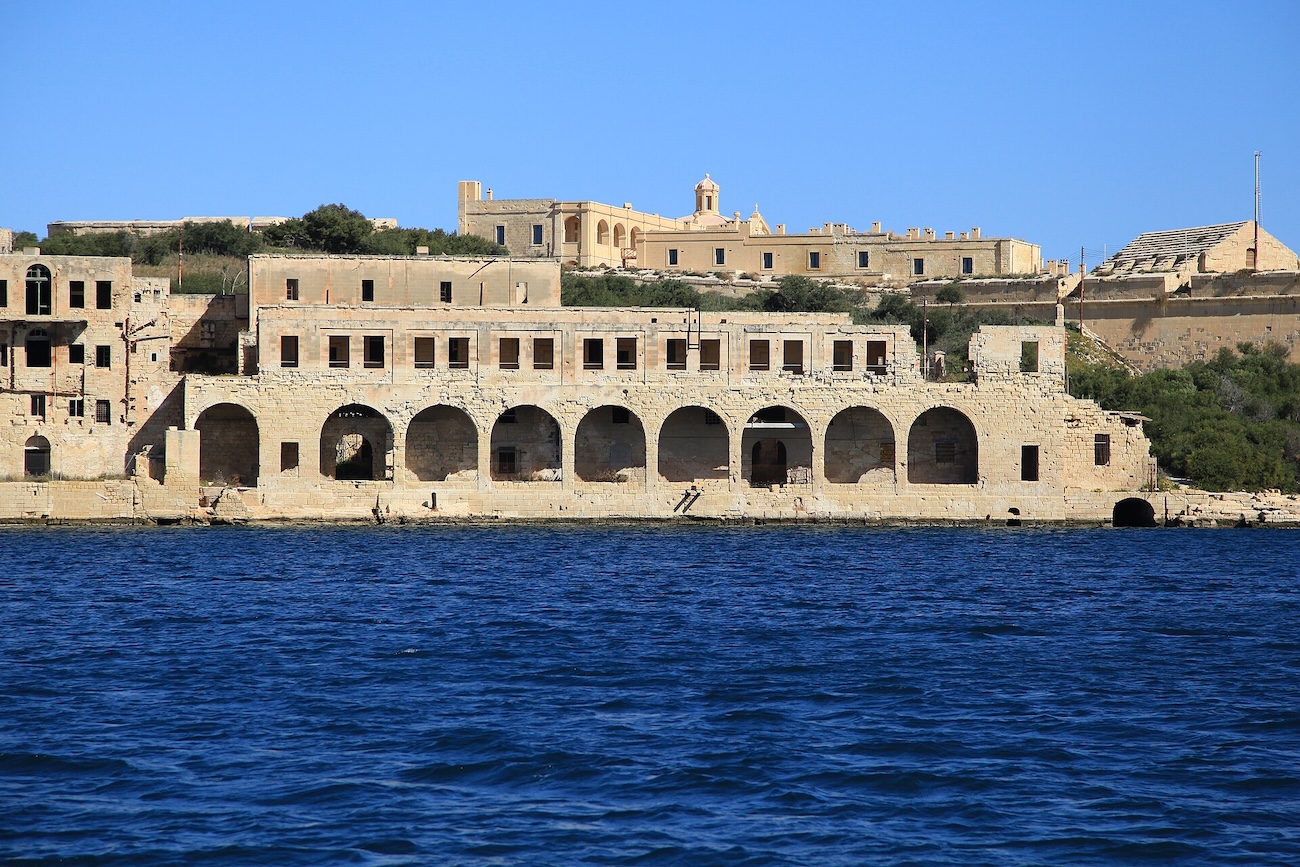
The city purchased the island in 1885 and relocated Riverside Hospital from Blackwell's Island. The facility expanded rapidly: wards for smallpox, pavilions for tuberculosis, isolation cottages for typhus. A coal-fired power plant, a morgue, staff dormitories, doctors' residences, a chapel, and a network of paved roads turned the island into a self-contained institutional campus. At its peak, Riverside operated as a small city of contagion — patients ferried in by boat, confined until cured or dead, their bodies processed through the island's own mortuary system.
How Patients Were Forcibly Quarantined on North Brother Island
The quarantine was not voluntary. Under sections 1169 and 1170 of the Greater New York City Charter, the Health Department had the legal authority to forcibly detain anyone deemed a threat to public health. There was no telephone service on the island, and visitors were prohibited during outbreaks. Conditions during surges — smallpox epidemics in the 1890s, the polio crisis of 1916 — could be wretched, with overflow patients housed in tents on the grounds when the wards filled beyond capacity.
For the thousands of immigrants who arrived on North Brother Island's docks, the island was not a hospital in any modern sense. It was a place of exile, separated from the city by a current that might as well have been an ocean — much like Poveglia, the Venetian plague island that served the same function for centuries across the Atlantic, or North Head Quarantine Station on Sydney Harbour, where Australia deposited its own arriving contagions. The architecture of isolation was the same everywhere. Only the water changed.
Typhoid Mary on North Brother Island: The 26-Year Quarantine
How Mary Mallon Spread Typhoid Fever Across New York
Mary Mallon was born in Cookstown, County Tyrone, Ireland, in 1869 and emigrated to the United States at the age of fifteen. She found work as a domestic cook — a skilled one, by all accounts — in wealthy households across New York City and Long Island. Between 1900 and 1907, typhoid fever broke out in seven of the eight households where she was employed. Mallon moved on after each outbreak, leaving no forwarding address.
In 1906, a wealthy banker named Charles Henry Warren rented a summer residence in Oyster Bay, Long Island. Six of the eleven people in the household fell ill with typhoid within weeks of Mallon's arrival. Warren hired George Soper, a sanitary engineer with the New York City Department of Health whose specialty was epidemic investigation. Soper traced the trail of infections across years and boroughs, linking twenty-two confirmed cases of typhoid to a single common factor: Mary Mallon's kitchen. He tracked her to a Park Avenue residence and confronted her, requesting stool and urine samples. She refused — violently, by most accounts, chasing him from the premises with a carving fork.
The arrest that followed — Baker, the five officers, the five-hour chase through closets and alleyways — ended with Mallon on a boat to North Brother Island. Her stool tested positive for Salmonella typhi. She was the first person in the United States identified as an asymptomatic carrier of typhoid fever — a concept that was itself barely understood by the medical establishment. The Health Department confined her to a small brick cottage on the island grounds. She could walk the island freely, attend the chapel, and use the hospital facilities, but she could not leave.
In 1909, she unsuccessfully sued the Health Department for her release. Her lawyer, George Francis O'Neill, filed a writ of habeas corpus. The New York American, likely funding her legal costs, introduced her to the public as "'Typhoid Mary,' most harmless and yet the most dangerous woman in America." Mallon herself wrote to the newspaper: "I have been in fact a peep show for everybody." The court sided with the city. Public safety outweighed individual liberty. Mallon remained on the island.
Mary Mallon's Second Arrest and Life Sentence on the Island
In 1910, the Health Department released Mallon on one condition: she was never to work as a cook again. She agreed. For a time, she took jobs as a laundress — work that paid a fraction of a cook's wages. The arrangement lasted roughly a year.
By 1914, the Department of Health had lost track of her whereabouts. Mallon had returned to cooking under the name Mary Brown. In January 1915, a typhoid outbreak struck the Sloane Maternity Hospital in Manhattan — twenty-five cases, two deaths. Soper was called to investigate, compared the handwriting of "Mary Brown" with Mallon's, and confirmed the match. The Sanitary Police apprehended her on March 27, 1915.
This time, there would be no release. Mallon was returned to North Brother Island, to the same cottage, for what would become the remaining twenty-three years of her life. She spent her days baking cakes and crafting bead jewelry, which she sold to staff and patients. By 1918 she had secured a job in the hospital; by 1925, she was assisting in the laboratory — cleaning glassware, recording test results, handling the very pathogens that had imprisoned her. In 1925, physician Alexandra Plavska arrived on the island for an internship and hired Mallon as her assistant. The woman the city had declared too dangerous to be free was now processing samples of the disease that bore her name.
On Christmas morning 1932, a man delivering supplies found Mallon collapsed on the floor of her bungalow. She had suffered a stroke and never walked again. For six years she lay paralyzed in Riverside Hospital, the institution that had been her jailer. She died of pneumonia on November 11, 1938, at the age of sixty-nine. The autopsy confirmed what the Health Department had long insisted: live typhoid bacilli still thrived in her gallbladder. Her body was buried at St. Raymond's Cemetery in the Bronx. Nine people attended the funeral.
Was Typhoid Mary's Quarantine Justified?
The ethical dimensions of Mallon's case have sharpened with time — and sharpened again during the outbreaks of HIV/AIDS, tuberculosis, and COVID-19 that forced the same questions back into public debate. Over four hundred asymptomatic typhoid carriers were identified in New York during the same period as Mallon's confinement. Some infected far more people — a carrier named Tony Labella was linked to over one hundred cases. None were confined for more than a few weeks. None were imprisoned for life. Others who worked in the food industry were given alternative jobs and had their rent paid by the state.
Mallon was an Irish immigrant, a working-class woman, and a cook in wealthy households — a combination of class, gender, and ethnicity that made her an easy target for a public health system that needed a visible symbol of contagion. Her story is not simply a medical curiosity. It is a case study in who gets sacrificed when a city decides to protect itself — and who gets to walk free. In its use of island isolation as a tool of indefinite confinement, Mallon's captivity carries echoes of Alcatraz, another rock in another river, where the logic was the same: put the problem where no one has to see it.
The General Slocum Disaster of 1904: 1,021 Dead at North Brother Island
The quarantine hospital on North Brother Island had dealt in slow, institutional death for two decades — patients arriving by ferry, dying in wards, their bodies processed through the island's morgue. The morning of June 15, 1904, brought death at a speed and scale the island had never seen.
How the General Slocum Caught Fire in the East River
The PS General Slocum, a sidewheel passenger steamer, left a Lower East Side pier shortly before 9:40 a.m. carrying nearly 1,400 passengers — almost all of them women and children from St. Mark's Evangelical Lutheran Church in Kleindeutschland, Manhattan's dense German-American enclave. The church had chartered the boat for $350, its seventeenth consecutive annual outing to a picnic site on Long Island. The children wore Sunday school clothes. A German band played on the upper deck. Mothers carried wicker picnic baskets.
Thirty minutes into the voyage, as the Slocum approached the treacherous tidal narrows at Hell Gate, a boy spotted fire in the lamp room below the main deck. A crewman tried to stamp it out with charcoal. The flames only grew. When the crew grabbed the fire hoses, the rubber was so rotted the hoses burst open under pressure. The six lifeboats had been painted to the deck and could not be pried loose. The cork life preservers — inspected and certified just five weeks earlier — had been filled with cheap granulated cork and iron bars to meet weight requirements. When passengers strapped them on and jumped, the vests disintegrated on impact or dragged them under.
Captain William Van Schaick, his feet blistering from the heat below, beached the burning ship on the rocky southern shore of North Brother Island. The ship's speed fanned the fire into a furnace. Fewer than twenty minutes elapsed between the first flame and the collapse of the hurricane deck.
On the island, hospital staff heard the fire whistle and ran to the shore. Nurses trained to handle smallpox patients waded into the East River and pulled burned survivors onto the rocks. Some dove in fully clothed. The hospital's engines pumped water in a futile effort to douse the blaze. A dozen tugboats and fireboats converged, some catching fire themselves. A ten-month-old boy floated to shore uninjured but orphaned, and lay unclaimed for days until his grandmother identified him. Eleven-year-old Willie Keppler, who had sneaked aboard without his parents' permission, survived the chaos of drowning non-swimmers pulling each other under — then was too terrified of punishment to go home. He returned only after seeing his own name listed among the dead in the next morning's newspaper.
The final count was 1,021 dead. Until the attacks of September 11, 2001, it was the single deadliest day in New York City history. The Slocum was the century's worst maritime disaster until the sinking of the Titanic surpassed it eight years later.
The Destruction of Kleindeutschland: How the Slocum Erased Little Germany
More than 600 families in Kleindeutschland lost someone. The neighborhood's population had been disproportionately female and young on the day of the disaster — the men were at work, the annual outing a tradition for mothers and children. Entire bloodlines vanished. President Theodore Roosevelt appointed a federal Commission of Investigation, which found catastrophic negligence at every level: the Knickerbocker Steamboat Company had deferred all maintenance; the U.S. Steamboat Inspection Service had certified rotten equipment; the life preservers were fraudulent. Van Schaick was convicted and sentenced to ten years, though Roosevelt later pardoned him.
The community never recovered. Within months, more than a quarter of the affected families had left the Lower East Side. Many moved to Yorkville; others returned to Germany. Kleindeutschland — Little Germany — ceased to exist. In 1906, the city dedicated a memorial fountain in Tompkins Square Park. The last survivor, Adella Wotherspoon, died in January 2004 at the age of one hundred. She had been six months old on the day of the fire; her two older sisters, two cousins, and two aunts perished. At a commemoration in 1999, she offered the reason the Slocum had faded from memory while the Titanic endured: "The Titanic had a great many famous people on it. This was just a family picnic."
From Veterans' Housing to Drug Rehab: North Brother Island's Final Years
Riverside Hospital's quarantine mission wound down in the 1930s as advances in public health — vaccination, antibiotics, improved sanitation — reduced the need to exile the contagious to islands. The tuberculosis pavilion, completed in 1943, was obsolete before it opened. The hospital closed that same year, and North Brother Island sat empty for the first time in six decades.
Veterans' Housing on North Brother Island After World War II
The vacancy was brief. After World War II, New York City faced a severe housing shortage as hundreds of thousands of veterans returned home. The city repurposed North Brother Island as temporary housing for veterans and their families, many of them attending college on the GI Bill. From 1946 to 1951, the former quarantine colony became something improbable: a small residential community. Families occupied the converted hospital buildings. Children commuted by ferry to schools in the Bronx. One veteran's wife, interviewed decades later by photographer Christopher Payne, recalled the island as an idyllic place to raise a family — quiet, green, surrounded by water, the Manhattan skyline glittering across the channel at night.
The housing shortage eased. The families left. The island went dark again.
The Drug Rehabilitation Center That Closed North Brother Island for Good
In 1952, the city converted North Brother Island into a rehabilitation center for adolescent heroin addicts — one of the first facilities in the country to attempt treatment, education, and rehabilitation for young drug offenders. The island's isolation, which had once contained disease, was now meant to contain addiction.
The reality was grimmer than the mission statement. Heroin users were confined to the facility and locked in rooms until they completed withdrawal. Many believed they were being held against their will — a perception that was, in practical terms, accurate. The program's methods reflected the era's understanding of addiction: punishment and containment rather than therapy or medical intervention, an approach strikingly similar to the one that had shaped institutions like the Trans-Allegheny Lunatic Asylum a century earlier. Relapse rates were devastating. Staff corruption became endemic. By the early 1960s, the gap between the facility's stated mission and its operational reality had become indefensible.
The rehabilitation center closed in 1963. The facility is said to have inspired the Broadway play Does a Tiger Wear a Necktie?, which opened in 1969 and launched the career of a young Al Pacino in a role that earned him a Tony Award. The play depicted life inside a drug treatment facility on an island — a setting its audiences could not have known was drawn almost directly from the last chapter of North Brother Island's inhabited life.
No one has lived on the island since.
North Brother Island Today: Abandoned Buildings and Overgrown Ruins
The Abandoned Buildings of North Brother Island
Sixty years without maintenance have done what fire, disease, and institutional neglect could not. The twenty-five buildings on North Brother Island — the four-story tuberculosis pavilion, the nurses' residence, the doctors' quarters, the morgue, the coal-fired power plant, the service buildings — are in advanced stages of collapse. Trees grow through shattered windows. Vines have woven themselves into the skeletal frames of ward buildings, pulling walls apart from the inside. Roofs have caved in. Stair treads are missing. Floors have given way to the basement below. Beneath the canopy of English ivy, kudzu, and native sugar maples, the paved roads and fire hydrants that once connected a functioning campus have vanished under decades of leaf litter and root growth.
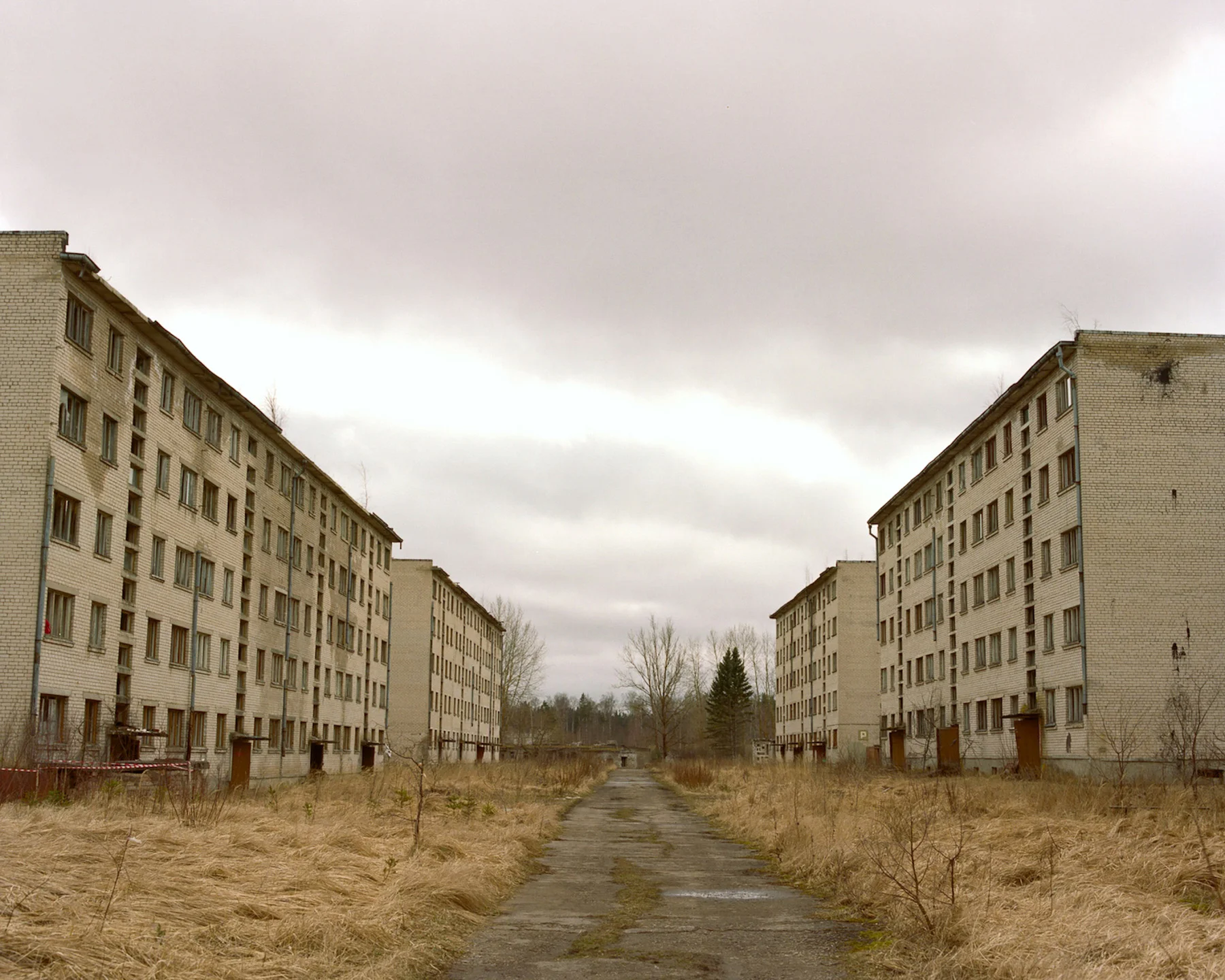
Photographer Christopher Payne, granted access by the NYC Parks Department in 2006, spent years documenting the decay across multiple seasons. His photographs — published in North Brother Island: The Last Unknown Place in New York City — capture a place that looks less like a ruin than like a time-lapse of civilization being digested. The transformation from institutional campus to unrecognizable forest took not centuries but decades. The buildings that once held smallpox patients and teenage heroin addicts are now indistinguishable from the landscape that has consumed them, much like the ruins of Pripyat, where nature has been conducting the same slow experiment since 1986. The parallel extends to Hashima Island, Japan's abandoned concrete battleship — another dense institutional community on a tiny island, left to the elements within sight of the mainland.
The experience of standing on the island is defined by contradiction. The Manhattan skyline is visible. The hum of traffic on the Bruckner Expressway carries across the water. Planes descend into LaGuardia overhead. The city is right there — audible, visible, close enough to feel its presence — and yet the island is profoundly, unnervingly empty.
North Brother Island as a Bird Sanctuary and Wildlife Preserve
The NYC Parks Department took ownership of North Brother Island in 2001 and designated it, along with adjacent South Brother Island, as part of the Harbor Herons Region — a network of uninhabited islands and marshes that serve as critical nesting habitat for colonial wading birds. Black-crowned night herons, snowy egrets, and double-crested cormorants now breed in the ruins of buildings that once housed smallpox patients. The collapsed rooftops and overgrown walls provide exactly the combination of structure, seclusion, and proximity to food that the birds require. The East River, once a corridor of quarantine ferries and burning steamships, now feeds a modest ecosystem of fish, herons, and silence.
The island's restricted status has generated its own mythology. Paranormal investigators cite the General Slocum dead, the quarantine patients who never left, and the decades of suffering within the hospital wards as evidence that the island is among New York's most haunted sites. A more creative strain of urban speculation — fueled by the proximity to Rikers Island, the police patrols on the East River, and the absolute prohibition on public access — has produced persistent rumors that one of the crumbling buildings conceals, or once concealed, a covert intelligence facility. The rumor is almost certainly baseless, a product of the same conspiratorial logic that attaches itself to any sufficiently restricted space in a city that otherwise has none. The mundane truth requires no embellishment: the buildings are riddled with asbestos, the floors are full of holes, and the city has neither the budget nor the political will to make them safe.
Proposals for the island have surfaced and stalled for decades. Mayor John Lindsay proposed selling it. Mayor Ed Koch suggested converting it to housing for the homeless. In the mid-1970s, Bronx Borough President Robert Abrams blocked a plan to auction the island for $1 million, arguing the sale was short-sighted. In 2014, City Council member Mark Levine led a delegation to the island and declared his intent to open it for limited public access. A study was commissioned from the University of Pennsylvania's School of Design. A public hearing followed. The estimated cost of building a dock, blazing safe paths, and stabilizing even a few buildings proved prohibitive. No steps were taken.
North Brother Island remains what it has been for sixty years: a place the city cannot use, cannot sell, and cannot bring itself to demolish. The herons nest. The buildings crumble. The island waits.
How to See North Brother Island: Access, Memorials, and Nearby Sites
Can You Visit North Brother Island?
Public access to North Brother Island is prohibited. The island is managed by the NYC Parks Department as protected wildlife habitat, and trespassing is illegal. Occasional permits are granted to researchers, journalists, and city officials — all visits require a Parks Department escort and a signed liability waiver acknowledging the structural hazards, including asbestos, unstable floors, and open manholes. Permits are not issued between late March and September to protect the bird nesting season.
The closest most visitors will come to North Brother Island is a glimpse. The island is visible from the window seat of a plane descending into LaGuardia Airport, from the Bruckner Expressway in the Bronx, and from the shoreline near Barretto Point Park in Hunts Point. The ruins are difficult to distinguish from the surrounding tree canopy without binoculars.
The General Slocum Memorial Fountain in Tompkins Square Park (East Village, Manhattan) remains the most accessible physical monument to the island's history. A ceremony is held at the fountain each June 15. A larger memorial to the Slocum victims stands at the Lutheran All Faiths Cemetery in Middle Village, Queens, where many of the dead were buried. A plaque honoring the victims hangs on the facade of St. Mark's Evangelical Lutheran Church on East 6th Street, the congregation that chartered the doomed voyage.
For those drawn to New York's archipelago of forgotten islands, North Brother sits within a constellation of restricted and abandoned sites scattered across the city's waterways. Hart Island, just north in Long Island Sound, serves as the city's potter's field — a mass burial ground for the unclaimed dead that is itself slowly opening to limited public visitation. Together, these islands form a shadow geography of New York: the places where the city sent the people and problems it preferred not to see, and where the evidence of that erasure is still visible — if you know where to look.
FAQ
What happened on North Brother Island?
North Brother Island served as a quarantine hospital for infectious diseases from 1885 to 1943, housing patients with smallpox, typhus, and tuberculosis at Riverside Hospital. It was the site of the General Slocum steamship disaster in 1904, which killed 1,021 people. The island also held Mary Mallon, known as Typhoid Mary, for twenty-six years. After World War II it briefly housed veterans' families, then operated as a teenage drug rehabilitation center until corruption forced its closure in 1963. It has been abandoned ever since.
Can you visit North Brother Island?
Public access is prohibited. The island is a designated bird sanctuary managed by the NYC Parks Department, and trespassing is illegal. Occasional permits are granted to researchers, journalists, and city officials, but all visits require a Parks escort and a signed liability waiver. Permits are not issued between late March and September to protect the nesting season. The island is visible from planes landing at LaGuardia, from the Bruckner Expressway, and from the Hunts Point shoreline.
Who was Typhoid Mary and why was she quarantined on North Brother Island?
Mary Mallon was an Irish-born cook identified as the first asymptomatic carrier of typhoid fever in the United States. Between 1900 and 1907, she infected at least twenty-two people across multiple households. She was forcibly quarantined at Riverside Hospital in 1907, released in 1910 on the condition she never cook again, then re-arrested in 1915 after causing another outbreak under a false name. She spent the remaining twenty-three years of her life confined to the island, dying of pneumonia in 1938.
What was the General Slocum disaster?
The PS General Slocum was a passenger steamboat that caught fire in the East River on June 15, 1904, while carrying approximately 1,400 members of a German-American Lutheran church on their annual picnic. The fire hoses were rotted, the lifeboats painted shut, and the life preservers filled with disintegrating cork and iron bars. The captain beached the ship on North Brother Island, but 1,021 passengers — mostly women and children — died in under twenty minutes. It remained New York's deadliest day until September 11, 2001.
Why is North Brother Island abandoned?
The quarantine hospital closed in 1943 as public health advances made island isolation obsolete. After brief stints as veterans' housing and a drug rehabilitation center, the last residents left in 1963. Proposals to repurpose the island have repeatedly stalled due to prohibitive costs — building a dock, stabilizing structures, and remediating asbestos would require millions the city has never allocated.
What is on North Brother Island today?
Twenty-five buildings remain in advanced collapse, including the tuberculosis pavilion, nurses' residence, morgue, and a coal-fired power plant. Trees grow through windows, vines pull walls apart, and roofs have caved in. The island is a wildlife sanctuary providing nesting habitat for black-crowned night herons, snowy egrets, and double-crested cormorants.
Sources
- [Ship Ablaze: The Tragedy of the Steamboat General Slocum] - Edward T. O'Donnell, Broadway Books (2003)
- [Typhoid Mary: Captive to the Public's Health] - Judith Walzer Leavitt, Beacon Press (1996)
- [North Brother Island: The Last Unknown Place in New York City] - Christopher Payne, with history by Randall Mason, Fordham University Press (2014)
- [Damnation Island: Poor, Sick, Mad & Criminal in 19th-Century New York] - Stacy Horn, Algonquin Books (2018)
- [Mary Mallon (1869–1938) and the History of Typhoid Fever] - Marineli et al., Annals of Gastroenterology, PMC (2013)
- [Witness to Tragedy: The Sinking of the General Slocum] - New-York Historical Society, Digital Collections
- [Report of the United States Commission of Investigation upon the Disaster to the Steamer General Slocum] - U.S. Department of Commerce and Labor (1904)
- [General Slocum Disaster] - NYC Parks Department, Astoria Park Highlights
- [Typhoid Mary's Life Sentence in Quarantine] - Dr. Howard Markel, PBS NewsHour (2014)
- [The Other Islands of New York City] - Sharon Seitz and Stuart Miller, The Countryman Press (2011)