The Last Morning in Varosha — August 14, 1974
Eleni Ellinas heard the air raid sirens just after five in the morning. Her family had been in Varosha for eight months. Boxes of their belongings were still unpacked in the hallway of their new apartment. As they dressed and gathered what they could carry, her mother moved to the windows and began lowering the front blinds — the instinct of a woman who had spent a Cypriot summer protecting her furniture from the sun. She managed to close the ones on the left and the right before the family ran.
A few kilometers away, fifteen-year-old Yiannakis Rousos was crouching in his family's citrus groves, watching columns of black smoke rise from the explosions hitting the coast. His family loaded into a car and drove south toward Paralimni. They left behind everything they owned, including their dog, Linda. They planned to return that evening.
The 39,000 people who evacuated Varosha on August 14 and 15, 1974, packed for a weekend. The conviction that the displacement was temporary was nearly universal — the fighting would stop, the diplomats would intervene, and life would resume. No one locked up for the last time. No one said goodbye to their house. The Turkish military arrived to find a city that had been abandoned mid-sentence: laundry on clotheslines, rice half-cooked on stoves, a crane operator's load of three concrete blocks suspended in mid-air where he had left it when he ran. Those blocks still hang there today.
Varosha was not destroyed by the invasion. It was captured intact, fenced with barbed wire, and sealed. The Turkish government did not resettle it, develop it, or demolish it. It held the district hostage — a city-sized bargaining chip in negotiations over the partition of Cyprus that have produced nothing in half a century. The result is a place defined by a specific kind of political cruelty: a neighborhood kept whole enough to promise return and left to rot long enough to make return impossible. Thirty-nine thousand people became leverage, and the asking price was never named.
How Varosha Became the Richest Resort on the Eastern Mediterranean Coast
The district barely existed before the 1960s. The land where Varosha rose had been grazing fields on the outskirts of Famagusta, a medieval walled port city whose Venetian ramparts and Gothic cathedral — converted to a mosque after the Ottoman conquest of 1571 — drew a modest trickle of cultural tourists. The beach was beautiful but undeveloped. The money was elsewhere.
Cyprus's independence from Britain in 1960 changed the economics overnight. The new republic needed foreign currency, and its eastern coastline had the raw ingredients — golden sand, reliable sun, warm water, proximity to Europe and the Middle East — to manufacture a tourism industry from scratch. Varosha was the construction site. By the late 1960s, the district had transformed into a corridor of modernist hotel towers, their cantilevered balconies and glass lobbies designed to frame the Mediterranean. The Argo, the King George, the Florida, the Asterias, the Grecian, the Golden Sands — names that became shorthand among the European jet set for a specific kind of coastal glamour.
Richard Burton and Elizabeth Taylor favored the Argo. Brigitte Bardot sunbathed on the golden beach. Sophia Loren and Raquel Welch were spotted on the strip. In April 1970, four Swedish musicians — Björn Ulvaeus, Benny Andersson, Agnetha Fältskog, and Anni-Frid Lyngstad — visited Varosha on a promotional trip and performed an informal show for UN peacekeepers stationed on the island. It was the first time all four played together. They had not yet formed ABBA.
By 1974, the numbers were staggering: 45 hotels with over 12,000 beds, apartment complexes, 21 banks, 24 cinemas, and restaurants that served a clientele arriving from Scandinavia, Britain, and the Gulf states. Varosha generated more than half of Cyprus's total tourism revenue. The construction cranes never stopped. The skyline was a monument to a confidence that assumed the future would be an amplified version of the present.
That confidence ignored a fault line running beneath every cocktail bar and hotel lobby. Varosha was overwhelmingly Greek Cypriot. The old walled city of Famagusta, less than two kilometers to the north, had a significant Turkish Cypriot population that had been confined to enclaves during the intercommunal violence of 1963–64. The prosperity was real. The tensions were older, deeper, and armed.
The 1974 Turkish Invasion and the Fall of Famagusta
Operation Attila II — The 1974 Turkish Offensive Against Famagusta
On July 15, 1974, the Greek military junta orchestrated a coup against Cypriot President Archbishop Makarios III, installing a puppet regime and announcing the island's union with Greece. Turkey responded five days later, invoking its rights as a guarantor power under the 1960 Treaty of Guarantee. On July 20, Turkish forces landed on the northern coast near Kyrenia.
The first phase of the invasion established a military foothold. A ceasefire followed. Negotiations in Geneva collapsed. On August 14, Turkey launched its second offensive — Operation Attila II — a full-scale armored advance across the Mesaoria plain toward the eastern coast. The target was Famagusta.
The Turkish military had not initially planned to take Varosha. Their objective was the old walled city, where the Turkish Cypriot community had been sheltering. The Greek Cypriot army was concentrated around Nicosia to defend the capital. When the advancing columns reached the coast and found the resort district largely empty — its civilian population already in flight — they occupied it without significant resistance. The decision to seal it rather than settle it came afterward: Varosha would be held as a card to play at the negotiating table.
39,000 People in 48 Hours — The Evacuation of Varosha
The evacuation was fast, chaotic, and shaped by a single miscalculation: the belief that it was temporary. The British military base nearby helped coordinate the movement of civilians south toward Paralimni, Deryneia, and Larnaca. The roads clogged with cars, trucks, and people on foot carrying whatever they had grabbed in the first minutes of panic.
Eleni Marcovici, who had built a house in Varosha with her American husband in 1971, left behind a home she described as a dream — a life of dinners with friends, open doors, the easy sociability of a resort community where Greek and Turkish Cypriots mixed without friction. Andreas Charalambous, fourteen years old, fled with his parents. His father was in his forties, his mother in her late thirties. They arrived in the south with nothing and started from scratch. Charalambous eventually became an architect in Washington, D.C.
The scale of what was left behind is difficult to grasp without the specific details. In the theater of a Greek school on the main avenue, clothes that residents had been collecting to send to refugees from Kyrenia — people displaced by the first phase of the invasion — lay scattered across the floor. The donors had become refugees before they could deliver the aid. In the lobbies of the beachfront hotels, a handful of British tourists who had been sheltering at the Golden Sands with its staff became the last civilians in the district. Department stores stood with their shelves stocked. Car dealerships sat with their lots full. The district was not evacuated; it was frozen.
The Fence Goes Up — UN Resolutions and a City Held Hostage
The Turkish military sealed Varosha with barbed wire and declared it a restricted military zone. The rationale was strategic, not punitive: a district worth billions, returned to its owners, would be the most valuable concession Turkey could offer in exchange for international recognition of the partition and guarantees for the Turkish Cypriot community. The assumption was that negotiations would move quickly. The fence was expected to be temporary.
UN Security Council Resolution 3212 (1974) called for the return of refugees to their homes. Resolution 550 (1984) went further, declaring any attempt to settle Varosha by people other than its original inhabitants inadmissible. The international community had spoken. Turkey did not comply. The fence hardened into a permanent border. Entry was restricted to Turkish military personnel and, eventually, UN observers. The residents who had packed for a weekend discovered they had packed for the rest of their lives.
Fifty Years Behind Barbed Wire — What Happened to the Sealed City
The Looting of Varosha's Hotels and Homes
The time capsule myth — a city preserved exactly as it was left in 1974 — is partly romantic fiction. In the months following the sealing, soldiers stripped the district of its movable wealth. Furniture, electronics, automobiles, personal belongings — anything portable was removed through the fence. The car dealerships were emptied. The hotel lobbies were gutted of their fixtures. What remained was the architecture: the shells of buildings, the infrastructure, the bones of a city with its organs removed.
The looting was not chaotic scavenging. It was systematic, conducted under military control, and went largely unacknowledged for decades. The result is a district that looks abandoned but feels violated — the difference between a house left empty and a house ransacked.
How Nature Reclaimed Varosha After Fifty Years of Abandonment
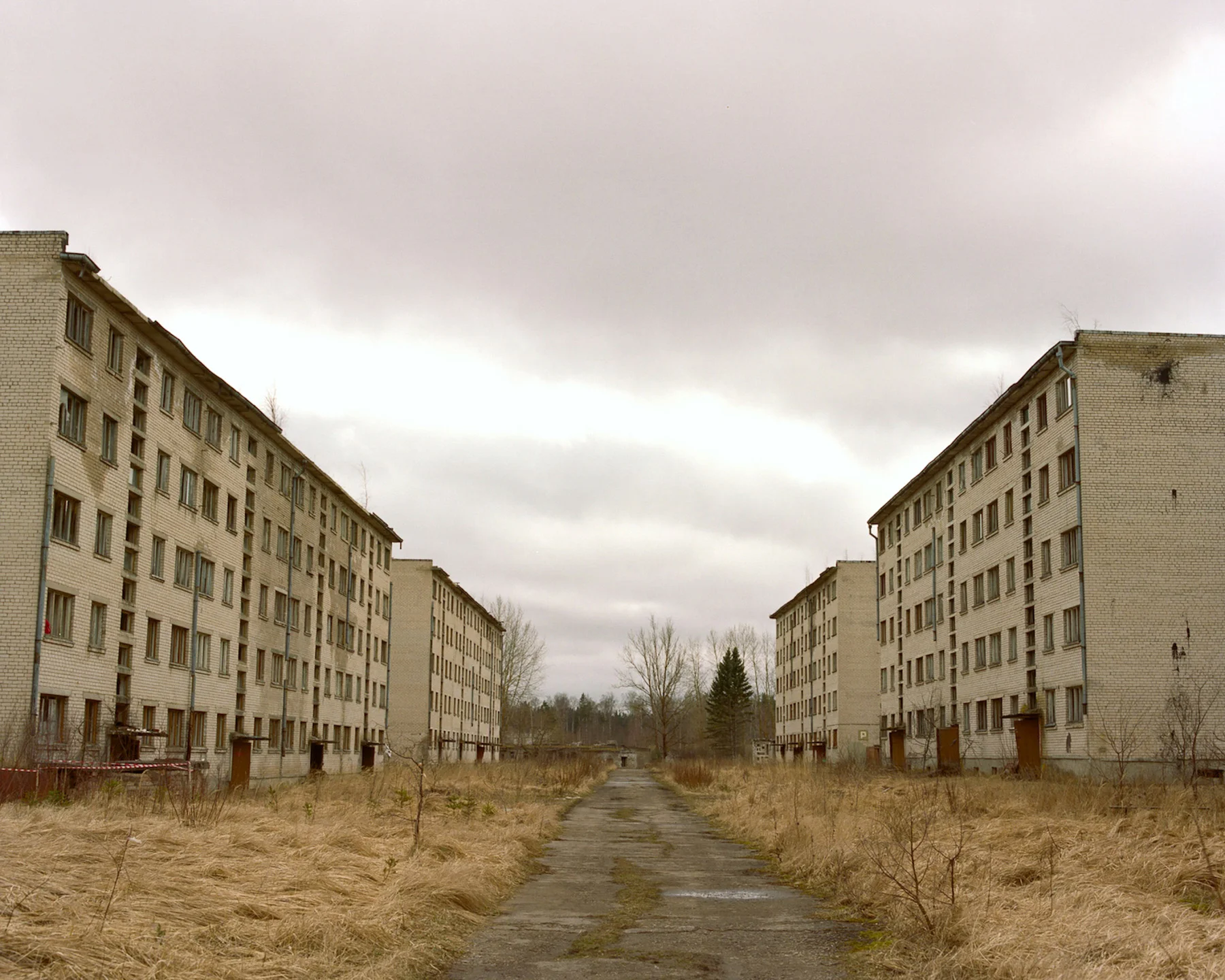
Nature did not wait for diplomacy. With no human maintenance, the Mediterranean environment began dismantling Varosha at the molecular level. The reinforced concrete of the 1970s hotels was not engineered to withstand fifty years of uninterrupted exposure to salt-laden sea spray. The iron rebar inside the concrete rusted, expanded, and fractured the cement from within — a process called spalling that has left the facades of the beachfront towers pockmarked and crumbling. Balconies that once held cocktail glasses have collapsed into rubble. Entire exterior walls have sheared away, exposing cross-sections of apartments: a strip of 1970s wallpaper, a rusted bed frame, a light fixture dangling from a wire.
The vegetation was more aggressive. Acacia trees and prickly pear cacti burst through the asphalt of the boulevards, splitting the road surface and undermining foundations. Bougainvillea planted to decorate hotel balconies grew wild, strangling the structures it was meant to adorn. Inside the lobbies, miniature forests took root in the accumulated debris. On the darkened beaches — unlit, unvisited, undisturbed for decades — endangered loggerhead sea turtles began nesting, reclaiming the sand for a purpose older than tourism.
Alan Weisman cited Varosha in his book The World Without Us as a real-world demonstration of how rapidly human infrastructure disintegrates without maintenance. The answer, in a Mediterranean climate with salt air: faster than anyone expected, and in ways that are both destructive and oddly beautiful.
Varosha's Displaced Families — Fifty Years of Exile Within Sight of Home
Pavlos Iacovou was nineteen when he fled. His parents ran the Florida Hotel, one of the district's landmark properties. He settled in Paralimni, just south of the UN buffer zone — close enough to see the silhouette of his family's hotel from the road. For forty-six years, he lived within sight of a building he could not enter, watching it decay through binoculars and across a fence he could not cross.
His experience was not unusual. Thousands of Varosha's displaced families resettled in the towns immediately south of the Green Line — Deryneia, Paralimni, Larnaca — and built new lives in the shadow of what they had lost. The proximity was the cruelty. Refugees from other conflicts are often separated from their homes by hundreds of kilometers, by borders too distant to see. Varosha's refugees could point to their bedroom windows.
The trauma compounded across generations. Children who had never lived in Varosha grew up hearing their parents describe specific rooms, specific trees, specific views from specific balconies. Paris Demetriades, a Greek Cypriot journalist, described a common experience. Emily Markides, born and raised in the district, carried the loss so deeply that it shaped her daughter Vasia's entire career — Vasia became a filmmaker and launched the Famagusta Ecocity Project, an initiative to reimagine the district's future. A handful of photographs were the only physical record of Emily's childhood.
The 2004 Annan Plan offered the closest thing to a resolution. Under the UN proposal, much of Famagusta, including Varosha, would have been returned to its previous inhabitants as part of a reunification agreement. Sixty-five percent of Turkish Cypriots voted yes. Seventy-six percent of Greek Cypriots voted no, rejecting a power-sharing arrangement they viewed as legitimizing the invasion's consequences. The plan died. The fence stayed.
The 2020 Reopening of Varosha — A Calculated Provocation
Erdogan, Ersin Tatar, and the Political Calculus Behind the Reopening
On October 8, 2020, Turkish Cypriot authorities — with the explicit backing of Recep Tayyip Erdogan — announced the partial reopening of Varosha. Bulldozers cleared decades of overgrowth along Demokratias Avenue, the main commercial street. Fresh asphalt was laid. Streetlights were installed. The barbed wire was pulled back to create a narrow public corridor through the ruins, leading to the beach.
The timing was not subtle. Turkish Cypriot presidential elections were ten days away. The nationalist candidate, Ersin Tatar, was running against the moderate incumbent Mustafa Akinci, who had openly clashed with Erdogan. The reopening handed Tatar a dramatic campaign backdrop. He won. Akinci, who had opposed the move, was ousted.
The EU, the UN, and the United States condemned the reopening. UN Security Council presidential statements reiterated that settling Varosha by anyone other than its original inhabitants was inadmissible. US Secretary of State Antony Blinken called subsequent expansion announcements provocative and unacceptable. The European Parliament asked Turkey to reverse the decision. Turkey rejected every objection.
In November 2020, Erdogan visited Varosha personally. The main avenue, Kennedy Avenue, was renamed after Semih Sancar, Turkey's Chief of the General Staff during the 1974 invasion. The renaming was a message delivered in asphalt and signage: this is ours, and we are not giving it back.
What Varosha Looks Like After the 2020 Reopening
The reopened strip covers approximately 3.5 percent of Varosha's total area. Visitors enter through a military checkpoint, pass security screening, and step onto a freshly paved road flanked by ruin. Bicycle rental stands and ice cream kiosks line the corridor. The beach itself — the Golden Coast — is roped off for swimming. Families splash in crystalline water while, fifty meters inland, the hollowed facades of the King George and the Argo loom against the sky, their windows black, their balconies collapsed.
The cognitive dissonance is the point, and it cuts in every direction. For Turkish Cypriot visitors — more than 400,000 came in the first two years — Varosha is a curiosity, a strange open-air museum of a world they never inhabited. For Greek Cypriot displaced families, it is something else entirely. Pavlos Iacovou watched the bulldozers tear down the fences he had stared at for forty-six years.
In July 2021, Erdogan returned for the anniversary of the invasion. Greek and Turkish Cypriot peace activists formed a human chain along the buffer zone in protest. Nikos Karoullas, a Greek Cypriot in his sixties who had grown up in the district, stood in front of buildings that had been looted decades earlier and pointed to the gutted facade of the Cafe Edelweiss, where he used to drink after school. His Turkish Cypriot friend, Yildirim Hasoglu, stood beside him.
Inside the Esperia Tower Hotel, behind the boarded-up entrance of the Perroquet nightclub on the ground floor, artworks by the modernist Cypriot painter Christophoros Savva still hang on the walls. No one has removed them. No one has been authorized to enter.
Visiting Varosha and Famagusta Today
How to Cross the Green Line and Reach the Varosha Reopened Zone
Most visitors approach from the Republic of Cyprus in the south. The Deryneia checkpoint, a few kilometers from Famagusta, is the most convenient crossing point. A valid passport or EU ID card is required. There is no visa stamp — entry is recorded digitally or on a separate slip of paper. Crossing involves passing through the Republic of Cyprus police post, a short stretch of UN buffer zone, and the TRNC immigration post.
From the checkpoint, it is a ten-minute taxi ride to the Varosha entrance gates. Guided tours run regularly from Ayia Napa and Protaras. The reopened zone operates from approximately 8:00 AM to 8:00 PM, with seasonal variation. The Turkish Lira is the official currency in the north, though euros are accepted at the kiosks inside the zone.
What to Expect Inside the Varosha Reopened Zone
The experience begins at a military checkpoint. Bags are searched. Rules are stated clearly and enforced without flexibility: no entering buildings, no photographing military personnel or installations, no drones. Police on bicycles and CCTV cameras monitor the paved corridor. The structures on either side of the road are roped off, their interiors visible but inaccessible — cross-sections of domestic life suspended for half a century.
Most visitors rent bicycles at the entrance and ride the length of Demokratias Avenue. The ride is physically easy and psychologically disorienting. The beach is immaculate. The water is clean. The hotels behind it are collapsing. Shutters bang against walls in the sea breeze — a rhythmic percussion that becomes the ambient sound of the district. A construction crane, frozen since August 1974, holds its three concrete blocks against the skyline like a monument to interrupted momentum.
Famagusta's medieval walled city, a short drive north, offers a counterpoint that deepens the experience. Othello's Tower — the Venetian citadel that gave Shakespeare's play its setting — commands the harbor. The Lala Mustafa Pasha Mosque, formerly the Cathedral of St. Nicholas, is a masterpiece of French Gothic architecture that has survived the Lusignans, the Venetians, the Ottomans, and the British. These medieval structures, built to last centuries, have weathered their history into a kind of dignity. Varosha's modernist towers, built for a future that lasted ten years, are falling apart. The contrast between the two ruins — one ancient and settled, the other modern and raw — is the most instructive thing in Famagusta.
Standing on the beach at Varosha, the ethical weight of the site is inescapable. The sand is beautiful. The water is warm. The buildings behind the visitor belong to families who are alive, who live an hour's drive away, and who cannot enter. The houses contain the decaying remnants of lives interrupted mid-sentence — not ancient lives, not historical abstractions, but the lives of people who are still waiting for a key that no longer fits the lock. Varosha is not a ruin. It is an open wound dressed up with bicycle rentals and ice cream kiosks, and the bandage does not fit.
Frequently Asked Questions
Why Is Varosha in Cyprus Abandoned?
Varosha was abandoned on August 14, 1974, when the Turkish military advanced toward Famagusta during the second phase of its invasion of Cyprus. The district's 39,000 Greek Cypriot residents evacuated in a matter of hours, believing they would return within days. The Turkish army fenced the entire district with barbed wire and declared it a restricted military zone. Rather than resettling it, Turkey held Varosha as a bargaining chip in negotiations over the island's partition. UN Security Council Resolution 550 (1984) declared any attempt to settle the district by anyone other than its original inhabitants inadmissible. No settlement has been reached, and the original residents have never been permitted to return.
Can You Visit Varosha Today?
A small portion of Varosha — approximately 3.5 percent of its total area — was reopened to the public in October 2020 by Turkish Cypriot authorities. Visitors can enter through a military checkpoint and walk or cycle along Demokratias Avenue and a stretch of the Golden Coast beach. The reopened zone operates from roughly 8:00 AM to 8:00 PM, with seasonal variation. Entry into buildings is strictly prohibited. Most visitors approach from the Republic of Cyprus via the Deryneia checkpoint, which requires a valid passport or EU ID card.
Who Used to Live in Varosha Before 1974?
Varosha was an overwhelmingly Greek Cypriot district and the most profitable tourist destination on the island. By the early 1970s it contained 45 hotels with over 12,000 beds, generating more than half of Cyprus's tourism revenue. Celebrity visitors included Elizabeth Taylor, Richard Burton, Brigitte Bardot, and Sophia Loren. The resident population of approximately 39,000 was displaced during the August 1974 Turkish offensive. Most resettled in Paralimni, Deryneia, and Larnaca — towns close enough to the Green Line that many could see their former homes from the other side of the fence.
What Happened to the Buildings in Varosha?
The buildings have deteriorated severely over fifty years of abandonment. In the months following the 1974 sealing, soldiers systematically looted the district of furniture, vehicles, electronics, and personal belongings. The structures that remain are shells, ravaged by salt-laden sea spray that has corroded the internal rebar and caused widespread concrete spalling. Vegetation has broken through roads and foundations, and entire balconies and exterior walls have collapsed. The time capsule image — a city frozen exactly as it was left — is largely a myth. What remains is architecture, not contents.
Why Was Varosha's 2020 Reopening Controversial?
The partial reopening was condemned by the European Union, the United Nations, and the United States because it violated UN resolutions requiring that Varosha be returned only to its original inhabitants. The timing — ten days before Turkish Cypriot presidential elections — was widely interpreted as a political maneuver to boost the nationalist candidate Ersin Tatar, who won. Greek Cypriot authorities described the reopening as a provocation. Turkish President Recep Tayyip Erdogan visited the district in November 2020 and renamed its main avenue after the Turkish general who commanded the 1974 invasion.
Is Varosha the Same as Famagusta?
Varosha is a district within the city of Famagusta, located on its southern beachfront. Famagusta itself is a much larger and older city, centered on a medieval walled old town built by the Lusignans and Venetians. The walled city is inhabited and functioning under Turkish Cypriot administration. Varosha specifically refers to the modern resort district that was sealed off after 1974. Visitors to the area can see both the medieval city — including Othello's Tower and the Lala Mustafa Pasha Mosque — and the fenced ruins of Varosha in a single trip.
Sources
- [The Man Who Feeds the Dogs: A Report from Varosha] - Yiannakis Rousos, as told to National Geographic (2018)
- [Waking Famagusta] - Vasia Markides, documentary film, Famagusta Ecocity Project (2013–ongoing)
- [Attila '74] - Michael Cacoyannis, documentary film (1975)
- [The World Without Us] - Alan Weisman, Thomas Dunne Books (2007)
- [Teaching Contested Narratives] - Zvi Bekerman and Michalinos Zembylas, Cambridge University Press (2012)
- [UN Security Council Resolution 550] - United Nations Security Council (1984)
- [UN Security Council Resolution 3212] - United Nations General Assembly (1974)
- [A Cyprus Ghost Town Is Emblematic of the Island's 50-Year Conflict] - U.S. News and World Report (2023)
- [Erdogan Plans Picnic in Symbolic Cyprus Ghost Town] - France 24 (2020)
- [The Suspended Future of Varosha] - Inkstick Media (2024)
- [International Crisis Group Report on Cyprus] - International Crisis Group (2023)