The Last Families to Walk Out of Al-Deerah
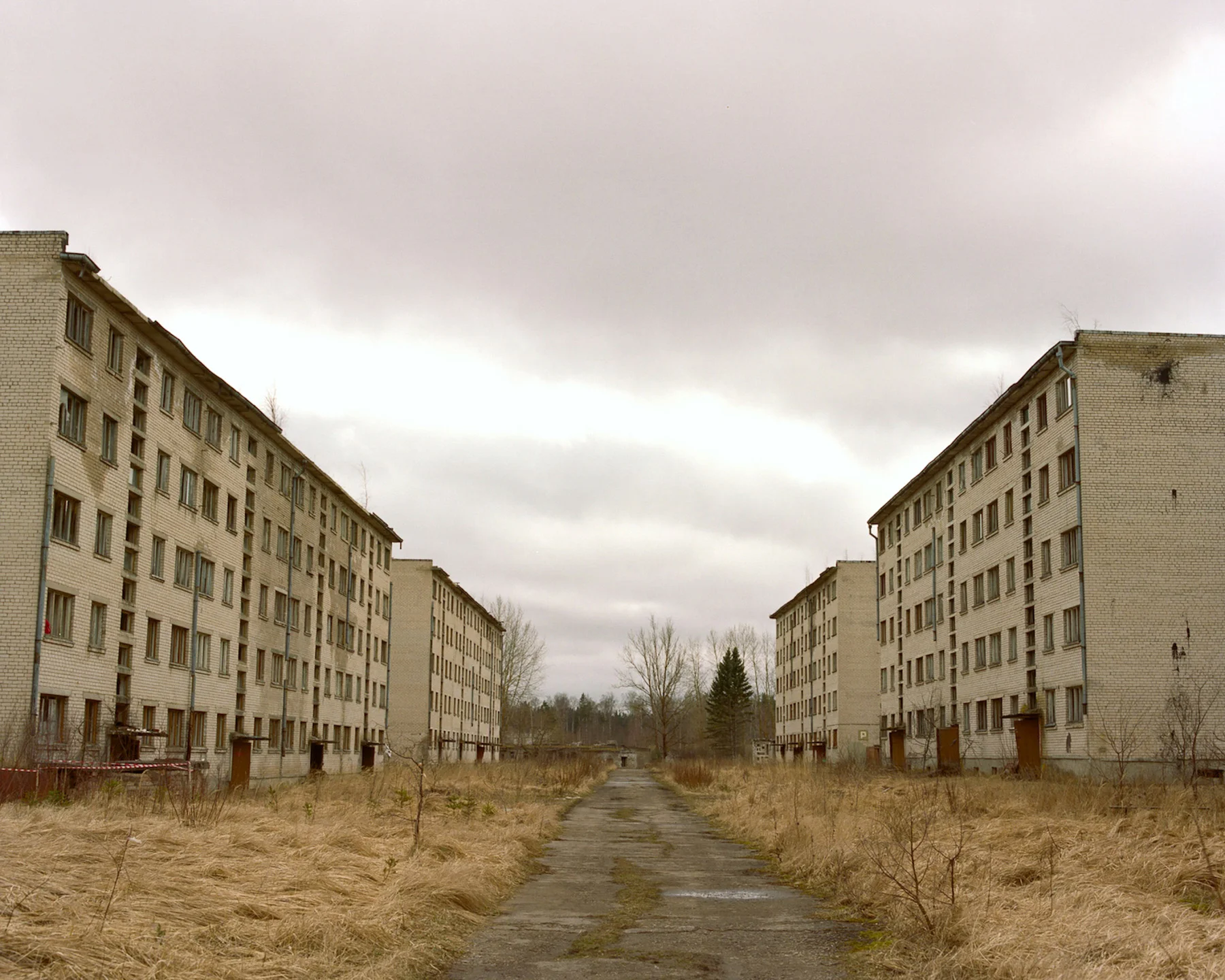
Sometime in the early 1980s, the last residents of Al-Deerah closed their doors for the final time. There was no evacuation order, no catastrophe, no invading army. The Saudi government had built modern housing on the plain below — concrete blocks with electricity, indoor plumbing, and rooms wide enough for furniture that would never fit through the Old Town's corridors. The choice was not dramatic. It was practical. And one by one, families who had lived in the same mudbrick rooms for generations carried what they could down the hill and did not come back.
What they left behind was one of the most intact medieval Arabian townscapes on earth: a vertical maze of two- and three-storey houses built from mudbrick, stone, and palm trunk beams, pressed together so tightly that the streets between them functioned less as roads than as canyons. Sunlight barely reached the ground. The architecture was not accidental — every narrow passage was engineered to channel airflow and block heat, turning the labyrinth into a passive cooling system centuries before air conditioning existed. At the top of the hill, a citadel attributed to the 7th-century Umayyad general Musa bin Nusayr watched over the oasis below.
The departure of Al-Deerah's last residents exposed something the living town had been hiding. This was not simply a medieval settlement. It was the topmost layer of a site that had been occupied, built upon, and rebuilt for over three thousand years — a geological core sample of Arabian civilisation. The Dedanites had been here. The Lihyanites had carved their kings into the cliff faces. The Nabataeans had built a necropolis of monumental tombs twenty kilometres to the north. The Romans had come and taxed the caravans. Islam had arrived and the town had continued, absorbing each new era into its walls and foundations, until the 20th century offered something the desert never had: a reason to leave.
Al-Ula is a vertical cross-section of civilisational ambition — each kingdom building on the bones of the last, each one convinced it would outlast the desert. The Dedanites built over whatever came before them. The Lihyanites built over the Dedanites. The medieval town buried them all. And when the last residents walked out in the 1980s, every layer was exposed at once — three thousand years of the same conviction, disproved by the same sand.
The Kingdoms That Controlled the Arabian Incense Route
Dadan and Lihyan — The Forgotten Superpowers of the Frankincense Trade
Long before Al-Deerah's mudbrick houses existed, the AlUla valley was the capital of a kingdom most people have never heard of. Dadan — known in the Hebrew Bible as Dedan — emerged around the 9th century BCE as the dominant power on the overland incense route, the arterial trade corridor that carried frankincense and myrrh from the production zones of southern Arabia northward to Egypt, Mesopotamia, and the Mediterranean world. Frankincense was not a luxury. It was a necessity — burned in every temple from Memphis to Rome, prescribed by physicians, demanded by embalmers. Controlling its transit was the ancient equivalent of controlling an oil pipeline.
The Dedanites built their capital at the mouth of a narrow valley where sandstone cliffs created a natural fortress and a perennial water source fed one of the richest oases on the Arabian Peninsula. The site was strategic genius: any caravan moving north had to pass through their territory, and the oasis offered the water and food that made the journey survivable. By the 5th century BCE, the Dedanite kingdom had been absorbed or succeeded by the Lihyanite kingdom, which expanded the city's ambition dramatically. Lihyanite kings commissioned monumental rock-cut tombs high in the sandstone cliffs — the so-called Lion Tombs, flanked by carved predators that still crouch above the valley floor. Inscriptions in the Dadanitic script, scattered across rock faces throughout the region, record dedications to the god Dhu-Ghaba and administrative decrees that reveal a literate, bureaucratically organised state.
The Lihyanites controlled this corridor for roughly three centuries. Their kingdom was a contemporary of classical Athens and the Persian Empire — trading with the same Achaemenid dynasty whose monumental capital at Persepolis would later be torched by Alexander — yet it barely appears in Western historiography. The inscriptions they left behind — thousands of them, carved into cliff faces across the AlUla region — represent one of the largest bodies of pre-Islamic Arabian text in existence. The valley that most visitors today associate with empty desert ruins was, for half a millennium, one of the wealthiest commercial hubs in the ancient Near East.
Hegra and the Nabataean Tombs — Saudi Arabia's First UNESCO World Heritage Site
By the 1st century BCE, a new power had moved into the valley from the north. The Nabataeans — the same civilisation that carved Petra into the rose-red cliffs of modern Jordan — extended their kingdom southward and established Hegra (known today as Madan Salih) as their second city, roughly twenty kilometres north of the old Dadanite capital. Hegra was not a rival to Petra. It was its southern anchor — a logistics hub and monumental burial ground that secured the Nabataeans' grip on the lower half of the incense route.
What the Nabataeans built at Hegra remains one of the most striking archaeological sites in the Middle East. One hundred and eleven rock-cut tombs punctuate the sandstone outcrops surrounding the settlement, their façades carved with elaborate pediments, pilasters, and Nabataean inscriptions. Some of these inscriptions are astonishingly specific: they name the deceased, the stonemason who carved the tomb, and the exact date of completion. One tomb records the work of a mason named Wahballahi son of 'Abdobodat, dating the carving to 1 CE — a named craftsman signing his work two thousand years ago, in a tradition more commonly associated with Renaissance Florence than the Arabian desert. These dated inscriptions have given archaeologists a precise chronology of Nabataean funerary art that even Petra cannot match.
In 106 CE, the Roman emperor Trajan annexed the Nabataean kingdom and absorbed it into the province of Arabia Petraea. The incorporation was administrative rather than destructive — no siege, no sacking — but the economic logic that had sustained Hegra began to shift. Roman maritime routes through the Red Sea increasingly bypassed the overland caravan trails. The incense trade didn't vanish overnight, but the strategic premium of controlling a desert corridor declined steadily. Hegra contracted. The tombs stopped being carved. The settlement continued in diminished form, but the monumental era was over.
In 2008, Hegra became Saudi Arabia's first UNESCO World Heritage Site — a designation that carried symbolic weight far beyond archaeology. For decades, the site had been largely neglected, partly because of an Islamic tradition associating the area with the Thamud, a pre-Islamic people described in the Quran as having been destroyed by divine punishment for their disobedience. The UNESCO listing signalled a shift in how Saudi Arabia was willing to engage with its pre-Islamic past — a shift that would accelerate dramatically in the following decade.
Inside the Mudbrick Labyrinth of Al-Deerah
The Hilltop Citadel and the Oasis Fortress
The settlement that became Al-Deerah grew around a hilltop citadel that had likely served as a defensive position for centuries before the current Old Town took shape. The castle perched at the summit — traditionally attributed to Musa bin Nusayr, the Umayyad commander who led the Muslim conquest of the Iberian Peninsula in the early 8th century — commanded a panoramic view of the valley and the palm groves below. Musa had conquered more territory for the caliphate than almost any general of his era, crossing from North Africa into Spain and pushing as far as the Pyrenees. His reward was disgrace: recalled by the caliph, stripped of his wealth, and left to die in obscurity somewhere in the Hejaz — possibly within sight of the valley that still bears his name on its hilltop. Whether he himself ever fortified this particular summit is a matter of tradition rather than archaeology, but the strategic logic of the position is undeniable: the hill controlled the water, and the water controlled the valley.
Beneath the citadel, the town grew organically over centuries, each generation adding rooms, floors, and corridors to an increasingly dense lattice of mudbrick and stone. The most striking feature of Al-Deerah's design is an absence: there was no city wall. The city was the wall. The outermost ring of houses was built with rear walls aligned, thickened, and left windowless, forming a continuous rampart that encircled the entire settlement. A breach in one family's back wall was a breach in the town's defences — the architecture was a physical manifestation of a social contract. Entry was funnelled through a small number of gates that could be sealed at night or during raids. The effect, for anyone approaching from the desert, was of a single massive structure rather than a collection of individual houses.
The density created a second innovation: a rooftop highway. The houses were packed so tightly that their flat roofs formed a continuous elevated surface, allowing defenders to traverse the entire length of the town without descending into the narrow alleys below. During raids, men could move across this upper network to reinforce any threatened point on the perimeter. The same rooftop network served a peacetime function — women used it to visit neighbours without entering the male-dominated streets, creating a parallel social world above the labyrinth.
900 Houses, 400 Shops, and Streets Too Narrow for Two — Daily Life in Old Town Al-Ula
At its peak, Al-Deerah contained approximately 900 residential structures, some 400 shops and market stalls, several mosques, and five public squares that served as the social nuclei of the community. The principal mosque, built with repurposed stone from earlier periods, anchored the spiritual life of the town. The market streets — slightly wider than the residential passages — buzzed with the commerce of dates, grain, and goods that still moved along the old trade routes, though at a fraction of their ancient volume.
The architecture of daily life was shaped entirely by climate. Walls were thick — sometimes a metre deep — to insulate against daytime heat that regularly exceeded 40°C. Streets were deliberately narrow, rarely wider than 1.5 metres, and largely covered by the overhanging upper storeys, creating tunnel-like passages that blocked direct solar radiation. Stepping into these covered alleys from the open desert produced an immediate temperature drop — as much as 10 to 15°C. The effect was not merely shade. The irregular street widths and varying roof heights created pressure differentials that forced air through the tunnels via the Venturi effect, generating a constant natural draft. The mudbrick itself contributed: its high thermal inertia meant thick walls absorbed heat slowly during the day, keeping interiors cool, then radiated the stored warmth back during the cold desert nights. The result was a passive climate system that made the labyrinth survivable through summers that routinely exceeded 45°C.
The building materials were more sophisticated than the mud surface suggested. The first metre of every wall rested on a foundation of black basalt or sandstone sourced from the valley floor — a damp course that prevented moisture from wicking up and dissolving the mudbrick base. Palm trunk beams spanned room widths to support ceilings of woven palm fronds layered with packed earth. The critical structural element was Athl (tamarisk) wood, used for lintels above doors and windows. Athl is extraordinarily dense, resistant to the termites that plague the region, and becomes harder with age — curing into a stone-like consistency over decades. Many of the intricately carved wooden doors found in the ruins are centuries old, surviving long after the mud around them began to crumble.
Social hierarchy was legible in the architecture. Wealthier families occupied larger compounds with more elaborate doorways — carved stone lintels, sometimes with inscriptions — and their homes sat closer to the citadel. Poorer residents lived on the periphery, in smaller rooms with thinner walls. The town had no formal street plan. Navigation was intuitive, learned through a lifetime of walking the same corridors. Visitors described the experience as disorienting — a maze without obvious landmarks, where every turn revealed another identical passage of brown mudbrick and shadow.
The children who grew up in these corridors in the 1960s and 1970s were the last generation to know the labyrinth as a living place. Some of them are still alive, and their memories — collected in oral history projects launched as part of the AlUla restoration — describe a town that was simultaneously claustrophobic and communal, where privacy was almost impossible and solitude required climbing to the roof. One detail recurs across multiple accounts: the way sound moved through the labyrinth. A conversation held in a courtyard three houses away was audible through the shared walls. A mother calling her son's name from a rooftop could be heard across half the town. The mudbrick carried voices the way stone carries cold — the settlement was, in effect, a single acoustic chamber, and everyone in it lived inside the same conversation.
The Tantora Sundial — How Shadow Governed Water and Survival in Al-Ula
In the main square of the Old Town stands a pyramid-shaped mudbrick obelisk known as the Tantora. For the casual visitor, it is a modest structure easily overlooked. For the inhabitants of Al-Deerah, it was the absolute authority of the valley — an unbribable judge that governed the distribution of the most valuable commodity in the desert: water.
The Tantora functioned as a sundial calibrated not for time-telling but for agriculture. The length and angle of its shadow determined the precise schedule for opening and closing the sluice gates that fed the date palm groves through a qanat system — a network of underground channels that tapped into the water table near the cliffs and used gravity to transport water to the fields. Specific stones embedded in the ground around the Tantora marked the alignment of the shadow at critical seasonal thresholds, including the start of the Murbaniyah, the forty coldest days of winter, when the planting calendar reset.
The economics were elegant and ruthless. A farmer did not own water in a volumetric sense. He owned time — a specific duration of flow measured by the creeping shadow of the Tantora. The system transformed an astronomical phenomenon into a unit of currency, and it eliminated the disputes that could otherwise tear an oasis community apart. Water theft in a desert settlement was a crime potentially punishable by death or exile, and the Tantora's verdict was beyond argument.
The water it measured flowed through a social contract known as the Al-Miyah (The Waters). This unwritten constitution bound the valley's tribes in mutual obligation: if a channel collapsed or silted up, every able-bodied man — regardless of tribal affiliation — was required to assist in the repair immediately. A muhandis, part engineer and part judge, verified the Tantora readings and arbitrated disputes. The system made isolationism impossible. The water that flowed past your house was destined for your neighbour's plot. Civic duty was indistinguishable from personal survival, and the Al-Miyah was the mechanism that enforced it — not through law, but through the physics of shared water.
Why Al-Deerah Was Abandoned — The End of a 700-Year-Old Town
Government Relocation and Saudi Arabia's Modernisation Push
The abandonment of Al-Deerah was not a sudden event. It unfolded across roughly two decades, from the 1960s to the early 1980s, driven by the same forces that reshaped towns across the Arabian Peninsula during the oil boom era. The Saudi government, flush with petroleum revenue and committed to a programme of rapid modernisation, built new housing developments on the flat ground below the Old Town. These were not architecturally distinguished — concrete block houses arranged in a grid — but they offered what the labyrinth could not: running water, electricity, sewage systems, and rooms large enough for modern furniture and appliances.
The practical case for leaving was overwhelming. Al-Deerah's streets were too narrow for vehicles. Its mudbrick walls could not be wired for electricity without risk of structural damage. Plumbing was essentially impossible in a settlement where houses shared walls and foundations with their neighbours in an unbroken mass. The government offered subsidised or free housing in the new development, and the economics were unanswerable.
The departure happened in waves. Younger families left first, drawn by convenience and modern amenities. Older residents held on longer, some staying into the late 1970s and early 1980s out of attachment, habit, or reluctance to leave the homes where they had been born. Elderly women who had spent decades navigating the labyrinth by touch — knowing every wall, every turn, every threshold — found the new grid-planned town disorienting in its openness. The corridors they had memorised since childhood were replaced by wide streets with no shade and no walls to guide them. The final departures were quiet — no ceremony, no collective farewell. Families locked their heavy wooden doors and walked away, leaving behind grinding stones, agricultural tools, and in some cases personal letters — the weight of a life measured in what was too heavy or too old-fashioned to carry into the concrete boxes below. The desert began its reclamation.
The pattern was identical to what happened at Chinguetti, the medieval Saharan trading city in Mauritania that emptied out as sand dunes advanced and modern infrastructure was built elsewhere. In both cases, a town that had survived centuries of harsh climate was undone not by nature but by the availability of something better.
Mudbrick Against the Desert — How Abandoned Cities Decay
Mudbrick is one of the oldest and most effective building materials in arid climates — but it requires human maintenance to survive. The walls of Al-Deerah were made from a mixture of earth, water, and organic binders (typically straw or palm fibre), sun-dried into blocks and mortared with the same material. In an inhabited town, residents repaired cracks, replastered surfaces after rare rainstorms, and kept rooftops sealed against water infiltration. The moment that maintenance stopped, the clock started.
Rain — infrequent but intense in the AlUla region — was the primary agent of destruction. Water penetrated cracks in the parapet walls and seeped into the mudbrick core, dissolving the binding material and causing sections to slump and collapse. Once a roof failed, the interior walls were exposed, and the process accelerated. Palm trunk beams, no longer protected from the elements, rotted and broke. Upper storeys fell into lower ones. Sand filled the ground-floor rooms through doorways that no one closed.
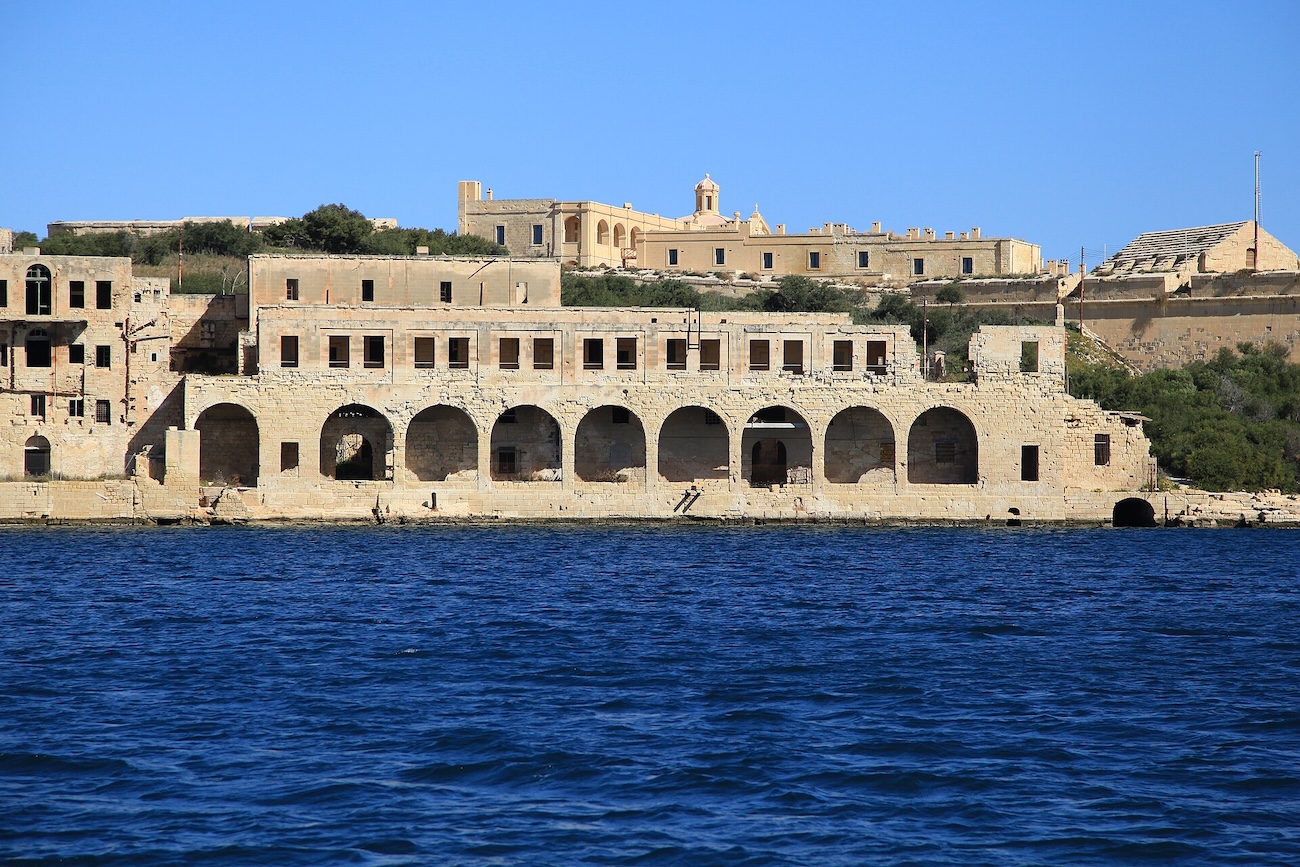
By the early 2000s, significant portions of Al-Deerah had collapsed or were structurally compromised. The labyrinth that had sheltered families for seven hundred years was dissolving into the landscape that had produced it — mudbrick returning to mud, walls becoming slopes, rooms becoming depressions. The site was heading toward the same fate as Craco, the medieval Italian hill town slowly sliding off its ridge, or Kolmanskop, the Namibian diamond town where the desert poured through the windows of abandoned houses. The difference was that no one, at that point, had decided whether Al-Deerah was worth saving.
Saudi Arabia's Billion-Dollar Gamble on AlUla
Vision 2030, the Royal Commission, and the Race to Reinvent the Desert
In 2017, Saudi Crown Prince Mohammed bin Salman established the Royal Commission for AlUla (RCU), a body tasked with transforming the entire AlUla valley into a global cultural and heritage destination. The commission was part of the broader Vision 2030 programme — Saudi Arabia's strategic plan to diversify its economy away from oil dependency — but AlUla was arguably its most ambitious single project. The scale of the investment has been estimated in the tens of billions of dollars, encompassing archaeological restoration, luxury hospitality, infrastructure, and cultural programming.
The centrepiece of the development plan was announced with characteristic ambition: Sharaan, a resort designed by the French architect Jean Nouvel, to be carved directly into the sandstone cliffs of the AlUla valley. The design echoed the Nabataean tradition of cutting architecture into living rock — a twenty-first-century luxury hotel built using the same basic principle as the two-thousand-year-old tombs at Hegra. A Franco-Saudi cultural agreement, signed in 2018, brought French archaeological expertise and institutional partnerships to the project, including collaboration with the Louvre and the French National Institute for Preventive Archaeological Research (INRAP).
The tourism strategy was explicit: AlUla would become Saudi Arabia's answer to Petra, Luxor, and Machu Picchu — a heritage destination of global significance, anchored by the UNESCO-listed tombs of Hegra but expanded to encompass the entire valley's archaeological and natural landscape. The ambition was not modest. AlUla was to host international arts festivals, luxury wellness retreats, and immersive cultural experiences — all in a valley that, a decade earlier, had been visited primarily by archaeologists and a handful of adventurous travellers.
Old Town Al-Deerah's Restoration — Rebuilding the City That Was Left to Die
The Old Town itself became a central element of the restoration programme. Archaeological and conservation teams — including specialists in mudbrick preservation from institutions across Europe and the Middle East — began the painstaking work of stabilising, documenting, and selectively rebuilding the collapsed structures. The first principle was material honesty: cement, the default repair material of modern construction, is the enemy of mudbrick. It traps moisture inside the wall, forcing it into the softer mud, which then dissolves from the inside out — a building that looks repaired on the surface while rotting at its core. The conservators had to locate surviving elders who remembered the traditional ratios of mud, straw, and water, reviving a masonry trade that had been abandoned along with the town itself.
By the mid-2020s, portions of the Old Town had reopened to visitors. The restored market street, several mosques, and a number of residential structures offered a walkable experience of the labyrinth — though a sanitised and curated version of the town that the last residents would recognise more as a museum than a home. Some of the original carved stone lintels and wooden doors had been preserved or returned. Interpretive panels, designed with the restraint typical of high-end heritage projects, provided context without overwhelming the architecture.
The restoration raised the questions that every heritage project of this scale must face. Whose memory was being preserved? The town that existed in the 1970s, with its TV antennas and transistor radios alongside ancient doorframes? The medieval settlement at its commercial peak? The idealised image of an Arabian oasis town that would look best in a tourism campaign? The answer, inevitably, was a composite — a version of Al-Deerah that never quite existed in any single moment but that told a coherent story about continuity, adaptation, and the desert.
Visiting Old Town Al-Ula and the AlUla Archaeological Valley
What to See in Old Town Al-Ula and the Surrounding Ancient Sites
The AlUla valley today offers one of the densest concentrations of archaeological sites on the Arabian Peninsula, spanning roughly three thousand years of continuous history within a corridor of sandstone canyons and palm-fringed oases.
Old Town Al-Deerah is the most immediate and emotionally accessible of these sites — a walkable ghost town where the mudbrick walls still carry the marks of the families who lived in them. The restored sections include the market street, the principal mosque, and several residential blocks. The citadel at the summit offers a panoramic view of the valley and the modern town below. Guided tours are led by Rawis — local storytellers, often descendants of the families who lived in Al-Deerah — who function as oral historians rather than conventional tour guides. A Rawi might pause at a crumbling doorway and explain that his grandfather was born in the room behind it, collapsing the distance between ruin and living memory in a single sentence.
Hegra (Madan Salih), twenty kilometres north, is the valley's archaeological centrepiece — the 111 Nabataean rock-cut tombs, several with inscriptions naming the deceased and the craftsmen who carved them. Access is by guided tour only, and the site is managed with controlled visitor numbers to protect the sandstone.
Dadan, the ancient Dedanite and Lihyanite capital, lies within walking distance of the Old Town. The Lion Tombs, carved high into the cliff face, are visible from the valley floor. Ongoing excavations continue to reveal new structures and inscriptions.
Jabal Ikmah, a narrow canyon covered in ancient rock inscriptions in Dadanitic, Lihyanite, Nabataean, Thamudic, and early Arabic scripts, has been described as an open-air library — one of the most concentrated collections of pre-Islamic Arabian text anywhere in the world.
Elephant Rock (Jabal AlFil), a natural sandstone formation eroded into the shape of an elephant, has become AlUla's most photographed landmark and the backdrop for an open-air dining and events area that epitomises the valley's new identity as a luxury cultural destination.
Visitor access to AlUla requires advance booking through the Experience AlUla platform. The best season is October through March, when daytime temperatures are comfortable and the desert light is at its most dramatic. Summer visits are possible but brutal — temperatures exceed 45°C and outdoor exploration becomes physically punishing by mid-morning.
The Atlas Entry — Standing in a Valley of Erasures
Walking through Al-Deerah in the late afternoon, when the shadows deepen the labyrinth's corridors into near-darkness, the town feels less abandoned than paused. The walls are still here. The doorways still frame the same views of sky and sandstone. The citadel still watches from above. What is missing are the voices, the cooking smoke, the sound of children in the alleys — the human current that kept the mudbrick alive.
A few kilometres away, the Nabataean tombs at Hegra stand in the opposite condition: monumental, empty, carved for eternity. They were built to outlast the people they memorialised, and they have. The mudbrick houses of Al-Deerah were built to shelter the living, and they are dissolving now that the living have gone. The valley holds both kinds of ruin — the kind meant to be permanent and the kind that was never meant to be a ruin at all.
The AlUla valley is undergoing a transformation that will continue for decades. The billions being poured into its infrastructure, its hotels, its cultural programming, and its archaeological restoration will change what this place means and who comes here. Whether that transformation honours the layers beneath its feet — the Dedanite merchants, the Lihyanite kings, the Nabataean stonemasons, the medieval families, the last generation to lock their doors — depends on whether the valley's newest builders remember what every previous civilisation here forgot: that the desert outlasts everything.
FAQ
Why was Old Town Al-Ula (Al-Deerah) abandoned?
Al-Deerah was abandoned gradually between the 1960s and early 1980s as part of Saudi Arabia's national modernisation programme. The government built new housing with electricity, running water, and sewage systems on the plain below the Old Town. The medieval mudbrick labyrinth could not be retrofitted for modern infrastructure — its streets were too narrow for vehicles, its shared walls made plumbing impossible, and its mudbrick construction was incompatible with electrical wiring. Families relocated in waves, with younger residents leaving first and older generations following over the next two decades.
What is the difference between Al-Ula, Al-Deerah, and Hegra (Madan Salih)?
Al-Ula (also spelled AlUla) is the name of both the modern town and the broader valley in northwestern Saudi Arabia. Al-Deerah is the historic Old Town — the abandoned mudbrick settlement on a hilltop within the AlUla valley, continuously inhabited for roughly 700 years before its abandonment in the 1980s. Hegra (also known as Madan Salih or Madain Saleh) is a separate archaeological site roughly 20 kilometres north of Al-Deerah, famous for its 111 Nabataean rock-cut tombs dating to the 1st century BCE–1st century CE. Hegra is Saudi Arabia's first UNESCO World Heritage Site.
Can you visit Old Town Al-Ula today?
Portions of Old Town Al-Deerah have been restored and reopened to visitors as part of the Royal Commission for AlUla's heritage development programme. The restored areas include the market street, the principal mosque, and several residential blocks. The hilltop citadel is also accessible and offers panoramic views of the valley. Visitor access to AlUla requires advance booking through the Experience AlUla platform. The best time to visit is between October and March, when temperatures are moderate.
Who were the Dadanites and Lihyanites of AlUla?
The Dadanites (also spelled Dedanites) established a kingdom in the AlUla valley around the 9th century BCE, controlling the overland incense route that carried frankincense and myrrh from southern Arabia to the Mediterranean world. By the 5th century BCE, the Dadanite kingdom was succeeded by the Lihyanite kingdom, which expanded the settlement and commissioned monumental rock-cut tombs — including the famous Lion Tombs — in the surrounding sandstone cliffs. The Lihyanites left behind thousands of inscriptions in the Dadanitic script, representing one of the largest collections of pre-Islamic Arabian writing in existence.
What is the Royal Commission for AlUla (RCU)?
The Royal Commission for AlUla was established in 2017 by Saudi Crown Prince Mohammed bin Salman as part of the Vision 2030 economic diversification programme. The RCU oversees the transformation of the AlUla valley into a global heritage and cultural tourism destination, with investments estimated in the tens of billions of dollars. Projects include the restoration of Old Town Al-Deerah, archaeological excavations at Dadan and Hegra, the planned Sharaan resort designed by architect Jean Nouvel, and international arts and cultural programming developed in partnership with French institutions including the Louvre.
What is Jabal Ikmah in AlUla?
Jabal Ikmah is a narrow sandstone canyon in the AlUla valley covered with thousands of ancient rock inscriptions in multiple scripts, including Dadanitic, Lihyanite, Nabataean, Thamudic, and early Arabic. It has been described as an open-air library and contains one of the densest concentrations of pre-Islamic Arabian text anywhere in the world. The inscriptions span roughly a thousand years and include religious dedications, personal names, trade records, and administrative texts. Jabal Ikmah is accessible to visitors as part of the AlUla heritage experience.
Sources
- [Al-Ula: An Archaeological and Historical Overview] - Royal Commission for AlUla / AFALULA (2020)
- [The Nabataean Tomb Inscriptions of Mada'in Salih] - John F. Healey, Oxford University Press (1993)
- [Hegra: An Archaeological Guide to Saudi Arabia's First World Heritage Site] - Laïla Nehmé, Royal Commission for AlUla (2020)
- [The Dadanite and Lihyanite Kingdoms: New Research on Pre-Islamic North Arabia] - Michael C.A. Macdonald, Proceedings of the Seminar for Arabian Studies (2004)
- [The Incense Route and the Kingdom of Dadan] - Abdulrahman al-Ansary, King Saud University Press (1982)
- [Mada'in Salih: A Nabataean City in North-West Arabia] - Laïla Nehmé et al., CNRS Editions (2015)
- [Arabian Architecture: An Introduction] - G.R.D. King, in The Cambridge History of Islam, Cambridge University Press (2010)
- [Saudi Arabia's Vision 2030 and the AlUla Development Framework] - Royal Commission for AlUla, Strategic Report (2019)
- [Mudbrick Conservation in Arid Environments: Principles and Practice] - UNESCO / ICCROM Technical Papers (2017)
- [The Roman Annexation of Nabataea and the Decline of the Incense Route] - David F. Graf, Journal of Roman Archaeology (1997)
- [Pre-Islamic Arabia: The Lihyanite Inscriptions and Their Historical Context] - F.V. Winnett and W.L. Reed, University of Toronto Press (1970)